


 Aperçu en situation
 Partager
 Partager
 Détails
 Guide imprimable

 Télécharger
 Articles similaires
 Radiographie
 Voir le diaporama
 Statistiques
Seascape


Pierre-Auguste Renoir's Seascape captivates with Impressionist light & color! Explore the Art Institute of Chicago’s masterpiece – tranquility meets human presence. Admire Renoir's iconic style!
 Afficher la suite
Explorez le monde vibrant de Pierre-Auguste Renoir (1841-1919), un peintre impressionniste majeur, célébré pour ses portraits lumineux, scènes de vie parisienne et la beauté féminine. Découvrez son héritage et les contributions artistiques de sa famille.
Reproduction à l'huile faite à la main
Huile sur toile peinte à la main, avec cadre et dimensions personnalisés, réalisée sur commande par nos artistes. ( Passer au format impression Passer au format image numérique)




P118B €10

P118H €10

P118W €10

P438Z €10

P508JH €12

P508YH €12

P805H €10

P805Z €10

P919BZ €10

P919G €10

P919XJ €10

P959ZH €10

P968JZ €12

W106C €8

W218G €10

W218JH €8

W218Y €10

W307PJ €10

W316G €10

W316PJ €8

W316Y €10

W398PJ €8

W4111J €10

W500HY €15

W500JH €15

W692G €12

W849H €8

W940BG €15

W953PJ €8




Format standard
personnalisé
CM
INCH
Choisissez parmi nos formats prédéfinis qui respectent les proportions originales de l’œuvre.
Loading sizes...

largeur
hauteur
Saisissez la largeur et la hauteur souhaitées, pour s'adapter à votre cadre ou à votre mur. Cette œuvre est peinte à la main ; ainsi, pour un format de forme différente, l'artiste peut peindre un peu plus autour du tableau ou réduire légèrement les bords — c'est vous qui choisissez. Nous vous envoyons une maquette numérique pour approbation avant que la peinture ne commence. L'image présentée sur cette page ne reflète pas le résultat réel — seule la maquette le fait.
Exemples de personnalisation possibles : remplacer un visage par la photo du client ; ajouter un animal de compagnie (par exemple, remplacer un chat par un chien) ; inclure un message caché en arrière-plan ; modifier le paysage ou les éléments de l'arrière-plan.
Après la commande, l’équipe TopImpressionists.com contactera le client par e-mail pour recueillir ses instructions et lui fournira une maquette d’aperçu
Après la commande, l’équipe TopImpressionists.com contactera le client par e-mail pour recueillir ses instructions et lui fournira une maquette d’aperçu
Livraison dans le monde entier () en 3 à 4 semaines au lieu des 5 semaines habituelles. (23 octobre). Aucun compromis sur la qualité.

Livraison express gratuite dans le monde entier

Toile de lin de haute qualité

Assurance transport complète

Garantie de remboursement des droits de douane

Garantie de fidélité des couleurs

Garantie de retour de 100 jours (uniquement en cas de défaut)

Garantie de remboursement à 100%

Tarifs dégressifs sur quantité
 L'option verre n'est disponible que pour les dimensions inférieures à 110 cm.

Seascape
Technique de reproduction
Format de la reproduction
-


Prix total final
€ 236
Seascape
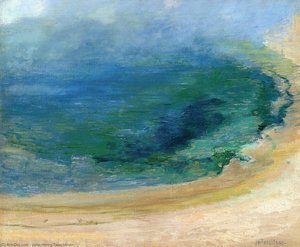
Pierre-Auguste Renoir, one of the most celebrated artists of the Impressionist movement, created a stunning piece titled Seascape in 1879. This oil on canvas painting is housed at the prestigious Art Institute of Chicago and showcases Renoir’s mastery of capturing the essence of natural beauty.The Painting: A Glimpse into Serenity
The painting depicts a serene seascape with waves gently crashing against the shore. The sky above is dark and cloudy, adding a sense of drama to the otherwise peaceful scene. Several figures are visible in the distance, likely enjoying the view or engaging in activities near the water's edge. This composition reflects Renoir’s ability to balance tranquility with subtle hints of human presence. He skillfully employed loose brushstrokes—a hallmark of Impressionism—to convey movement and luminosity, prioritizing light over precise detail. The palette is dominated by muted blues and greens, punctuated by splashes of white foam, creating an atmosphere of calm contemplation.Impressionism: A Movement of Light and Color
Renoir was a key figure in the Impressionist movement, which fundamentally challenged academic conventions by emphasizing capturing light and its changing qualities. Unlike traditional painters who meticulously rendered form with meticulous shading, Impressionists sought to depict fleeting moments of visual experience—the way sunlight dances on water or transforms foliage throughout the day. Seascape exemplifies this focus on light, with Renoir skillfully depicting the interplay between sunlight and cloud cover. The brushstrokes are characteristic of Renoir’s style, blending realism with a touch of impressionistic flair; they aren't meant to represent an exact likeness but rather to evoke a feeling—a sense of serenity and wonder at the grandeur of nature.Artistic Influences and Context
Renoir’s work was influenced by his contemporaries, including Claude Monet, who also explored the theme of light in his paintings. For example, Monet's Bordighera, The Art Institute of C, available on /art/list/?Filter=9H5RL8-Claude-Monet-Bordighera-The-Art-Institute-of-C, showcases a similar emphasis on light and color—a deliberate departure from the idealized landscapes favored by earlier artists like Rubens and Watteau. The Impressionists sought to depict everyday life with honesty and spontaneity, rejecting the grand narratives of history painting in favor of capturing the beauty of ordinary moments.Relevance in Modern Art
The Impressionist movement paved the way for modern art by introducing innovative techniques and challenging established aesthetic standards. Their influence can be seen in subsequent movements such as Expressionism and Fauvism, where artists prioritized emotional expression over objective representation. Today, Renoir’s Seascape continues to inspire artists and captivate audiences worldwide—a testament to the enduring power of Impressionist vision.Conclusion
Pierre-Auguste Renoir's Seascape is a masterpiece of Impressionist art. Its serene yet dynamic composition invites viewers to reflect on the harmony between nature and human presence. For those interested in exploring more works by Renoir, TopImpressionists offers high-quality reproductions, such as /art/list/?Filter=8EWQ8B-Pierre-Auguste-Renoir-Seascape. To delve deeper into the world of Impressionism and its impact on modern art, visit https://en.wikipedia.org/wiki/Impressionism for a comprehensive overview.Questions et réponses
«Seascape» est-il l'une des œuvres les plus populaires de Pierre-Auguste Renoir ?
«Seascape» de Pierre-Auguste Renoir possède un niveau de popularité Iconique. Cette classification reflète l'étendue de la reconnaissance de l'œuvre.
Quelle taille de reproduction est suggérée pour «Seascape» de Pierre-Auguste Renoir ?
La taille d'impression recommandée pour «Seascape» de Pierre-Auguste Renoir est Format large.
Quelle nuance dominante traverse «Seascape» de Pierre-Auguste Renoir ?
Une nuance Spectre du vert au violet traverse «Seascape» de Pierre-Auguste Renoir.
Œuvres similaires




Biographie de l'artiste
jeunesse et carrière
pierre-auguste renoir, un artiste français essentiel, est né le 25 février 1841 à Limoges, en France. Il a joué un rôle crucial dans la formation du mouvement impressionniste, réputé pour sa lumière vibrante et ses couleurs saturées. L'œuvre de Renoir célébrait la beauté, en particulier la sensualité féminine, le plaçant dans une lignée d'artistes allant de Rubens à Watteau.héritage artistique
L'héritage de Renoir s'est étendu au-delà de ses toiles, en tant que patriarche d'une famille où l'art prospérait sous diverses formes. Ses enfants, pierre renoir (1885–1952), le cinéaste jean renoir (1894–1979) et l'artiste céramiste claude renoir (1901–1969), ont chacun apporté des contributions significatives dans leurs domaines respectifs. Son petit-fils, le cinéaste claude renoir (1913–1993), a davantage fait progresser l'héritage artistique de la famille.œuvres notables et musées
* la danse à Bougival, une peinture notable de Renoir, illustre sa maîtrise de la capture de l'essence de l'art impressionniste. * Le musée des collettes, situé à Cagnes-sur-Mer, en France, est une destination incontournable pour les amateurs d'art. Ce musée, autrefois la maison de pierre-auguste renoir, témoigne de sa vie et de son œuvre, abritant quinze de ses peintures. * Le musée maurice denis, une autre perle cachée en France, présente une impressionnante collection de peintures post-impressionnistes françaises du XIXe et début du XXe siècle.explorez l'art de Renoir avec TopImpressionists
- découvrez le charme du musée des collettes (France) et de son art impressionniste sur TopImpressionists : [https://TopImpressionists.com/@@/a@d3aupf](https://TopImpressionists.com/@@/a@d3aupf)
- explorez les merveilles du musée maurice denis (France) avec TopImpressionists : /fr/art/show/art-d3aue3-fr/
- visualisez les peintures de Renoir, y compris la danse à Bougival, sur TopImpressionists : [https://TopImpressionists.com/@/pierre-auguste renoir](https://TopImpressionists.com/@/pierre-auguste%20renoir)

Pierre-Auguste Renoir
1841 - 1919 , France
En bref
- Artistes Influents:
- Rubens
- Watteau
- Camille Pissarro
- Édouard Manet
- Date De Décès: 3 décembre 1919
- Date De Naissance: 25 février 1841
- Influences Artistiques:
- Impressionnisme
- Post-impressionnisme
- Lieu De Naissance: Limoges, France
- Mouvement Artistique: Impressionnisme
- Nationalité: Française
- Nom Complet: Pierre-Auguste Renoir
- Oeuvres Notables:
- La Danse à Bougival
- Le Déjeuner des canotiers
- Bal au moulin de la Galette
- Après le bain
Articles connexes

Renoir : 25 Chefs-d'œuvre Incontournables – L’Art de la Lumière
Plongez au cœur de l'univers vibrant de Pierre-Auguste Renoir ! Découvrez 25 chefs-d’œuvre emblématiques, explorant la lumière, les couleurs et la joie de vivre. Reproductions d'art de qualité musée sur TopImpressionists.com.

Les 10 Chefs-d'œuvre Impressionnistes qui ont Révolutionné la Peinture | TopImpressionists
Plongez au cœur de l'Impressionnisme avec les 10 chefs-d'œuvre incontournables de Monet, Renoir et Degas. Découvrez l'histoire, la technique & l'émotion derrière ces tableaux célèbres. Reproductions d'art de qualité musée sur TopImpressionists.com !

The Luminous World of Pierre-Auguste Renoir: An Exploration of Impressionism's Sensuous Embrace
Explore the captivating world of Pierre-Auguste Renoir! Discover his life, iconic Impressionist masterpieces & enduring legacy with our expert guide. High-quality reproductions available.

Les 10 Chefs-d'œuvre Impressionnistes qui ont Révolutionné l'Art : Décoration & Histoire
Plongez au cœur de l'Impressionnisme avec les 10 œuvres majeures de Monet, Renoir & Degas. Découvrez l'histoire et la lumière unique de ces chefs-d'œuvre. Reproductions d'art exceptionnelles sur TopImpressionists.com.

Les 10 Chefs-d'œuvre Impressionnistes qui ont Révolutionné le Paysage
Plongez au cœur de l'Impressionnisme avec les 10 chefs-d'œuvre qui ont révolutionné le paysage. Découvrez Monet, Renoir et plus encore sur TopImpressionists.com – reproductions d'art de qualité muséale pour sublimer votre intérieur.
Explorez des œuvres d'art classées par thèmes, styles et caractéristiques.


