


 Aperçu en situation
 Partager
 Partager
 Détails
 Guide imprimable

 Télécharger
 Articles similaires
 Radiographie
 Voir le diaporama
 Statistiques
Suzanne Valadon


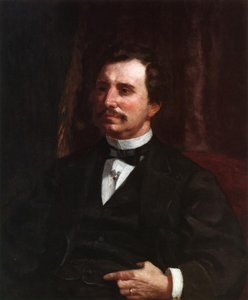
Pierre-Auguste Renoir captivates with "Suzanne Valadon," an Impressionist masterpiece portraying Suzanne Valadon herself—a pioneering artist and model—in exquisite detail. Explore light, color & beauty!
 Afficher la suite
Explorez le monde vibrant de Pierre-Auguste Renoir (1841-1919), un peintre impressionniste majeur, célébré pour ses portraits lumineux, scènes de vie parisienne et la beauté féminine. Découvrez son héritage et les contributions artistiques de sa famille.
Giclées et impressions d'art
Impressions giclées ou sur toile de qualité musée, avec une production rapide et des finitions au choix. ( Acheter la peinture faite à la main Passer au format image numérique)




P118B €10

P118H €10

P118W €10

P438Z €10

P508JH €12

P508YH €12

P805H €10

P805Z €10

P919BZ €10

P919G €10

P919XJ €10

P959ZH €10

P968JZ €12

W106C €8

W218G €10

W218JH €8

W218Y €10

W307PJ €10

W316G €10

W316PJ €8

W316Y €10

W398PJ €8

W4111J €10

W500HY €15

W500JH €15

W692G €12

W849H €8

W940BG €15

W953PJ €8




Format standard
personnalisé
CM
INCH
Choisissez parmi nos formats prédéfinis qui respectent les proportions originales de l’œuvre.
Loading sizes...

largeur
hauteur
Saisissez la largeur et la hauteur souhaitées pour qu'elles s'adaptent à votre cadre ou à votre mur. Une impression ne peut être que découpée, elle ne peut jamais être agrandie au-delà de l'image originale ; ainsi, un format de forme différente entraînera la perte d'une partie de l'image. Nous vous envoyons une maquette numérique pour approbation avant toute impression. L'image présentée sur cette page ne montre pas le recadrage réel — seule la maquette le permet.
Livraison dans le monde entier () en 2 semaines au lieu des 4/5 semaines habituelles. (22 octobre)

Livraison express gratuite dans le monde entier

Toile de lin de haute qualité

Assurance transport complète

Garantie de remboursement des droits de douane

Garantie de fidélité des couleurs

Garantie de retour de 100 jours (uniquement en cas de défaut)

Garantie de remboursement à 100%

Tarifs dégressifs sur quantité
 L'option verre n'est disponible que pour les dimensions inférieures à 110 cm.

Suzanne Valadon
Giclées et impressions d'art
Format de la reproduction
-


Prix total final
€ 61
Suzanne Valadon : A Portrait of Quiet Elegance Illuminated by Renoir’s Impressionistic Touch
Pierre-Auguste Renoir's Suzanne Valadon stands as a cornerstone of Impressionist art—a testament to Renoir’s masterful manipulation of light and color, capturing not just an image but also a fleeting moment of serene contemplation. Painted in 1885, this oil on canvas depicts Suzanne Valadon, a celebrated French artist and model who graced the studios of numerous prominent artists, including Henri de Toulouse-Lautrec, cementing her place as a pivotal figure in the artistic landscape of Belle Époque Paris. The painting itself presents Valadon with dark hair elegantly styled into a ponytail, adorned by a black dress that exudes understated sophistication. More than just a visual representation, it’s an embodiment of Renoir's signature style—a deliberate choice to prioritize atmosphere and emotion over precise detail.Impressionism: Capturing the Ephemeral Beauty of Light
Renoir’s approach to painting aligns perfectly with the core tenets of Impressionism, a movement that revolutionized artistic expression in France during the late 1860s and 1870s. Rejecting the academic conventions of realism prevalent at the time—characterized by meticulous shading and idealized forms—Impressionists sought instead to depict the sensory experience of observing the world around them. Artists like Monet, Sisley, and Renoir prioritized capturing the transient effects of light on surfaces, striving to convey not what they *saw*, but how it *felt*. This pursuit is vividly realized in Suzanne Valadon where Renoir employs loose brushstrokes and vibrant hues—primarily yellows and greens—to imbue the scene with warmth and vitality. The dappled light filtering through foliage subtly illuminates Valadon’s face and dress, creating an illusion of depth and enhancing the painting's overall luminosity.Technique and Composition: Renoir’s Delicate Hand
Renoir’s technique is notable for its subtlety and precision—a hallmark of his artistic prowess. He meticulously blended pigments on the canvas, layering thin washes of color to achieve a luminous surface texture. The brushstrokes are deliberately soft and diffused, avoiding harsh lines that would detract from the painting's ethereal quality. Furthermore, Renoir’s compositional choices contribute significantly to the artwork’s impact. Positioning Valadon slightly off-center creates visual balance while drawing the viewer’s eye towards her gaze—a gesture of quiet confidence and introspection. The inclusion of a dark dress provides a striking contrast against the brighter hues of the background, emphasizing Valadon's figure and reinforcing the painting’s mood of elegance and tranquility.Symbolism and Context: Valadon as Muse
Beyond its aesthetic qualities, Suzanne Valadon holds symbolic significance within the broader context of Impressionist art and Parisian society. Suzanne Valadon herself was a trailblazing figure—a woman artist who defied societal expectations by pursuing her artistic ambitions openly. Her willingness to pose for renowned artists like Toulouse-Lautrec and Renoir challenged conventional notions of femininity and creativity, establishing her as an icon of female empowerment during the era. The painting serves as a reminder that beauty can be found in simplicity and quiet contemplation—values championed by Impressionists who sought to capture the essence of human experience through luminous color palettes and evocative brushwork.A Legacy Illuminated: Valadon’s Influence on Art History
Renoir's Suzanne Valadon continues to inspire artists and collectors alike—a testament to its enduring artistic merit. Its masterful depiction of light and color exemplifies the Impressionist ideal—and it stands alongside other masterpieces by Renoir such as La Parisienne, demonstrating Renoir’s unwavering commitment to capturing the beauty of everyday life and elevating portraiture to new heights. For those eager to delve deeper into Impressionism and art history, exploring Suzanne Valadon alongside other iconic artworks—including La Loge and Fruits from the Midi—offers a captivating journey into the artistic spirit of Belle Époque Paris. Further information about Renoir and his stylistic innovations can be found on Wikipedia.Questions et réponses
Quelle atmosphère «Suzanne Valadon» de Pierre-Auguste Renoir apporte-t-il à un intérieur ?
L'atmosphère Élégance classique de «Suzanne Valadon» de Pierre-Auguste Renoir s'accorde parfaitement avec l'espace recommandé : un(e) Salon.
Quelle pièce s'accorde avec les couleurs de «Suzanne Valadon» de Pierre-Auguste Renoir ?
Compte tenu de ses couleurs Sombre et profond, « Suzanne Valadon » est suggéré pour une Salon.
Est-ce que «Suzanne Valadon» de Pierre-Auguste Renoir est dans le domaine public ?
«Suzanne Valadon» de Pierre-Auguste Renoir est dans le dans le domaine public - ses droits d'auteur ont expiré. Ce statut régit les modalités de reproduction de l'image de l'œuvre.
Œuvres similaires


Biographie de l'artiste
jeunesse et carrière
pierre-auguste renoir, un artiste français essentiel, est né le 25 février 1841 à Limoges, en France. Il a joué un rôle crucial dans la formation du mouvement impressionniste, réputé pour sa lumière vibrante et ses couleurs saturées. L'œuvre de Renoir célébrait la beauté, en particulier la sensualité féminine, le plaçant dans une lignée d'artistes allant de Rubens à Watteau.héritage artistique
L'héritage de Renoir s'est étendu au-delà de ses toiles, en tant que patriarche d'une famille où l'art prospérait sous diverses formes. Ses enfants, pierre renoir (1885–1952), le cinéaste jean renoir (1894–1979) et l'artiste céramiste claude renoir (1901–1969), ont chacun apporté des contributions significatives dans leurs domaines respectifs. Son petit-fils, le cinéaste claude renoir (1913–1993), a davantage fait progresser l'héritage artistique de la famille.œuvres notables et musées
* la danse à Bougival, une peinture notable de Renoir, illustre sa maîtrise de la capture de l'essence de l'art impressionniste. * Le musée des collettes, situé à Cagnes-sur-Mer, en France, est une destination incontournable pour les amateurs d'art. Ce musée, autrefois la maison de pierre-auguste renoir, témoigne de sa vie et de son œuvre, abritant quinze de ses peintures. * Le musée maurice denis, une autre perle cachée en France, présente une impressionnante collection de peintures post-impressionnistes françaises du XIXe et début du XXe siècle.explorez l'art de Renoir avec TopImpressionists
- découvrez le charme du musée des collettes (France) et de son art impressionniste sur TopImpressionists : [https://TopImpressionists.com/@@/a@d3aupf](https://TopImpressionists.com/@@/a@d3aupf)
- explorez les merveilles du musée maurice denis (France) avec TopImpressionists : /fr/art/show/art-d3aue3-fr/
- visualisez les peintures de Renoir, y compris la danse à Bougival, sur TopImpressionists : [https://TopImpressionists.com/@/pierre-auguste renoir](https://TopImpressionists.com/@/pierre-auguste%20renoir)

Pierre-Auguste Renoir
1841 - 1919 , France
En bref
- Artistes Influents:
- Rubens
- Watteau
- Camille Pissarro
- Édouard Manet
- Date De Décès: 3 décembre 1919
- Date De Naissance: 25 février 1841
- Influences Artistiques:
- Impressionnisme
- Post-impressionnisme
- Lieu De Naissance: Limoges, France
- Mouvement Artistique: Impressionnisme
- Nationalité: Française
- Nom Complet: Pierre-Auguste Renoir
- Oeuvres Notables:
- La Danse à Bougival
- Le Déjeuner des canotiers
- Bal au moulin de la Galette
- Après le bain
Articles connexes

L’Épopée de l’Art : Des Fondements Médiévaux à la Modernité Contemporaine
Explorez l'épopée des chefs-d'œuvre, de la Préhistoire à l'art moderne. Plongez dans cette fresque historique passionnante dès maintenant.
Explorez des œuvres d'art classées par thèmes, styles et caractéristiques.


