Aperçu en situation
 Envoyer
 Partager
 Détails de l'œuvre
 Guide
Guide

 Télécharger l'image
 Articles similaires
 Radiographie
 Diaporama
 Statistiques
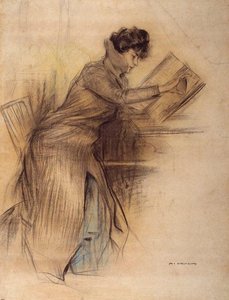
Julia
 Oil On Canvas
- WallArt
- Modernisme
 19th Century
 67.0 x 85.0 cm
 Musée Carmen Thyssen de Málaga
Discover Ramon Casas’ captivating portrait of Julia, a stunning example of Spanish Modernisme. Explore its vibrant colors, provocative pose & artistic influences.
 Lire la suite
Découvrez Ramon Casas i Carbó (1866-1932), artiste catalan majeur du Modernisme ! Portraits, scènes de genre & vie espagnole capturées avec réalisme et impressionnisme.
Giclées et impressions d'art
Impressions giclées ou sur toile de qualité musée, avec une production rapide et des finitions au choix. ( Commander la reproduction peinte à la main Passer au format numérique)




P118B €10

P118H €10

P118W €10

P438Z €10

P508JH €12

P508YH €12

P805H €10

P805Z €10

P919BZ €10

P919G €10

P919XJ €10

P959ZH €10

P968JZ €12

W106C €8

W218G €10

W218JH €8

W218Y €10

W307PJ €10

W316G €10

W316PJ €8

W316Y €10

W398PJ €8

W4111J €10

W500HY €15

W500JH €15

W692G €12

W849H €8

W940BG €15

W953PJ €8




Format standard
sur mesure
CM
INCH
Choisissez parmi nos formats prédéfinis qui respectent les proportions originales de l’œuvre.
Loading sizes...

largeur
hauteur
Saisissez la largeur et la hauteur souhaitées pour qu'elles s'adaptent à votre cadre ou à votre mur. Une impression peut être recadrée, mais jamais agrandie au-delà de l'image originale ; ainsi, un format de forme différente entraînera la perte d'une partie de l'image. Nous vous envoyons une maquette numérique pour approbation avant toute impression. L'image présentée sur cette page ne montre pas le recadrage réel — seule la maquette le permet.
Livraison dans le monde entier () en 2 semaines au lieu des 4/5 semaines habituelles. (26 octobre)

Livraison express gratuite dans le monde entier

Toile de lin de qualité supérieure

Assurance transport complète

Garantie de remboursement des droits de douane

Garantie de fidélité des couleurs

Politique de retour de 100 jours (uniquement en cas de défaut)

Garantie de remboursement à 100%

Offre de tarifs dégressifs
 L'option verre n'est disponible que pour les dimensions inférieures à 110 cm.

Julia
Giclées et impressions d'art
Format de la reproduction
-


Prix total
€ 61
A Vision of Spanish Spirit: The Captivating Presence of Julia
In the storied annals of Catalan Modernisme, few portraits possess the magnetic vitality found in Ramon Casas i Carbó’s Julia. This masterpiece is far more than a mere likeness; it is a profound encounter with a woman who embodied both personal passion and cultural archetype. The subject, Julia Peraire, was not just a frequent model for Casas but his lifelong companion, a woman whose beauty and spirited nature left an indelible mark on the artist's soul. In this particular work, Casas captures her in a pose that is simultaneously defiant and alluring, seated with hands resting upon her hips in a manner that commands the viewer's immediate attention. The painting breathes with the energy of a bygone era, inviting us into a moment where personal intimacy meets the grand theatricality of Spanish tradition.
The brilliance of the composition lies in its masterful use of color and the striking espagnolade aesthetic. Casas dresses Julia in the iconic attire of a matador, featuring a vibrant red jacket intricately embroidered with black thread and silver accents. This choice of costume is not accidental; it serves to connect the sitter to the broader cultural identity of Spain, blending the sensual allure of the female form with the rugged, heroic symbols of Spanish folk tradition. The rich, saturated reds of her jacket harmonize exquisitely with the floral elements in her hair and the delicate comb, creating a visual rhythm that guides the eye across the canvas. Against a muted, atmospheric background that recedes into soft shadows, the subject emerges with a luminous clarity, making the painting an ideal focal point for any sophisticated interior.
Technique and the Mastery of Light
To behold Julia is to witness the technical prowess of a painter who could seamlessly bridge the gap between the precision of Realism and the emotive fluidity of Impressionism. Casas employs a layered oil technique, utilizing subtle glazes to achieve a breathtaking luminosity within the skin tones and the metallic sheen of the embroidery. The brushwork is deliberate yet expressive; while the contours of Julia’s face and the structural details of her jacket are rendered with academic rigor, there is an underlying softness in the textures of her hair and the surrounding atmosphere that prevents the work from feeling static. This interplay between sharp detail and soft, diffused light creates a sense of three-dimensional depth, pulling the viewer into the very space Julia occupies.
For the discerning collector or interior designer, this reproduction offers an unparalleled opportunity to introduce a sense of historical grandeur and emotional warmth into a living space. The painting’s ability to evoke both strength and vulnerability makes it a versatile piece of art, capable of anchoring a room with its bold color palette while providing a sophisticated narrative element. It is a work that does not merely decorate a wall but tells a story of love, identity, and the enduring beauty of the human spirit, making it a timeless investment for those who appreciate the profound legacy of the Modernisme movement.
Questions et réponses
Un téléchargement en haute résolution de « Julia » est-il disponible ?
Une version numérique de «Julia» de Ramon Casas i Carbó est disponible à l'achat sur sa page Image numérique haute résolution : téléchargement d'une image numérique haute résolution.
À quelle occasion «Julia» de Ramon Casas i Carbó est-il recommandé d'offrir ?
«Julia» de Ramon Casas i Carbó est recommandé comme cadeau pour Anniversary. Une reproduction de l'œuvre peut être offerte en guise de présent.
Comment « Julia » s'inscrit-il dans les thèmes et le style de Ramon Casas i Carbó ?
«Julia» s'inscrit dans l'œuvre Modernisme de Ramon Casas i Carbó, dont les thèmes récurrents incluent spanish identity, vibrant culture, erotic allure, social commentary, lottery vendor, everyday beauty.
Biographie de l'artiste
Ramon Casas i Carbó (1866-1932) : Une Vie Dédiée à l'Art Catalan
Ramon Casas i Carbó, né le 4 janvier 1866 à Barcelone et décédé en 1932, est une figure emblématique du Modernisme catalan. Son parcours artistique, marqué par un talent précoce et une grande diversité d’expression, a laissé une empreinte durable sur l'art espagnol de la fin du XIXe siècle et du début du XXe siècle.
Jeunesse, Formation et Premières Œuvres
Issu d'une famille aisée – son père avait amassé une fortune à Cuba – Ramon Casas abandonne rapidement les études traditionnelles pour se consacrer pleinement à l’art. En 1877, il entre dans l'atelier de Joan Vicens, où il reçoit sa première formation artistique. Ses premières œuvres se distinguent par des portraits et des caricatures satiriques de l'élite catalane, espagnole et française. Il démontre très tôt un sens aigu de l’observation et une capacité à capturer la personnalité de ses sujets. Parmi ses premiers succès notables figurent :
- Self-portrait as a Flamenco Dancer (1883): Cette œuvre audacieuse lui vaut une invitation prestigieuse à rejoindre la Societé d'Artistes Français.
- Corrida de Toros (1884) : Un tableau saisissant qui témoigne de sa maîtrise des scènes de foule et de son talent pour rendre l’atmosphère électrique d’une corrida.
L'Évolution Artistique et les Collaborations
Au fil des années, le style de Casas évolue, s'enrichissant d'influences impressionnistes et réalistes. Son œuvre se diversifie, explorant des thèmes variés tels que la vie quotidienne, les paysages catalans et les portraits de personnalités artistiques. Il voyage en France et collabore étroitement avec Santiago Rusiñol, partageant avec lui une passion pour l'exploration de la Catalogne et de ses traditions. Ces voyages et collaborations contribuent à affiner son style et à élargir sa perspective artistique.
- Intérieur du Moulin de la Galette (1891) : Cette œuvre, exposée à l’Exposition Internationale de Berlin, lui vaut une médaille et témoigne de sa progression artistique.
- Collaborations avec Santiago Rusiñol: Ces voyages en Catalogne ont été cruciaux pour son développement artistique.
Influences, Style et Reconnaissance
L'œuvre de Ramon Casas est influencée par le réalisme, l’impressionnisme et les idéaux du Modernisme catalan. Il se distingue par une palette de couleurs vives, un dessin précis et une composition dynamique. Son style unique combine des éléments réalistes avec une sensibilité impressionniste, créant ainsi des œuvres à la fois expressives et captivantes. Il est reconnu pour sa capacité à saisir l'essence d'une époque et à rendre hommage à la culture catalane.
- Influences: Réalisme, Impressionnisme, Modernisme Catalan
- Style: Palette de couleurs vives, dessin précis, composition dynamique
Héritage et Présence Muséale
Ramon Casas i Carbó laisse derrière lui un héritage artistique riche et varié. Ses œuvres sont aujourd'hui exposées dans des musées prestigieux à travers l’Espagne et le monde. Le Cau Ferrat Museum (Sitges) possède une collection importante de ses peintures, dont Female Nude et Nude with a Guitar. Le Museu d'Art Contemporani (Barcelone) présente également des œuvres significatives de l’artiste, témoignant de son importance dans l'histoire de l'art contemporain catalan.
Son œuvre continue d'inspirer les artistes et les amateurs d'art du monde entier, consolidant sa place parmi les figures majeures du Modernisme espagnol. Pour en savoir plus sur Ramon Casas i Carbó, vous pouvez consulter :

Ramon Casas i Carbó
1866 - 1932 , Espagne
L'essentiel de l'artiste
- Date De Naissance: 4 janvier 1866
- Lieu De Naissance: Barcelone, Espagne
- Mouvement Artistique: Modernisme catalan
- Nationalité: Espagnole
- Nom Complet: Ramon Casas i Carbó
- Oeuvres Notables:
- Autoportrait de danseur flamenco
- Corrida de toros
- Intérieur du moulin de la galette
- Portrait de M. Domínguez
- Isaac Albéniz
Articles connexes

Crimson Threads of Narrative: Exploring Symbolism & Representation in Artworks Featuring the Red Dress
Explore the rich symbolism of the red dress in art history! From ancient power displays to iconic portraits like Cézanne’s 'Madame Cezanne', discover the cultural and artistic significance behind this captivating color. Expert analysis & insights.

Rafael de Penagos: A Study in Spanish Portraiture & Artistic Identity
Explore the life & art of Rafael de Penagos, a leading Spanish Art Deco illustrator. Discover his iconic 'Penagos Woman', commercial work, and lasting legacy. Learn about this pivotal figure in 20th-century Spanish art history.

The Golden Age Reforged: Dramatic Realism & Religious Zeal in Spanish Baroque Art
Explore the dramatic world of Spanish Baroque art! Discover masters like Zurbarán & the powerful influence of religious zeal on painting techniques – a guide for collectors and enthusiasts.

Les 10 Chefs-d'œuvre du XIXe Siècle : Artistes et Décor Intemporels
Plongez au cœur du XIXe siècle avec les 10 œuvres incontournables de Manet, Monet et Renoir. Découvrez l'histoire, les techniques et l'émotion derrière ces chefs-d'œuvre impressionnistes et réalistes. Trouvez votre reproduction idéale sur TopImpressionists.com !

Josep Cusachs i: Exploring Catalan Modernism Through Social Commentary & Artistic Innovation
Explore the captivating world of Josep Cusachs i, a key figure in Catalan Modernism. Discover his realist paintings, social commentary, and influence on 19th-century Spanish art. Hand-painted reproductions available at TopImpressionists.
Explorez des œuvres d'art classées par thèmes, styles et caractéristiques.