


 Aperçu en situation
 Partager
 Partager
 Détails
 Guide imprimable

 Télécharger
 Articles similaires
 Radiographie
 Voir le diaporama
 Statistiques
Self Portrait
 Oil On Canvas
- WallArt
- Post-Impressionism
 1899
1899- 19th Century
 33.0 x 41.0 cm
A striking post-impressionist self portrait by Raoul Dufy captures a serious man in a red bow tie with vibrant oil textures, offering a unique opportunity to bring this piece of French art history into your collection.
 Afficher la suite
Découvrez Raoul Dufy (1877-1953), peintre fauviste français aux couleurs vibrantes ! Explorez ses paysages, scènes de loisirs & son influence sur l'art textile. #Dufy #Fauvisme #ArtFrançais
Giclées et impressions d'art
Impressions giclées ou sur toile de qualité musée, avec une production rapide et des finitions au choix. ( Acheter la peinture faite à la main Passer au format image numérique)




P118B €10

P118H €10

P118W €10

P438Z €10

P508JH €12

P508YH €12

P805H €10

P805Z €10

P919BZ €10

P919G €10

P919XJ €10

P959ZH €10

P968JZ €12

W106C €8

W218G €10

W218JH €8

W218Y €10

W307PJ €10

W316G €10

W316PJ €8

W316Y €10

W398PJ €8

W4111J €10

W500HY €15

W500JH €15

W692G €12

W849H €8

W940BG €15

W953PJ €8




Format standard
personnalisé
CM
INCH
Choisissez parmi nos formats prédéfinis qui respectent les proportions originales de l’œuvre.
Loading sizes...

largeur
hauteur
Saisissez la largeur et la hauteur souhaitées pour qu'elles s'adaptent à votre cadre ou à votre mur. Une impression ne peut être que découpée, elle ne peut jamais être agrandie au-delà de l'image originale ; ainsi, un format de forme différente entraînera la perte d'une partie de l'image. Nous vous envoyons une maquette numérique pour approbation avant toute impression. L'image présentée sur cette page ne montre pas le recadrage réel — seule la maquette le permet.
Livraison dans le monde entier () en 2 semaines au lieu des 4/5 semaines habituelles. (24 octobre)

Livraison express gratuite dans le monde entier

Toile de lin de haute qualité

Assurance transport complète

Garantie de remboursement des droits de douane

Garantie de fidélité des couleurs

Garantie de retour de 100 jours (uniquement en cas de défaut)

Garantie de remboursement à 100%

Tarifs dégressifs sur quantité
 L'option verre n'est disponible que pour les dimensions inférieures à 110 cm.

Self Portrait
Giclées et impressions d'art
Format de la reproduction
-


Prix total final
€ 61
A Moment Captured in Time: The Introspection of Raoul Dufy
In the quiet, contemplative moments before his brush became a conduit for the exuberant colors of Fauvism, Raoul Dufy captured a profound sense of self through his Self Portrait. Painted in 1899, this work serves as a poignant window into the artist's early psyche, long before he became the master of light and joyful French landscapes. The portrait presents a man poised in a moment of deep thought, his gaze averted from the viewer as if lost in an internal dialogue or observing something unseen beyond the frame. Clad in a formal suit jacket and a striking red bow tie, the subject possesses a certain gravity, a seriousness that hints at the burgeoning talent and the intense dedication required to navigate the competitive art world of late 19th-century France.
The technique employed in this oil on canvas reflects the rich, tactile traditions of the era. Even in this early stage of his career, one can sense the influence of the Impressionist masters, with a deliberate use of texture to create depth and presence. The way the light catches the fabric of his attire and the subtle shadows contouring his face suggests a mastery of form that would later evolve into his signature decorative style. There is a weight to the colors here—a richness that anchors the subject within the composition, providing a sense of permanence and dignity that makes the piece feel both intimate and monumental.
The Prelude to Vibrancy: Style and Historical Context
To look upon this 1899 masterpiece is to witness the genesis of a legend. At the time of this painting, Dufy was still deeply immersed in the academic foundations of Le Havre and the burgeoning influences of Montmartre. While his later works would dance with the wild, uninhibited hues of Fauvism, this self-portrait retains a more somber, post-impressionist restraint. It is a study in character rather than a celebration of spectacle. The artist uses a palette that, while grounded, prepares the eye for the chromatic revolutions to come, using contrast and tonal shifts to direct the viewer's emotion toward the subject's contemplative state.
For collectors and interior designers, this piece offers a unique opportunity to possess a foundational moment in art history. It provides a sophisticated anchor for a room, offering a sense of intellectual depth and historical weight. Unlike more boisterous works, this portrait invites quiet observation, making it an ideal centerpiece for a study, a library, or a formal sitting area where conversation and reflection are encouraged. The subtle tension between the man's formal attire and his wandering gaze creates a narrative mystery that continues to captivate anyone who lingers before its canvas.
An Invitation to Elegance
Bringing a high-quality reproduction of this Self Portrait into a home or gallery space is more than an act of decoration; it is an act of curation. It allows the timeless elegance of Dufy’s early period to breathe within a modern setting, bridging the gap between the turn of the century and the contemporary era. The painting's ability to evoke emotion—ranging from a sense of nostalgic melancholy to a profound respect for the artist's journey—makes it a versatile and powerful addition to any curated collection.
Whether you are an art enthusiast seeking to connect with the roots of French modernism or a designer looking for a piece that embodies serious, classical beauty, this work stands as a testament to the enduring power of the human spirit captured through paint. It remains a soulful, evocative masterpiece that promises to inspire awe and contemplation for generations to come.
Questions et réponses
Quel artiste et quel style se cachent derrière « Self Portrait » ?
Derrière « Self Portrait » se trouvent Raoul Dufy et le mouvement Post-Impressionism.
Quelle est l'intensité des couleurs de "Self Portrait" ?
La couleur de « Self Portrait » présente une saturation de Balanced Soft et une intensité de Balanced.
Quels sont les pseudonymes ou autres noms sous lesquels Raoul Dufy est connu ?
Raoul Dufy apparaît sous les noms alternatifs Dufy.


Biographie de l'artiste
Premières années et formation
Raoul Dufy, peintre fauviste français, est né le 3 juin 1877 à Le Havre, en Normandie. Il quitte l'école à l'âge de quatorze ans pour travailler dans une société d'importation de café. En 1895, il commence à suivre des cours du soir d'art au Havre, à l’École des beaux-arts, où il rencontre Raimond Lécourt et Othon Friesz, avec qui il partage plus tard un atelier à Montmartre.Évolution artistique et influences
Dufy développe un style décoratif et coloré qui devient populaire pour les designs de céramiques, de textiles et d'édifices publics. Il est influencé par les peintres paysagistes impressionnistes tels que Claude Monet et Camille Pissarro. Son style évolue au fil du temps, passant par le fauvisme puis intégrant des éléments cubistes. Il est également influencé par les arts décoratifs et l'art populaire.Œuvres majeures et collaborations
- Le Pur-sang (45 x 53 cm, art naïf / primitivisme, huile sur toile) est une œuvre notable de Dufy, mettant en valeur son style unique.
- En 1904, il travaille avec Albert Marquet à Fécamp sur la Manche.
- Sa collaboration avec Henri Matisse’s Luxe, Calme et Volupté en 1905 fut une révélation pour le jeune artiste, dirigeant ses intérêts vers le fauvisme.
- Dufy a réalisé de nombreuses commandes importantes, notamment la réalisation d'une immense fresque pour l'Exposition Universelle de Paris en 1937, "La Fée Électricité".
Récompenses et héritage
En 1952, Dufy reçoit le grand prix de peinture à la 26e Biennale de Venise. Son travail peut être trouvé dans divers musées, dont le musée royal collection (Royaume-Uni), qui est l'une des collections d'art les plus vastes et importantes au monde. Il a laissé une œuvre considérable comprenant environ trois mille peintures, six mille aquarelles, quatre mille grands dessins, quinze cents projets textiles, gravures, bois gravés et même tapisseries.Décès et postérité
La santé de Dufy s'est détériorée en raison de l'arthrite rhumatoïde, et il est décédé le 23 mars 1953 à Forcalquier, France. Il a été enterré près de Matisse dans le cimetière du monastère de Cimiez, une banlieue de Nice. Son œuvre continue d’être célébrée pour sa joie de vivre, ses couleurs vibrantes et son style décoratif unique qui a influencé l'art moderne et les arts appliqués.
Raoul Dufy
1877 - 1953 , France
En bref
- Artistes Influents:
- Claude Monet
- Camille Pissarro
- Henri Matisse
- Date De Décès: 23 mars 1953
- Date De Naissance: 3 juin 1877
- Influences Artistiques: Fauvisme, Impressionnisme
- Lieu De Naissance: Le Havre, France
- Mouvement Artistique: Fauvisme
- Nationalité: Française
- Nom Complet: Raoul Dufy
- Œuvres Notables:
- Le Thoroughbred
- La console avec le bol rouge
Articles connexes

Beyond the Light: Discovering the Soul and Emotional Depth of Post-Impressionism
Embark on a cultural journey through Post-Impressionism. Discover the profound emotional depth of masters like Van Gogh and Cézanne, exploring how they moved beyond light to capture the very soul of human experience through vibrant color and symbolic form.

Capturing the Soul: The Ethereal Magic and Timeless Technique of Impressionist Portraiture
Discover the ethereal beauty of Impressionist portraiture. Explore how masters like Monet and Renoir captured light and soul through brushwork, and learn how to bring this timeless magic into your home with exquisite, hand-painted oil reproductions from TopImpressionists.com.
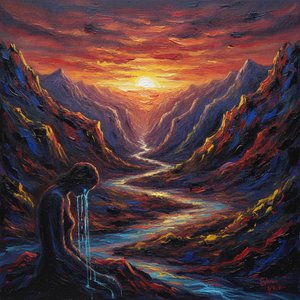
Capturing Emotion: A Journey Through the Soul of Expressionist Landscapes
Explore the profound emotional depth of Expressionist landscapes. Discover how Post-Impressionist masters moved beyond light to capture the soul through vibrant color and form. A curated journey for true art lovers seeking the beauty of expressive mastery.
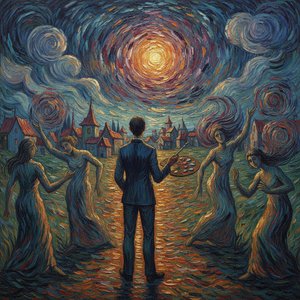
Beyond the Light: Capturing Emotion Through the Expressive Soul of Post-Impressionism
Explore the profound emotional depth of Post-Impressionism. Discover how masters like Van Gogh and Cézanne moved beyond light to capture raw feeling through color and texture. A journey into art history for the true connoisseur.
Explorez des œuvres d'art classées par thèmes, styles et caractéristiques.


