
Shown: · With its frame:
 Aperçu en situation
 Envoyer
 Partager
 Détails de l'œuvre
 Guide
Guide

 Télécharger l'image
 Articles similaires
 Radiographie
 Diaporama
 Q&A
Q&A Statistiques
 Huile sur toile
- Décoration murale
- Baroque Painting
 1643
1643 203.0 x 185.0 cm
 Musée de l'Ermitage
€ 259
Reproduction à l'huile faite à la main
Huile sur toile peinte à la main, avec cadre et dimensions personnalisés, réalisée sur commande par nos artistes. ( Passer au format impression Passer au format numérique)
Size
·Format standard
sur mesure
CM
INCH
Choisissez parmi nos formats prédéfinis qui respectent les proportions originales de l’œuvre.
Loading sizes...

largeur
hauteur
Saisissez la largeur et la hauteur souhaitées, pour s'adapter à votre cadre ou à votre mur. Cette œuvre est peinte à la main ; ainsi, pour un format de forme différente, l'artiste peut peindre un peu plus autour du tableau ou réduire légèrement les bords — c'est vous qui choisissez. Nous vous envoyons une maquette numérique pour approbation avant que la peinture ne commence. L'image présentée sur cette page ne reflète pas le résultat réel — seule la maquette le fait.
 En savoir plus
Finish
·
White €1

Blurside €1

Extended €1

P118B €10

P118H €10

P118W €10

P438Z €10

P508JH €12

P508YH €12

P805H €10

P805Z €10

P919BZ €10

P919G €10

P919XJ €10

P959ZH €10

P968JZ €12

W106C €8

W218G €10

W218JH €8

W218Y €10

W307PJ €10

W316G €10

W316PJ €8

W316Y €10

W398PJ €8

W4111J €10

W500HY €15

W500JH €15

W692G €12

W849H €8

W940BG €15

W953PJ €8

H24-GOLD €30

H24-SILVER €30

H36-GOLD €45

H36-SILVER €45
Shipped in a protective tube, ready for your own framer.
Above 105 cm the frame is shipped as a kit for a professional framer — read the details.
Extras
optionalWhat do the extras include?
Examples of what can be changed: Replace face with customer photo; Add pet (e.g., replace cat with dog); Include hidden message in background; Change background landscape or elements.
After order, TopImpressionists.com team will email client for instructions and provide a mockup preview
After order, TopImpressionists.com team will email client for instructions and provide a mockup preview
Livraison dans le monde entier () en 3 à 4 semaines au lieu des 5 semaines habituelles. (30 octobre). Aucun compromis sur la qualité.
Vernis de protection
Cartel
Détails de la plaque en bronze gravée
This elegant plaque features the artist's name and the title of the artwork, finely engraved for a timeless presentation.
It is made from bronze with a refined, elegant finish. The text is precisely laser-engraved for a sharp and permanent result. Measuring 9x2 cm, the plaque is compact yet easy to read. It's built to be durable and scratch-resistant, offering a professional, museum-quality look. Mounting is simple thanks to the included adhesive backing.
Détails de la plaque en acrylique transparent
The plaque includes essential engraved details such as the artist's name, the title of the artwork, the date it was created, the type of media used-like oil on canvas or watercolor-a brief description of the piece, and a QR code that links to the complete artwork information.
It is crafted from clear acrylic, offering a sleek, modern appearance. The text is UV-engraved in black to ensure strong visual contrast. With a size of 10x15 cm, it ensures optimal readability. It comes equipped with two metal hooks for secure wall mounting. The plaque is designed to be weather-resistant, making it suitable for various environments, and it includes interactive features that work seamlessly with smartphone scanning.
Détails de la plaque en acrylique noir
This elegant plaque includes engraved information such as the artist's name, the title of the artwork, the date it was created, the type of media used (like oil on canvas or watercolor), a short description of the artwork, and a QR code for quick access to more information.
The plaque itself is made from refined black acrylic with a premium finish. The text is laser-engraved in white for high contrast and readability. Its size is 10x15 cm, designed to be easy to read. It comes with two metal hooks for professional mounting. The design is sleek and fits any interior style. It is also weather-resistant and durable, with built-in digital integration for mobile compatibility.
L'option verre n'est disponible que pour les dimensions inférieures à 110 cm.
 L'option verre n'est disponible que pour les dimensions inférieures à 110 cm.
- Livraison express gratuite dans le monde entier
- Toile de lin de qualité supérieure
- Assurance transport complète
- Garantie de remboursement des droits de douane
- Garantie de fidélité des couleurs
- Politique de retour de 100 jours (uniquement en cas de défaut)
- Garantie de remboursement à 100%
- Offre de tarifs dégressifs


Description de la pièce
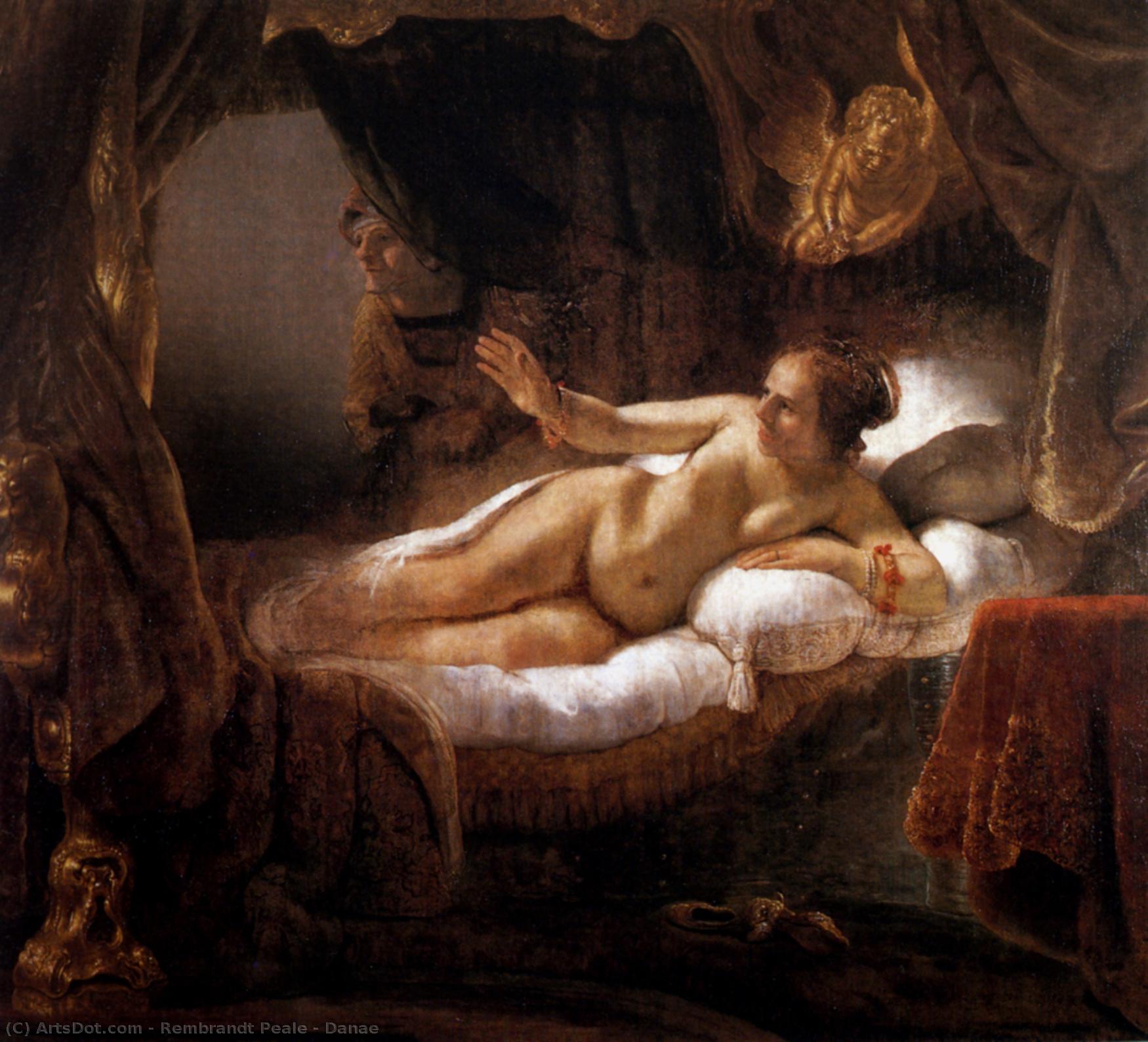
Plongez dans le mystérieux Danaé de Rembrandt Peale ! Cette huile baroque captivante révèle une scène mythologique intense, dominée par la lumière et l'émotion. Découvrez un chef-d’œuvre américain.
Biographie de l'artiste
Découvrez Rembrandt Peale (1778-1860), artiste américain néoclassique célèbre pour ses portraits de Washington et Jefferson ! Explorez son héritage muséal & ses répliques détaillées.
About the painting
Danae : Un Éclat Baroque de Désir et de Divinité
Rembrandt Peale’s “Danaë” – a monumental oil painting completed in 1643 – is far more than a mere depiction of Greek mythology; it's a dramatic exploration of desire, divine intervention, and the vulnerability of womanhood, rendered with the intensity characteristic of the Baroque period. The artwork immediately captivates with its profound chiaroscuro, a masterful manipulation of light and shadow that plunges the scene into an atmosphere of both opulent luxury and unsettling mystery. Peale doesn’t simply illustrate a myth; he constructs a powerful narrative within a richly detailed interior, transporting the viewer to a space brimming with wealth and intrigue.
At the heart of the composition lies Danaë, reclining on a sumptuous bed adorned with pillows and draped in shimmering fabrics. Her nudity, while undeniably provocative, is tempered by a deliberate use of sheer curtains – a strategic device that simultaneously reveals and conceals her form, highlighting both her beauty and the extraordinary event unfolding around her. The golden rain, descending upon her like a celestial blessing (or perhaps a curse), is the painting’s most arresting element. It's not merely paint; it’s an embodiment of Zeus’s divine power, a tangible manifestation of his desire and a potent symbol of both fertility and impending danger. The careful layering of this golden pigment creates an almost luminous effect, drawing the eye directly to Danaë’s face – a face etched with a mixture of apprehension and surrender.
La Technique et le Style Baroque
Peale's mastery is evident in every brushstroke. The impasto technique—the application of thick layers of paint—is particularly pronounced in the drapery and the golden rain, lending a remarkable tactile quality to the work. These textures aren’t simply decorative; they contribute significantly to the painting’s dramatic intensity. The composition itself adheres closely to the principles of Baroque art: a pyramidal structure, with Danaë as its apex, directs the viewer's gaze upwards, emphasizing her centrality and importance within the scene. The use of sharp lines defines the architectural elements – the columns, arches, and furniture – creating a sense of solidity and grandeur that contrasts sharply with the fluidity of the draperies.
Furthermore, Peale’s attention to detail is astonishing. The ornate furnishings, the patterned textiles, even the subtle expressions on the figures' faces are rendered with meticulous precision. This commitment to realism, combined with a heightened sense of drama and emotion, firmly places “Danaë” within the Baroque tradition – an era characterized by its theatricality, emotional intensity, and skillful use of light and shadow. The flattened perspective, prioritizing emotional impact over strict adherence to Renaissance principles, further enhances this dramatic effect.
Symbolisme et Contexte Historique
Beyond its immediate visual appeal, “Danaë” is rich in symbolic meaning. The myth itself speaks to the complexities of desire, power, and fate. Zeus, disguised as golden rain, represents divine intervention – a force beyond human control that disrupts the natural order. Danaë’s vulnerability highlights the precariousness of her position, caught between her own desires and the overwhelming power of the gods. The painting was created during a period of intense religious and political upheaval in Europe, and it reflects these anxieties through its exploration of themes of transgression, divine judgment, and the consequences of unchecked desire.
Moreover, “Danaë” offers a fascinating glimpse into the artistic and cultural landscape of early America. Rembrandt Peale was part of a vibrant artistic community centered around Charles Willson Peale’s museum in Philadelphia – a pioneering institution that played a crucial role in shaping American identity. The painting's creation coincided with a growing interest in classical mythology and art, reflecting a broader European trend but also demonstrating the burgeoning confidence and ambition of American artists at the time. The work stands as a testament to Peale’s skill and his contribution to establishing a distinctly American style within the Baroque tradition.
Répliques et Intérieurs
TopImpressionists offers meticulously crafted hand-painted reproductions of “Danae” in various sizes, allowing you to bring this iconic masterpiece into your home or office. Each reproduction is created using archival-quality materials and techniques, ensuring that it faithfully captures the original’s rich colors, dramatic lighting, and intricate details. Whether you're an art enthusiast, a collector, or simply seeking a stunning piece of décor, a TopImpressionists reproduction of “Danae” will serve as a timeless reminder of the power and beauty of Baroque art.
Questions et réponses
Où puis-je voir un aperçu de « Danae » ?
Un aperçu de «Danae» de Rembrandt Peale est disponible sur la page Aperçu en situation de l'œuvre.
Qui est l'auteur de « Danae » et en quelle année a-t-elle été créée ?
L'œuvre « Danae » est signée Rembrandt Peale et date de 1643.
Quelle intensité lumineuse les couleurs de "Danae" semblent-elles refléter ?
«Danae» de Rembrandt Peale présente une luminance de Sombre. La luminance décrit la quantité de lumière que les couleurs semblent réfléchir.
Quick facts and art quiz
About Rembrandt Peale

Rembrandt Peale
1778 - 1860, États-Unis d'Amérique
Biographie de l'artiste
Premières années et formation
Rembrandt Peale, un artiste et conservateur de musée américain, est né le 22 février 1778 dans le comté de Bucks, en Pennsylvanie. Il était le troisième de six enfants survivants de sa mère, Rachel Brewer, et de son père, Charles Willson Peale, un artiste renommé. Le nom de Rembrandt a été inspiré du peintre et graveur néerlandais du XVIIe siècle, Rembrandt Harmenszoon van Rijn. Son père a enseigné à tous ses enfants à peindre des paysages et des portraits, et a formé Rembrandt aux arts et aux sciences.Carrière artistique
Rembrandt Peale a été influencé par le néoclassicisme français après un séjour à Paris au début de la trentaine. Il a commencé à dessiner à l'âge de 8 ans et a terminé son premier autoportrait à 13 ans, ce qui témoigne de sa maîtrise précoce. La carrière prolifique de Peale comprenait plus de 70 répliques détaillées, notamment des portraits des présidents George Washington et Thomas Jefferson.- Œuvres notables :
- George Washington (type sablier) (1795), actuellement à la Galerie nationale des portraits (Londres, Royaume-Uni), [https://TopImpressionists.com/@@/d44spg-rembrandt-peale-george-washington-(porthole-type)](peinture de 'rembrandt peale' | rembrandt peale : george washington (type sablier))
- Homme avec une barbe (sans date), [https://TopImpressionists.com/@@/d329cc-rembrandt-peale-man-with-a-beard](peinture de 'rembrandt peale' | rembrandt peale : homme avec une barbe)
- Portrait du révérend John Pierpont (1785-1866), [https://TopImpressionists.com/@@/d4nqk5-rembrandt-peale-portrait-of-the-rev-john-pierpont-(1785-1866)](peinture de 'rembrandt peale' | rembrandt peale : portrait du révérend john pierpont (1785-1866))
Musée et héritage
Peale a lancé son premier musée à Baltimore, dans le Maryland, le 15 août 1814, qui a ensuite servi de deuxième hôtel de ville de Baltimore et a finalement été restauré en tant que musée Peale. Son héritage continue d'être célébré grâce à ses nombreux portraits, qui font désormais partie de diverses collections muséales, notamment la Galerie nationale des portraits (Washington, États-Unis), [https://TopImpressionists.com/@/rembrandt-peale](artiste : rembrandt peale | 243 œuvres).Conclusion
La carrière prolifique de Rembrandt Peale en tant qu'artiste américain et conservateur de musée a eu un impact durable sur le monde de l'art. Ses nombreux portraits, dont ceux de George Washington et Thomas Jefferson, continuent d'être célébrés pour leur importance historique et leur valeur artistique.Quick facts about Rembrandt Peale
- Artistes Influents:
- Charles Willson Peale
- Benjamin West
- Gilbert Stuart
- Date De Décès: 3 octobre 1860
- Date De Naissance: 22 février 1778
- Lieu De Naissance: Comté de Bucks, États-Unis
- Mouvement Artistique: Néo-classicisme
- Nationalité: Américaine
- Nom Complet: Rembrandt Peale
- Oeuvres Notables:
- George Washington (type hublot)
- Homme avec une barbe
- Portrait du révérend John Pierpont
Explorez des œuvres d'art classées par thèmes, styles et caractéristiques.


Rembrandt Peale
Danae
() ·
With its frame: · Hand-painted in oil on linen
Total