


 Aperçu en situation
 Partager
 Partager
 Détails
 Guide imprimable

 Télécharger
 Articles similaires
 Radiographie
 Voir le diaporama
 Statistiques
The Smithy, Szeliwy, No. 2
 Oil On Canvas
- WallArt
- Impressionism
 1906
1906- Modern
 66.0 x 91.0 cm
Explore Robert Bevan’s ‘The Smithy, Szeliwy, No. 2’ – an early 20th-century oil painting capturing rural life in a vibrant Impressionistic style. Discover its charm & historical significance.
 Afficher la suite
Robert Polhill Bevan (1865-1925) : peintre britannique & fondateur du groupe Camden Town. Pionnier du fauvisme, paysages vibrants et scènes de la vie quotidienne.
Reproduction à l'huile faite à la main
Huile sur toile peinte à la main, avec cadre et dimensions personnalisés, réalisée sur commande par nos artistes. ( Passer au format impression Passer au format image numérique)




P118B €10

P118H €10

P118W €10

P438Z €10

P508JH €12

P508YH €12

P805H €10

P805Z €10

P919BZ €10

P919G €10

P919XJ €10

P959ZH €10

P968JZ €12

W106C €8

W218G €10

W218JH €8

W218Y €10

W307PJ €10

W316G €10

W316PJ €8

W316Y €10

W398PJ €8

W4111J €10

W500HY €15

W500JH €15

W692G €12

W849H €8

W940BG €15

W953PJ €8




Format standard
personnalisé
CM
INCH
Choisissez parmi nos formats prédéfinis qui respectent les proportions originales de l’œuvre.
Loading sizes...

largeur
hauteur
Saisissez la largeur et la hauteur souhaitées, pour s'adapter à votre cadre ou à votre mur. Cette œuvre est peinte à la main ; ainsi, pour un format de forme différente, l'artiste peut peindre un peu plus autour du tableau ou réduire légèrement les bords — c'est vous qui choisissez. Nous vous envoyons une maquette numérique pour approbation avant que la peinture ne commence. L'image présentée sur cette page ne reflète pas le résultat réel — seule la maquette le fait.
Exemples de personnalisation possibles : remplacer un visage par la photo du client ; ajouter un animal de compagnie (par exemple, remplacer un chat par un chien) ; inclure un message caché en arrière-plan ; modifier le paysage ou les éléments de l'arrière-plan.
Après la commande, l’équipe TopImpressionists.com contactera le client par e-mail pour recueillir ses instructions et lui fournira une maquette d’aperçu
Après la commande, l’équipe TopImpressionists.com contactera le client par e-mail pour recueillir ses instructions et lui fournira une maquette d’aperçu
Livraison dans le monde entier () en 3 à 4 semaines au lieu des 5 semaines habituelles. (25 octobre). Aucun compromis sur la qualité.

Livraison express gratuite dans le monde entier

Toile de lin de haute qualité

Assurance transport complète

Garantie de remboursement des droits de douane

Garantie de fidélité des couleurs

Garantie de retour de 100 jours (uniquement en cas de défaut)

Garantie de remboursement à 100%

Tarifs dégressifs sur quantité
 L'option verre n'est disponible que pour les dimensions inférieures à 110 cm.

The Smithy, Szeliwy, No. 2
Technique de reproduction
Format de la reproduction
-


Prix total final
€ 258
A Window into Rural Tranquility
In the quiet corners of the early twentieth century, there existed a profound beauty in the rhythmic simplicity of village life, a sentiment captured with breathtaking tenderness in Robert Polhill Bevan’s 1906 masterpiece, The Smithy, Szeliwy, No. 2. This evocative oil on canvas serves as more than just a depiction of a landscape; it is a portal into a bygone era of communal harmony and pastoral grace. As the viewer gazes upon the scene, they are immediately drawn into a world where time seems to slow, anchored by the presence of horses and the steady, unhurried movement of a horse-drawn carriage. The painting breathes with the life of a small community, presenting a vignette of daily existence that feels both intimately personal and universally nostalgic.
The composition is masterfully orchestrated to guide the eye through a narrative of movement and stillness. In the foreground, the sturdy presence of two horses provides a sense of weight and reality, their forms rendered with a tactile quality that suggests the very strength required for rural labor. As the gaze wanders toward the middle ground, a carriage emerges, acting as a bridge between the figures in the foreground and the architectural heart of the village. This arrangement creates a layered depth that invites the observer to wander through the painting, discovering the subtle interactions between man, beast, and the built environment.
The Impressionistic Soul and Technique
Bevan, a pioneer of British Modernism, utilizes an impressionistic vocabulary to imbue this scene with light and atmosphere. Rather than relying on the rigid precision of academic realism, he employs short, broken brushstrokes that dance across the canvas, building a rich, impasto-like texture. This technique is particularly striking on the roof of the traditional building and the wheels of the cart, where the thick application of paint catches the light, creating a sense of physical presence and luminosity. The artist’s hand is visible in every stroke, lending the work an organic, breathing quality that celebrates the act of creation itself.
The color palette is a warm, soulful embrace of earth tones. Ochres, deep reds, and rich browns dominate the landscape, evoking the sun-drenched dust of a country lane and the weathered wood of farm implements. These warm hues are artfully punctuated by soft greens and muted blues in the foliage and sky, providing a cooling contrast that prevents the composition from feeling heavy. This careful balance of temperature creates a diffused, soft lighting effect, reminiscent of an overcast afternoon where the sun struggles gently to break through the clouds, casting a dreamlike haze over the distant horizon.
A Timeless Legacy for the Modern Collector
Beyond its technical brilliance, The Smithy, Szeliwy, No. 2 carries a profound emotional resonance. It symbolizes a longing for simplicity and a reverence for the enduring cycles of nature and tradition. For the discerning collector or interior designer, this painting offers a sophisticated anchor for any space. Its ability to evoke tranquility makes it an ideal centerpiece for a study, a library, or a living area designed for reflection. The artwork does not merely decorate a wall; it transforms an environment, infusing it with a sense of history and a quiet, dignified warmth.
Whether one is drawn to the historical significance of Bevan’s role in the transition toward modernism or simply captivated by the pastoral charm of the subject matter, this piece remains a timeless investment. A high-quality reproduction of such a work allows the magic of 1906 to reside within a contemporary home, offering a continuous dialogue between the heritage of British art and the aesthetics of modern living. It is an invitation to pause, to breathe, and to reconnect with the enduring beauty of the everyday.
Questions et réponses
Qu'est-ce qui explique le statut du droit d'auteur de «The Smithy, Szeliwy, No. 2» de Robert Bevan ?
«The Smithy, Szeliwy, No. 2» de Robert Bevan est dans le dans le domaine public - ses droits d'auteur ont expiré. Les droits d'auteur sont calculés à partir de l'année du décès de l'artiste, et Robert Bevan est décédé en 1925.
De quelle période historique date «The Smithy, Szeliwy, No. 2» de Robert Bevan ?
«The Smithy, Szeliwy, No. 2» de Robert Bevan date de la période Modern. Cette époque apporte le contexte historique de l'œuvre.
Pour quelle pièce «The Smithy, Szeliwy, No. 2» de Robert Bevan est-elle recommandée, compte tenu de ses couleurs ?
Avec sa palette Dark, «The Smithy, Szeliwy, No. 2» de Robert Bevan est recommandé pour une Coffee Shop. Ses couleurs justifient d'ailleurs cette suggestion.
Œuvres similaires


Biographie de l'artiste
Premières années et formation artistique
- Né : Hove, Royaume-Uni (1865)
- Décédé : 1925
- Origines familiales : Robert Polhill Bevan est né dans une famille quaker ayant des liens avec la banque. Ses parents étaient Richard Alexander Bevan et Laura Maria Polhill.
- Première éducation : Il a étudié à l'école d'art de Westminster sous la direction de Fred Brown. Plus tard, il a fréquenté l'Académie Julian à Paris où il a rencontré des artistes influents tels que Paul Sérusier, Pierre Bonnard, Édouard Vuillard et Maurice Denis.
- Influence de Bretagne : Ses premiers voyages en Bretagne (1890 et 1891) ont considérablement influencé son développement artistique, notamment grâce à l'exposition au style de Pont-Aven.
Développement artistique et influences
- Style précoce : Le travail précoce de Bevan montrait des influences du synthétisme, évident dans ses dessins et gravures réalisés pendant son séjour en Bretagne.
- Fauvisme : Vers 1904, Bevan a expérimenté avec la couleur pure, démontrant une approche proto-fauve qui précédait de nombreux artistes britanniques à l'époque. Sa peinture "Courtyard" est considérée comme un exemple précoce de ce style.
- Divisionnisme/Pointillisme : Par la suite, il a adopté une technique divisionniste ou pointilliste, comme on le voit dans des œuvres telles que "Ploughing on the Downs" et "The Turn-Rice Plough."
- Influences clés : Les influences significatives comprenaient Paul Gauguin (évident dans son utilisation de la couleur) et les maîtres plus anciens tels que Velázquez et Goya. Il a également reconnu les conseils de Renoir pour dessiner des chevaux.
Appartenance à des groupes artistiques
- Groupe de Camden Town : Bevan était un membre fondateur du Groupe de Camden Town, un collectif d'artistes qui cherchait à dépeindre la vie urbaine moderne.
- London Group : Il a également appartenu au London Group, une autre organisation artistique progressiste.
- Groupe Cumberland Market : Démontrant davantage son engagement envers les mouvements artistiques contemporains, Bevan faisait partie du Groupe Cumberland Market.
- Association avec Walter Sickert : En 1908, il a rejoint le groupe de Fitzroy Street de Walter Sickert, où il a reçu des encouragements à se concentrer sur des sujets quotidiens.
- Allied Artists' Association : Il a participé à la première exposition de l'Association des artistes alliés en 1908, qui a fourni une plateforme aux artistes progressistes et lui a présenté Wassily Kandinsky.
Œuvres majeures et thèmes
- Paysages : Bevan est surtout connu pour ses paysages du Sussex et de la Bretagne, dépeignant souvent des scènes rurales avec des couleurs vibrantes et un travail pictural expressif. Des exemples incluent "In the Downs near Lewes", "The Chestnut Tree" et "Landscape in the Blackdown Hills, Devon".
- Portraits : Il a créé des portraits, dont une représentation notable de sa femme, Stanislawa Bevan (née de Karłowska).
- Scènes urbaines : Son travail comprenait également des représentations de la vie urbaine, telles que des peintures documentant le déclin du commerce des calèches ("The Cab Horse").
- Peintures notables : Parmi les autres œuvres importantes figurent "Queen's Grove, St John's Wood", "The Farmhouse" et “Rosemary la vallée”.
Héritage et signification historique
- Pionnier de l'art britannique moderne : Robert Polhill Bevan est reconnu comme un pionnier de l'art britannique moderne, en particulier pour son adoption précoce des principes fauves.
- Influence sur l'utilisation de la couleur : Il a été parmi les premiers artistes britanniques à utiliser la couleur pure d'une manière significative, influençant ainsi les générations futures de peintres.
- Contribution au Groupe de Camden Town : Sa participation au Groupe de Camden Town a contribué à façonner le développement de l'art moderne en Grande-Bretagne.
- Exposition rétrospective : Une exposition rétrospective à Colnaghi's en 1961 a mis en évidence ses contributions et a consolidé sa place dans l'histoire de l'art.

Robert Bevan
1865 - 1925 , Royaume-Uni
En bref
- Artistes Influents:
- Paul Gauguin
- Renoir
- Velázquez
- Goya
- Date De Décès: 1925
- Date De Naissance: 1865
- Lieu De Naissance: Hove, Royaume-Uni
- Mouvement Artistique:
- Groupe Camden Town
- Fauvisme
- Pointillisme
- Nationalité: Britannique
- Nom Complet: Robert Polhill Bevan
- Oeuvres Notables:
- Rosemary la vallée
- Paysage dans les Blackdown Hills
- Stanislawa Bevan, née de Karlowska
- Dans les collines près de Lewes
- Le Châtaignier
- Queen's Grove, St John’s Wood
- La Ferme
- L’Arbre à noix
Articles connexes
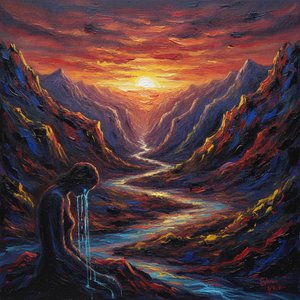
Capturing Emotion: A Journey Through the Soul of Expressionist Landscapes
Explore the profound emotional depth of Expressionist landscapes. Discover how Post-Impressionist masters moved beyond light to capture the soul through vibrant color and form. A curated journey for true art lovers seeking the beauty of expressive mastery.

The Soul of Impressionism: Why Oil on Canvas Captures Eternal Light and Timeless Emotion
Discover the enchanting alchemy of Impressionism. Explore how the mastery of oil on canvas, through glazing and impasto, captures eternal light and emotion. Perfect for lovers of Monet and Van Gogh seeking the profound depth of hand-painted fine art.
Explorez des œuvres d'art classées par thèmes, styles et caractéristiques.


