

 Aperçu en situation
 Envoyer
 Partager
 Détails de l'œuvre
 Guide
Guide

 Télécharger l'image
 Articles similaires
 Radiographie
 Diaporama
 Questions et réponses
 Statistiques
Mrs Livesay


Explore this remarkable portrait by Sir Francis Grant, showcasing Victorian elegance and artistic precision.
 Lire la suite
Découvrez Sir Francis Grant (1803-1878), peintre écossais renommé pour ses portraits de l'aristocratie britannique, dont la reine Victoria. Explorez son art élégant !
Giclées et impressions d'art
Impressions giclées ou sur toile de qualité musée, avec une production rapide et des finitions au choix. ( Commander la reproduction peinte à la main Passer au format numérique)




P118B €10

P118H €10

P118W €10

P438Z €10

P508JH €12

P508YH €12

P805H €10

P805Z €10

P919BZ €10

P919G €10

P919XJ €10

P959ZH €10

P968JZ €12

W106C €8

W218G €10

W218JH €8

W218Y €10

W307PJ €10

W316G €10

W316PJ €8

W316Y €10

W398PJ €8

W4111J €10

W500HY €15

W500JH €15

W692G €12

W849H €8

W940BG €15

W953PJ €8




Format standard
sur mesure
CM
INCH
Choisissez parmi nos formats prédéfinis qui respectent les proportions originales de l’œuvre.
Loading sizes...

largeur
hauteur
Saisissez la largeur et la hauteur souhaitées pour qu'elles s'adaptent à votre cadre ou à votre mur. Une impression peut être recadrée, mais jamais agrandie au-delà de l'image originale ; ainsi, un format de forme différente entraînera la perte d'une partie de l'image. Nous vous envoyons une maquette numérique pour approbation avant toute impression. L'image présentée sur cette page ne montre pas le recadrage réel — seule la maquette le permet.
Livraison dans le monde entier () en 2 semaines au lieu des 4/5 semaines habituelles. (7 novembre)

Livraison express gratuite dans le monde entier

Toile de lin de qualité supérieure

Assurance transport complète

Garantie de remboursement des droits de douane

Garantie de fidélité des couleurs

Politique de retour de 100 jours (uniquement en cas de défaut)

Garantie de remboursement à 100%

Offre de tarifs dégressifs
 L'option verre n'est disponible que pour les dimensions inférieures à 110 cm.

Mrs Livesay
Giclées et impressions d'art
Format de la reproduction
-


Prix total
€ 62
A Portrait of Quiet Dignity
Sir Francis Grant’s 1851 masterpiece, “Mrs Livesay,” serves as a profound testament to the Victorian era's fascination with refined beauty and intellectual depth. In this exquisite oil on canvas, we encounter a woman of considerable social standing, captured in a moment of serene contemplation. Seated beneath the gentle canopy of a blossoming tree, Mrs. Livesay is not merely a subject of a likeness, but an embodiment of contemplative serenity. The painting invites the viewer into her private world, where the rustle of leaves and the turning of a page are the only sounds to break the stillness of a garden setting.
The composition employs a classic three-quarter pose that prioritizes intimacy, drawing the eye directly to the subject's downward gaze. As she holds an open book in her lap, the act of reading becomes a powerful symbol of knowledge, learning, and intellectual refinement. This focus on the internal life of the sitter is beautifully framed by the natural world; the soft, organic shapes of the tree branches overhead create a protective, almost sacred space around her. The subtle recession of the landscape background, rendered in hazy greens and browns, utilizes atmospheric perspective to create a shallow depth of field, ensuring that the viewer's emotional connection remains anchored to the subject herself.
Mastery of Light and Texture
Grant’s technical prowess is on full display through his masterful use of color and light. The palette is elegantly muted, dominated by sophisticated creams, soft blues, and whites in Mrs. Livesay’s attire, which provides a luminous contrast against the bold, rich red drapery upon which she rests. This interplay of tones is further enriched by the artist's ability to manipulate texture through delicate brushwork. One can almost feel the smooth, flowing surface of her dress juxtaposed against the more tactile, textured foliage of the surrounding garden.
The lighting within the piece is soft and diffused, acting as a gentle spotlight that illuminates the most expressive elements of the portrait: Mrs. Livesay's face and hands. This careful attention to light and shadow allows for subtle gradations in skin tone, lending a lifelike realism to her features. For collectors and interior designers alike, this painting offers more than just visual beauty; it provides an atmosphere of grace and tranquility. Whether placed in a sunlit study or a formal drawing room, a high-quality reproduction of “Mrs Livesay” brings with it a sense of historical prestige and a timeless, quiet elegance that resonates deeply within any sophisticated space.
Questions et réponses
Quel âge avait Sir Francis Grant lors de la création de « Mrs Livesay » ?
Sir Francis Grant avait 48 ans lors de la création de « Mrs Livesay » en 1851. L'âge est calculé à partir de l'année de naissance de l'artiste, 1803.
Quelle palette et quelle couleur dominante définissent "Mrs Livesay" ?
«Mrs Livesay» de Sir Francis Grant arbore une palette Earthy, avec le Driftwood (#898157) comme couleur dominante.
Peut-on visionner un diaporama de «Mrs Livesay» de Sir Francis Grant ?
Un diaporama est disponible : la page Diaporama de «Mrs Livesay» de Sir Francis Grant.
Biographie de l'artiste
Sir Francis Grant : Une Vie Dédiée au Portrait et à l'Art Équestre
- Né: 18 janvier 1803, Royaume-Uni
- Décédé: 5 octobre 1878
- Nationalité: Écossais
- Profession: Peintre, Président de la Royal Academy
Jeunesse et Développement Artistique
- Francis Grant est né au sein d'une famille terrienne à Perthshire, en Écosse. Il était le quatrième fils de Francis Grant, Laird de Kilgraston.
- Initialement destiné à une carrière juridique, il a abandonné cette voie pour se consacrer à la peinture, principalement autodidacte.
- Il a brièvement étudié sous la direction d'Alexander Nasmyth à Édimbourg.
- Ses premières œuvres se sont concentrées sur des sujets sportifs, lui valant une reconnaissance et établissant sa réputation.
- Un moment décisif fut son accès au cercle de chasseurs de Melton Mowbray grâce à sa seconde épouse, ce qui a conduit à des leçons avec John Ferneley et un virage vers les scènes équestres et de chasse.
Œuvres Majeures et Style Artistique
- Scènes Sportives Précoces: *Melton Breakfast* (1834), gravé par Charles G. Lewis, a marqué un premier succès. Parmi les autres œuvres notables, on retrouve *The Meeting of His Majesty's Staghounds on Ascot Heath* et *The Melton Hunt*.
- Portraiture: Grant est devenu renommé pour ses portraits de l'aristocratie britannique et de figures politiques, y compris la reine Victoria. Son portrait de Lady Glenlyon (1842) a considérablement renforcé sa réputation.
- Portraits Équestres: Il a peint des portraits équestres de la reine Victoria et du prince Albert pour Christ's Hospital, démontrant son habileté à capturer à la fois les traits et la grandeur de ses sujets à cheval.
- Portraits Notables: Les portraits de la marquise de Waterford, de la marquise de Bristol et de Mme Markham (Daisy Grant) ont été particulièrement acclamés.
- Style: Son style mêlait des influences néoclassiques avec une touche de romantisme, caractérisé par une composition élégante, un éclairage dramatique et des détails riches. Il tempérait l'élégance des portraits de Thomas Lawrence avec la sobriété victorienne.
Présidence de la Royal Academy et Héritage
- En 1866, après le décès de Charles Eastlake, Grant a été élu président de la Royal Academy, un poste prestigieux qu'il a occupé jusqu'à sa mort.
- Il a été anobli peu après son élection à la présidence, reconnaissant ainsi ses contributions significatives au monde de l'art.
- Pendant sa présidence, il a instauré la coutume de la Royal Academy d'organiser des expositions temporaires majeures, élargissant la portée et l'influence de l'Académie.
- Influence: Grant a influencé des artistes ultérieurs tels que Martin Archer Shee et Solomon Alexander Hart.
- Héritage: Sir Francis Grant a laissé un héritage durable en tant qu'un des peintres portraitistes les plus importants de Grande-Bretagne et un leader respecté au sein de la Royal Academy. Ses œuvres sont conservées dans des collections du monde entier, notamment à la Walker Art Gallery de Liverpool.
Signification Historique
- L’œuvre extensive de Grant fournit des aperçus précieux de la société britannique au XIXe siècle, capturant les traits et le statut de figures importantes allant de l'aristocratie à la royauté.
- Sa présidence de la Royal Academy a marqué une période de développement significatif pour l'institution, consolidant son rôle de force centrale dans l'art britannique.
- En tant que portraitiste talentueux et leader, Sir Francis Grant a joué un rôle crucial dans le façonnement du paysage artistique de son époque.

Sir Francis Grant
1803 - 1878 , Royaume-Uni
L'essentiel de l'artiste
- Artistes Influents:
- Alexander Nasmyth
- John Ferneley
- Date De Décès: 5 octobre 1878
- Date De Naissance: 18 janvier 1803
- Influence Sur Les Artistes:
- Martin Archer Shee
- Solomon Alexander Hart
- Lieu De Naissance: Édimbourg, Royaume-Uni
- Mouvement Artistique: Portrait et art sportif
- Nationalité: Écossais
- Nom Complet: Sir Francis Grant
- Oeuvres Notables:
- Melton Breakfast
- Meeting of Staghounds
- Lady Glenlyon
Articles connexes
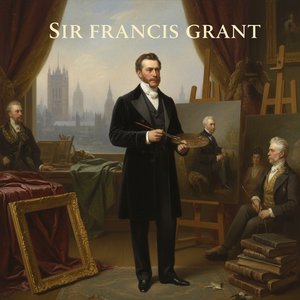
Sir Francis Grant: Portraiture, Patronage & Victorian Society
Explore the life & work of Sir Francis Grant, a leading Victorian portraitist. Discover his aristocratic clientele, role at the Royal Academy, and enduring artistic legacy. Learn about art patronage in 19th-century Britain.

Les 25 chefs-d'œuvre de Sir Joshua Reynolds : l'art du Grand Style
Explorez les 25 chefs-d'œuvre de Sir Joshua Reynolds et le Grand Style. Découvrez ces trésors sur TopImpressionists.com.

Reflections of an Era: Identity & Social Commentary in 19th-Century Portraiture
Explore the captivating world of 19th-century portraiture! Discover key artists, movements like Realism & Impressionism, and the powerful social commentary embedded within these iconic artworks. Expert insights at TopImpressionists.

Les 25 chefs-d'œuvre de Sir Alfred James Munnings : l'âme de la campagne anglaise
Explorez les 25 chefs-d'œuvre de Sir Alfred James Munnings et l'art équestre anglais. Découvrez toute la collection sur TopImpressionists.com.

La puissance brute de la peur : les 25 chefs-d'œuvre de Francis Bacon
Explorez les 25 chefs-d'œuvre viscéraux de Francis Bacon. Trouvez des reproductions d'exception sur TopImpressionists.com.
Explorez des œuvres d'art classées par thèmes, styles et caractéristiques.


