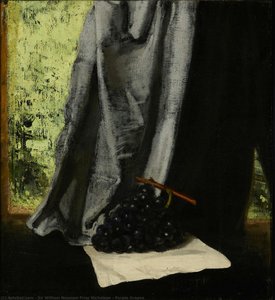
Aperçu en situation
 Partager
 Partager
 Détails
 Guide imprimable

 Télécharger
 Articles similaires
 Radiographie
 Voir le diaporama
 Statistiques
Indian Pinks
 Oil On Canvas
- WallArt
- Impressionism
 1928
1928- Modern
 33.0 x 40.0 cm
Admire Sir William Nicholson’s ‘Indian Pinks’ – an exquisite 1928 Impressionistic still life featuring vibrant florals & impasto texture. A timeless piece of British art.
 Afficher la suite
Découvrez Sir William Nicholson (1872-1949), peintre britannique renommé pour ses portraits saisissants, ses natures mortes élégantes et ses gravures innovantes. Explorez son partenariat Beggarstaff, l'influence de Whistler & son héritage !
Giclées et impressions d'art
Impressions giclées ou sur toile de qualité musée, avec une production rapide et des finitions au choix. ( Acheter la peinture faite à la main Passer au format image numérique)




P118B €10

P118H €10

P118W €10

P438Z €10

P508JH €12

P508YH €12

P805H €10

P805Z €10

P919BZ €10

P919G €10

P919XJ €10

P959ZH €10

P968JZ €12

W106C €8

W218G €10

W218JH €8

W218Y €10

W307PJ €10

W316G €10

W316PJ €8

W316Y €10

W398PJ €8

W4111J €10

W500HY €15

W500JH €15

W692G €12

W849H €8

W940BG €15

W953PJ €8




Format standard
personnalisé
CM
INCH
Choisissez parmi nos formats prédéfinis qui respectent les proportions originales de l’œuvre.
Loading sizes...

largeur
hauteur
Saisissez la largeur et la hauteur souhaitées pour qu'elles s'adaptent à votre cadre ou à votre mur. Une impression ne peut être que découpée, elle ne peut jamais être agrandie au-delà de l'image originale ; ainsi, un format de forme différente entraînera la perte d'une partie de l'image. Nous vous envoyons une maquette numérique pour approbation avant toute impression. L'image présentée sur cette page ne montre pas le recadrage réel — seule la maquette le permet.
Livraison dans le monde entier () en 2 semaines au lieu des 4/5 semaines habituelles. (21 octobre)

Livraison express gratuite dans le monde entier

Toile de lin de haute qualité

Assurance transport complète

Garantie de remboursement des droits de douane

Garantie de fidélité des couleurs

Garantie de retour de 100 jours (uniquement en cas de défaut)

Garantie de remboursement à 100%

Tarifs dégressifs sur quantité
 L'option verre n'est disponible que pour les dimensions inférieures à 110 cm.

Indian Pinks
Giclées et impressions d'art
Format de la reproduction
-


Prix total final
€ 60
A Symphony of Petals and Light
In the quiet intimacy of Sir William Nicholson’s 1928 masterpiece, Indian Pinks, the viewer is invited into a serene domestic sanctuary where time seems to slow. This exquisite still life captures more than just a floral arrangement; it captures a fleeting moment of grace. A vase overflows with the delicate textures of chrysanthemums and asters, their soft hues dancing against the rustic charm of a wooden table. The composition is masterfully balanced, drawing the eye through a rhythmic dance of organic forms—the rounded petals of the flowers contrasted by the humble, grounded presence of a slice of bread and a simple spoon. It is a scene that celebrates the profound beauty found in the commonplace, elevating everyday objects into a poetic meditation on existence.
The painting serves as a breathtaking example of Impressionistic brilliance, where the artist’s hand is visible in every expressive stroke. Nicholson employs a rich, tactile impasto technique, applying oil paints in thick, confident layers that lend the canvas a sculptural quality. This physical depth allows light to play across the surface of the painting, creating subtle shadows and highlights that breathe life into the flora. The palette is a sophisticated blend of muted earth tones and soft floral pigments, evoking a sense of natural warmth. Through this heavy texture, the artist achieves a sensory experience that transcends the visual, making the viewer almost feel the velvety weight of the petals and the rough grain of the wooden tabletop.
The Legacy of British Impressionism
To understand Indian Pinks is to understand the enduring legacy of Sir William Nicholson, a titan of early 20th-century British art. Born in Newark and trained under the watchful eyes of masters like William Cubley, Nicholson developed a style that bridged the gap between classical discipline and modern experimentation. This particular work, dating from 1928, reflects a period of his career where he had mastered the ability to infuse stillness with movement. His background, rooted in both industrial pragmatism and aesthetic tradition, allowed him to approach subject matter with a unique clarity—finding the extraordinary within the ordinary.
For the discerning collector or interior designer, this piece offers an unparalleled opportunity to introduce a sense of timeless elegance into a space. The artwork’s flattened perspective and focus on color saturation make it a versatile centerpiece, capable of anchoring a room with its quiet strength. Whether placed in a sun-drenched morning room or a sophisticated study, the painting radiates an emotional warmth that suggests themes of life, joy, and remembrance. Owning a high-quality reproduction of this work is not merely about decorating a wall; it is about bringing a piece of art history into the home—a tactile, luminous fragment of a bygone era that continues to inspire awe and tranquility.
Questions et réponses
Quelle technique a été utilisée pour « Indian Pinks » et quand a-t-elle été créée ?
«Indian Pinks» a été réalisé en 1928, en Oil On Canvas.
Où puis-je télécharger «Indian Pinks» de Sir William Nicholson ?
«Indian Pinks» de Sir William Nicholson peut être téléchargé depuis la page Télécharger de l'œuvre, en tant que un téléchargement d'image numérique haute résolution.
Quelle émotion les couleurs de «Indian Pinks» de Sir William Nicholson dégagent-elles ?
La palette Earthy de «Indian Pinks» de Sir William Nicholson s'harmonise avec son ton émotionnel Calm. La couleur est l'un des moyens par lesquels une œuvre transmet une émotion.
Biographie de l'artiste
Premières années et formation
Sir William Newzam Prior Nicholson, un peintre britannique renommé, est né le 5 février 1872 à Newark-on-Trent. Il était le plus jeune fils de William Newzam Nicholson, industriel et député conservateur, et de sa femme Annie Elizabeth Prior. Dès l'âge de 9 ans, Nicholson a fréquenté la Magnus Grammar School, où il a reçu des cours d'art de William Cubley, peintre et homme politique.Carrière artistique
La carrière artistique de Nicholson peut être divisée en plusieurs phases, chacune marquée par un style et un médium unique. Au début de ses vingt ans, il a collaboré avec son beau-frère James Pryde sur des conceptions d'affiches et des travaux graphiques, produisant des affiches innovantes qui mettaient en valeur leur audace du contour et la simplicité du traitement.- Le partenariat Beggarstaff (1893-1898) : La collaboration de Nicholson avec James Pryde a donné naissance à une série d'affiches révolutionnaires, notamment Don Quixote (1895) et Harper’s Magazine (1895).
- Gravure sur bois et eau-forte (années 1900) : Nicholson s'est développé au-delà des affiches, développant un style personnel qu'il a exploité grâce aux techniques de gravure sur bois et d'eau-forte.
- Peinture (années 1910) : Il s'est concentré sur la peinture, encouragé par Whistler, et a exposé pour la première fois en tant que peintre à la International Society.
Œuvres notables et expositions
Parmi les œuvres notables de Nicholson figurent :- Lady in furs, Mme P. (c.1907), un portrait qui témoigne de sa maîtrise dans la capture de l'essence de ses sujets.
- The Lowestoft Bowl (1911), une nature morte qui démontre son souci du détail et son utilisation de la couleur.
- Étude pour 'Plaza de Toros, Malaga' (1935), un paysage qui met en évidence sa capacité à capturer l'atmosphère d'un lieu.
Influences et développement artistique
Nicholson a été influencé par plusieurs artistes et mouvements artistiques. Whistler a joué un rôle important dans son développement en tant que peintre, l'encourageant à explorer la peinture et à affiner ses compétences. L’influence du mouvement Arts and Crafts est également visible dans son travail, notamment dans ses gravures sur bois qui mettent l'accent sur la simplicité et le retour aux techniques artisanales traditionnelles. Son association avec James Pryde sous le nom de Beggarstaff a été cruciale pour son développement artistique précoce, lui permettant d’expérimenter des formes graphiques audacieuses et innovantes.Héritage et importance historique
L'œuvre de Nicholson témoigne de sa polyvalence et de son talent en tant qu'artiste. Son travail dans les affiches, la gravure sur bois et la peinture a eu un impact significatif sur le développement de l’art moderne au début du XXe siècle. Ses portraits sont appréciés pour leur réalisme et leur capacité à capturer la personnalité de ses sujets, tandis que ses natures mortes et ses paysages témoignent de son sens aigu de l'observation et de sa maîtrise des couleurs et de la lumière. Nicholson est aujourd’hui considéré comme un artiste britannique important du XXe siècle, dont l’œuvre continue d’inspirer et de fasciner les amateurs d’art du monde entier.Collections publiques
Les œuvres de Nicholson peuvent être admirées dans plusieurs musées prestigieux :- Tate Britain, qui présente plusieurs de ses œuvres, notamment The Lowestoft Bowl (1911) et Lady in furs, Mme P. (c.1907).
- National Galleries of Scotland, qui possède une collection étendue des peintures de Nicholson, dont The Young Polo Player (années 1920).
- Sir William Newzam Prior Nicholson | 3 œuvres
- Découvrez les chefs-d'œuvre du musée Blake (Royaume-Uni)

Sir William Nicholson
1872 - 1949 , Royaume-Uni
En bref
- Date De Décès: 1949
- Date De Naissance: 5 février 1872
- Influences Artistiques: ['Whistler']
- Lieu De Naissance: Newark, Royaume-Uni
- Nationalité: Britannique
- Nom Complet: Sir William Nicholson
- Oeuvres Notables:
- Lady in Furs, Mme P.
- The Lowestoft Bowl
- Study for 'Plaza de Toros'
- Style Artistique: Portrait, nature morte, woodcut
Articles connexes

The Magic of Lithography: Capturing Light and Texture in Every Impressionist Print
Discover the enchanting world of lithography through an Impressionist lens. Explore how this timeless technique captures the luminous light and delicate textures of masters like Monet and Renoir, offering a profound way to bring art history into your home with elegance and soul.

De vos souvenirs aux chefs-d'œuvre : l'art de créer votre peinture à l'huile impressionniste sur mesure
Transformez vos souvenirs en chefs-d'œuvre avec TopImpressionists. Nos artistes experts créent des peintures à l'huile sur mesure, capturant la lumière et l'émotion de l'impressionnisme. Un héritage intemporel, peint à la main sur toile pour sublimer votre intérieur.

The Timeless Beauty of Oil on Panel: Capturing Light and Texture through the Impressionist Lens
Discover the exquisite depth of oil on panel. Explore how Impressionist masters captured light and texture through tactile brushwork, and learn how to bring these museum-quality, hand-painted masterpieces into your home with expert curation.

The Soul of Impressionism: Why Oil on Canvas Captures Eternal Light and Timeless Emotion
Discover the enchanting alchemy of Impressionism. Explore how the mastery of oil on canvas, through glazing and impasto, captures eternal light and emotion. Perfect for lovers of Monet and Van Gogh seeking the profound depth of hand-painted fine art.
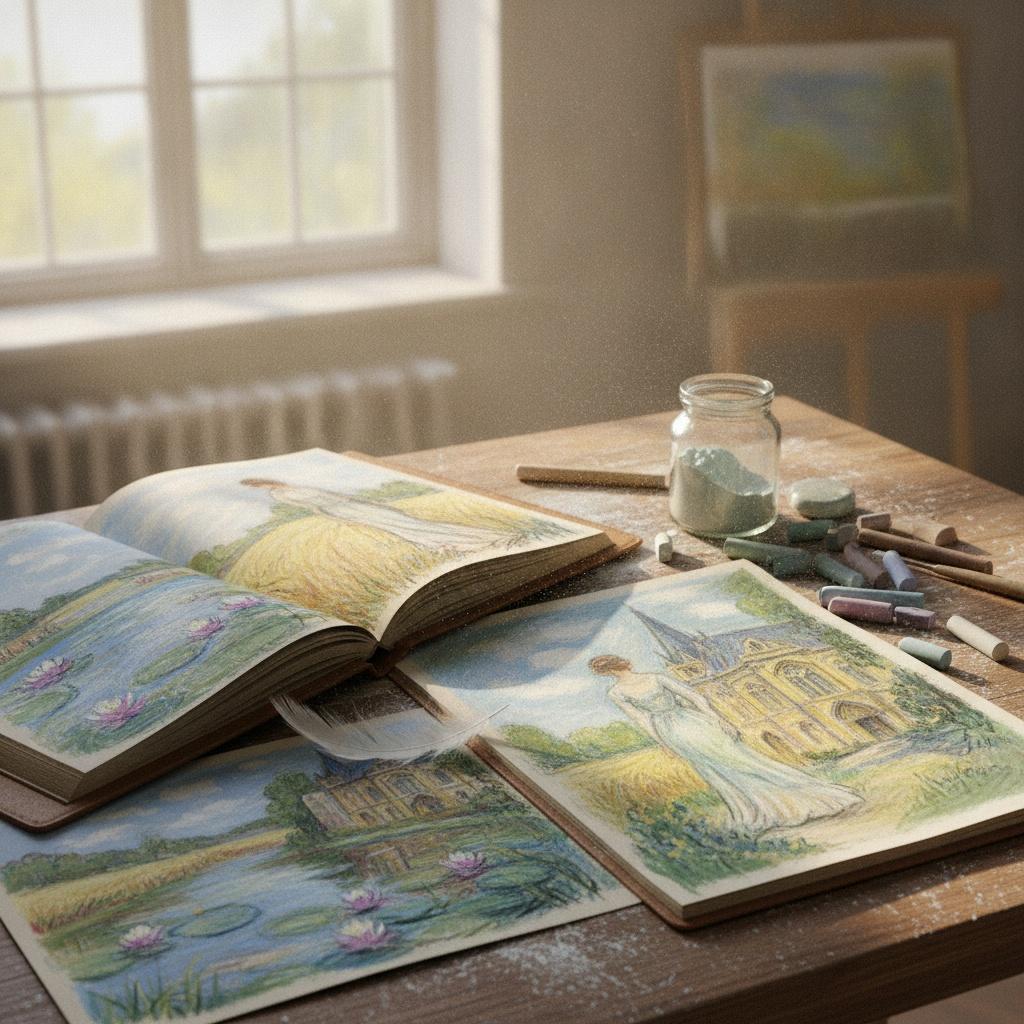
The Soft Magic of Chalk: Capturing Light, Texture, and the Ethereal Soul of Impressionist Masterpieces
Discover the ethereal beauty of pastel and chalk art. Explore how Impressionist masters like Van Gogh and Degas captured light and texture to create timeless, soulful masterpieces for the discerning collector.
Explorez des œuvres d'art classées par thèmes, styles et caractéristiques.