


 Aperçu en situation
 Partager
 Partager
 Détails
 Guide imprimable

 Télécharger
 Articles similaires
 Radiographie
 Voir le diaporama
 Statistiques
Gustave Klimt


A striking collage of urban decay meets the golden elegance of Gustav Klimt as Syrian artist Tammam Azzam blends classical beauty with modern reality, inviting you to explore this powerful contemporary masterpiece.
 Afficher la suite
Tammam Azzam : Artiste syrien combinant chefs-d’œuvre classiques et paysages urbains détruits. Découvrez son œuvre mixte et collagée marquante et abordez les thèmes de la perte, de la résilience et du renouvellement après le conflit. Cliquez ici pour en savoir plus !
L’œuvre d'art présentée sur cette page est protégée par le droit d'auteur, ce qui signifie que nous ne pouvons légalement créer ou vendre de reproduction identique. Cette protection est appliquée en vertu d'accords internationaux tels que la Convention de Berne et par les lois nationales, notamment celles énoncées par le Loi américaine sur le droit d'auteur - Titre 17.
En tant qu'alternative respectueuse et légale, nous proposons des œuvres d'art personnalisées, peintes à la main et inspirées de l'original. Nos artistes talentueux et professionnels étudient avec soin le style, l'ambiance et l'essence artistique de l'œuvre originale pour créer une pièce nouvelle et unique qui évoque la même émotion — tout en restant une création originale en soi.
Cette méthode est pleinement conforme aux réglementations sur le droit d'auteur car elle ne repose pas sur la copie ou la duplication de l'œuvre protégée. Il s'agit plutôt d'une réinterprétation créative — une nouvelle peinture qui s'inspire de l'original sans pour autant lui être identique.
Reproduction à l'huile faite à la main
Huile sur toile peinte à la main, avec cadre et dimensions personnalisés, réalisée sur commande par nos artistes. ( Passer au format impression Passer au format image numérique)




P118B €10

P118H €10

P118W €10

P438Z €10

P508JH €12

P508YH €12

P805H €10

P805Z €10

P919BZ €10

P919G €10

P919XJ €10

P959ZH €10

P968JZ €12

W106C €8

W218G €10

W218JH €8

W218Y €10

W307PJ €10

W316G €10

W316PJ €8

W316Y €10

W398PJ €8

W4111J €10

W500HY €15

W500JH €15

W692G €12

W849H €8

W940BG €15

W953PJ €8




Format standard
personnalisé
CM
INCH
Choisissez parmi nos formats prédéfinis qui respectent les proportions originales de l’œuvre.
Loading sizes...

largeur
hauteur
Saisissez la largeur et la hauteur souhaitées, pour s'adapter à votre cadre ou à votre mur. Cette œuvre est peinte à la main ; ainsi, pour un format de forme différente, l'artiste peut peindre un peu plus autour du tableau ou réduire légèrement les bords — c'est vous qui choisissez. Nous vous envoyons une maquette numérique pour approbation avant que la peinture ne commence. L'image présentée sur cette page ne reflète pas le résultat réel — seule la maquette le fait.
Exemples de personnalisation possibles : remplacer un visage par la photo du client ; ajouter un animal de compagnie (par exemple, remplacer un chat par un chien) ; inclure un message caché en arrière-plan ; modifier le paysage ou les éléments de l'arrière-plan.
Après la commande, l’équipe TopImpressionists.com contactera le client par e-mail pour recueillir ses instructions et lui fournira une maquette d’aperçu
Après la commande, l’équipe TopImpressionists.com contactera le client par e-mail pour recueillir ses instructions et lui fournira une maquette d’aperçu
Livraison dans le monde entier () en 3 à 4 semaines au lieu des 5 semaines habituelles. (22 octobre). Aucun compromis sur la qualité.

Livraison express gratuite dans le monde entier

Toile de lin de haute qualité

Assurance transport complète

Garantie de remboursement des droits de douane

Garantie de fidélité des couleurs

Garantie de retour de 100 jours (uniquement en cas de défaut)

Garantie de remboursement à 100%

Tarifs dégressifs sur quantité
 L'option verre n'est disponible que pour les dimensions inférieures à 110 cm.

Gustave Klimt
Technique de reproduction
Format de la reproduction
-


Prix total final
€ 236
A Collision of Eras: The Poignant Vision of Tammam Azzam
In the evocative piece titled Gustave Klimt, contemporary Syrian artist Tammam Azzam orchestrates a breathtaking dialogue between the gilded splendor of the past and the fractured reality of the present. At first glance, the viewer is drawn into a familiar embrace, recognizing the unmistakable essence of Klimt’s iconic romanticism. However, as the eye wanders across the canvas, the illusion of a seamless masterpiece begins to splinter. Azzam utilizes a sophisticated collage technique that overlays the lush, golden warmth of Art Nouveau with the stark, gritty textures of urban decay. This juxtaposition creates a profound tension, where the timeless beauty of a lover's embrace meets the literal and metaphorical cracks of a world in transition.
The subject matter serves as a hauntingly beautiful meditation on resilience. By integrating elements of modern street art and architectural fragmentation, Azzam transforms a classic symbol of intimacy into a commentary on survival. The presence of contemporary detritus—the subtle inclusion of modern objects like cell phones amidst the painted scenery—acts as a temporal bridge, pulling the viewer out of the historical dreamscape and into our immediate, hyper-connected reality. This technique forces an emotional confrontation: we are asked to witness how much of our classical heritage remains intact when faced with the relentless pressures of modern conflict and urban transformation.
Technique and Visual Narrative
The visual impact of this work lies in its masterful use of contrast. The vibrant yellow palette provides an energetic focal point for any sophisticated space, yet beneath this brightness lies a deep, intellectual gravity. Azzam’s method is not merely a reproduction of a style, but a reimagining of history itself. Through the careful layering of textures, he creates a sense of depth that invites the eye to linger on both the smooth, painted surfaces and the jagged, broken edges of the composition. The image presents a close-up view where a man's face is rendered in stark black against a luminous background, creating a silhouette that feels both intimate and ghostly.
For the discerning collector or interior designer, this artwork offers a unique opportunity to introduce a conversation piece that transcends mere decoration. It functions as an anchor for a room, providing a sense of movement and narrative depth. The way the light seems to emanate from the golden tones, only to be interrupted by the shadows of urban fragmentation, makes it a dynamic element in any curated environment. Whether placed in a minimalist modern gallery or a richly textured classical study, the piece commands attention through its ability to bridge the gap between the museum and the street.
Symbolism and Emotional Resonance
Beyond its aesthetic brilliance, Gustave Klimt carries a heavy emotional weight. It is a work that speaks to the human condition—the struggle to maintain beauty and connection in the face of destruction. The fragmentation of the image serves as a metaphor for the fractured lives of those living through conflict, yet the persistence of the central figures suggests an unbreakable bond of humanity. This duality makes the piece incredibly powerful; it is simultaneously a lament for what has been lost and a celebration of what remains.
Owning a high-quality reproduction of this work allows one to curate an environment filled with meaning. It is more than just art; it is a window into a complex historical and contemporary dialogue. The piece invites viewers to reflect on the fragility of civilization and the enduring power of art to reconstruct our sense of self. For those seeking inspiration, Azzam’s vision provides a profound reminder that even amidst the cracks of a broken world, beauty continues to find a way to emerge.
Questions et réponses
Quelle est la date de création et le style de «Gustave Klimt» de Tammam Azzam ?
«Gustave Klimt» de Tammam Azzam date de 2013 et appartient au mouvement Contemporary Art.
Qui est l'auteur de « Gustave Klimt », et dans quel mouvement ?
« Gustave Klimt » a été créé par Tammam Azzam dans le style Contemporary Art. L'artiste et le mouvement définissent la tradition de l'œuvre.
L'œuvre « Gustave Klimt » se trouve-t-elle dans le pays de son créateur ?
Non - l'œuvre est conservée à l'étranger. « Gustave Klimt » est conservée en Émirats arabes unis, tandis que Tammam Azzam est né(e) en Syrie.
Biographie de l'artiste
Tammam Azzam: Bridging Destruction and Beauty Through Collage
Tammam Azzam (born Damascus, Syrian Arab Republic in 1980) is a Syrian artist whose distinctive approach to visual storytelling blends the grandeur of European masters with the stark realities of urban decay. His work powerfully confronts themes of loss, resilience, and the imperative to rebuild after conflict—a reflection of his own experiences navigating the turbulent landscape of Syria’s recent history. Graduating from Damascus Faculty of Fine Arts in 2001, Azzam honed his skills through intensive workshops led by Marwan, a celebrated Syrian artist who profoundly shaped his artistic vision. Initially experimenting with mixed media, he swiftly recognized the potential of collage as a medium to articulate complex emotions and narratives—a method that would become central to his oeuvre.Early Influences: The Shaping Hand of Marwan
Marwan’s mentorship instilled in Azzam a dedication to confronting difficult subjects with sensitivity and artistry. Recognizing the importance of confronting uncomfortable truths, Azzam sought guidance from Marwan Kassab Bashi, whose artistic philosophy championed both intellectual rigor and emotional depth. This formative relationship fostered Azzam's conviction that art could serve as a vehicle for profound reflection on societal challenges—a belief that continues to permeate his creative process.The Klimt Overlay Technique: A Dialogue Between Ruin and Remembrance
Azzam gained international acclaim in 2013 when he pioneered the innovative method of layering photographs of bombed buildings onto reproductions of iconic artworks like Gustav Klimt's *The Kiss*. This technique transcends mere visual juxtaposition; it establishes a poignant dialogue between devastation and enduring beauty—a deliberate provocation designed to unsettle viewers and compel them to reconsider notions of grandeur and permanence. Azzam’s artistic démarche embodies the belief that even amidst destruction, fragments of cultural heritage retain their significance, urging us to honor the past while striving toward a more hopeful future.Material Exploration: Texture as Testimony
Azzam’s artistic practice utilizes acrylic paint alongside collage materials—paper fragments, architectural elements—to meticulously construct his compositions. He doesn't simply depict landscapes; he embodies them—capturing their physicality and conveying an emotional resonance that surpasses mere representation. The textured surfaces of his canvases serve as tangible reminders of the scars inflicted by conflict, mirroring the process of rebuilding shattered spaces with care and intention. Azzam’s artistic exploration extends beyond Syria; he has resided in Germany since 2016, fostering collaborations with fellow artists at institutes like the Institute of Advanced Studies in Delmenhorst.Notable Exhibitions and Recognition
Azzam’s compelling artwork has garnered recognition across continents. He showcased his talent at Ayyam Gallery in Dubai, Art Dubai, Untitled Miami, Haines Gallery San Francisco, notably achieving success at the Armory Show in New York in 2018. These exhibitions have cemented Azzam's position as a significant voice within contemporary art discourse—a testament to his ability to transform personal experience into universally resonant artistic statements. His work has been featured prominently in publications such as Artforum and The National, furthering its reach and impact on the global artistic community.Contemporary Significance: A Voice for Resilience
Tammam Azzam’s oeuvre transcends mere aesthetic appeal; it embodies a powerful commentary on the human condition amidst adversity. By repurposing classical imagery alongside photographic documentation of destruction, he compels viewers to contemplate the enduring power of art as a tool for remembrance and transformation—a mission that underscores his conviction that creativity can foster empathy and inspire action in confronting societal challenges. Azzam’s artistic legacy continues to resonate with audiences worldwide, solidifying his place as an artist who confronts trauma head-on while simultaneously advocating for visions of hope and renewal.
Tammam Azzam
1980 - , Syrie
En bref
- Artistic Movement Or Style: Collage et peinture mixte
- Artists Or Movements Influenced By This Artist: Masters classiques
- Artists Who Influenced This Artist: Marwan Kassab Bashi
- Date Of Birth: 1980
- Full Name: Tammam Azzam
- Nationality: Syrien
- Notable Artworks: ["Gustave Klimt's The Kiss"]
- Place Of Birth: Damascus, Syrian Arab Republic
Articles connexes

The Unvarnished Truth: A Cultural Journey Through the Soul of American Realism
Explore the profound beauty of American Realism. From the Ashcan School's urban grit to intimate portraits, discover how artists captured the authentic soul of a nation through unvarnished truth and masterful observation.
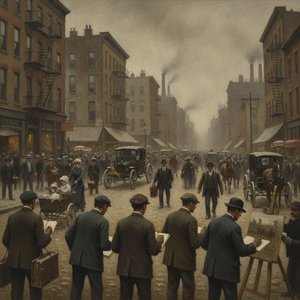
The Ashcan School: Capturing the Raw, Unfiltered Soul of Urban Life through American Realism
Discover the raw beauty of the Ashcan School. Explore how masters like Bellows and Henri captured the gritty, vibrant soul of early 20th-century New York through profound American Realism and evocative urban landscapes.