


 Aperçu en situation
 Partager
 Partager
 Détails
 Guide imprimable

 Télécharger
 Articles similaires
 Radiographie
 Voir le diaporama
 Statistiques
Self portrait with hat
 Painting
- Post-Impressionism
 1909
1909- Modern
 15.0 x 14.0 cm
A striking close-up portrait of a man with an expressive open mouth set against a vibrant yellow background, this 1909 painting by Theo van Doesburg captures raw emotion and invites you to explore his early mastery.
 Afficher la suite
Découvrez Theo van Doesburg (1883-1931), fondateur du De Stijl & Néoplasticisme ! Explorez ses abstractions géométriques, son influence Bauhaus et son impact sur l'art moderne.
Giclées et impressions d'art
Impressions giclées ou sur toile de qualité musée, avec une production rapide et des finitions au choix. ( Acheter la peinture faite à la main Passer au format image numérique)




P118B €10

P118H €10

P118W €10

P438Z €10

P508JH €12

P508YH €12

P805H €10

P805Z €10

P919BZ €10

P919G €10

P919XJ €10

P959ZH €10

P968JZ €12

W106C €8

W218G €10

W218JH €8

W218Y €10

W307PJ €10

W316G €10

W316PJ €8

W316Y €10

W398PJ €8

W4111J €10

W500HY €15

W500JH €15

W692G €12

W849H €8

W940BG €15

W953PJ €8




Format standard
personnalisé
CM
INCH
Choisissez parmi nos formats prédéfinis qui respectent les proportions originales de l’œuvre.
Loading sizes...

largeur
hauteur
Saisissez la largeur et la hauteur souhaitées pour qu'elles s'adaptent à votre cadre ou à votre mur. Une impression ne peut être que découpée, elle ne peut jamais être agrandie au-delà de l'image originale ; ainsi, un format de forme différente entraînera la perte d'une partie de l'image. Nous vous envoyons une maquette numérique pour approbation avant toute impression. L'image présentée sur cette page ne montre pas le recadrage réel — seule la maquette le permet.
Livraison dans le monde entier () en 2 semaines au lieu des 4/5 semaines habituelles. (23 octobre)

Livraison express gratuite dans le monde entier

Toile de lin de haute qualité

Assurance transport complète

Garantie de remboursement des droits de douane

Garantie de fidélité des couleurs

Garantie de retour de 100 jours (uniquement en cas de défaut)

Garantie de remboursement à 100%

Tarifs dégressifs sur quantité
 L'option verre n'est disponible que pour les dimensions inférieures à 110 cm.

Self portrait with hat
Giclées et impressions d'art
Format de la reproduction
-


Prix total final
€ 61
A Moment Captured in Amber: The Raw Humanity of Van Doesburg
In the quiet moments before his radical departure into the geometric purity of De Stijl, Theo van Doesburg captured something profoundly intimate and startlingly human. Self-portrait with hat, painted in 1909, serves as a breathtaking window into the artist's psyche during his formative years. Unlike the rigid lines and primary colors that would later define his legacy as the architect of abstraction, this work vibrates with an almost visceral energy. The subject—a man caught in a transient, candid gesture—appears to be mid-sentence or perhaps lost in a sudden yawn, lending the piece an unexpected sense of life and spontaneity. It is not merely a likeness; it is a captured breath, a fleeting second of existence frozen against a luminous, sun-drenched yellow backdrop.
The composition is masterfully focused, pulling the viewer into an immediate, face-to-face encounter with the artist. The stark contrast between the deep, obsidian black of the hat and the radiant warmth of the background creates a visual tension that commands attention. This interplay of light and shadow does more than just define form; it establishes a psychological depth. The yellow expanse behind him is not a flat void but a textured atmosphere that seems to pulse with the same vitality found in the man's expressive features. For the discerning collector, this painting offers a rare glimpse into the evolution of a master, showcasing a period where emotion and physical presence reigned supreme over mathematical precision.
Technique and the Beauty of the Visible Hand
To gaze upon this reproduction is to appreciate the tactile romance of traditional oil painting. The technique employed here celebrates the impasto spirit, where every brushstroke tells a story of movement and intention. One can almost feel the rhythmic motion of the bristles as they layered pigment to sculpt the contours of the face and the heavy fabric of the clothing. These visible strokes provide a wonderful sense of texture and depth, making the artwork feel alive and multidimensional. This handmade quality is what distinguishes a true fine art reproduction from a mere print; it possesses a soul that resonates within a room.
The artistry lies in the balance between detail and impression. While the facial features are rendered with enough precision to convey character and emotion, there is an intentional looseness that prevents the portrait from feeling static or overly academic. This stylistic choice creates an emotional resonance that is both accessible and profound. For interior designers, this piece serves as a sophisticated focal point—a conversation starter that brings a sense of historical weight and artistic integrity to any modern or classical space. It is a work that does not just decorate a wall; it anchors a room with its vibrant energy and timeless human connection.
Questions et réponses
Quel format d'impression pour «Self portrait with hat» de Theo van Doesburg convient à la pièce recommandée ?
L'association recommandée pour «Self portrait with hat» de Theo van Doesburg : une impression de Small dans un(e) Studio Apartment.
À quelle période de la carrière de Theo van Doesburg appartient « Self portrait with hat » ?
« Self portrait with hat » représente la période Early Period de Theo van Doesburg.
Quel format et quelle orientation d'impression sont suggérés pour «Self portrait with hat» de Theo van Doesburg ?
Pour une impression de «Self portrait with hat» de Theo van Doesburg, un format Small avec une orientation Square est recommandé.
Biographie de l'artiste
Première vie et carrière
Théo van Doesburg, un artiste néerlandais, est né le 30 août 1883 à Utrecht, aux Pays-Bas. Il est surtout connu comme le fondateur et le chef du De Stijl, un mouvement artistique néoplastique. Les premières œuvres de Van Doesburg ont été influencées par Vincent van Gogh, tant dans le style que dans le sujet.La naissance du néoplasticisme
En 1913, après avoir lu *Rückblicke* de Wassily Kandinsky, Van Doesburg réalisa qu'il existait un niveau supérieur, plus spirituel, dans la peinture qui provenait de l'esprit plutôt que de la vie quotidienne. Cela a conduit au développement du néoplasticisme, également connu sous le nom de De Stijl. Le mouvement plaidait pour une abstraction pure et une universalité par réduction aux éléments essentiels de forme et de couleur.Œuvres notables et collaborations
- Étude pour compositions simultanées xxII, une étude au crayon pour des compositions simultanées, est un exemple d'art néoplastique. (Situé au musée Kröller-Müller, Otterlo, aux Pays-Bas)
- Van Doesburg a collaboré avec Piet Mondrian sur divers projets, notamment le journal De Stijl.
- Il a également travaillé avec Georges Vantongerloo et Sophie Taeuber-Arp sur la conception de maisons pour les artistes.
Développement artistique et influences
L'évolution vers l'abstraction : Initialement influencé par Van Gogh, Van Doesburg a progressivement abandonné le réalisme au profit d'une abstraction géométrique radicale. Son expérience avec le cubisme, notamment son association avec des artistes comme Picasso et Braque, a joué un rôle crucial dans cette transformation. Il a ensuite développé ses propres concepts de "composition contre-forme" et "élémentarisme", cherchant à créer une harmonie visuelle basée sur des relations mathématiques et géométriques pures. L'influence du Bauhaus : Bien qu’il n’ait jamais été officiellement membre, Van Doesburg a entretenu des liens étroits avec le Bauhaus, intégrant ses principes de fonctionnalité et d'abstraction dans son travail.Héritage et influence
Les œuvres de Van Doesburg ont eu un impact significatif sur le développement de l'art moderne. Son héritage peut être vu dans divers aspects de l'art, de l'architecture à la peinture. Le mouvement néoplastique continue d’influencer les artistes aujourd’hui. Dates importantes : * 30 août 1883 : Naissance de Théo van Doesburg * 1913 : Développement du néoplasticisme * 7 mars 1931 : Décès
Theo van Doesburg
1883 - 1931 , Pays-Bas
En bref
- Artistic Movement Or Style: De Stijl, Néoplasticisme
- Artists Or Movements Influenced By This Artist:
- Architecture moderne
- Peinture abstraite
- Artists Who Influenced This Artist:
- Vincent van Gogh
- Wassily Kandinsky
- Date Of Birth: 30 août 1883
- Date Of Death: 7 mars 1931
- Full Name: Theo van Doesburg
- Nationality: Néerlandais
- Notable Artworks: ['Étude pour compositions simultanées xxii']
- Place Of Birth (City And Country): Utrecht, Pays-Bas
Articles connexes
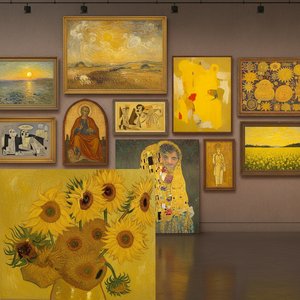
Top 10 des Tableaux Célèbres Dominés par le Jaune Chrome : Art & Décor
Plongez dans le monde vibrant du jaune chrome à travers 10 tableaux célèbres ! Découvrez l'histoire de Van Gogh, Monet et d'autres maîtres impressionnistes. Trouvez l'inspiration déco et achetez des reproductions d'art de qualité muséale sur TopImpressionists.com.

Les 10 Chefs-d'œuvre Noirs : Peintures Célèbres et Décoration d'Intérieur
Plongez dans l'univers fascinant des 10 plus beaux tableaux noirs de l'histoire de l'art. Découvrez les secrets de Goya, Manet, Rothko et autres maîtres. Inspirez votre décoration intérieure avec !
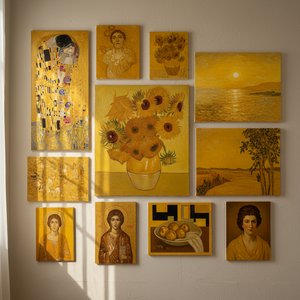
Top 10 des Tableaux Célèbres Dominés par l'Ocre Jaune : Art & Décor Intemporel
Plongez dans la magie de l'ocre jaune à travers 10 tableaux célèbres ! Découvrez les histoires, techniques et émotions derrière ces chefs-d'œuvre d'artistes comme Van Gogh & Monet. Inspirez votre décoration intérieure avec – reproductions de qualité musée.

The Golden Hue: Exploring Symbolism & Emotion in Yellow Art
Explore the rich symbolism & emotional power of yellow in art history! From Van Gogh to Kandinsky, discover how artists used this vibrant hue. Expert analysis & high-quality reproductions at TopImpressionists.

Les 10 Chefs-d'œuvre Dominés par le Noir : Art, Histoire & Décoration
Plongez dans l'univers fascinant des 10 plus beaux tableaux dominés par le noir. Découvrez les histoires, techniques et symbolisme de chefs-d'œuvre intemporels. Reproductions d'art de qualité musée sur !
Explorez des œuvres d'art classées par thèmes, styles et caractéristiques.


