


 Aperçu en situation
 Partager
 Partager
 Détails
 Guide imprimable

 Télécharger
 Articles similaires
 Radiographie
 Voir le diaporama
 Statistiques
Approaching Storm

Explore Théodore Roussel’s "Approaching Storm," a dramatic Impressionistic landscape of Dover Cliffs. Capturing nature's power & melancholy, this oil painting offers texture & depth.
Théodore Roussel (1847-1926) : peintre français-anglais de paysages atmosphériques, de scènes de genre et d'estampe en couleurs. Ami de Whistler, connu pour son controversé 'La Lecture'.
 Afficher la suite
Reproduction à l'huile faite à la main
Huile sur toile peinte à la main, avec cadre et dimensions personnalisés, réalisée sur commande par nos artistes. ( Passer au format impression Passer au format image numérique)




































Format standard
personnalisé
CM
INCH
Choisissez parmi nos formats prédéfinis qui respectent les proportions originales de l’œuvre.
Loading sizes...

largeur
hauteur
Vous pouvez saisir vos propres dimensions pour l'adapter à un cadre ou à un espace spécifique. Si la taille sélectionnée ne correspond pas aux proportions de l'image d'origine, nous recadrerons l'œuvre ou prolongerons la peinture avec des éléments peints à la main supplémentaires. Une maquette numérique vous sera envoyée pour approbation avant le début de la production.
Veuillez noter que l'aperçu à l'écran ne reflète pas le recadrage ou l'extension réels. Seule la maquette montrera fidèlement la composition finale.
Bien que des tailles personnalisées soient disponibles, nous vous recommandons de sélectionner une dimension dans la liste prédéfinie afin de préserver les proportions d'origine.
Exemples de personnalisation possibles : remplacer un visage par la photo du client ; ajouter un animal de compagnie (par exemple, remplacer un chat par un chien) ; inclure un message caché en arrière-plan ; modifier le paysage ou les éléments de l'arrière-plan.
Après la commande, l’équipe TopImpressionists.com contactera le client par e-mail pour recueillir ses instructions et lui fournira une maquette d’aperçu
Après la commande, l’équipe TopImpressionists.com contactera le client par e-mail pour recueillir ses instructions et lui fournira une maquette d’aperçu
Livraison dans le monde entier () en 3 à 4 semaines au lieu des 5 semaines habituelles. (26 septembre). Aucun compromis sur la qualité.

Livraison express gratuite dans le monde entier

Toile de lin de haute qualité

Assurance transport complète

Garantie de remboursement des droits de douane

Garantie de fidélité des couleurs

Garantie de retour de 100 jours (uniquement en cas de défaut)

Garantie de remboursement à 100%

Tarifs dégressifs sur quantité
 L'option verre n'est disponible que pour les dimensions inférieures à 110 cm.

Approaching Storm
Technique de reproduction
Format de la reproduction
-


Prix total final
$ 269
Œuvres similaires


Biographie de l'artiste
A Late Bloomer’s Journey: The Life and Art of Théodore Roussel
Théodore Casimir Roussel, a name perhaps less instantly recognizable than some of his contemporaries, occupies a fascinating niche in the landscape of late 19th and early 20th-century art. Born in Orléans, France, in 1847, his path to becoming a painter was decidedly unconventional. Unlike artists who demonstrated precocious talent from youth, Roussel embarked on his artistic journey relatively late, around 1872, after fulfilling his military service. Entirely self-taught, he initially explored scenes of everyday life, grounding himself in the techniques of the Old Masters—a foundation that would later be brilliantly transformed by a unique and deeply personal vision. This early work, while skillful, lacked the distinctive voice that would eventually set him apart, hinting at the potential within but not yet revealing the artist he was destined to become.Early Influences and Artistic Foundations
Roussel’s formative years were marked by an unwavering fascination with the artistic heritage of Europe—particularly the landscapes of Claude Lorrain and Nicolas Poussin. These masters instilled in him a profound appreciation for idealized beauty, compositional balance, and the expressive power of light and shadow. Rejecting the prevailing trends of Impressionism, which prioritized fleeting impressions over meticulous observation, Roussel deliberately sought inspiration from the more contemplative traditions of Academic painting. This conscious decision to eschew the immediacy of Impressionism would prove crucial in shaping his distinctive artistic style—a style characterized by a deliberate restraint and an unwavering commitment to capturing the essence of nature with remarkable accuracy. He meticulously studied the brushstrokes and tonal gradations of the Old Masters, absorbing their techniques and mastering their expressive vocabulary.London’s Embrace: Whistler and Artistic Transformation
A pivotal moment arrived in 1878 when Roussel relocated to London—a move that irrevocably altered the trajectory of his artistic career. This cosmopolitan environment exposed him to new ideas and influences, fostering a dialogue with fellow artists who challenged his preconceptions. Among these encounters was arguably the most significant: his friendship with James McNeill Whistler. The Scottish painter’s aesthetic philosophy—centered on “harmony” and “suggestion”—deepened Roussel's understanding of art as an emotional experience rather than merely a visual representation. Whistler encouraged him to experiment with etching, advocating for a revolutionary technique that involved transferring images directly onto copper plates from nature—a method that prioritized spontaneity and luminosity while preserving the integrity of the original subject matter. This collaboration profoundly impacted Roussel’s artistic sensibilities, propelling him toward a “free etching” style—a stylistic hallmark that would define his oeuvre.“The Reading Girl”: Controversy and Critical Recognition
Roussel’s debut at the New English Art Club exhibition in 1887 with his monumental nude sculpture, *“The Reading Girl,”* immediately ignited controversy within London's artistic circles. Critics vehemently denounced it as “realism of the worst kind,” accusing Roussel of vulgarity and crudeness—a judgment that seemed to contradict the idealized beauty championed by Whistler and other prominent artists of the time. However, this initial backlash ultimately served as a catalyst for his career, attracting considerable attention from the press and bolstering his reputation within the art community. Sir William Orpen famously declared *“The Reading Girl”* the finest nude painting of its era—a testament to Roussel’s artistic prowess and an acknowledgement of the enduring power of his vision. The model for this daring work was Hetty Pettigrew, alongside her sisters Rose and Lily—all celebrated figures in London's art world who had posed for artists like Whistler, Holman Hunt, and Millais. This audacious undertaking demonstrated Roussel’s willingness to confront societal norms and push the boundaries of artistic expression.Landscapes of Tranquility: Etching and Atmospheric Impressionism
Following the success of *“The Reading Girl,”* Roussel devoted himself primarily to painting atmospheric landscapes—often depicting scenes along the River Thames—characterized by muted tones, loose brushwork, and an almost poetic sensitivity to light and mood. Simultaneously, he became a pioneer of color etching in England, skillfully blending Impressionistic techniques with his own distinctive style. He meticulously studied the interplay between light and shadow, capturing the subtle nuances of weather conditions and seasonal changes—a stylistic hallmark that reflected his profound connection to the natural world. Roussel’s etchings were distinguished by their remarkable precision and tonal subtlety, demonstrating a mastery of printmaking that rivaled the achievements of Rembrandt and Turner. He regularly exhibited at prestigious venues such as the Royal Society of British Artists and the Royal Scottish Academy—solidifying his position within the artistic establishment and securing recognition for his enduring contribution to landscape painting and etching technique. Roussel passed away in 1926, leaving behind a body of work that represents a compelling intersection of French and English artistic traditions—a legacy increasingly recognized for its originality, technical innovation, and enduring beauty.
Théodore Roussel
1847 - 1926 , France
En bref
- Artistic Movement Or Style: Impressionnisme, Gravure en couleurs
- Artists Who Influenced This Artist: ['James McNeill Whistler']
- Date Of Birth: 1847
- Date Of Death: 1926
- Full Name: Théodore Casimir Roussel
- Nationality: Français-Anglais
- Notable Artworks:
- La Lecture
- Les Bois de Royat
- Le Puy de Dôme
- Place Of Birth: Lorient
Articles similaires

Beyond the Light: Capturing Raw Emotion and Subjective Vision in Post-Impressionist Landscapes
Explore the profound emotional depth of Post-Impressionist landscapes. Discover how masters like Van Gogh moved beyond light to capture raw human feeling through vibrant color and expressive texture in this expert art history retrospective.
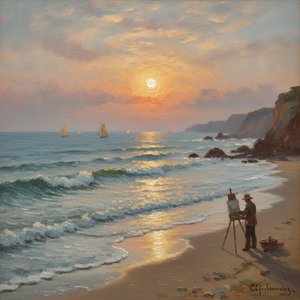
Whispers of the Waves: Discovering the Luminous Beauty and Timeless Light of Impressionist Coastal Art
Experience the breathtaking luminosity of Impressionist coastal art. From Monet’s shores to Sorolla’s sun-drenched waves, discover our exquisite hand-painted oil reproductions and bespoke commissions. Bring the timeless beauty of maritime masters into your home with TopImpressionists.com.

Capturing the Soul: The Most Emotionally Moving Impressionist and Post-Impressionist Masterpieces
Discover the profound emotional depth of Impressionist and Post-Impressionist masterpieces. Explore how legends like Monet, Van Gogh, and Gauguin captured light and soul through evocative landscapes and vibrant brushwork for a timeless connection to art history.

The Beauty of Impermanence: Capturing Decay through Impressionist Eyes
Explore the profound beauty of impermanence through Impressionist and Post-Impressionist eyes. Discover how masters like Monet and Van Gogh captured fleeting light and the poetic essence of nature's transitions in our deep dive into art history and emotional landscapes.
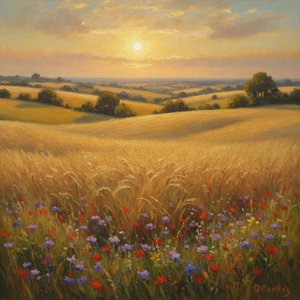
Golden Fields & Sun-Drenched Meadows: Capturing the Soul of Impressionist Landscapes
Immerse yourself in the luminous world of Impressionist landscapes. Discover how masters like Monet and Gauguin captured ephemeral light through plein air painting, and learn to bring the soul of sun-drenched meadows into your home with exquisite, hand-painted oil reproductions.