

Présenté : · Avec son cadre :
 Aperçu en situation
 Envoyer
 Partager
 Détails de l'œuvre
 Guide
Guide

 Télécharger l'image
 Articles similaires
 Radiographie
 Diaporama
 Questions et réponses
 Statistiques
- 95.0 x 125.0 cm


€ 240
Reproduction à l'huile faite à la main
Huile sur toile peinte à la main, avec cadre et dimensions personnalisés, réalisée sur commande par nos artistes. ( Passer au format impression Passer au format numérique)
Format
·Format standard
sur mesure
CM
INCH
Choisissez parmi nos formats prédéfinis qui respectent les proportions originales de l’œuvre.
Chargement des formats...

largeur
hauteur
Saisissez la largeur et la hauteur souhaitées, pour s'adapter à votre cadre ou à votre mur. Cette œuvre est peinte à la main ; ainsi, pour un format de forme différente, l'artiste peut peindre un peu plus autour du tableau ou réduire légèrement les bords — c'est vous qui choisissez. Nous vous envoyons une maquette numérique pour approbation avant que la peinture ne commence. L'image présentée sur cette page ne reflète pas le résultat réel — seule la maquette le fait.
 En savoir plus
Finition
·
Bords blancs €1

Bords estompés €1

Bords imprimés €1

P118B €10

P118H €10

P118W €10

P438Z €10

P508JH €12

P508YH €12

P805H €10

P805Z €10

P919BZ €10

P919G €10

P919XJ €10

P959ZH €10

P968JZ €12

W106C €8

W218G €10

W218JH €8

W218Y €10

W307PJ €10

W316G €10

W316PJ €8

W316Y €10

W398PJ €8

W4111J €10

W500HY €15

W500JH €15

W692G €12

W849H €8

W940BG €15

W953PJ €8

H24-GOLD €30

H24-SILVER €30

H36-GOLD €45

H36-SILVER €45
Expédié dans un tube de protection, prêt à être encadré par votre professionnel habituel.
Options supplémentaires
optionnelQue comprennent les extras ?
Exemples de personnalisation possibles : Remplacer le visage par la photo du client ; Ajouter un animal (ex: remplacer le chat par un chien) ; Inclure un message caché en arrière-plan ; Modifier le paysage ou les éléments de l'arrière-plan.
Après la commande, l'équipe de TopImpressionists.com contactera le client par e-mail pour obtenir ses instructions et lui fournir un aperçu de la maquette
Après la commande, l'équipe de TopImpressionists.com contactera le client par e-mail pour obtenir ses instructions et lui fournir un aperçu de la maquette
Livraison dans le monde entier () en 3 à 4 semaines au lieu des 5 semaines habituelles. (3 novembre). Aucun compromis sur la qualité.
Vernis de protection
Cartel
Détails de la plaque en bronze gravée
This elegant plaque features the artist's name and the title of the artwork, finely engraved for a timeless presentation.
It is made from bronze with a refined, elegant finish. The text is precisely laser-engraved for a sharp and permanent result. Measuring 9x2 cm, the plaque is compact yet easy to read. It's built to be durable and scratch-resistant, offering a professional, museum-quality look. Mounting is simple thanks to the included adhesive backing.
Détails de la plaque en acrylique transparent
The plaque includes essential engraved details such as the artist's name, the title of the artwork, the date it was created, the type of media used-like oil on canvas or watercolor-a brief description of the piece, and a QR code that links to the complete artwork information.
It is crafted from clear acrylic, offering a sleek, modern appearance. The text is UV-engraved in black to ensure strong visual contrast. With a size of 10x15 cm, it ensures optimal readability. It comes equipped with two metal hooks for secure wall mounting. The plaque is designed to be weather-resistant, making it suitable for various environments, and it includes interactive features that work seamlessly with smartphone scanning.
Détails de la plaque en acrylique noir
This elegant plaque includes engraved information such as the artist's name, the title of the artwork, the date it was created, the type of media used (like oil on canvas or watercolor), a short description of the artwork, and a QR code for quick access to more information.
The plaque itself is made from refined black acrylic with a premium finish. The text is laser-engraved in white for high contrast and readability. Its size is 10x15 cm, designed to be easy to read. It comes with two metal hooks for professional mounting. The design is sleek and fits any interior style. It is also weather-resistant and durable, with built-in digital integration for mobile compatibility.
L'option verre n'est disponible que pour les dimensions inférieures à 110 cm.
 L'option verre n'est disponible que pour les dimensions inférieures à 110 cm.
- Livraison express gratuite dans le monde entier
- Toile de lin de qualité supérieure
- Assurance transport complète
- Garantie de remboursement des droits de douane
- Garantie de fidélité des couleurs
- Politique de retour de 100 jours (uniquement en cas de défaut)
- Garantie de remboursement à 100%
- Offre de tarifs dégressifs


Description de la pièce
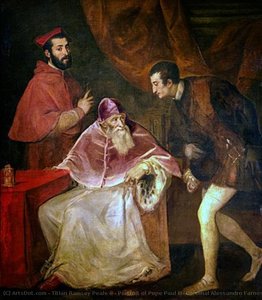
Portrait du Strada peint par Titian Ramsey Peale II : Une œuvre baroque remarquable conservée au Kunsthistorisches Museum à Vienne, symbole de richesse et savoir scientifique. Découvrez son histoire et sa signification artistique !
Biographie de l'artiste
Découvrez Titian Ramsay Peale II (1799-1885), artiste américain et naturaliste, réputé pour ses peintures de style Renaissance italienne, ses illustrations détaillées de la faune sauvage et ses contributions aux premières expéditions scientifiques. Explorez ses chefs-d'œuvre redécouverts sur...
À propos de l'œuvre
Portrait of Jacopo Strada
The Portrait of Jacopo Strada, painted by the renowned artist Titian Ramsey Peale II, is a captivating piece that showcases the artist’s skill and attention to detail. This oil on canvas painting, measuring 95 x 125 cm, is housed in the esteemed Kunsthistorisches Museum in Vienna, Austria.
Titian Ramsey Peale II was a master of the Renaissance style, and this portrait exemplifies his expertise. The subject, Jacopo Strada, is depicted wearing a red jacket with a fur trim, complemented by a beard and mustache. He holds a statue or figurine in his hand, adding an element of elegance to the scene. The artist’s use of warm colors and subtle lighting creates a cozy atmosphere, drawing the viewer into the painting.
Artistic Style and Technique
The portrait embodies the spirit of Venetian Renaissance art—a style characterized by meticulous observation and refined execution. Peale II skillfully employs chiaroscuro, manipulating light and shadow to sculpt Strada’s form and imbue the scene with depth. Notice how the artist captures Strada's posture with remarkable precision, conveying a sense of quiet contemplation.
Symbolism and Composition
Beyond its aesthetic beauty, the painting is rich in symbolic elements. The clock on the wall above Jacopo Strada’s head serves as a reminder of time’s passage—a common motif in Renaissance portraits intended to convey wisdom and experience. Similarly, the book resting beside Strada symbolizes knowledge and erudition, reflecting Strada's intellectual pursuits.
The artist carefully balances the composition with decorative elements like the vase positioned on the right side of the image. These objects aren’t merely ornamental; they contribute to the overall narrative by hinting at Strada’s interests and social standing. The statue held in Strada’s hand—a Roman copy of Venus Pseliumene—represents beauty and mythological inspiration.
Historical Context
The Kunsthistorisches Museum, where this masterpiece resides, stands as a testament to Habsburg imperial grandeur. It houses an unparalleled collection of royal treasures and artifacts from the Austro-Hungarian Empire, providing invaluable context for understanding the portrait’s significance within its historical milieu. Peale II's work reflects the humanist ideals prevalent during his time—a fascination with classical antiquity and a belief in human reason.
Comparison with Other Works
Titian Ramsey Peale II’s approach aligns closely with that of Titian Vecellio (Titian), whose version of Portrait of Jacopo Strada—also housed in the Kunsthistorisches Museum—offers a contrasting interpretation focused on capturing Strada’s psychological state.
Furthermore, Peale II's exploration of natural history parallels that of Rembrandt Harmenszoon van Rijn, whose portraits often incorporated detailed depictions of flora and fauna. Like Rembrandt, Peale II sought to elevate his art beyond mere representation—aiming for a profound engagement with the subject’s inner life.
For those seeking inspiration or contemplating acquiring a reproduction of this iconic artwork, consider its enduring appeal—a testament to Titian Ramsey Peale II's artistic genius and the timeless beauty of Renaissance painting.
Questions et réponses
En quelle année «Portrait du Strada» de Titian Ramsay Peale II a-t-il été créé ?
«Portrait du Strada» de Titian Ramsay Peale II a été créé en 1568.
Où puis-je voir l'original de «Portrait du Strada» de Titian Ramsay Peale II ?
Vous pouvez admirer l'original de « Portrait du Strada » au Kunsthistorisches Museum, Vienna, Austria.
Quelle couleur domine la composition de «Portrait du Strada» de Titian Ramsay Peale II ?
La couleur dominante de «Portrait du Strada» de Titian Ramsay Peale II est le Noyer (#866439).
Informations clés et quiz sur l'œuvre
À propos de Titian Ramsay Peale II

Titian Ramsay Peale II
1799 - 1885, États-Unis
Biographie de l'artiste
**Jeunesse et débuts artistiques**
Titian Ramsey Peale II, un nom qui résonne dans les annales de l'histoire de l'art, mais enveloppé d'un mystère. Né en 1799, la jeunesse de Peale II est marquée par une passion inébranlable pour les arts, qui allait finalement le conduire à devenir un peintre habile.**Contributions artistiques et style**
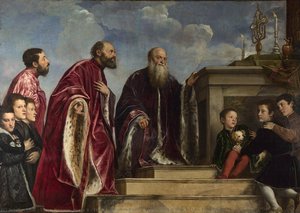
L’œuvre de Peale II, caractérisée par son élégance de la Renaissance italienne, met en valeur sa maîtrise de la peinture à l'huile sur panneau et toile. Les œuvres notables comprennent :- Autel avec quatre saints (125 x 72 cm, peinture à l'huile sur panneau), un témoignage de sa dévotion à l’art sacré.
- Adoration des bergers (Palais Pitti, Florence, Italie, Renaissance italienne, peinture à l'huile sur toile), reflétant sa capacité à capturer des moments poignants.
- La beauté (89 x 76 cm, Palais Pitti, Florence, Italie, Renaissance italienne, peinture à l'huile sur toile), un portrait qui dégage élégance et raffinement.
**Influences et héritage**
Bien que sa vie ne soit pas aussi bien documentée que celle de certains de ses contemporains, l’œuvre de Peale II est indubitablement influencée par la Renaissance italienne, avec des touches de colorisme vénitien. Son héritage, bien qu'il n'ait pas été largement reconnu à son époque, a été redécouvert et réévalué à travers le prisme de la critique d’art moderne.**Où trouver l’œuvre de Peale II**
Pour ceux qui souhaitent approfondir leur connaissance de l’œuvre de Peale II, Titian Ramsey Peale II : Autel avec quatre saints peut être trouvé sur TopImpressionists, ainsi que d’autres œuvres notables. La Galerie des Offices (Florence, Italie) et le Palais Pitti (Florence, Italie) présentent également ses œuvres, offrant un aperçu du monde de l’artiste.**Conclusion**
Titian Ramsey Peale II, figure énigmatique dans le monde de l'art, laisse derrière lui une série de chefs-d'œuvre qui continuent d'intriguer et d'inspirer. Grâce à TopImpressionists et autres ressources, son œuvre est aujourd’hui plus accessible que jamais, invitant une nouvelle génération d'amateurs d'art à découvrir et apprécier ses contributions au mouvement de la Renaissance italienne.- Explorez davantage les œuvres de Peale II sur TopImpressionists.
- Apprenez-en davantage sur d'autres artistes influents comme Giulio Clavio, connu pour ses manuscrits enluminés.
- Découvrez le Société des Beaux-Arts (Royaume-Uni, une institution de premier plan pour la promotion du patrimoine artistique, sur TopImpressionists.
Informations clés sur Titian Ramsay Peale II
- Artistes Influents:
- Titian
- Maîtres vénitiens
- Date De Décès: 1885
- Date De Naissance: 1799
- Mouvement Artistique: Renaissance italienne
- Nationalité: Américain
- Nom Complet: Titian Ramsay Peale II
- Œuvres Notables:
- Autel avec quatre saints
- Adoration des bergers
- La Beauté
Explorez des œuvres d'art classées par thèmes, styles et caractéristiques.





Titian Ramsay Peale II
Portrait du Strada
() ·
Avec son cadre : · Peint à la main à l'huile sur lin
Total