Aperçu en situation
 Partager
 Partager
 Détails
 Guide imprimable

 Télécharger
 Articles similaires
 Radiographie
 Voir le diaporama
 Statistiques
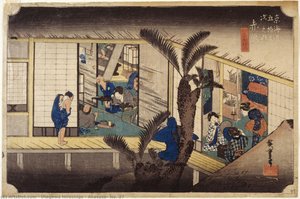
Wakasa


Utagawa Hiroshige’s “Wakasa” depicts a picturesque fishing boat traversing calm waters, populated by thirteen figures enjoying the day. Inspired by the Fifty-Three Stations of the Tokaido highway, this masterpiece embodies Hiroshige's signature style—a harmonious blend of observation and artistic interpretation—influencing Impressionist painters like Monet and Van Gogh.
 Afficher la suite
Découvrez Utagawa Hiroshige (1797-1858), maître incontesté de l'ukiyo-e japonais. Ses paysages poétiques, comme "Les 53 stations du Tôkaidô", ont inspiré l'Impressionnisme.
Giclées et impressions d'art
Impressions giclées ou sur toile de qualité musée, avec une production rapide et des finitions au choix. ( Acheter la peinture faite à la main Passer au format image numérique)




P118B €10

P118H €10

P118W €10

P438Z €10

P508JH €12

P508YH €12

P805H €10

P805Z €10

P919BZ €10

P919G €10

P919XJ €10

P959ZH €10

P968JZ €12

W106C €8

W218G €10

W218JH €8

W218Y €10

W307PJ €10

W316G €10

W316PJ €8

W316Y €10

W398PJ €8

W4111J €10

W500HY €15

W500JH €15

W692G €12

W849H €8

W940BG €15

W953PJ €8




Format standard
personnalisé
CM
INCH
Choisissez parmi nos formats prédéfinis qui respectent les proportions originales de l’œuvre.
Loading sizes...

largeur
hauteur
Saisissez la largeur et la hauteur souhaitées pour qu'elles s'adaptent à votre cadre ou à votre mur. Une impression ne peut être que découpée, elle ne peut jamais être agrandie au-delà de l'image originale ; ainsi, un format de forme différente entraînera la perte d'une partie de l'image. Nous vous envoyons une maquette numérique pour approbation avant toute impression. L'image présentée sur cette page ne montre pas le recadrage réel — seule la maquette le permet.
Livraison dans le monde entier () en 2 semaines au lieu des 4/5 semaines habituelles. (21 octobre)

Livraison express gratuite dans le monde entier

Toile de lin de haute qualité

Assurance transport complète

Garantie de remboursement des droits de douane

Garantie de fidélité des couleurs

Garantie de retour de 100 jours (uniquement en cas de défaut)

Garantie de remboursement à 100%

Tarifs dégressifs sur quantité
 L'option verre n'est disponible que pour les dimensions inférieures à 110 cm.

Wakasa
Giclées et impressions d'art
Format de la reproduction
-


Prix total final
€ 60
A Poetic Vision of Edo Japan: The Life and Art of Utagawa Hiroshige
Utagawa Hiroshige (1797-1858) stands as an unparalleled luminary in the realm of *ukiyo-e*, or “pictures of the floating world,” forever etching his name into the annals of Japanese art history. More than merely capturing visual impressions, Hiroshige possessed a singular ability to distill the spirit of Edo Japan—a period characterized by burgeoning urban growth, social stratification, and an evolving cultural landscape—into breathtaking landscapes imbued with profound emotional resonance. His artistic journey began humbly, apprenticed under Utagawa Toyohiro, mastering the intricate craft of woodblock printing while simultaneously cultivating a deeply personal aesthetic rooted in observation and contemplation. This formative experience would ultimately shape his distinctive style and propel him to become Japan’s final great *ukiyo-e* master, leaving an indelible mark on both Japanese artistic tradition and its subsequent influence on Western art movements like Impressionism.- Subject Matter & Composition: Hiroshige's canvases rarely depict grand narratives or heroic figures; instead, he favored serene scenes of nature—mountain vistas, riverscapes, cherry blossoms in bloom—often populated by solitary travelers or fishermen. These subjects were deliberately chosen to evoke feelings of tranquility and contemplation, mirroring the philosophical currents prevalent during his time.
- Style & Technique: Hiroshige’s signature style is defined by its meticulous attention to detail and masterful use of perspective—particularly *ma*, or negative space—to create a sense of depth and atmosphere. He employed a technique known as *bokashi*, blending tonal gradations with subtle shading to achieve remarkable realism while simultaneously conveying an ethereal quality.
The Fifty-Three Stations of the Tōkaidō: A Journey Through Time & Landscape
Perhaps Hiroshige’s most celebrated series, “The Fifty-Three Stations of the Tōkaidō,” exemplifies his artistic prowess and captures the essence of Edo Japan's commercial artery. This ambitious undertaking involved painstakingly documenting each station along the Tokaido highway—the main route connecting Kyoto and Tokyo—resulting in sixty-six prints that offer a panoramic view of the region’s topography, flora, and fauna. Each print is rendered with breathtaking precision, capturing not only the physical environment but also the subtle nuances of daily life—farmers tending their fields, merchants traversing the road, pilgrims embarking on sacred pilgrimages.- Symbolism & Emotion: Hiroshige’s landscapes are laden with symbolic meaning. Cherry blossoms represent impermanence and beauty fleetingly grasped; mountains symbolize strength and resilience—themes central to Zen Buddhism, which profoundly influenced Japanese culture during Hiroshige's lifetime.
- Influence on Impressionism: Hiroshige’s innovative use of *ma* and tonal gradations captivated European artists like Claude Monet and Vincent van Gogh who were experimenting with new approaches to painting. They recognized in Hiroshige’s work a kindred spirit—a desire to capture the immediacy of experience and convey emotion through color and light, mirroring the core tenets of Impressionism.
Hiroshige's Legacy: An Enduring Aesthetic Influence
Despite the decline of *ukiyo-e* by the late 19th century due to shifting economic conditions and Western artistic dominance, Hiroshige’s influence continues to resonate today. His landscapes remain admired for their beauty, tranquility, and masterful execution—inspiring artists and designers alike. Reproductions of his prints adorn homes and galleries worldwide, testifying to the enduring power of his vision—a testament to a Japanese artist who transformed landscape painting into an art form capable of conveying profound emotional depth and capturing the sublime spirit of Edo Japan.Questions et réponses
Quelle atmosphère se dégage de « Wakasa » ?
L'atmosphère générale de «Wakasa» de Utagawa Hiroshige est Serene. Cette ambiance décrit l'impression globale de l'œuvre.
Quelle est la taille d'impression recommandée pour «Wakasa» de Utagawa Hiroshige ?
Une reproduction en Large est suggérée pour «Wakasa» de Utagawa Hiroshige. Le format peut être ajusté tout en conservant les proportions.
Où puis-je acheter une image numérique de «Wakasa» de Utagawa Hiroshige ?
« Wakasa » est disponible en tant que un téléchargement d'image numérique haute résolution, à acheter directement sur sa page Image numérique.
Biographie de l'artiste
Biographie d'une icône de l'art japonais
Utagawa Hiroshige, un artiste renommé du genre ukiyo-e japonais, a vécu de 1797 à 1858. Il est largement considéré comme le dernier grand maître de ce genre traditionnel. Le travail d'Hiroshige se caractérise par son approche poétique et ambiante, qui le distingue des estampes plus audacieuses et plus formelles de ses contemporains.Style artistique et techniques
L’utilisation de la couleur par Hiroshige était subtile mais essentielle à ses estampes. Il employait souvent plusieurs impressions dans la même zone, utilisant la technique du bokashi (gradation de couleurs), ce qui était laborieux mais résultait en un effet visuel unique. Ses œuvres les plus célèbres incluent les cinquante-trois stations du Tōkaidō et les cent vues célèbres d'Edo, toutes deux témoignant de sa maîtrise des séries paysagères.Développement et influences
Hiroshige est né à Tokyo en 1797, dans le quartier de Yayosu Quay. Son père était responsable de la brigade anti-incendie d’Edo. Il a commencé à s'intéresser à l'art dès son plus jeune âge et a étudié sous la direction du maître ukiyo-e Utagawa Toyohiro. Hiroshige a été influencé par le style Kanō, qui mettait l'accent sur les techniques de peinture traditionnelles japonaises, ainsi que par le style Shijō, connu pour son approche impressionniste. Ces influences se reflètent dans ses œuvres, qui combinent des éléments de ces différents styles.Impact sur l'art occidental
Le travail d’Hiroshige a eu un impact profond sur l’art occidental, en particulier pendant la tendance japonisme à la fin du XIXe siècle. Des artistes tels que Manet et Monet ont été influencés par les estampes japonaises, tandis que des post-impressionnistes comme Van Gogh collectionnaient et étudiaient les compositions d'Hiroshige. Son influence est visible dans l’utilisation de couleurs vives et de perspectives inhabituelles par ces artistes.Héritage
Après la mort d'Hiroshige en 1858, le genre ukiyo-e a connu un déclin rapide en raison de la modernisation après la restauration Meiji de 1868. Cependant, son influence sur l’art occidental reste significative, et de nombreux artistes continuent à s’inspirer de ses œuvres.- Œuvres notables : * Les cinquante-trois stations du Tōkaidō * Les cent vues célèbres d'Edo * L'influence sur la série japonaiserie de Van Gogh, incluant l'arbre de prunier en fleurs après Hiroshige
- Dates clés : * 1797 : Naissance au Japon * 1858 : Décès, marquant le début d’un déclin rapide du genre ukiyo-e

Utagawa Hiroshige
1797 - 1858 , Japon
En bref
- Artistic Movement Or Style: Ukiyo-e
- Artists Or Movements Influenced By This Artist:
- Manet
- Monet
- Van Gogh
- Impressionnisme
- Post-impressionnisme
- Art Nouveau
- Artists Who Influenced This Artist:
- Utagawa Toyohiro
- Hokusai Katsushika
- Date Of Birth: 1797
- Date Of Death: 1858
- Full Name: Utagawa Hiroshige
- Nationality: Japonaise
- Notable Artworks:
- Cinquante-trois stations du Tōkaidō
- Cent vues célèbres d'Edo
- Place Of Birth: Tokyo, Japon
Articles connexes

Zen on Canvas: The Timeless Artistry and Spiritual Depth of Japanese Landscape Painting
Explore the profound beauty of Japanese landscape painting. From Hokusai's iconic vistas to Zen-inspired compositions, discover the spiritual depth and historical mastery of Ukiyo-e art in this expert cultural retrospective.

Ephemeral Landscapes: Hiroshige's Poetics of Transient Beauty in Edo Japan
Explore the captivating world of Utagawa Hiroshige's ukiyo-e landscapes. Discover his artistic innovations, influence on Western art, and the poetics of transient beauty in Edo period Japan. A guide for collectors & enthusiasts.

Hokusai : Les 25 Œuvres Maîtresses d'un Génie Japonais | TopImpressionists
Plongez dans l'univers de Katsushika Hokusai avec les 25 œuvres incontournables du maître japonais. Découvrez l'histoire, les techniques d'ukiyo-e et la beauté intemporelle de 'La Grande Vague'. Reproductions tableaux de qualité muséale sur TopImpressionists.com.

Ukiyo-e's Poetic Visionary: Hiroshige Ando & the Transformation of Landscape in 19th-Century Japan
Explore the life & art of Ando Hiroshige, Japan's last great ukiyo-e master. Discover his iconic landscapes, poetic style, and profound influence on Western Impressionism. Learn about The Fifty-Three Stations & more!

Beyond the Great Wave: The High-Impact Visual Revolution of Japanese Landscape Art
Go beyond Hokusai's Great Wave. Explore the high-impact, graphic world of Japanese Ukiyo-e landscapes and urban prints. Discover how these bold, vibrant woodblock masterpieces continue to shape modern pop culture and contemporary design aesthetics.
Explorez des œuvres d'art classées par thèmes, styles et caractéristiques.