


 Aperçu en situation
 Partager
 Partager
 Détails
 Guide imprimable

 Télécharger
 Articles similaires
 Radiographie
 Voir le diaporama
 Statistiques
Landscape

Explore Wassily Kandinsky’s vibrant landscape painting—a cornerstone of abstract expressionism—capturing the emotive power of color and form. Witness a dynamic scene brimming with spirit and nature's beauty; discover or acquire this iconic masterpiece.
 Afficher la suite
Découvrez Kandinsky (1866-1944), pionnier de l'art abstrait ! Explorez son expressionnisme vibrant, ses thèmes spirituels et son héritage Bauhaus à travers des reproductions exceptionnelles.
Giclées et impressions d'art
Impressions giclées ou sur toile de qualité musée, avec une production rapide et des finitions au choix. ( Acheter la peinture faite à la main Passer au format image numérique)




P118B €10

P118H €10

P118W €10

P438Z €10

P508JH €12

P508YH €12

P805H €10

P805Z €10

P919BZ €10

P919G €10

P919XJ €10

P959ZH €10

P968JZ €12

W106C €8

W218G €10

W218JH €8

W218Y €10

W307PJ €10

W316G €10

W316PJ €8

W316Y €10

W398PJ €8

W4111J €10

W500HY €15

W500JH €15

W692G €12

W849H €8

W940BG €15

W953PJ €8




Format standard
personnalisé
CM
INCH
Choisissez parmi nos formats prédéfinis qui respectent les proportions originales de l’œuvre.
Loading sizes...

largeur
hauteur
Saisissez la largeur et la hauteur souhaitées pour qu'elles s'adaptent à votre cadre ou à votre mur. Une impression ne peut être que découpée, elle ne peut jamais être agrandie au-delà de l'image originale ; ainsi, un format de forme différente entraînera la perte d'une partie de l'image. Nous vous envoyons une maquette numérique pour approbation avant toute impression. L'image présentée sur cette page ne montre pas le recadrage réel — seule la maquette le permet.
Livraison dans le monde entier () en 2 semaines au lieu des 4/5 semaines habituelles. (24 octobre)

Livraison express gratuite dans le monde entier

Toile de lin de haute qualité

Assurance transport complète

Garantie de remboursement des droits de douane

Garantie de fidélité des couleurs

Garantie de retour de 100 jours (uniquement en cas de défaut)

Garantie de remboursement à 100%

Tarifs dégressifs sur quantité
 L'option verre n'est disponible que pour les dimensions inférieures à 110 cm.

Landscape
Giclées et impressions d'art
Format de la reproduction
-


Prix total final
€ 61
A Pioneer of Abstraction: Exploring Wassily Kandinsky’s Landscape
- Subject Matter & Composition The painting depicts a serene landscape brimming with vibrant foliage and shimmering water—a scene that immediately draws the eye into its expansive beauty. However, it's not merely a picturesque vista; Kandinsky deliberately incorporates human figures scattered throughout the composition, alongside an animal positioned on the right side of the canvas. This juxtaposition serves to elevate the artwork beyond a simple depiction of nature, inviting contemplation about humanity’s relationship with the environment.
- Style & Technique Kandinsky's Landscape exemplifies his groundbreaking approach to painting—pure abstraction. Rejecting representational art altogether, he abandons recognizable forms and colors to prioritize their expressive qualities. The artist utilizes a technique characterized by spontaneous brushstrokes and layering of pigments, resulting in textured surfaces that capture the dynamism of light and color. This method aligns perfectly with Kandinsky’s belief that art should transcend visual perception and tap into deeper spiritual realms.
- Historical Context Created during Kandinsky's formative years in Munich (around 1908-1910), Landscape sits firmly within the burgeoning movement of Expressionism. However, unlike many Expressionist artists who sought to convey emotional turmoil through distorted imagery, Kandinsky aimed for a more profound connection with the subconscious mind. He was deeply influenced by developments in music theory—particularly Arnold Schoenberg’s pioneering use of atonality—which encouraged him to explore musical equivalents of color and form.
- Symbolism & Emotional Impact The colors employed in Landscape are deliberately chosen not for their literal representation but for their symbolic resonance. Vivid hues convey feelings of joy, tranquility, and vitality, mirroring the beauty of the natural world. Kandinsky’s intention was to evoke an emotional response in the viewer—a sensation akin to experiencing a musical harmony—and to transport them beyond the confines of rational thought. The presence of the animal symbolizes instinctual forces and primal energy, complementing the human figures' role as embodiments of intellect and consciousness.
- Conclusion Wassily Kandinsky’s Landscape represents more than just a beautiful depiction of scenery; it embodies his revolutionary vision for art—a quest to liberate color and form from the constraints of imitation. Its enduring appeal lies in its ability to inspire awe, provoke contemplation, and resonate with viewers on an emotional level, securing its place as a cornerstone of modern artistic heritage.
Questions et réponses
Pour quelle pièce «Landscape» de Wassily Wassilyevich Kandinsky est-elle recommandée, compte tenu de ses couleurs ?
Les couleurs Dark de «Landscape» de Wassily Wassilyevich Kandinsky s'accordent parfaitement avec l'espace recommandé : une Living Room.
À quel sentiment "Landscape" est-il associé ?
Le ton émotionnel relevé pour «Landscape» de Wassily Wassilyevich Kandinsky est Calm. Il résume le sentiment exprimé par l'œuvre.
Quel emplacement convient au format de «Landscape» de Wassily Wassilyevich Kandinsky ?
Avec sa forme Landscape, une reproduction de « Landscape » est idéale pour un(e) Living Room.
Biographie de l'artiste
Wassily Wassilyevich Kandinsky : Pionnier de l'Abstraction
- Né : 16 décembre 1866, Moscou, Russie
- Décédé : 13 décembre 1944
- Nationalité : Russe
Jeunesse et Développement Artistique
- La jeunesse de Kandinsky a été marquée par une éducation diversifiée, étudiant initialement le droit et l'économie à l'Université de Moscou.
- À l’âge de 30 ans, il s’est tourné vers l’art, s’inscrivant à l’Académie de Munich sous la direction de Franz von Stuck. Ce changement a marqué un engagement profond envers l’expression artistique.
- Ses premières œuvres ont été influencées par l'art populaire russe, notamment lors d'un voyage ethnographique dans la région de Vologda en 1889.
- Il a développé un intérêt pour le symbolisme des couleurs et la psychologie, qui sont devenus des éléments fondamentaux de ses compositions abstraites ultérieures.
Périodes Artistiques Clés et Styles
- Expressionnisme Précoce : Caractérisé par des couleurs vibrantes et une intensité émotionnelle, comme on le voit dans "Papeln (Poplars)" (1902).
- Transition vers l'Abstraction : Kandinsky s’est progressivement éloigné de l’art représentatif, explorant la relation entre la couleur, la forme et l’émotion.
- Abstraction Géométrique : Cette période a vu un intérêt accru pour les formes géométriques et les compositions, illustré par "Several Circles" (140 x 140 cm).
- Abstraction Spirituelle : Kandinsky croyait que l'art pouvait exprimer des vérités spirituelles à travers des formes non représentatives. Ses œuvres visaient à évoquer des émotions et des expériences intérieures plutôt qu’à dépeindre la réalité externe.
Influence et Héritage
- Influence du Bauhaus : En tant que membre de faculté de l'école Bauhaus en Allemagne, Kandinsky a profondément influencé des générations d'artistes grâce à ses théories sur la couleur, la forme et l’abstraction.
- Écrits Théoriques : Ses écrits, notamment "De lo Spirituel dans l'Art", ont articulé sa philosophie artistique et ont contribué de manière significative au développement de la théorie de l'art abstrait.
- Impact sur l'Art Moderne : Kandinsky est largement reconnu comme un pionnier de l'art abstrait, ouvrant la voie à de nombreux mouvements et artistes ultérieurs.
- Collections Muséales : Ses œuvres sont conservées dans les principaux musées du monde entier, notamment la Galerie Tretyakov à Moscou, qui abrite sa "Composition VII" monumentale.
Œuvres Notables
- Composition VII : Une œuvre abstraite de grande envergure considérée comme l'aboutissement du développement artistique de Kandinsky.
- Carré Noir (en collaboration avec Kazimir Malevitch) : Une œuvre fondamentale dans l’histoire de l’abstraction, représentant un départ radical des formes artistiques traditionnelles.
- Several Circles : Démontre son utilisation innovante de formes géométriques et de couleurs vibrantes pour créer des compositions dynamiques.
- Murnau avec une Église : Équilibre les éléments abstraits avec l'imagerie représentative, mettant en valeur son style en évolution.
- Un Bal Intime : Une œuvre ultérieure présentant une abstraction géométrique et un empâtement superposé, reflétant son exploration continue des thèmes spirituels.

Wassily Wassilyevich Kandinsky
1866 - 1944 , Russie
En bref
- Artistic Movement Or Style: Expressionnisme abstrait
- Date De Décès: 13 décembre 1944
- Date De Naissance: 16 décembre 1866
- Full Name: Wassily Wassilyevich Kandinsky
- Lieu De Naissance: Moscou, Russie
- Nationalité: Russe
- Notable Artworks:
- Composition VII
- Carré noir
- Plusieurs cercles
- Murnau avec une église
- Un après-midi intime
Articles connexes

Capturing the Soul: The Most Emotionally Moving Impressionist and Post-Impressionist Masterpieces
Discover the profound emotional depth of Impressionist and Post-Impressionist masterpieces. Explore how legends like Monet, Van Gogh, and Gauguin captured light and soul through evocative landscapes and vibrant brushwork for a timeless connection to art history.

Beyond the Light: Capturing Raw Emotion and Subjective Vision in Post-Impressionist Landscapes
Explore the profound emotional depth of Post-Impressionist landscapes. Discover how masters like Van Gogh moved beyond light to capture raw human feeling through vibrant color and expressive texture in this expert art history retrospective.

The Beauty of Impermanence: Capturing Decay through Impressionist Eyes
Explore the profound beauty of impermanence through Impressionist and Post-Impressionist eyes. Discover how masters like Monet and Van Gogh captured fleeting light and the poetic essence of nature's transitions in our deep dive into art history and emotional landscapes.
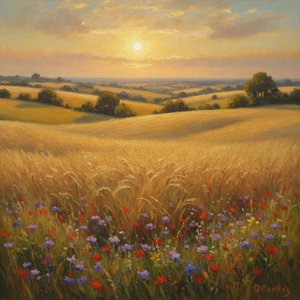
Golden Fields & Sun-Drenched Meadows: Capturing the Soul of Impressionist Landscapes
Immerse yourself in the luminous world of Impressionist landscapes. Discover how masters like Monet and Gauguin captured ephemeral light through plein air painting, and learn to bring the soul of sun-drenched meadows into your home with exquisite, hand-painted oil reproductions.

The Soul of Color: A Journey into the Emotional Resonance of Lyrical Abstraction
Embark on a cultural journey through Lyrical Abstraction. Explore how masters like Kandinsky used color and motion to translate emotion into visual poetry. Discover the profound beauty of abstract expressionism and learn to curate emotional resonance in your own art collection.
Explorez des œuvres d'art classées par thèmes, styles et caractéristiques.


