Aperçu en situation
 Envoyer
 Partager
 Détails de l'œuvre
 Guide
Guide

 Télécharger l'image
 Articles similaires
 Radiographie
 Diaporama
 Q&A
Q&A Statistiques
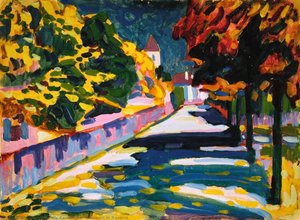
Study for a Sluice


Wassily Kandinsky’s 1901 ‘Study for a Sluice’ is a captivating Post-Impressionist landscape showcasing a serene water scene with a white building, reflecting the artist's pioneering spirit and early exploration of abstraction. Discover or own this iconic artwork.
 Lire la suite
Découvrez Kandinsky (1866-1944), pionnier de l'art abstrait ! Explorez son expressionnisme vibrant, ses thèmes spirituels et son héritage Bauhaus à travers des reproductions exceptionnelles.
Giclées et impressions d'art
Impressions giclées ou sur toile de qualité musée, avec une production rapide et des finitions au choix. ( Commander la reproduction peinte à la main Passer au format numérique)




P118B €10

P118H €10

P118W €10

P438Z €10

P508JH €12

P508YH €12

P805H €10

P805Z €10

P919BZ €10

P919G €10

P919XJ €10

P959ZH €10

P968JZ €12

W106C €8

W218G €10

W218JH €8

W218Y €10

W307PJ €10

W316G €10

W316PJ €8

W316Y €10

W398PJ €8

W4111J €10

W500HY €15

W500JH €15

W692G €12

W849H €8

W940BG €15

W953PJ €8




Format standard
sur mesure
CM
INCH
Choisissez parmi nos formats prédéfinis qui respectent les proportions originales de l’œuvre.
Loading sizes...

largeur
hauteur
Saisissez la largeur et la hauteur souhaitées pour qu'elles s'adaptent à votre cadre ou à votre mur. Une impression peut être recadrée, mais jamais agrandie au-delà de l'image originale ; ainsi, un format de forme différente entraînera la perte d'une partie de l'image. Nous vous envoyons une maquette numérique pour approbation avant toute impression. L'image présentée sur cette page ne montre pas le recadrage réel — seule la maquette le permet.
Livraison dans le monde entier () en 2 semaines au lieu des 4/5 semaines habituelles. (30 octobre)

Livraison express gratuite dans le monde entier

Toile de lin de qualité supérieure

Assurance transport complète

Garantie de remboursement des droits de douane

Garantie de fidélité des couleurs

Politique de retour de 100 jours (uniquement en cas de défaut)

Garantie de remboursement à 100%

Offre de tarifs dégressifs
 L'option verre n'est disponible que pour les dimensions inférieures à 110 cm.

Study for a Sluice
Giclées et impressions d'art
Format de la reproduction
-


Prix total
€ 61
Wassily Kandinsky’s ‘Study for a Sluice’: A Dawn of Abstract Emotion
Wassily Kandinsky's 'Study for a Sluice,' painted in 1901, represents a pivotal moment not just in the artist’s career but in the very trajectory of modern art. This seemingly simple landscape – a serene body of water reflecting a white building nestled amongst trees – is far more than a picturesque depiction; it's an intensely personal and profoundly influential exploration of color and form that foreshadowed the rise of abstract expressionism. Born in Moscow in 1866, Kandinsky’s artistic journey was initially marked by a pragmatic pursuit of law and economics before a transformative encounter with Monet’s “Haystacks” ignited within him a fervent desire to translate inner experience onto canvas. This nascent impulse found further resonance in Wagner's opera "Lohengrin," fueling his ambition to move beyond representational accuracy and capture the essence of emotion through purely visual means.
Post-Impressionist Roots & Early Experimentation
‘Study for a Sluice’ firmly establishes Kandinsky within the Post-Impressionist movement, though he quickly sought to transcend its limitations. The painting's style is characterized by bold color choices and expressive brushwork – hallmarks of the period – yet it demonstrates an unprecedented focus on the *relationships* between colors rather than their objective depiction. Notice how the blues and greens of the water subtly shift and blend, creating a sense of movement and depth. The white building, rendered with simplified forms, acts as a focal point, drawing the eye while simultaneously contributing to the overall atmospheric effect. This early work reveals Kandinsky’s nascent desire to use color not merely to represent reality but to evoke feeling and spiritual experience – a core tenet of his later artistic philosophy.
Symbolic Resonance & Spiritual Intent
Beyond its formal qualities, ‘Study for a Sluice’ is laden with symbolic resonance. The “sluice” itself, a structure designed to control water flow, can be interpreted as representing the artist's own attempt to channel and direct his creative energies. The surrounding landscape – the water, the trees, the building – all contribute to a sense of tranquility and contemplation, suggesting a yearning for spiritual harmony. Kandinsky was deeply interested in the intersection of art, religion, and psychology, believing that color possessed inherent spiritual qualities. This painting exemplifies this belief, demonstrating how he sought to translate subjective experience into tangible form.
Technique & Reproduction – A Window to the Original
This hand-painted reproduction meticulously recreates Kandinsky’s original technique, capturing the nuances of his brushwork and color palette with remarkable fidelity. The artist employed a layering method, building up thin washes of paint to achieve the luminous effects characteristic of his work. The textured surface, achieved through multiple applications of pigment, adds depth and richness to the image, inviting close observation. TopImpressionists’s skilled artisans have painstakingly reproduced this artwork, ensuring that you receive a faithful representation of Kandinsky's vision – a piece that will undoubtedly become a treasured addition to any art collection or interior space.
Questions et réponses
Qui a créé « Study for a Sluice » et dans quel style s'inscrit cette œuvre ?
Wassily Wassilyevich Kandinsky a créé « Study for a Sluice » au sein du mouvement Post-Impressionist Landscape.
L'œuvre « Study for a Sluice » est-elle disponible en tirage d'art ?
« Study for a Sluice » est disponible en tant que une impression d'art sur toile de coton ou sur papier canvas d'archive. Les commandes s'effectuent sur sa page Tirage d'art fine art, dans le format de votre choix.
D'où viennent les visiteurs de «Study for a Sluice» de Wassily Wassilyevich Kandinsky ?
Une page Statistiques est disponible pour « Study for a Sluice ». Elle présente l'évolution mensuelle des visites de l'œuvre ainsi que des autres créations de l'artiste, avec une répartition par pays et par langue.
Biographie de l'artiste
Wassily Wassilyevich Kandinsky : Pionnier de l'Abstraction
- Né : 16 décembre 1866, Moscou, Russie
- Décédé : 13 décembre 1944
- Nationalité : Russe
Jeunesse et Développement Artistique
- La jeunesse de Kandinsky a été marquée par une éducation diversifiée, étudiant initialement le droit et l'économie à l'Université de Moscou.
- À l’âge de 30 ans, il s’est tourné vers l’art, s’inscrivant à l’Académie de Munich sous la direction de Franz von Stuck. Ce changement a marqué un engagement profond envers l’expression artistique.
- Ses premières œuvres ont été influencées par l'art populaire russe, notamment lors d'un voyage ethnographique dans la région de Vologda en 1889.
- Il a développé un intérêt pour le symbolisme des couleurs et la psychologie, qui sont devenus des éléments fondamentaux de ses compositions abstraites ultérieures.
Périodes Artistiques Clés et Styles
- Expressionnisme Précoce : Caractérisé par des couleurs vibrantes et une intensité émotionnelle, comme on le voit dans "Papeln (Poplars)" (1902).
- Transition vers l'Abstraction : Kandinsky s’est progressivement éloigné de l’art représentatif, explorant la relation entre la couleur, la forme et l’émotion.
- Abstraction Géométrique : Cette période a vu un intérêt accru pour les formes géométriques et les compositions, illustré par "Several Circles" (140 x 140 cm).
- Abstraction Spirituelle : Kandinsky croyait que l'art pouvait exprimer des vérités spirituelles à travers des formes non représentatives. Ses œuvres visaient à évoquer des émotions et des expériences intérieures plutôt qu’à dépeindre la réalité externe.
Influence et Héritage
- Influence du Bauhaus : En tant que membre de faculté de l'école Bauhaus en Allemagne, Kandinsky a profondément influencé des générations d'artistes grâce à ses théories sur la couleur, la forme et l’abstraction.
- Écrits Théoriques : Ses écrits, notamment "De lo Spirituel dans l'Art", ont articulé sa philosophie artistique et ont contribué de manière significative au développement de la théorie de l'art abstrait.
- Impact sur l'Art Moderne : Kandinsky est largement reconnu comme un pionnier de l'art abstrait, ouvrant la voie à de nombreux mouvements et artistes ultérieurs.
- Collections Muséales : Ses œuvres sont conservées dans les principaux musées du monde entier, notamment la Galerie Tretyakov à Moscou, qui abrite sa "Composition VII" monumentale.
Œuvres Notables
- Composition VII : Une œuvre abstraite de grande envergure considérée comme l'aboutissement du développement artistique de Kandinsky.
- Carré Noir (en collaboration avec Kazimir Malevitch) : Une œuvre fondamentale dans l’histoire de l’abstraction, représentant un départ radical des formes artistiques traditionnelles.
- Several Circles : Démontre son utilisation innovante de formes géométriques et de couleurs vibrantes pour créer des compositions dynamiques.
- Murnau avec une Église : Équilibre les éléments abstraits avec l'imagerie représentative, mettant en valeur son style en évolution.
- Un Bal Intime : Une œuvre ultérieure présentant une abstraction géométrique et un empâtement superposé, reflétant son exploration continue des thèmes spirituels.

Wassily Wassilyevich Kandinsky
1866 - 1944 , Russie
L'essentiel de l'artiste
- Artistic Movement Or Style: Expressionnisme abstrait
- Date De Décès: 13 décembre 1944
- Date De Naissance: 16 décembre 1866
- Full Name: Wassily Wassilyevich Kandinsky
- Lieu De Naissance: Moscou, Russie
- Nationalité: Russe
- Notable Artworks:
- Composition VII
- Carré noir
- Plusieurs cercles
- Murnau avec une église
- Un après-midi intime
Articles connexes

Beyond the Light: Capturing Raw Emotion and Subjective Vision in Post-Impressionist Landscapes
Explore the profound emotional depth of Post-Impressionist landscapes. Discover how masters like Van Gogh moved beyond light to capture raw human feeling through vibrant color and expressive texture in this expert art history retrospective.

The Soul of Color: A Journey into the Emotional Resonance of Lyrical Abstraction
Embark on a cultural journey through Lyrical Abstraction. Explore how masters like Kandinsky used color and motion to translate emotion into visual poetry. Discover the profound beauty of abstract expressionism and learn to curate emotional resonance in your own art collection.
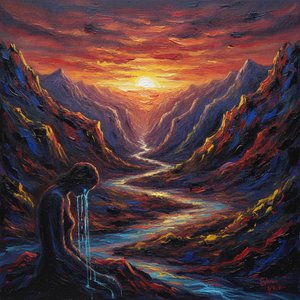
Capturing Emotion: A Journey Through the Soul of Expressionist Landscapes
Explore the profound emotional depth of Expressionist landscapes. Discover how Post-Impressionist masters moved beyond light to capture the soul through vibrant color and form. A curated journey for true art lovers seeking the beauty of expressive mastery.
Explorez des œuvres d'art classées par thèmes, styles et caractéristiques.