

प्रदर्शित: · फ्रेम सहित:
 पूर्वावलोकन देखें
 साझा करें
 साझा करें
 विस्तृत विवरण
 मार्गदर्शिका

 डाउनलोड करें
 समान वस्तुएं
 एक्स-रे
 स्लाइड शो देखें
 प्रश्न और उत्तर
 आंकड़े

₹ 25924
हस्तनिर्मित ऑयल रिप्रोडक्शन
आपके आकार और फ्रेम के अनुसार कैनवास पर हाथ से बनी ऑयल पेंटिंग, हमारे कलाकारों द्वारा विशेष रूप से ऑर्डर पर तैयार। ( प्रिंट विकल्प पर स्विच करें डिजिटल इमेज पर स्विच करें)
आकार
·मानक
कस्टम
CM
INCH
कलाकृति के मूल अनुपात से मेल खाने वाले हमारे पूर्व निर्धारित आकारों में से चुनें।
आकार लोड हो रहे हैं...

चौड़ाई
ऊँचाई
अपने फ्रेम या अपनी दीवार के अनुसार आवश्यक चौड़ाई और ऊंचाई दर्ज करें। यह हाथ से पेंट किया गया है, इसलिए अलग आकार के लिए कलाकार चित्र के चारों ओर थोड़ा अधिक पेंट कर सकता है, या थोड़ा काट सकता है — चुनाव आपका है। पेंटिंग शुरू होने से पहले हम आपकी स्वीकृति के लिए एक डिजिटल मॉकअप भेजते हैं। इस पृष्ठ पर दिखाई गई तस्वीर वास्तविक परिणाम नहीं दिखाती है — केवल मॉकअप ही वास्तविक रूप दिखाता है।
 अधिक जानकारी पढ़ें
समाप्त करें
·
सफेद किनारे ₹1

धुंधला किनारा ₹1

विस्तारित ₹1

P118B ₹10

P118H ₹10

P118W ₹10

P438Z ₹10

P508JH ₹12

P508YH ₹12

P805H ₹10

P805Z ₹10

P919BZ ₹10

P919G ₹10

P919XJ ₹10

P959ZH ₹10

P968JZ ₹12

W106C ₹8

W218G ₹10

W218JH ₹8

W218Y ₹10

W307PJ ₹10

W316G ₹10

W316PJ ₹8

W316Y ₹10

W398PJ ₹8

W4111J ₹10

W500HY ₹15

W500JH ₹15

W692G ₹12

W849H ₹8

W940BG ₹15

W953PJ ₹8

H24-GOLD ₹30

H24-SILVER ₹30

H36-GOLD ₹45

H36-SILVER ₹45
एक सुरक्षात्मक ट्यूब में भेजा जाता है, जिसे आप अपने पसंद के फ्रेम में लगवा सकते हैं।
अतिरिक्त सेवाएँ
वैकल्पिकएक्स्ट्रा में क्या शामिल है?
क्या बदला जा सकता है उसके उदाहरण: चेहरे को ग्राहक की फोटो से बदलें; पालतू जानवर जोड़ें (जैसे, बिल्ली की जगह कुत्ता); बैकग्राउंड में छिपा हुआ संदेश शामिल करें; बैकग्राउंड का परिदृश्य या तत्व बदलें।
ऑर्डर के बाद, TopImpressionists.com टीम निर्देशों के लिए क्लाइंट को ईमेल करेगी और एक मॉकअप प्रीव्यू प्रदान करेगी
ऑर्डर के बाद, TopImpressionists.com टीम निर्देशों के लिए क्लाइंट को ईमेल करेगी और एक मॉकअप प्रीव्यू प्रदान करेगी
विश्वव्यापी वितरण () मानक 5 सप्ताह के बजाय मात्र 3/4 सप्ताह में। (3 नवमबर)। गुणवत्ता से कोई समझौता नहीं।
सुरक्षात्मक वार्निश
नामपट्टिका
उत्कीर्ण कांस्य पट्टिका का विवरण
This elegant plaque features the artist's name and the title of the artwork, finely engraved for a timeless presentation.
It is made from bronze with a refined, elegant finish. The text is precisely laser-engraved for a sharp and permanent result. Measuring 9x2 cm, the plaque is compact yet easy to read. It's built to be durable and scratch-resistant, offering a professional, museum-quality look. Mounting is simple thanks to the included adhesive backing.
पारदर्शी ऐक्रेलिक पट्टिका का विवरण
The plaque includes essential engraved details such as the artist's name, the title of the artwork, the date it was created, the type of media used-like oil on canvas or watercolor-a brief description of the piece, and a QR code that links to the complete artwork information.
It is crafted from clear acrylic, offering a sleek, modern appearance. The text is UV-engraved in black to ensure strong visual contrast. With a size of 10x15 cm, it ensures optimal readability. It comes equipped with two metal hooks for secure wall mounting. The plaque is designed to be weather-resistant, making it suitable for various environments, and it includes interactive features that work seamlessly with smartphone scanning.
काले ऐक्रेलिक पट्टिका का विवरण
This elegant plaque includes engraved information such as the artist's name, the title of the artwork, the date it was created, the type of media used (like oil on canvas or watercolor), a short description of the artwork, and a QR code for quick access to more information.
The plaque itself is made from refined black acrylic with a premium finish. The text is laser-engraved in white for high contrast and readability. Its size is 10x15 cm, designed to be easy to read. It comes with two metal hooks for professional mounting. The design is sleek and fits any interior style. It is also weather-resistant and durable, with built-in digital integration for mobile compatibility.
ग्लास का विकल्प केवल 110 सेमी से कम आकार में ही उपलब्ध है।
 ग्लास का विकल्प केवल 110 सेमी से कम आकार में ही उपलब्ध है।
- दुनिया भर में मुफ़्त एक्सप्रेस शिपिंग
- उच्च गुणवत्ता वाला लिनेन कैनवास
- पूर्ण शिपिंग बीमा
- सीमा शुल्क और आयात कर वापसी की गारंटी
- सटीक रंग मिलान की गारंटी
- 100 दिनों की वापसी नीति (केवल दोष होने पर)
- 100% पैसे वापसी की गारंटी
- थोक छूट का अवसर


संग्रहणीय वस्तु का विवरण
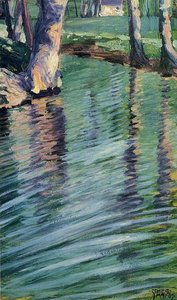
Experience the serene beauty of Egon Schiele’s ‘Trees Mirrored in a Pond,’ a masterful Impressionist landscape capturing reflections and tranquility. Explore reproductions at WikiArt.
कलाकार की जीवनी
एगॉन शील, ऑस्ट्रियाई अभिव्यक्तिवादी चित्रकार, अपनी तीव्र भावनाओं और मनोवैज्ञानिक चित्रों के लिए जाने जाते हैं। उनकी कला में मृत्यु, कामुकता और अकेलेपन जैसे विषयों को दर्शाया गया है।
पेंटिंग के बारे में
A Window into the Soul: The Haunting Serenity of Schiele’s Landscape
In the quietude of 1907, Egon Schiele captured a moment that transcends mere landscape painting, offering instead a profound distillation of Expressionist sensibility. Trees Mirrored in a Pond is far more than a picturesque depiction of nature; it serves as a window into the artist’s burgeoning, tormented psyche. Created during a pivotal and deeply personal era—immediately following the devastating loss of his sister—the work vibrates with an underlying preoccupation with mortality and the fragility of existence. While the surface of the canvas presents a tranquil scene, there is an unsettling stillness to the composition, a sense that the very air is heavy with the weight of what has been lost. For the discerning collector or lover of fine art, this piece offers a rare opportunity to possess a fragment of the early Viennese avant-garde, where the boundaries between the external world and internal emotion begin to dissolve.
The composition centers around a mirror-like pond, its surface acting as a silent witness to the mature trees that surround it. Schiele employs an Impressionistic approach to technique, utilizing loose, rhythmic brushstrokes and a muted palette of deep greens, earthy browns, and somber blues. Rather than striving for photographic precision, he seeks to capture the atmospheric tension of the moment. The reflections in the water are not merely optical phenomena but symbolic echoes; they represent the duality of reality and perception, much like Schiele’s own struggle to reconcile his outward life with his inner anxieties. This mastery of light and shadow creates a sense of depth that invites the viewer to linger, searching for meaning within the ripples of the painted water.
Humanity Amidst the Infinite
Adding a layer of poignant complexity to this natural setting are two figures positioned near the pond’s edge. Their presence is subtle, yet vital; they represent humanity grappling with its relationship to the vast, indifferent beauty of nature. Positioned slightly off-kilter, their posture exudes a quiet, contemplative energy that contrasts sharply with the turbulent emotions simmering beneath the surface of the painting. This deliberate tension between the stillness of the landscape and the existential questions posed by the human figures is what makes the work so enduringly powerful. It is a scene of profound solitude, yet it avoids being lonely, instead offering a space for deep, introspective thought.
For interior designers and curators, Trees Mirrored in a Pond serves as a sophisticated focal point that brings a sense of historical weight and emotional depth to any space. The painting’s ability to command attention through its subtle color harmonies and evocative subject matter makes it an ideal centerpiece for a gallery-style collection or a refined living environment. It is a piece that does not merely decorate a wall; it transforms a room, inviting conversation about the intersection of beauty, grief, and the enduring resilience of the human spirit. To display a high-quality reproduction of this masterpiece is to celebrate the raw, unshielded beauty of the Expressionist movement and to honor one of the most significant voices in modern art history.
प्रश्न और उत्तर
एगॉन शील द्वारा "Trees Mirrored in a Pond" के रंग कितने गहरे हैं?
"Trees Mirrored in a Pond" की रंग तीव्रता Balanced है। तीव्रता यह दर्शाती है कि रंग कितने गहरे या स्पष्ट दिखाई देते हैं।
Impressionist Landscape शैली की कृति "Trees Mirrored in a Pond" किस देश से संबंधित है?
"Trees Mirrored in a Pond" की रचना ऑस्ट्रिया में जन्मे एगॉन शील द्वारा Impressionist Landscape आंदोलन के अंतर्गत की गई थी। कलाकार की मूल जड़ें इस कृति को Impressionist Landscape शैली से जोड़ती हैं, जैसा कि ऑस्ट्रिया के कलाकारों द्वारा अपनाया जाता है।
"Trees Mirrored in a Pond" का निर्माण कब किया गया था?
एगॉन शील द्वारा "Trees Mirrored in a Pond" का निर्माण 1907 में हुआ था।
त्वरित तथ्य और कला प्रश्नोत्तरी
एगॉन शील के बारे में

एगॉन शील
1890 - 1918, ऑस्ट्रिया
कलाकार की जीवनी
एगॉन शील: ऑस्ट्रियाई अभिव्यक्तिवादी चित्रकार का जीवन और कला
एगॉन लियो एडॉल्फ लुडविग शील (1890-1918) एक ऐसे कलाकार थे जिन्होंने अपनी तीव्र, भावनात्मक रूप से आवेशित चित्रों और रेखाचित्रों के माध्यम से 20वीं सदी की शुरुआत में ऑस्ट्रियाई कला पर अमिट छाप छोड़ी। टूलन में जन्मे, शील का जीवन प्रारंभिक नुकसान और व्यक्तिगत संघर्षों से चिह्नित था, जिसने उनकी कला को गहराई से प्रभावित किया। उनके पिता के शीघ्र निधन और बाद में उनकी बहन की मृत्यु ने उन्हें मृत्यु दर और मानव अस्तित्व की क्षणभंगुरता के प्रति एक गहन संवेदनशीलता प्रदान की, जो उनके कार्यों में बार-बार उभरती है। शील का बचपन पारंपरिक स्थिरता से रहित था, लेकिन इसने उनमें एक मजबूत स्वतंत्र भावना पैदा की। कम उम्र से ही उन्होंने ड्राइंग में असाधारण प्रतिभा दिखाई, हालांकि यह अक्सर उनके पिता द्वारा संदेह के साथ देखा जाता था, जिन्होंने इसे अधिक व्यावहारिक प्रयासों से ध्यान भटकाने के रूप में माना। इन शुरुआती अनुभवों ने उन्हें एक भावनात्मक कच्चापन प्रदान किया जो उनकी कलात्मक अभिव्यक्ति को परिभाषित करेगा, जीवन, मृत्यु और मानव स्थिति के विषयों के साथ निरंतर संघर्ष करते हुए।
वियना का क्रूसिबल: कलात्मक विकास
शील की औपचारिक कला प्रशिक्षण वियना में कुन्स्टगेवेरबुचूले (कला और शिल्प विद्यालय) में शुरू हुआ, लेकिन उन्हें जल्द ही इसकी रूढ़िवादी दृष्टिकोण से निराशा हुई। उन्होंने बाद में अकादमी डेर बिल्डेंडन कुन्स्टन (फाइन आर्ट्स एकेडमी) में स्थानांतरित किया, लेकिन वहां भी वे कठोर शैक्षणिक परंपराओं से निराश हो गए। इस असंतोष ने उन्हें औपचारिक प्रशिक्षण को पूरी तरह से त्यागने के लिए प्रेरित किया, अपने स्वयं के मार्ग को प्रशस्त करते हुए, अपनी कलात्मक दृढ़ विश्वास का प्रमाण। गुस्ताव क्लिमिट का प्रभाव उनके शुरुआती वर्षों में महत्वपूर्ण था; शील ने क्लिमिट की सजावटी शैली और प्रतीकात्मक अन्वेषण की प्रशंसा की, यहां तक कि स्थापित कलाकार से मार्गदर्शन भी प्राप्त किया। हालांकि, शील जल्द ही क्लिमिट के सौंदर्यशास्त्र से अलग हो गए, एक विशिष्ट व्यक्तिगत आवाज विकसित की जो अपनी कच्ची ईमानदारी और मनोवैज्ञानिक तीव्रता द्वारा चिह्नित थी। उन्होंने 1909 में Neues Wiener Kunstgruppe (नया वियना कला समूह) की सह-स्थापना की, खुद को अन्य प्रगतिशील कलाकारों के साथ संरेखित किया जिन्होंने प्रचलित कलात्मक मानदंडों को चुनौती दी। उनके शुरुआती कार्यों, अक्सर परेशान करने वाले चित्र और स्व-चित्रणों ने भावनात्मक उथल-पुथल के शक्तिशाली बयान के रूप में उभरना शुरू कर दिया, जिसमें विकृत आंकड़े और एक स्पष्ट अशांति की भावना थी। ये पेंटिंग केवल भौतिक रूप का प्रतिनिधित्व नहीं थे बल्कि आंतरिक परिदृश्य की खोज थीं - चिंताएं, इच्छाएं और भय जो मानव मन को परेशान करते हैं। उन्होंने उस चीज को चित्रित करने की कोशिश की जिसे वे *देखा* नहीं, बल्कि *महसूस* किया।
कच्ची भावना और निर्भीक सत्य
एगॉन शील की कला अपनी कच्ची ईमानदारी और मनोवैज्ञानिक गहराई के लिए तुरंत पहचानने योग्य है। उन्होंने अक्सर वर्जित माने जाने वाले विषयों - कामुकता, मृत्यु, चिंता, अलगाव - का सामना निर्भीकता से किया। उनकी विशिष्ट शैली में लम्बे आंकड़े, मुड़े हुए आसन और अभिव्यंजक रेखाएं शामिल हैं जो बेचैनी और भावनात्मक तीव्रता की भावना व्यक्त करती हैं। मानव रूप, विशेष रूप से नग्न, उनका प्राथमिक विषय बन गया, आदर्श सौंदर्य के एक वस्तु के रूप में नहीं बल्कि मानव अनुभव की जटिलताओं का पता लगाने के लिए एक बर्तन के रूप में। स्व-चित्रण उनके कार्यों का एक महत्वपूर्ण हिस्सा बनाते हैं, जो उनके आंतरिक जगत की अंतरंग झलक प्रदान करते हैं - अक्सर अकेलापन और आत्म-संदेह से चिह्नित दुनिया। उन्होंने खुद को अनाकर्षक या कमजोर मुद्राओं में चित्रित करने से नहीं हिचकिचाया, जिससे आत्म-जागरूकता और अंतर्दृष्टि के एक गहरे स्तर का खुलासा हुआ। स्व-चित्रों के अलावा, शील ने दूसरों के कई चित्र बनाए, उनकी समानता को एक परेशान करने वाली यथार्थवाद के साथ कैप्चर किया जो सतह के नीचे प्रतीत होता था। उनके परिदृश्य, उनके चित्रात्मक चित्रों की तुलना में कम केंद्रीय होने पर भी, रूप और रंग में उनकी महारत का प्रदर्शन करते हैं, अक्सर उनके चित्रों के समान ही भावनात्मक तीव्रता को दर्शाते हैं। शील के काम में रेखा का उपयोग विशेष रूप से उल्लेखनीय है; यह केवल आकार को परिभाषित करने का एक उपकरण नहीं है बल्कि एक अभिव्यंजक शक्ति है जो भावना और मनोवैज्ञानिक तनाव व्यक्त करती है। *फिसलिस* पौधे जैसे आवर्ती रूपांकनों - इसकी नाजुक, कागजी खोल के साथ मृत्यु और क्षणभंगुरता का प्रतीक - इस मृत्यु दर के प्रति जुनून को और उजागर करते हैं।
समय से पहले एक विरासत: उपलब्धियां और महत्व
सेंसरशिप और कानूनी चुनौतियों का सामना करने के बावजूद - जिसमें नाबालिगों को भ्रष्ट करने के आरोप में संक्षिप्त कारावास भी शामिल है - शील ने वियना के अत्याधुनिक हलकों में मान्यता प्राप्त की। उनके काम ने उस समय के मानदंडों को चुनौती दी, प्रशंसा और आक्रोश दोनों को प्रेरित किया। अपनी समय से पहले मृत्यु के साथ 1918 में 28 वर्ष की आयु में स्पेनिश फ्लू महामारी में उनकी मृत्यु होने तक, उन्होंने खुद को ऑस्ट्रियाई अभिव्यक्तिवाद के एक प्रमुख व्यक्ति के रूप में स्थापित कर लिया था। फिसलिस के साथ स्व-चित्र, एक दूसरे को गले लगाते हुए जोड़ा और क्रुमाऊ के पास Kreuzberg का फील्ड लैंडस्केप जैसे महत्वपूर्ण कार्य उनकी कलात्मक प्रतिभा के प्रमाण के रूप में खड़े हैं। अभिव्यक्तिवादी कलाकारों की अगली पीढ़ी पर उनका प्रभाव निर्विवाद है, विशेष रूप से जो मनोवैज्ञानिक विषयों का पता लगाने और पारंपरिक कलात्मक मानदंडों को चुनौती देने में रुचि रखते हैं। शील का बोल्ड दृष्टिकोण से रूप और विषय वस्तु के प्रति आज भी दर्शकों को आकर्षित करता है, जिससे वे 20वीं सदी की शुरुआत के सबसे महत्वपूर्ण और प्रभावशाली आंकड़ों में से एक बन जाते हैं। उनके चित्रों को अब दुनिया भर के प्रमुख संग्रहालयों के संग्रह में रखा गया है, जिसमें वियना के लेपोल्ड संग्रहालय और चेस्की क्रुम्लोव में एगॉन शील आर्ट सेंटर शामिल हैं, जो उनकी कलात्मक विरासत को सुनिश्चित करते हैं। उन्होंने एक ऐसा काम छोड़ दिया है जो न केवल सौंदर्य की दृष्टि से आकर्षक है बल्कि गहराई से मानवीय भी है - अस्तित्व की जटिलताओं का सामना करने की कला की शक्ति का प्रमाण ईमानदारी, साहस और अटूट दृष्टिकोण के साथ।
- मुख्य विषय: मृत्यु दर, कामुकता, अलगाव, मनोवैज्ञानिक अशांति।
- प्रभाव: गुस्ताव क्लिमिट, वियना सेसेशन, व्यक्तिगत आघात।
- शैली की विशेषताएं: लम्बे आंकड़े, मुड़े हुए आसन, अभिव्यंजक रेखाएं, कच्ची भावना।
एगॉन शील के बारे में कुछ खास बातें
- कलात्मक शैली: अभिव्यक्तिवाद
- जन्म तिथि: 12 जून 1890
- जन्म स्थान: टुलन, ऑस्ट्रिया
- पूरा नाम: एगॉन शील
- प्रभावित आंदोलन: ['अभिव्यक्तिवाद']
- प्रभावित कलाकार: ['गुस्ताव क्लिमिट']
- प्रमुख कलाकृतियाँ:
- स्व-चित्रित फल
- मिलन
- क्षेत्रीय दृश्य
- मृत्यु तिथि: 31 अक्टूबर 1918
- राष्ट्रीयता: ऑस्ट्रियाई
समान कलाकृतियाँ


विषयों, शैलियों और विशेषताओं के आधार पर व्यवस्थित कलाकृतियों का अन्वेषण करें।


एगॉन शील
Trees Mirrored in a Pond
() ·
फ्रेम सहित: · लिनन पर तेल के रंगों से हाथ से पेंट किया गया
कुल योग