


 पूर्वावलोकन देखें
 भेजें
भेजें साझा करें
 विवरण देखें
 मार्गदर्शिका

 डाउनलोड करें
 समान वस्तुएं
 एक्स-रे
 स्लाइड शो देखें
 Q&A
Q&A आंकड़े
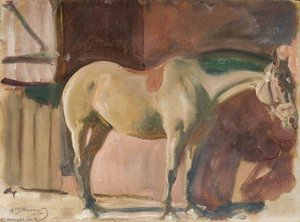
A Horse Drinking
 Oil On Canvas
- WallArt
- Impressionism
 1887
1887- 19th Century
 22.0 x 16.0 cm
A serene Impressionist study of a horse drinking from a trough by Eugène Louis Boudin captures the fleeting beauty of light and nature in this 1887 masterpiece, perfect for adding timeless elegance to your collection.
 और पढ़ें
यूजीन लुई Boudin (1824-1898) एक फ्रांसीसी चित्रकार थे जिन्होंने समुद्री दृश्यों और वायुमंडलीय परिदृश्यों के लिए अपनी कलात्मकता से प्रभाव डाला। उन्होंने इम्प्रेशनिज्म के विकास में महत्वपूर्ण भूमिका निभाई और क्लाउड मोनेट को प्रेरित किया। उनके चित्रों में प्रकृति की सुंदरता और क्षणभंगुर प्रकाश का चित्रण है।
गिक्ली / आर्ट प्रिंट
तेज़ उत्पादन और विभिन्न फिनिश विकल्पों के साथ म्यूजियम-क्वालिटी गिकली (giclée) या कैनवस प्रिंट। ( हाथ से बनी पेंटिंग खरीदें डिजिटल इमेज पर जाएँ)




P118B ₹10

P118H ₹10

P118W ₹10

P438Z ₹10

P508JH ₹12

P508YH ₹12

P805H ₹10

P805Z ₹10

P919BZ ₹10

P919G ₹10

P919XJ ₹10

P959ZH ₹10

P968JZ ₹12

W106C ₹8

W218G ₹10

W218JH ₹8

W218Y ₹10

W307PJ ₹10

W316G ₹10

W316PJ ₹8

W316Y ₹10

W398PJ ₹8

W4111J ₹10

W500HY ₹15

W500JH ₹15

W692G ₹12

W849H ₹8

W940BG ₹15

W953PJ ₹8




मानक आकार
अनुकूलित
CM
INCH
कलाकृति के मूल अनुपात से मेल खाने वाले हमारे पूर्व निर्धारित आकारों में से चुनें।
Loading sizes...

चौड़ाई
ऊँचाई
अपने फ्रेम या अपनी दीवार के अनुसार आवश्यक चौड़ाई और ऊंचाई दर्ज करें। प्रिंट को केवल काटा जा सकता है, चित्र से बड़ा कभी नहीं बनाया जा सकता, इसलिए अलग आकार का साइज चित्र का एक हिस्सा खो देता है। किसी भी चीज़ को प्रिंट करने से पहले हम आपकी स्वीकृति के लिए आपको एक डिजिटल मॉकअप भेजते हैं। इस पृष्ठ पर दिखाया गया चित्र वास्तविक कटिंग नहीं दिखाता है — केवल मॉकअप ही इसे दर्शाता है।
विश्वव्यापी डिलीवरी (), मानक 4/5 सप्ताह के बजाय मात्र 2 सप्ताह में। (29 अक्टूबर)

दुनिया भर में मुफ़्त एक्सप्रेस शिपिंग

प्रीमियम ग्रेड लिनेन कैनवास

पूर्ण शिपिंग बीमा

सीमा शुल्क और आयात कर वापसी की गारंटी

सटीक रंग मिलान की गारंटी

100 दिनों की वापसी नीति (केवल निर्माण दोष होने पर)

100% पैसे वापसी की गारंटी

थोक छूट का अवसर
 ग्लास का विकल्प केवल 110 सेमी से कम आकार में ही उपलब्ध है।

A Horse Drinking
गिक्ली / आर्ट प्रिंट
प्रतिकृति का आकार
-


कुल मूल्य
₹ 6628
A Moment Captured in Light: The Essence of Boudin’s Vision
In the quietude of 1887, Eugène Louis Boudin captured a scene of profound simplicity that resonates with the very soul of the Impressionist movement. A Horse Drinking is not merely a depiction of an animal at a trough; it is a masterful study of a fleeting moment, where the boundaries between nature and light begin to dissolve. The painting presents a horse bowed in a moment of tranquil necessity, its form rendered with a delicate touch that suggests both strength and vulnerability. As the eye wanders from the horse’s focused posture toward the soft, atmospheric background, one encounters a world where the mundane is elevated to the sublime through the artist's unparalleled ability to manipulate color and luminosity.
The composition invites the viewer into a pastoral narrative, where the presence of distant figures and a quiet dining table suggests a lived-in landscape, a slice of life caught in the amber of time. There is a rhythmic grace to the way Boudin positions his subjects, creating a sense of balance that feels both spontaneous and meticulously orchestrated. For the collector or interior designer, this piece offers more than just visual beauty; it provides an emotional anchor, a window into a period of art history where the pursuit of truth lay in the honest observation of light hitting a surface.
Technique and the Impressionist Spirit
Boudin, often celebrated as a precursor to Claude Monet, brings his signature plein air sensibility to this intimate work. His technique is characterized by a sophisticated use of a muted palette, where shades of gray, white, and soft earth tones coalesce to create a sense of atmospheric depth. Rather than relying on harsh outlines, Boudin employs nuanced brushstrokes that impart a tactile texture to the horse's coat, capturing the subtle interplay of light and shadow across its musculature. This approach allows the subject to emerge organically from the environment, as if the creature were woven from the very mist and morning light of the French countryside.
The artist’s mastery lies in his ability to avoid idealization, opting instead for a naturalistic detail that honors the reality of the scene. This commitment to capturing the "impression" of a moment—the way light reflects off water or how shadows soften at midday—is what makes this reproduction such a compelling choice for modern spaces. The painting does not demand attention through loud colors but earns it through a quiet, persistent beauty that rewards prolonged contemplation.
A Timeless Addition to the Curated Home
Integrating a work of this caliber into an interior design scheme offers an opportunity to introduce a sense of historical depth and serenity. Whether placed in a sun-drenched morning room or a sophisticated study, A Horse Drinking serves as a conversation piece that bridges the gap between the nineteenth-century French coast and contemporary elegance. The modest dimensions of the original work allow it to nestle intimately within a gallery wall or stand alone as a focal point of calm.
For those seeking to surround themselves with art that evokes emotion and intellect, this piece stands as a testament to the enduring legacy of Eugène Louis Boudin. It is an invitation to slow down, to observe the subtle variations in light, and to appreciate the quiet dignity found in the simplest of natural encounters. Owning a high-quality reproduction of this masterpiece allows the spirit of Impressionism to breathe within the modern home, offering a perennial source of inspiration and peace.
प्रश्न और उत्तर
इगुएन लुईस बूडिन द्वारा "A Horse Drinking" की रचना में कौन सा रंग प्रमुख है?
इगुएन लुईस बूडिन द्वारा "A Horse Drinking" का प्रमुख रंग Rosy Brown (#b6a895) है।
क्या मैं इगुएन लुईस बूडिन द्वारा "A Horse Drinking" को अलग-अलग रोशनी में देख सकता हूँ?
इगुएन लुईस बूडिन द्वारा "A Horse Drinking" का एक्स-रे पेज एक इंटरैक्टिव व्यूअर है जो आपको कलाकृति की छवि की ग्यारह ऑप्टिकल परतों के माध्यम से स्लाइड करने की सुविधा देता है, जिसमें एक्स-रे शैली का दृश्य भी शामिल है।
इगुएन लुईस बूडिन द्वारा "A Horse Drinking" की दृश्य चमक (brightness) कैसी है?
इगुएन लुईस बूडिन द्वारा "A Horse Drinking" की आभा का स्तर shadow है। इसे इच्छित स्थान के प्रकाश के अनुरूप बनाया जा सकता है।
समान कलाकृतियाँ




कलाकार का परिचय
Eugène Louis Boudin (1824–1898): Pioneer of plein air painting & key influence on Impressionism
Eugène Louis Boudin, born in July 12th, 1824, in Honfleur, France—a town inextricably linked to the sea—was destined for a life devoted to capturing its sublime beauty. His father, a harbor pilot, instilled within him from childhood an unwavering fascination with the ocean’s moods and ever-changing light – an influence that would become the bedrock of Boudin's artistic vision. Rejecting the rigid conventions of academic art, young Eugène embarked on his artistic journey not through formal training but through direct experience: he began working aboard a steamboat traversing between Le Havre and Honfleur at just ten years old. It was during these voyages—observing the shifting skies and shimmering waters—that he first felt compelled to translate those fleeting impressions onto canvas, marking the genesis of his lifelong passion for landscape painting. The family’s subsequent relocation to Le Havre, where his father established a stationery and picture-framing business, further nurtured Boudin's artistic environment. Surrounded by fellow artists like Constant Troyon and Jean-François Millet—who recognized his innate talent and encouraged him to pursue his creative aspirations—he honed his skills and developed his distinctive style. These formative encounters steered him decisively away from commercial pursuits and toward a singular dedication to painting, shaping the trajectory of his entire artistic life.Developing a Unique Style: Plein Air Painting and Influences
Boudin’s artistic breakthrough arrived with the mentorship of Johan Jongkind—a Dutch painter who championed the revolutionary technique of plein air—painting outdoors directly from nature. This approach, unheard of in its time, allowed Boudin to transcend mere representation and achieve a profound communion with the natural world. He embraced plein air wholeheartedly, mastering the subtle nuances of atmospheric perspective and capturing the ephemeral beauty of sunlight filtering through clouds. Jongkind’s insistence on immediacy and observation profoundly impacted Boudin's artistic sensibilities, shaping his distinctive style—characterized by luminous skies, delicate brushstrokes, and a masterful rendering of light and shadow. Furthermore, Boudin drew inspiration from the monumental canvases of the 17th-century Dutch masters—particularly Rembrandt and Frans Hals—whose meticulous attention to detail and dramatic use of chiaroscuro resonated deeply with his own artistic sensibilities. He meticulously studied their techniques, absorbing their mastery of tonal gradation and capturing the psychological depth inherent in human portraits. This stylistic fusion—combining Jongkind’s pioneering spirit with the Dutch masters' expressive power—established Boudin as a pivotal figure in bridging the gap between Romanticism and Impressionism.Impressionism and Claude Monet: A Collaborative Partnership
Boudin’s artistic journey intersected decisively with that of Claude Monet, arguably the most influential Impressionist painter of his era. Recognizing Boudin's exceptional talent and unwavering devotion to capturing natural light—a principle central to Monet’s artistic vision—he persuaded him to abandon academic conventions and embrace plein air painting. This collaboration proved transformative, fostering a shared understanding of Impressionism’s core tenets and cementing Boudin’s role as a catalyst for the movement's emergence. Monet himself famously recounted witnessing Boudin at work, describing him as “apprehensively and then more attentively,” stating that Boudin had “torn the veil from my eyes” and revealing the true potential of landscape painting—a sentiment that encapsulates the profound impact of their artistic partnership. Throughout his prolific career, Boudin produced a vast corpus of paintings—primarily seascapes and coastal landscapes—that exemplify his unwavering commitment to capturing the beauty of Normandy’s coastline. His canvases are imbued with an extraordinary sensitivity to light and atmosphere, reflecting Jongkind's influence and embodying the spirit of Impressionism. Notable works include Honfleur, the Saint Catherine Market Place, which captures the bustling energy of a seaside town bathed in golden sunlight; and numerous depictions of Honfleur’s harbor—rendered with breathtaking precision and imbued with an evocative sense of place. ##Legacy and Recognition Despite facing considerable challenges throughout his life—including debilitating health problems—Boudin persevered in his artistic pursuits, consistently exhibiting his work and mentoring younger artists. His unwavering dedication to capturing the sublime beauty of nature earned him widespread acclaim from fellow painters and critics alike. Among his admirers were Constant Troyon, Jean-François Millet, Gustave Courbet, Claude Monet, and Charles Baudelaire—who lauded Boudin’s ability to “conserve an attitude of familiarity with nature,” without seeking to embellish it—a characteristic that distinguished him from many of his contemporaries. In 1892, he was honored by the Légion d'honneur—a testament to his enduring contribution to French art and culture. Eugène Louis Boudin died peacefully in Deauville, overlooking the English Channel on August 8th, 1898, leaving behind a legacy that continues to inspire artists today. His paintings—characterized by their luminous skies, delicate brushstrokes, and masterful rendering of light—remain among the most celebrated examples of Impressionist landscape painting, securing his place as one of France’s greatest artistic luminaries.
इगुएन लुईस बूडिन
1824 - 1898 , फ्रांस
संक्षिप्त जानकारी
- Artistic Movement Or Style: इंप्रेशनिज्म
- Artists Or Movements Influenced By This Artist: ['Claude Monet']
- Artists Who Influenced This Artist:
- जohan जोंगकिंद
- डच कलाकार
- Date Of Birth: जुलाई 12, 1824
- Date Of Death: अगस्त 8, 1898
- Full Name: Eugène Louis Boudin
- Nationality: फ्रांसीसी
- Notable Artworks:
- मछली पालन के साथ चित्र
- सूर्योदय दृश्य
- Place Of Birth: हॉंफleur, फ्रांस
संबंधित लेखों की सूची

Beyond the Screen: Transforming Personal Memories into Timeless AI-Driven Anime Masterpieces
Experience the magic of digital metamorphosis. Transform your cherished photos into stunning, hand-painted anime masterpieces using our proprietary AI technology and professional artists. Elevate your personal story with a timeless, high-quality oil painting on canvas.
विषयों, शैलियों और विशेषताओं के आधार पर व्यवस्थित कलाकृतियों का अन्वेषण करें।


