
प्रदर्शित: · फ्रेम सहित:
 साझा करें
 साझा करें
 विस्तृत विवरण
 मार्गदर्शिका

 डाउनलोड करें
 समान वस्तुएं
 स्लाइड शो देखें
 प्रश्न और उत्तर
 आंकड़े


₹ 26048
हस्तनिर्मित ऑयल रिप्रोडक्शन
आपके आकार और फ्रेम के अनुसार कैनवास पर हाथ से बनी ऑयल पेंटिंग, हमारे कलाकारों द्वारा विशेष रूप से ऑर्डर पर तैयार। ( प्रिंट विकल्प पर स्विच करें डिजिटल इमेज पर स्विच करें)
यह कलाकृति कॉपीराइट संरक्षण के अंतर्गत है
इस पृष्ठ पर प्रदर्शित कलाकृति कॉपीराइट कानून द्वारा संरक्षित है, जिसका अर्थ है कि हम कानूनी रूप से इसकी हूबहू प्रतिलिपि बनाने या बेचने का अधिकार नहीं रखते हैं। यह संरक्षण अंतर्राष्ट्रीय समझौतों के तहत लागू किया जाता है, जैसे कि बर्न कन्वेंशन और राष्ट्रीय कानूनों द्वारा, जिनमें % द्वारा निर्धारित कानून भी शामिल हैं। अमेरिकी कॉपीराइट कानून - शीर्षक 17।
एक सम्मानजनक और कानूनी विकल्प के रूप में, हम मूल कृति से प्रेरित, कस्टम, हाथ से पेंट की गई कलाकृतियाँ प्रदान करते हैं। हमारे कुशल और पेशेवर कलाकार एक नई, अद्वितीय कृति बनाने के लिए मूल के शैली, भाव और कलात्मक सार का सावधानीपूर्वक अध्ययन करते हैं - जो अपनी मौलिक रचना बने रहते हुए भी वही भावना जगाती है।
यह विधि कॉपीराइट नियमों का पूरी तरह से पालन करती है क्योंकि इसमें संरक्षित कलाकृति की नकल या प्रतिलिपि बनाना शामिल नहीं है। इसके बजाय, यह एक रचनात्मक पुनर्व्याख्या है - एक ऐसी नई पेंटिंग जो मूल कृति से प्रेरित तो है, लेकिन उसके समान नहीं है।
 अधिक जानकारी पढ़ें
आकार
·मानक
कस्टम
CM
INCH
कलाकृति के मूल अनुपात से मेल खाने वाले हमारे पूर्व निर्धारित आकारों में से चुनें।
आकार लोड हो रहे हैं...

चौड़ाई
ऊँचाई
अपने फ्रेम या अपनी दीवार के अनुसार आवश्यक चौड़ाई और ऊंचाई दर्ज करें। यह हाथ से पेंट किया गया है, इसलिए अलग आकार के लिए कलाकार चित्र के चारों ओर थोड़ा अधिक पेंट कर सकता है, या थोड़ा काट सकता है — चुनाव आपका है। पेंटिंग शुरू होने से पहले हम आपकी स्वीकृति के लिए एक डिजिटल मॉकअप भेजते हैं। इस पृष्ठ पर दिखाई गई तस्वीर वास्तविक परिणाम नहीं दिखाती है — केवल मॉकअप ही वास्तविक रूप दिखाता है।
समाप्त करें
·
सफेद किनारे ₹1

धुंधला किनारा ₹1

विस्तारित ₹1

P118B ₹10

P118H ₹10

P118W ₹10

P438Z ₹10

P508JH ₹12

P508YH ₹12

P805H ₹10

P805Z ₹10

P919BZ ₹10

P919G ₹10

P919XJ ₹10

P959ZH ₹10

P968JZ ₹12

W106C ₹8

W218G ₹10

W218JH ₹8

W218Y ₹10

W307PJ ₹10

W316G ₹10

W316PJ ₹8

W316Y ₹10

W398PJ ₹8

W4111J ₹10

W500HY ₹15

W500JH ₹15

W692G ₹12

W849H ₹8

W940BG ₹15

W953PJ ₹8

H24-GOLD ₹30

H24-SILVER ₹30

H36-GOLD ₹45

H36-SILVER ₹45
एक सुरक्षात्मक ट्यूब में भेजा जाता है, जिसे आप अपने पसंद के फ्रेम में लगवा सकते हैं।
अतिरिक्त सेवाएँ
वैकल्पिकएक्स्ट्रा में क्या शामिल है?
क्या बदला जा सकता है उसके उदाहरण: चेहरे को ग्राहक की फोटो से बदलें; पालतू जानवर जोड़ें (जैसे, बिल्ली की जगह कुत्ता); बैकग्राउंड में छिपा हुआ संदेश शामिल करें; बैकग्राउंड का परिदृश्य या तत्व बदलें।
ऑर्डर के बाद, TopImpressionists.com टीम निर्देशों के लिए क्लाइंट को ईमेल करेगी और एक मॉकअप प्रीव्यू प्रदान करेगी
ऑर्डर के बाद, TopImpressionists.com टीम निर्देशों के लिए क्लाइंट को ईमेल करेगी और एक मॉकअप प्रीव्यू प्रदान करेगी
विश्वव्यापी वितरण () मानक 5 सप्ताह के बजाय मात्र 3/4 सप्ताह में। (5 नवमबर)। गुणवत्ता से कोई समझौता नहीं।
सुरक्षात्मक वार्निश
नामपट्टिका
उत्कीर्ण कांस्य पट्टिका का विवरण
This elegant plaque features the artist's name and the title of the artwork, finely engraved for a timeless presentation.
It is made from bronze with a refined, elegant finish. The text is precisely laser-engraved for a sharp and permanent result. Measuring 9x2 cm, the plaque is compact yet easy to read. It's built to be durable and scratch-resistant, offering a professional, museum-quality look. Mounting is simple thanks to the included adhesive backing.
पारदर्शी ऐक्रेलिक पट्टिका का विवरण
The plaque includes essential engraved details such as the artist's name, the title of the artwork, the date it was created, the type of media used-like oil on canvas or watercolor-a brief description of the piece, and a QR code that links to the complete artwork information.
It is crafted from clear acrylic, offering a sleek, modern appearance. The text is UV-engraved in black to ensure strong visual contrast. With a size of 10x15 cm, it ensures optimal readability. It comes equipped with two metal hooks for secure wall mounting. The plaque is designed to be weather-resistant, making it suitable for various environments, and it includes interactive features that work seamlessly with smartphone scanning.
काले ऐक्रेलिक पट्टिका का विवरण
This elegant plaque includes engraved information such as the artist's name, the title of the artwork, the date it was created, the type of media used (like oil on canvas or watercolor), a short description of the artwork, and a QR code for quick access to more information.
The plaque itself is made from refined black acrylic with a premium finish. The text is laser-engraved in white for high contrast and readability. Its size is 10x15 cm, designed to be easy to read. It comes with two metal hooks for professional mounting. The design is sleek and fits any interior style. It is also weather-resistant and durable, with built-in digital integration for mobile compatibility.
ग्लास का विकल्प केवल 110 सेमी से कम आकार में ही उपलब्ध है।
 ग्लास का विकल्प केवल 110 सेमी से कम आकार में ही उपलब्ध है।
- दुनिया भर में मुफ़्त एक्सप्रेस शिपिंग
- उच्च गुणवत्ता वाला लिनेन कैनवास
- पूर्ण शिपिंग बीमा
- सीमा शुल्क और आयात कर वापसी की गारंटी
- सटीक रंग मिलान की गारंटी
- 100 दिनों की वापसी नीति (केवल दोष होने पर)
- 100% पैसे वापसी की गारंटी
- थोक छूट का अवसर


संग्रहणीय वस्तु का विवरण
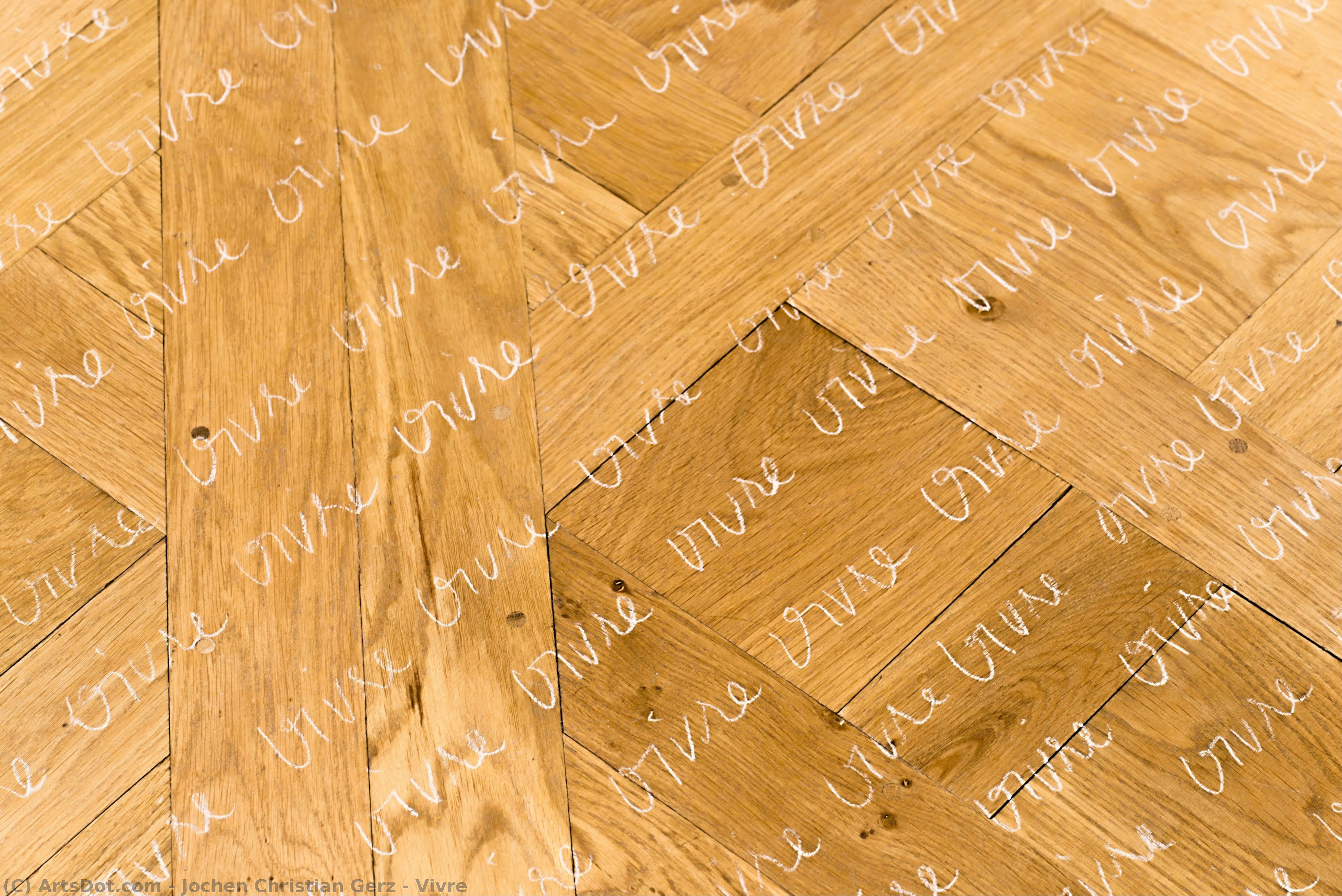
Jochen Christian Gerz’s ‘Vivre’ (1974) presents a striking photographic study of wooden flooring – intricate patterns, subtle textures & repeated text. Explore this minimalist realism.
कलाकार की जीवनी
जोचेन गेर्ज़ की वैचारिक कला का अन्वेषण करें! संस्कृति, समाज और लोकतंत्र पर केंद्रित सार्वजनिक रचना और इंस्टालेशन के लिए प्रसिद्ध जर्मन कलाकार। उनके अद्वितीय कार्यों को जानें।
पेंटिंग के बारे में
The Texture of Existence: An Encounter with Vivre
In the quiet, contemplative realm of conceptual art, few works manage to bridge the gap between the tangible material world and the ethereal layers of human thought as effectively as Jochen Christian Gerz’s Vivre. Created in 1974, this piece serves as a profound meditation on the very foundations upon which we stand. At first glance, the viewer is met with the warm, grounding presence of a wooden floor, its planks arranged in an intricate, geometric dance of light and shadow. The rich palette—ranging from honeyed ambers to deep, weathered browns—invites a tactile response, pulling the observer into a space that feels both ancient and immediate. It is a composition that celebrates the organic beauty of grain and timber, yet it refuses to remain merely decorative.
As one lingers on the surface, the true complexity of the work begins to unfold. The rhythmic, interlocking pattern of the wood provides a structural stability that is subtly disrupted by the presence of overlaid text. This layering technique transforms a simple photographic study of texture into a complex dialogue about language and presence. The white lettering, drifting across the wooden expanse, acts as a ghostly layer of consciousness superimposed upon the physical world. It suggests that our reality is never just the material ground beneath our feet, but is always being shaped, named, and redefined by the narratives we carry with us.
A Legacy of Memory and Public Dialogue
To understand Vivre, one must look toward the radical spirit of its creator. Jochen Christian Gerz, a pivotal figure in German contemporary art, emerged from the transformative energy of the late 1960s, a period defined by a desire to dismantle the boundaries between the artist and the public. His work has always been an architectural endeavor of memory, seeking to build spaces where history and individual experience intersect. In this 1974 piece, we see the seeds of his lifelong mission: the use of simple, accessible elements—wood, light, and text—to provoke deep inquiry into how we inhabit our world.
The title itself, meaning "To Live," provides a poignant emotional anchor. It elevates the subject matter from an abstract pattern to a philosophical inquiry. The piece asks us to consider the act of living as both a physical state and a linguistic construction. For the collector or the interior designer, this artwork offers more than just visual sophistication; it brings a sense of intellectual depth to a space. It is a work that demands a slow gaze, rewarding the viewer with a sense of peace derived from its symmetry, while simultaneously stirring a quiet curiosity about the layers of meaning hidden within the everyday.
An Essential Addition for the Discerning Collector
For those seeking to curate an environment of profound character, a high-quality reproduction of Vivre offers a unique opportunity to integrate conceptual mastery into a modern interior. The piece functions beautifully as a focal point in minimalist or contemporary settings, where its organic textures can soften the sharp lines of modern architecture. Its neutral yet warm tones allow it to harmonize with diverse color palettes, while its complex composition ensures it remains a conversation starter.
Owning a reproduction of this caliber is an investment in the history of conceptual thought. It allows the evocative power of Gerz’s vision—the interplay of the permanent and the transient, the physical and the cerebral—to reside within the home. Whether placed in a quiet study or a grand living space, Vivre serves as a constant, gentle reminder of the intricate beauty found in the textures of our shared existence.
प्रश्न और उत्तर
क्या जोचेन क्रिस्टियन गर्ज़ द्वारा "Vivre" कलाकार के अपने देश में रखा गया है?
नहीं - यह कलाकृति विदेश में रखी गई है. जोचेन क्रिस्टियन गर्ज़ का जन्म जर्मनी में हुआ था, और मूल "Vivre" फ्रांस के एक संग्रहालय में सुरक्षित है।
क्या "Vivre" कॉपीराइट मुक्त है?
जोचेन क्रिस्टियन गर्ज़ द्वारा "Vivre" के लिए कॉपीराइट संबंधी जानकारी: यह कृति अभी भी कॉपीराइट द्वारा सुरक्षित है है। इससे यह निर्धारित होता है कि क्या इस छवि की प्रतियां स्वतंत्र रूप से बनाई जा सकती हैं।
मुझे जोचेन क्रिस्टियन गर्ज़ द्वारा "Vivre" के समान अन्य कलाकृतियाँ कहाँ मिल सकती हैं?
"Vivre" के समान कलाकृतियाँ इस कलाकृति के समान कलाकृतियाँ पृष्ठ पर सूचीबद्ध हैं।
त्वरित तथ्य और कला प्रश्नोत्तरी
जोचेन क्रिस्टियन गर्ज़ के बारे में

जोचेन क्रिस्टियन गर्ज़
1940 - , जर्मनी
कलाकार की जीवनी
जोचेन क्रिश्चियन गेर्ज़: सार्वजनिक स्मृति के वास्तुकार
1940 में बर्लिन में जन्मे, जोचेन क्रिश्चियन गेर्ज़ की कलात्मक यात्रा कला और जीवन, इतिहास और स्मृति के बीच के संबंधों का एक गहरा अन्वेषण है—एक ऐसा संवाद जो निरंतर सार्वजनिक क्षेत्र के भीतर संचालित होता रहता है। प्रारंभ में साहित्य और भाषाओं के प्रति आकर्षित, जिसके परिणामस्वरूप कोलोन और बासेल में उनका अध्ययन हुआ, गेर्ज़ का प्रक्षेपवक्र 1960 के दशक के अंत में नाटकीय रूप से बदल गया, जो पेरिस में मई '68 की उथल-पुथल वाली घटनाओं के दौरान उनके अनुभवों से प्रेरित था। इस महत्वपूर्ण क्षण ने पारंपरिक कलात्मक परंपराओं से एक निर्णायक अलगाव को चिह्नित किया, जिससे उन्हें एक ऐसे क्रांतिकारी दृष्टिकोण को अपनाने के लिए प्रेरित किया जिसमें दर्शक, जनता और स्वयं समाज को रचनात्मक प्रक्रिया के अभिन्न अंग के रूप में देखा गया। उनका कार्य, जो प्रदर्शन कला (performance art), इंस्टॉलेशन, फोटोग्राफी, पाठ-आधारित कृतियों और सावधानीपूर्वक तैयार की गई कलाकार पुस्तकों तक फैला हुआ है, लगातार कला की सीमाओं और सामूहिक चेतना को आकार देने में इसकी भूमिका की स्थापित धारणाओं को चुनौती देता है।
गेर्ज़ के शुरुआती करियर की विशेषता पारंपरिक काव्य रूपों का जानबूझकर किया गया त्याग था, जो उनके इस विश्वास में निहित था कि आधुनिक कविता स्थिर हो गई थी। इसके बाद वे दृश्य कला की ओर मुड़े, और एक विशिष्ट कार्यप्रणाली विकसित की जिसमें छवि और पाठ की सूक्ष्म परतें शामिल थीं। यह दृष्टिकोण, जो उनके फोटोग्राफिक पैनलों की श्रृंखला में दिखाई देता है—जहाँ साधारण दिखने वाली छवियों के ग्रिड के साथ पाठ के अंश होते हैं—दर्शकों को एक चिंतनशील स्थान में आमंत्रित करता है, जिससे उन्हें अर्थ और प्रतिनिधित्व के बारे में अपनी स्वयं की धारणाओं पर सवाल उठाने के लिए प्रेरित किया जाता है। इन कार्यों में निहित जानबूझकर पैदा की गई अस्पष्टता अवलोकन और व्याख्या के बीच के संबंध के पुनर्मूल्यांकन के लिए मजबूर करती है, जो आमतौर पर दर्शक को दी जाने वाली निष्क्रिय भूमिका को चुनौती देती है।
स्थान की भाषा: सार्वजनिक लेखकत्व और स्मारकीय हस्तक्षेप
गेर्ज़ के अभ्यास की एक परिभाषित विशेषता सार्वजनिक स्थान के साथ उनका निरंतर जुड़ाव है। अपने कार्य को दीर्घाओं या संग्रहालयों तक सीमित करने के बजाय, वे सक्रिय रूप से शहरी परिदृश्य के भीतर स्थलों—चौकों, सड़कों और विस्मृत कोनों—की तलाश करते हैं, और उन्हें सहभागी कला परियोजनाओं के मंचों में बदल देते हैं। सार्वजनिक लेखकत्व के प्रति यह प्रतिबद्धता केवल इंस्टॉलेशन से कहीं आगे तक जाती है; इसमें स्थापित आख्यानों का जानबूझकर व्यवधान शामिल है, जो नागरिकों को सामूहिक स्मृति को आकार देने में सक्रिय भागीदार बनने के लिए आमंत्रित करता है। उनके स्मारकीय हस्तक्षेप, जैसे कि "ब्रेमेन प्रश्नावली" (1990-95), इस दृष्टिकोण का उदाहरण पेश करते हैं, यह प्रदर्शित करते हुए कि कैसे प्रश्न पूछने की क्रिया—और उनका उत्तर देना—इतिहास और पहचान की साझा समझ के निर्माण में योगदान दे सकती है।
ब्रेमेन में वह परियोजना, जहाँ नागरिकों को नस्लवाद के खिलाफ एक स्मारक के लिए अपने स्वयं के विचार तैयार करने का कार्य सौंपा गया था, गेर्ज़ के इस विश्वास के एक शक्तिशाली प्रमाण के रूप में खड़ी है कि स्मृति कोई स्थिर इकाई नहीं बल्कि एक गतिशील प्रक्रिया है जो निरंतर सामूहिक कार्रवाई के माध्यमता से बातचीत की जाती है। इसी तरह, सारब्रुकन (1991-93) में उनका "फासीवाद के विरुद्ध स्मारक", जिसमें यहूदी कब्रिस्तानों के नाम वाले फुटपाथ के पत्थरों को हटाना और पुन: स्थापित करना शामिल था, शक्तिशाली रूप से यह दर्शाता है कि कैसे कला असहज सच्चाइयों का सामना कर सकती है और प्रमुख ऐतिहासिक आख्यानों को चुनौती दे सकती है। ये हस्तक्षेप केवल सौंदर्यपूर्ण संकेत नहीं हैं; वे सामाजिक आलोचना के जानबूझकर किए गए कार्य हैं, जो शक्ति, जिम्मेदारी और आघात की स्थायी विरासत के मुद्दों पर चिंतन करने के लिए प्रेरित करते हैं।
प्रभाव और कलात्मक शैली
गेर्ज़ के कलात्मक विकास को विविध प्रकार के प्रभावों ने गहराई से आकार दिया है। अपने करियर की शुरुआत में, वे एजरा पाउंड और रिचर्ड एल्डिंगटन जैसे व्यक्तित्वों के कार्य की ओर आकर्षित थे, जहाँ उन्होंने अभिव्यक्ति के उपकरण और व्यवधान के स्थल दोनों के रूप में भाषा की संभावनाओं का पता लगाया। दादावाद (Dada movement), अपने व्यंग्य, संयोग संचालन और स्थापित मानदंडों के प्रति आलोचनात्मक रुख के साथ, एक महत्वपूर्ण पूर्ववृत्त के रूप में कार्य करता था, जिसने गेर्ज़ की पारंपरिक कलात्मक प्रथाओं को चुनौती देने की अपनी इच्छा को सूचित किया। इसके अलावा, उनका कार्य मार्सेल डचैम्प के विचारों के साथ प्रतिध्वनित होता है, विशेष रूप से रेडीमेड्स की उनकी खोज और कला वस्तु के पारंपरिक धारणाओं का विखंडन। मैक्स अर्न्स्ट का प्रभाव गेर्ज़ द्वारा कोलाज और असेंबल तकनीक के उपयोग में भी स्पष्ट है, जो ऐसी परतदार रचनाएँ बनाते हैं जो कई व्याख्याओं को आमंत्रित करती हैं।
गेर्ज़ की कलात्मक शैली की विशेषता प्रतीत होने वाले अलग-अलग तत्वों—फोटोग्राफी, पाठ, लकड़ी, पत्थर—का जानबूझकर किया गया मेल है, जिसे अक्सर सूक्ष्म विवरणों के साथ जोड़ा जाता है। उनके फोटोग्राफिक कार्य, जो अक्सर श्वेत-श्याम छवियों का उपयोग करते हैं, अपने कठोर यथार्थवाद और परिप्रेक्ष्य में सूक्ष्म बदलावों के लिए उल्लेखनीय हैं। "विव्रे" (1974) श्रृंखला, जिसमें हस्तलिखित लिपि के साथ लकड़ी के तख्तों का एक ग्रिड है, इस दृष्टिकोण का उदाहरण पेश करती है, जो लकड़ी के स्पर्श संबंधी गुणों को भाषा की क्षणभंगुर प्रकृति के साथ मिश्रित करती है। माध्यम के रूप में सार्वजनिक स्थान का उनका उपयोग विशेष रूप से प्रभावशाली है, जो साधारण स्थानों को आलोचनात्मक चिंतन और सामूहिक जुड़ाव के स्थलों में बदल देता है।
उल्लेखनीय कार्य और विरासत
गेर्ज़ के सबसे महत्वपूर्ण कार्यों में "विव्रे" (1974) शामिल है, जो एक फोटोग्राफिक ग्रिड है जो छवि और पाठ के बीच संबंध की खोज करता है; उनकी "फोटो-टेक्स्ट" श्रृंखला, जो तस्वीरों को कथा के अंशों के साथ जोड़ती है, दर्शकों को अपनी व्याख्याएँ स्वयं बनाने के लिए आमंत्रित करती है; और सार्वजनिक स्थान में उनके स्मारकीय हस्तक्षेप, जैसे कि "ब्रेमेन प्रश्नावली" और "फासीवाद के प्रति स्मारक"। इन परियोजनाओं को पूरे यूरोप और उत्तरी अमेरिका में व्यापक रूप से प्रदर्शित किया गया है, जिससे कला और सामाजिक जुड़ाव के प्रति उनके अभिनव दृष्टिकोण के लिए आलोचनात्मक प्रशंसा प्राप्त हुई। उनके कार्य ने TopImpressionists.com जैसे प्लेटफार्मों पर भी अपनी जगह बनाई है, जिससे इसकी पहुंच वैश्विक दर्शकों तक विस्तृत हुई है।
जोचेन गेर्ज़ की विरासत न केवल उनकी व्यक्तिगत कलाकृतियों में निहित है, बल्कि एक वैचारिक कलाकार के रूप में उनकी अग्रणी भावना में भी है जिसने कला की सीमाओं और समाज के साथ इसके संबंधों को पुनरपरिभाषित किया। सार्वजनिक लेखकत्व के प्रति उनकी प्रतिबद्धता, स्थापित आख्यानों को चुनौती देने की उनकी इच्छा, और स्मृति के साथ उनके गहन जुड़ाव ने समकालीन कला परिदृश्य पर एक स्थायी छाप छोड़ी है, जो कलाकारों की पीढ़ियों को सामाजिक परिवर्तन के उपकरण के रूप में कला की क्षमता का पता लगाने के लिए प्रेरित करती है।
जोचेन क्रिस्टियन गर्ज़ के बारे में कुछ खास बातें
- Artistic Movement Or Style: वैचारिक कला, सार्वजनिक लेखकत्व
- Artists Or Movements Influenced By This Artist: ['दादा आंदोलन']
- Artists Who Influenced This Artist:
- मार्सेल डचैम्प
- मैक्स अर्न्स्ट
- Date Of Birth: 1940 बर्लिन, जर्मनी
- Full Name: जोचेन क्रिश्चियन गेर्ज़
- Nationality: जर्मन
- Notable Artworks:
- विव्रे (Vivre)
- भागीदारी और सार्वजनिक लेखकत्व (Participation & Public Authorship)
- Place Of Birth: बर्लिन, जर्मनी

जोचेन क्रिस्टियन गर्ज़
Vivre
() ·
फ्रेम सहित: · लिनन पर तेल के रंगों से हाथ से पेंट किया गया
कुल योग