

प्रदर्शित: · फ्रेम सहित:
 पूर्वावलोकन देखें
 साझा करें
 साझा करें
 विस्तृत विवरण
 मार्गदर्शिका

 डाउनलोड करें
 समान वस्तुएं
 एक्स-रे
 स्लाइड शो देखें
 प्रश्न और उत्तर
 आंकड़े
- 28.0 x 28.0 cm


₹ 26082
हस्तनिर्मित ऑयल रिप्रोडक्शन
आपके आकार और फ्रेम के अनुसार कैनवास पर हाथ से बनी ऑयल पेंटिंग, हमारे कलाकारों द्वारा विशेष रूप से ऑर्डर पर तैयार। ( प्रिंट विकल्प पर स्विच करें डिजिटल इमेज पर स्विच करें)
आकार
·मानक
कस्टम
CM
INCH
कलाकृति के मूल अनुपात से मेल खाने वाले हमारे पूर्व निर्धारित आकारों में से चुनें।
आकार लोड हो रहे हैं...

चौड़ाई
ऊँचाई
अपने फ्रेम या अपनी दीवार के अनुसार आवश्यक चौड़ाई और ऊंचाई दर्ज करें। यह हाथ से पेंट किया गया है, इसलिए अलग आकार के लिए कलाकार चित्र के चारों ओर थोड़ा अधिक पेंट कर सकता है, या थोड़ा काट सकता है — चुनाव आपका है। पेंटिंग शुरू होने से पहले हम आपकी स्वीकृति के लिए एक डिजिटल मॉकअप भेजते हैं। इस पृष्ठ पर दिखाई गई तस्वीर वास्तविक परिणाम नहीं दिखाती है — केवल मॉकअप ही वास्तविक रूप दिखाता है।
 अधिक जानकारी पढ़ें
समाप्त करें
·
सफेद किनारे ₹1

धुंधला किनारा ₹1

विस्तारित ₹1

P118B ₹10

P118H ₹10

P118W ₹10

P438Z ₹10

P508JH ₹12

P508YH ₹12

P805H ₹10

P805Z ₹10

P919BZ ₹10

P919G ₹10

P919XJ ₹10

P959ZH ₹10

P968JZ ₹12

W106C ₹8

W218G ₹10

W218JH ₹8

W218Y ₹10

W307PJ ₹10

W316G ₹10

W316PJ ₹8

W316Y ₹10

W398PJ ₹8

W4111J ₹10

W500HY ₹15

W500JH ₹15

W692G ₹12

W849H ₹8

W940BG ₹15

W953PJ ₹8

H24-GOLD ₹30

H24-SILVER ₹30

H36-GOLD ₹45

H36-SILVER ₹45
एक सुरक्षात्मक ट्यूब में भेजा जाता है, जिसे आप अपने पसंद के फ्रेम में लगवा सकते हैं।
अतिरिक्त सेवाएँ
वैकल्पिकएक्स्ट्रा में क्या शामिल है?
क्या बदला जा सकता है उसके उदाहरण: चेहरे को ग्राहक की फोटो से बदलें; पालतू जानवर जोड़ें (जैसे, बिल्ली की जगह कुत्ता); बैकग्राउंड में छिपा हुआ संदेश शामिल करें; बैकग्राउंड का परिदृश्य या तत्व बदलें।
ऑर्डर के बाद, TopImpressionists.com टीम निर्देशों के लिए क्लाइंट को ईमेल करेगी और एक मॉकअप प्रीव्यू प्रदान करेगी
ऑर्डर के बाद, TopImpressionists.com टीम निर्देशों के लिए क्लाइंट को ईमेल करेगी और एक मॉकअप प्रीव्यू प्रदान करेगी
विश्वव्यापी वितरण () मानक 5 सप्ताह के बजाय मात्र 3/4 सप्ताह में। (9 नवमबर)। गुणवत्ता से कोई समझौता नहीं।
सुरक्षात्मक वार्निश
नामपट्टिका
उत्कीर्ण कांस्य पट्टिका का विवरण
This elegant plaque features the artist's name and the title of the artwork, finely engraved for a timeless presentation.
It is made from bronze with a refined, elegant finish. The text is precisely laser-engraved for a sharp and permanent result. Measuring 9x2 cm, the plaque is compact yet easy to read. It's built to be durable and scratch-resistant, offering a professional, museum-quality look. Mounting is simple thanks to the included adhesive backing.
पारदर्शी ऐक्रेलिक पट्टिका का विवरण
The plaque includes essential engraved details such as the artist's name, the title of the artwork, the date it was created, the type of media used-like oil on canvas or watercolor-a brief description of the piece, and a QR code that links to the complete artwork information.
It is crafted from clear acrylic, offering a sleek, modern appearance. The text is UV-engraved in black to ensure strong visual contrast. With a size of 10x15 cm, it ensures optimal readability. It comes equipped with two metal hooks for secure wall mounting. The plaque is designed to be weather-resistant, making it suitable for various environments, and it includes interactive features that work seamlessly with smartphone scanning.
काले ऐक्रेलिक पट्टिका का विवरण
This elegant plaque includes engraved information such as the artist's name, the title of the artwork, the date it was created, the type of media used (like oil on canvas or watercolor), a short description of the artwork, and a QR code for quick access to more information.
The plaque itself is made from refined black acrylic with a premium finish. The text is laser-engraved in white for high contrast and readability. Its size is 10x15 cm, designed to be easy to read. It comes with two metal hooks for professional mounting. The design is sleek and fits any interior style. It is also weather-resistant and durable, with built-in digital integration for mobile compatibility.
ग्लास का विकल्प केवल 110 सेमी से कम आकार में ही उपलब्ध है।
 ग्लास का विकल्प केवल 110 सेमी से कम आकार में ही उपलब्ध है।
- दुनिया भर में मुफ़्त एक्सप्रेस शिपिंग
- उच्च गुणवत्ता वाला लिनेन कैनवास
- पूर्ण शिपिंग बीमा
- सीमा शुल्क और आयात कर वापसी की गारंटी
- सटीक रंग मिलान की गारंटी
- 100 दिनों की वापसी नीति (केवल दोष होने पर)
- 100% पैसे वापसी की गारंटी
- थोक छूट का अवसर


संग्रहणीय वस्तु का विवरण
Explore Raphael's preparatory sketch for 'The Disputation,' showcasing his mastery of composition & the Neoplatonic ideal. A glimpse into Renaissance genius!
कलाकार की जीवनी
राफेल (1483-1520): उच्च पुनर्जागरण के महान कलाकार, अपने शांत स्वभाव के लिए प्रसिद्ध 'मैडोना' और 'एथेंस का विद्यालय' जैसी उत्कृष्ट कृतियों के निर्माता। उनकी कलात्मक विरासत आज भी प्रेरणादायक है।
पेंटिंग के बारे में
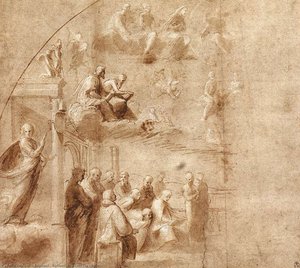
Study for the Disputa: A Glimpse into Raphael's Creative Process
The Study for the Disputa by Raphael (Raffaello Sanzio Da Urbino) offers a fascinating window into the mind of one of history's greatest artists. Created in 1509, this oil painting, measuring 28 x 28 cm, is not merely a preliminary sketch but a work of art in its own right, showcasing Raphael’s meticulous planning and artistic brilliance during the High Renaissance.
Subject Matter and Composition
This study depicts a group of figures engaged in what appears to be a lively discussion or meeting. The scene unfolds within an architectural setting, with individuals standing, sitting on chairs, and holding books or other objects. Notably, an angel is positioned in the top right corner, adding a layer of spiritual significance to the gathering. Raphael’s composition demonstrates his mastery of balance and harmony, even in this preparatory stage. The arrangement of figures suggests a carefully considered choreography, hinting at the grandeur and complexity of the final fresco, *The Disputation of the Holy Sacrament*, which adorned the Stanza della Segnatura in the Vatican.
Artistic Technique and Style
Raphael’s technique in this study is characterized by its clarity of form and ease of composition. He employs oil paint with a delicate touch, allowing for subtle gradations of tone and meticulous detail. This piece exemplifies Raphael's signature style – a synthesis of classical ideals and Renaissance humanism. The work reflects the Neoplatonic ideal of human grandeur, emphasizing harmony, proportion, and intellectual pursuit. Unlike some of his contemporaries who favored dramatic intensity, Raphael sought to create compositions that were both visually pleasing and intellectually stimulating. The study reveals how he experimented with poses and expressions before committing them to the larger fresco.
Historical Context and Influence
Created during the High Renaissance (roughly 1490-1527), a period of intense artistic innovation in Italy, this study reflects the era's emphasis on classical learning and human potential. Raphael worked alongside other titans like Leonardo da Vinci and Michelangelo, absorbing influences from both while forging his own distinct style. Giorgio Vasari, a prominent art historian, documented Raphael’s career in three phases, noting his evolution as an artist. This particular study falls within his early Roman period, where he was influenced by the artistic traditions of Florence but began to develop his unique approach. *The Disputa* itself is considered one of Raphael's most significant achievements, representing a theological debate between theologians and saints regarding the Eucharist.
Symbolism and Emotional Impact
While a study, this piece resonates with profound symbolism. The angel represents divine intervention and guidance in intellectual pursuits. The figures themselves embody different aspects of human knowledge – theology, philosophy, and reason. The overall atmosphere evokes a sense of reverence, contemplation, and the pursuit of truth. Even in its unfinished state, *Study for the Disputa* conveys Raphael’s ability to imbue his works with both intellectual depth and emotional resonance. It serves as a testament to his genius and provides valuable insight into the creative process of a master artist.
प्रश्न और उत्तर
राफेल द्वारा "Study for the Disputa" किस प्रकार की कलाकृति है?
"Study for the Disputa" एक WallArt कृति है।
राफेल द्वारा "Study for the Disputa", High Renaissance को कलाकार के गृह देश से किस प्रकार जोड़ता है?
"Study for the Disputa" अपने रचनाकार के जन्मस्थान के माध्यम से High Renaissance आंदोलन को इटली से जोड़ता है।
उपहार के रूप में राफेल द्वारा "Study for the Disputa" किसे देने की सलाह दी जाती है?
उपहार के रूप में, Anniversary के लिए राफेल द्वारा "Study for the Disputa" का सुझाव दिया जाता है। यह अन्य अवसरों के लिए भी उपयुक्त हो सकता है।
त्वरित तथ्य और कला प्रश्नोत्तरी
राफेल के बारे में

राफेल
1483 - 1520, इटली
कलाकार की जीवनी
राफेल: पुनर्जागरण के सौंदर्य का प्रतीक
रफाएल, जिनका असली नाम राफेल सान्ज़ियो दा उरबीनो था, इतालवी कला इतिहास में एक अद्वितीय स्थान रखते हैं। 1483 में उरबीनो शहर में जन्मे राफेल ने अपनी कम उम्र में ही कला की दुनिया में क्रांति ला दी। उरबीनो, उस समय कला और संस्कृति का केंद्र था, जहाँ ड्यूक फेडरिको दा मोंटेफेल्ट्रो के संरक्षण में कलाकारों को फलने-फूलने का अवसर मिला था। उनके पिता जियोवानी सान्ती भी एक चित्रकार थे और उन्होंने राफेल को शुरुआती प्रशिक्षण दिया। बचपन से ही राफेल की प्रतिभा स्पष्ट थी, लेकिन उनके जीवन में एक महत्वपूर्ण मोड़ तब आया जब 11 साल की उम्र में उनके पिता की मृत्यु हो गई। इस घटना ने उन्हें परिवार के व्यवसाय को संभालने और अपनी कलात्मक कौशल को विकसित करने के लिए प्रेरित किया।
पिएत्रो पेरुगिनो से फ्लोरेंस तक: कलात्मक विकास
अपनी प्रारंभिक शिक्षा के बाद, राफेल पिएत्रो पेरुगिनो के अधीन प्रशिक्षु बने। पेरुगिनो के मार्गदर्शन में, उन्होंने उम्ब्रिया शैली की बारीकियों को सीखा, जो अपनी कोमल मॉडलिंग, सामंजस्यपूर्ण रचनाओं और शांत धार्मिक दृश्यों के लिए जानी जाती है। हालांकि, राफेल की जिज्ञासा उन्हें नई चुनौतियों की तलाश करने और अपने कलात्मक क्षितिज का विस्तार करने के लिए प्रेरित करती रही। 1504 में, उन्होंने फ्लोरेंस की यात्रा की, जो उस समय कलात्मक नवाचारों से भरा हुआ था। वहाँ, उन्होंने लियोनार्डो दा विंची और माइकल एंजेलो जैसे महान कलाकारों के कार्यों को देखा और उनसे प्रेरणा ली। लियोनार्डो की स्फुमाटो तकनीक, जिसमें प्रकाश और छाया के सूक्ष्म ग्रेडेशन का उपयोग किया जाता है, और माइकल एंजेलो की शक्तिशाली शारीरिक सटीकता और नाटकीय रचनाएँ राफेल के कलात्मक विकास में महत्वपूर्ण भूमिका निभाते हैं। फ्लोरेंस में बिताया गया समय राफेल के लिए एक परिवर्तनकारी अनुभव था, जिसने उन्हें अपनी अनूठी शैली विकसित करने में मदद की।
रोम में विजय: कमीशन और उत्कृष्ट कृतियाँ
1508 में, पोप जूलियस द्वितीय ने राफेल को रोम बुला लिया, जो उनके करियर का एक महत्वपूर्ण मोड़ साबित हुआ। रोम में, उन्हें कला के भव्य कार्यों को करने का अवसर मिला, जिससे उन्होंने वैटिकन के पैलेस की दीवारों को शानदार भित्ति चित्रों से सजाया। "स्कूल ऑफ एथेंस", उनकी सबसे प्रसिद्ध कृतियों में से एक है, जो मानव तर्क और ज्ञान की खोज का जश्न मनाता है। इस भित्ति चित्र में, राफेल ने प्लेटो, अरस्तू, पाइथागोरस और यूक्लिड जैसे प्राचीन काल के महान दार्शनिकों को एक साथ चित्रित किया है। उन्होंने बाद में पोप लियो एक्स के लिए भी कई महत्वपूर्ण परियोजनाएँ कीं, जिनमें स्टैंजा डेला सेग्नाटुरा और स्टैंजा डी'एलियोडोरो का अलंकरण शामिल था। राफेल के रोम के भित्ति चित्र न केवल सजावटी हैं, बल्कि वे पोप शक्ति, धार्मिक विश्वासों और पुनर्जागरण के आदर्शों पर गहन विचार व्यक्त करते हैं।
सौंदर्य और भव्यता का संश्लेषण: राफेल की कलात्मक शैली
राफेल की कलात्मक शैली को अक्सर सौंदर्य, स्पष्टता और आदर्शित सुंदरता के सामंजस्यपूर्ण मिश्रण के रूप में वर्णित किया जाता है। उनके पास रचनाओं की योजना बनाने की असाधारण क्षमता थी, जो पुनर्जागरण सिद्धांतों की गहरी समझ को दर्शाती है। उनकी आकृतियाँ शांत गरिमा और भावनात्मक अभिव्यक्ति का संचार करती हैं, जो मानव पूर्णता के मानवतावादी आदर्श को मूर्त रूप देती हैं। वे एक कुशल रंगज्ञ भी थे, जिन्होंने समृद्ध, चमकदार रंगों का उपयोग करके ऐसे कार्य बनाए जो न केवल नेत्रहीन आकर्षक हैं बल्कि बौद्धिक रूप से उत्तेजक भी हैं। माइकल एंजेलो की अक्सर नाटकीय और अशांत शैली के विपरीत, राफेल के कार्यों में शांति और सद्भाव की भावना है - एक ऐसी गुणवत्ता जिसने सदियों से दर्शकों को मोहित किया है।
विरासत और स्थायी प्रभाव
राफेल की असामयिक मृत्यु 1520 में मात्र 37 वर्ष की आयु में हुई, लेकिन उनकी विरासत कला इतिहास के सबसे महत्वपूर्ण आंकड़ों में से एक के रूप में जीवित रही। उनके कार्यों ने उच्च पुनर्जागरण सौंदर्यशास्त्र का आधार बनाया, जो पीढ़ियों के कलाकारों के लिए एक मॉडल बन गए। राफेल का प्रभाव अनगिनत कार्यों में देखा जा सकता है, जिससे पश्चिमी कला पर उनका स्थायी प्रभाव स्थापित हो गया है। उनकी कृतियाँ आज भी दर्शकों को आश्चर्य और प्रशंसा से भर देती हैं, अपनी तकनीकी प्रतिभा, भावनात्मक गहराई और चिरस्थायी अपील के साथ। वे वास्तव में पुनर्जागरण के एक महान स्वामी थे - एक चित्रकार जिन्होंने न केवल अपने विषयों की शारीरिक समानता को कैद किया बल्कि मानव गरिमा और सौंदर्य का सार भी दर्शाया।
राफेल के बारे में कुछ खास बातें
- कलात्मक शैली: उच्च पुनर्जागरण
- जन्म तिथि: 28 मार्च 1483
- जन्म स्थान: उर्बाइनो, इटली
- पूरा नाम: रफ़ेल (राffaएलो सांजियो)
- प्रभावित आंदोलन: ['नवशास्त्रीय चित्रकला']
- प्रभावित कलाकार:
- लियोनार्डो दा विंची
- मिकेलेंजो
- प्रमुख कलाकृतियाँ:
- एथेंस का विद्यालय
- सिस्टिन मैडोना
- द ट्रांसफिग्रेशन
- मृत्यु तिथि: 6 अप्रैल 1520
- राष्ट्रीयता: इतालवी
विषयों, शैलियों और विशेषताओं के आधार पर व्यवस्थित कलाकृतियों का अन्वेषण करें।


राफेल
Study for the Disputa
() ·
फ्रेम सहित: · लिनन पर तेल के रंगों से हाथ से पेंट किया गया
कुल योग