

Shown: · With its frame:
 पूर्वावलोकन देखें
 भेजें
भेजें साझा करें
 विवरण देखें
 मार्गदर्शिका

 डाउनलोड करें
 समान वस्तुएं
 एक्स-रे
 स्लाइड शो देखें
 Q&A
Q&A आंकड़े


₹ 25828
हस्तनिर्मित ऑयल रिप्रोडक्शन
आपके आकार और फ्रेम के अनुसार कैनवास पर हाथ से बनी ऑयल पेंटिंग, हमारे कलाकारों द्वारा विशेष रूप से ऑर्डर पर तैयार। ( प्रिंट विकल्प पर जाएँ डिजिटल इमेज पर जाएँ)
यह कलाकृति कॉपीराइट संरक्षण के अंतर्गत है
इस पृष्ठ पर प्रदर्शित कलाकृति कॉपीराइट कानून द्वारा संरक्षित है, जिसका अर्थ है कि हम कानूनी रूप से इसकी हूबहू प्रतिलिपि बनाने या बेचने का अधिकार नहीं रखते हैं। यह संरक्षण अंतर्राष्ट्रीय समझौतों के तहत लागू किया जाता है, जैसे कि बर्न कन्वेंशन और राष्ट्रीय कानूनों द्वारा, जिनमें % द्वारा निर्धारित कानून भी शामिल हैं। अमेरिकी कॉपीराइट कानून - शीर्षक 17।
एक सम्मानजनक और कानूनी विकल्प के रूप में, हम मूल कृति से प्रेरित, कस्टम, हाथ से पेंट की गई कलाकृतियाँ प्रदान करते हैं। हमारे कुशल और पेशेवर कलाकार एक नई, अद्वितीय कृति बनाने के लिए मूल के शैली, भाव और कलात्मक सार का सावधानीपूर्वक अध्ययन करते हैं - जो अपनी मौलिक रचना बने रहते हुए भी वही भावना जगाती है।
यह विधि कॉपीराइट नियमों का पूरी तरह से पालन करती है क्योंकि इसमें संरक्षित कलाकृति की नकल या प्रतिलिपि बनाना शामिल नहीं है। इसके बजाय, यह एक रचनात्मक पुनर्व्याख्या है - एक ऐसी नई पेंटिंग जो मूल कृति से प्रेरित तो है, लेकिन उसके समान नहीं है।
 और पढ़ें
Size
·मानक आकार
अनुकूलित
CM
INCH
कलाकृति के मूल अनुपात से मेल खाने वाले हमारे पूर्व निर्धारित आकारों में से चुनें।
Loading sizes...

चौड़ाई
ऊँचाई
अपने फ्रेम या अपनी दीवार के अनुसार आवश्यक चौड़ाई और ऊंचाई दर्ज करें। यह हाथ से पेंट किया गया है, इसलिए अलग आकार के लिए कलाकार चित्र के चारों ओर थोड़ा अधिक पेंट कर सकता है, या थोड़ा काट सकता है — चुनाव आपका है। पेंटिंग शुरू होने से पहले हम आपकी स्वीकृति के लिए एक डिजिटल मॉकअप भेजते हैं। इस पृष्ठ पर दिखाई गई तस्वीर वास्तविक परिणाम नहीं दिखाती है — केवल मॉकअप ही वास्तविक रूप दिखाता है।
Finish
·
White ₹1

Blurside ₹1

Extended ₹1

P118B ₹10

P118H ₹10

P118W ₹10

P438Z ₹10

P508JH ₹12

P508YH ₹12

P805H ₹10

P805Z ₹10

P919BZ ₹10

P919G ₹10

P919XJ ₹10

P959ZH ₹10

P968JZ ₹12

W106C ₹8

W218G ₹10

W218JH ₹8

W218Y ₹10

W307PJ ₹10

W316G ₹10

W316PJ ₹8

W316Y ₹10

W398PJ ₹8

W4111J ₹10

W500HY ₹15

W500JH ₹15

W692G ₹12

W849H ₹8

W940BG ₹15

W953PJ ₹8

H24-GOLD ₹30

H24-SILVER ₹30

H36-GOLD ₹45

H36-SILVER ₹45
Shipped in a protective tube, ready for your own framer.
Above 105 cm the frame is shipped as a kit for a professional framer — read the details.
Extras
optionalWhat do the extras include?
Examples of what can be changed: Replace face with customer photo; Add pet (e.g., replace cat with dog); Include hidden message in background; Change background landscape or elements.
After order, TopImpressionists.com team will email client for instructions and provide a mockup preview
After order, TopImpressionists.com team will email client for instructions and provide a mockup preview
विश्वव्यापी वितरण () मानक 5 सप्ताह के बजाय मात्र 3/4 सप्ताह में। (29 अक्टूबर)। गुणवत्ता से कोई समझौता नहीं।
सुरक्षात्मक वार्निश
नामपट्टिका
उत्कीर्ण कांस्य पट्टिका का विवरण
This elegant plaque features the artist's name and the title of the artwork, finely engraved for a timeless presentation.
It is made from bronze with a refined, elegant finish. The text is precisely laser-engraved for a sharp and permanent result. Measuring 9x2 cm, the plaque is compact yet easy to read. It's built to be durable and scratch-resistant, offering a professional, museum-quality look. Mounting is simple thanks to the included adhesive backing.
पारदर्शी ऐक्रेलिक पट्टिका का विवरण
The plaque includes essential engraved details such as the artist's name, the title of the artwork, the date it was created, the type of media used-like oil on canvas or watercolor-a brief description of the piece, and a QR code that links to the complete artwork information.
It is crafted from clear acrylic, offering a sleek, modern appearance. The text is UV-engraved in black to ensure strong visual contrast. With a size of 10x15 cm, it ensures optimal readability. It comes equipped with two metal hooks for secure wall mounting. The plaque is designed to be weather-resistant, making it suitable for various environments, and it includes interactive features that work seamlessly with smartphone scanning.
काले ऐक्रेलिक पट्टिका का विवरण
This elegant plaque includes engraved information such as the artist's name, the title of the artwork, the date it was created, the type of media used (like oil on canvas or watercolor), a short description of the artwork, and a QR code for quick access to more information.
The plaque itself is made from refined black acrylic with a premium finish. The text is laser-engraved in white for high contrast and readability. Its size is 10x15 cm, designed to be easy to read. It comes with two metal hooks for professional mounting. The design is sleek and fits any interior style. It is also weather-resistant and durable, with built-in digital integration for mobile compatibility.
ग्लास का विकल्प केवल 110 सेमी से कम आकार में ही उपलब्ध है।
 ग्लास का विकल्प केवल 110 सेमी से कम आकार में ही उपलब्ध है।
- दुनिया भर में मुफ़्त एक्सप्रेस शिपिंग
- प्रीमियम ग्रेड लिनेन कैनवास
- पूर्ण शिपिंग बीमा
- सीमा शुल्क और आयात कर वापसी की गारंटी
- सटीक रंग मिलान की गारंटी
- 100 दिनों की वापसी नीति (केवल निर्माण दोष होने पर)
- 100% पैसे वापसी की गारंटी
- थोक छूट का अवसर


संग्रहणीय वस्तु का विवरण
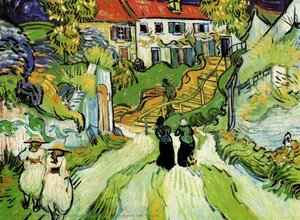
A vibrant village scene filled with lively social interaction defines this 1956 masterpiece by Haitian visionary Wilson Bigaud, inviting you to bring the colorful spirit of Caribbean Expressionism into your home.
कलाकार का परिचय
Discover Wilson Bigaud's vibrant Haitian paintings! Capturing light & daily life, influenced by Hector Hyppolite. Explore his murals & legacy at TopImpressionists.com.
About the painting
A Vibrant Tapestry of Haitian Life
In the heart of his 1956 masterpiece, Les Petits Blageurs, Wilson Bigaud invites the viewer into a sun-drenched moment of communal joy, capturing the very soul of a Haitian village. The canvas breathes with the energy of a bustling street scene, where at least fourteen individuals are woven into a complex social fabric. Some figures rest peacefully upon the earth, while others stand in animated conversation, their gestures suggesting the rhythmic flow of local gossip and shared laughter. This is not merely a depiction of a crowd; it is an intimate portrait of togetherness. The setting itself—a charming blend of rustic rural charm and structured urban elements—is punctuated by the presence of potted greenery and humble bowls that hint at a recent or ongoing feast, grounding the scene in the tangible, sensory realities of daily life.
Bigaud’s approach to this composition reflects his profound roots in sculpture, translating a three-dimensional understanding of form into a two-dimensional explosion of color. The technique is characterized by a vibrant, almost luminous palette that captures the intense Caribbean light. Each figure possesses a weight and presence that speaks to the artist's early training in clay, giving the inhabitants of this village a sculptural dignity. The interplay between the architectural lines of the surrounding houses and the organic, fluid movements of the people creates a dynamic tension, drawing the eye across the canvas in a continuous loop of discovery. For the collector or interior designer, this piece offers a rhythmic complexity that serves as a magnificent focal point, capable of injecting warmth and a sense of narrative depth into any sophisticated space.
The Spirit of Caribbean Expressionism
To understand Les Petits Blageurs is to understand the legacy of Wilson Bigaud, a visionary who bridged the gap between traditional Haitian motifs and the broader movement of Caribbean Expressionism. Created during a period of significant cultural flowering in Haiti, the painting serves as a window into a world where community is the ultimate sanctuary. The symbolism within the work is found not in cryptic icons, but in the very act of gathering; the shared bowls and the proximity of the figures symbolize the resilience and interconnectedness of the Haitian spirit. There is an emotional resonance here that transcends time—a celebration of the "small talk" and the quiet moments of leisure that constitute the true essence of human connection.
For those seeking to adorn a home or gallery with art that tells a story, this reproduction offers more than just aesthetic beauty; it offers an atmosphere. The painting’s ability to evoke a sense of lively, social warmth makes it an ideal selection for spaces designed for gathering and conversation. It carries with it the historical weight of Bigaud's journey from Port-au-Prince sculptor to international painter, making each brushstroke a testament to a life dedicated to capturing the vibrant pulse of his homeland. Owning a piece of this caliber is an invitation to preserve a fragment of Haitian history and to surround oneself with the enduring light of communal joy.
प्रश्न और उत्तर
Wilson Biguad द्वारा "Les Petits Blageurs" की विशेषता बताने वाली तकनीक और शैली क्या है?
"Les Petits Blageurs" को Painting में, Haitian Expressionism शैली में बनाया गया है।
"Les Petits Blageurs" की रचना कब की गई थी, और यह किस कला आंदोलन (movement) से संबंधित है?
"Les Petits Blageurs" का निर्माण 1956 में, Haitian Expressionism आंदोलन के अंतर्गत किया गया था।
"Les Petits Blageurs" Wilson Biguad के करियर के किस काल से संबंधित है?
"Les Petits Blageurs" Wilson Biguad के करियर के Mature Period काल से संबंधित है। यह वर्गीकरण इस कृति को कलाकार के विकासक्रम से जोड़ता है।
Quick facts and art quiz
About Wilson Biguad

Wilson Biguad
1931 - 2010, Haiti
कलाकार का परिचय
A Life Shaped by Clay and Canvas
Wilson Bigaud began his life in Port-au-Prince, Haiti, finding his first expression through the tactile world of sculpture. As a child, he worked with clay, molding figures that captured the weight and presence of the earth. This early focus on three-dimensional form gave him a unique way of seeing volume and light, a skill that would later define his paintings. His path changed when DeWitt Peters encouraged him to move away from carving and toward the two-dimensional surface of the canvas.
The legendary Hector Hyppolite played a significant role in bringing Bigaud into the Centre d'Art in 1946. Through this connection, he found himself part of a community where art was deeply tied to the rhythms of Haitian life. His work often drew from his own memories of the city, pulling from the sights and sounds of social gambling, Vodou ceremonies, and local melodramas. He did not merely paint scenes; he recorded the atmosphere of his surroundings.
The Weight of Color and Light
Bigaud developed a style that relied on thick layers of paint, known as impasto, to create surfaces you could almost feel. He had a particular way of using light and shadow to give his figures weight. While he was influenced by the techniques of artists like Edvard Munch and Oskar Kokoschka, his subject matter remained firmly rooted in the streets and traditions of Haiti. His palette often featured a specific, strange yellow light that bathed his scenes, from cemetery gatherings to village life.
His paintings often explored the tension between joy and hardship. He captured the energy of Carnival and the solemnity of religious life with equal intensity. Some of his most notable subjects included:
- The rituals of Vodou ceremonies
- Scenes of poverty and social gambling
- The movement of the rhythms of drums and rara
- Biblical narratives reimagined through a local lens
Recognition and Personal Struggles
In 1950, at the age of nineteen, Bigaud achieved international notice when his painting “Paradise” won second place at an International Exhibit in Washington, D.C. That same year, he worked on one of his most significant large-scale projects, a mural for the Holy Trinity Cathedral in Port-au-Prince depicting the wedding at Cana. This work allowed him to use scale to tell stories of faith and community.
However, the pressure of his success and the political shifts in Haiti took a heavy toll on his well-being. Between 1957 and 1961, Bigaud faced periods of acute depression and entered a mental institution. During these difficult years, he eventually retreated to Petit-Goave to find peace. When he returned to painting in the mid-sixties, some observers noted that the fire of his earlier work had changed, reflecting more of the fear and defeat he had experienced. Yet, even in these later years, works like “Village Wedding” showed a persistent spirit and an ability to reclaim the energy of his youth.
Quick facts about Wilson Biguad
- Artistic Movement Or Style: Caribbean Expressionism
- Artists Or Movements Influenced By This Artist: ['Contemporary Haitian artists']
- Artists Who Influenced This Artist:
- Hector Hyppolite
- Edvard Munch
- Oskar Kokoschka
- Full Name: Wilson Biguad
- Nationality: Haitian
- Notable Artworks:
- Paradise
- The Wedding at Cana
- Untitled (Guédés at the Cemetary)
- Place Of Birth: Port-au-Prince, Haiti
- Date Of Birth: 1931
- Date Of Death: 2010
समान कलाकृतियाँ




Wilson Biguad
Les Petits Blageurs
() ·
With its frame: · Hand-painted in oil on linen
Total