
Shown: · With its frame:
 Pregledaj u realnoj veličini
 Pošalji
 Podijeli
 Detalji o umjetničkom djelu
 Vodič
Vodič

 Preuzmi umjetničko djelo
 Slični predmeti
 Rentgenska snimka
 Slide show
 Q&A
Q&A Statistika
- 29.0 x 21.0 cm


€ 239
Ručno rađena uljana reprodukcija
Ručno oslikano uljanim bojama na platnu u dimenzijama i okviru po vašem izboru, izrađeno po narudžbi od strane naših umjetnika. ( Prebacite na printove Prebacite na digitalnu sliku)
Size
·Standardne dimenzije
po mjeri
CM
INCH
Odaberite jednu od naših unaprijed definiranih veličina koje odgovaraju izvornim proporcijama umjetničkog djela.
Loading sizes...

širina
visina
Unesite potrebnu širinu i visinu kako bi dimenzije odgovarale vašem okviru ili zidu. Budući da je riječ o ručno oslikanom djelu, umjetnik može malo proširiti rubove slike ili ih skratiti kako bi postigao drugačiji oblik — izbor je vaš. Prije početka slikanja poslat ćemo vam digitalni prikaz (mockup) radi potvrde. Slika prikazana na ovoj stranici ne predstavlja stvarni rezultat — samo digitalni prikaz to čini.
 Pročitajte više
Finish
·
White €1

Blurside €1

Extended €1

P118B €10

P118H €10

P118W €10

P438Z €10

P508JH €12

P508YH €12

P805H €10

P805Z €10

P919BZ €10

P919G €10

P919XJ €10

P959ZH €10

P968JZ €12

W106C €8

W218G €10

W218JH €8

W218Y €10

W307PJ €10

W316G €10

W316PJ €8

W316Y €10

W398PJ €8

W4111J €10

W500HY €15

W500JH €15

W692G €12

W849H €8

W940BG €15

W953PJ €8

H24-GOLD €30

H24-SILVER €30

H36-GOLD €45

H36-SILVER €45
Shipped in a protective tube, ready for your own framer.
Above 105 cm the frame is shipped as a kit for a professional framer — read the details.
Extras
optionalWhat do the extras include?
Examples of what can be changed: Replace face with customer photo; Add pet (e.g., replace cat with dog); Include hidden message in background; Change background landscape or elements.
After order, TopImpressionists.com team will email client for instructions and provide a mockup preview
After order, TopImpressionists.com team will email client for instructions and provide a mockup preview
Isporuka širom svijeta () u roku od 3-4 tjedna umjesto standardnih 5 tjedana. (31 Listopad). Bez kompromisa u kvaliteti.
Zaštitni lak
Natpisna pločica
Detalji gravirane brončane pločice
This elegant plaque features the artist's name and the title of the artwork, finely engraved for a timeless presentation.
It is made from bronze with a refined, elegant finish. The text is precisely laser-engraved for a sharp and permanent result. Measuring 9x2 cm, the plaque is compact yet easy to read. It's built to be durable and scratch-resistant, offering a professional, museum-quality look. Mounting is simple thanks to the included adhesive backing.
Detalji prozirne akrilne pločice
The plaque includes essential engraved details such as the artist's name, the title of the artwork, the date it was created, the type of media used-like oil on canvas or watercolor-a brief description of the piece, and a QR code that links to the complete artwork information.
It is crafted from clear acrylic, offering a sleek, modern appearance. The text is UV-engraved in black to ensure strong visual contrast. With a size of 10x15 cm, it ensures optimal readability. It comes equipped with two metal hooks for secure wall mounting. The plaque is designed to be weather-resistant, making it suitable for various environments, and it includes interactive features that work seamlessly with smartphone scanning.
Detalji crne akrilne pločice
This elegant plaque includes engraved information such as the artist's name, the title of the artwork, the date it was created, the type of media used (like oil on canvas or watercolor), a short description of the artwork, and a QR code for quick access to more information.
The plaque itself is made from refined black acrylic with a premium finish. The text is laser-engraved in white for high contrast and readability. Its size is 10x15 cm, designed to be easy to read. It comes with two metal hooks for professional mounting. The design is sleek and fits any interior style. It is also weather-resistant and durable, with built-in digital integration for mobile compatibility.
Opcija stakla dostupna je samo za dimenzije manje od 110 cm
 Opcija stakla dostupna je samo za dimenzije manje od 110 cm
- Besplatna ekspresna dostava širom svijeta
- Visokokvalitetno laneno platno
- Potpuno osiguranje dostave
- Jamstvo povrata carine i uvoznih poreza
- Jamstvo vjernosti boja
- Politika povrata u roku od 100 dana (samo u slučaju nedostataka)
- Jamstvo povrata 100% novca
- Popust na više proizvoda


Opis kolekcionarskog predmeta
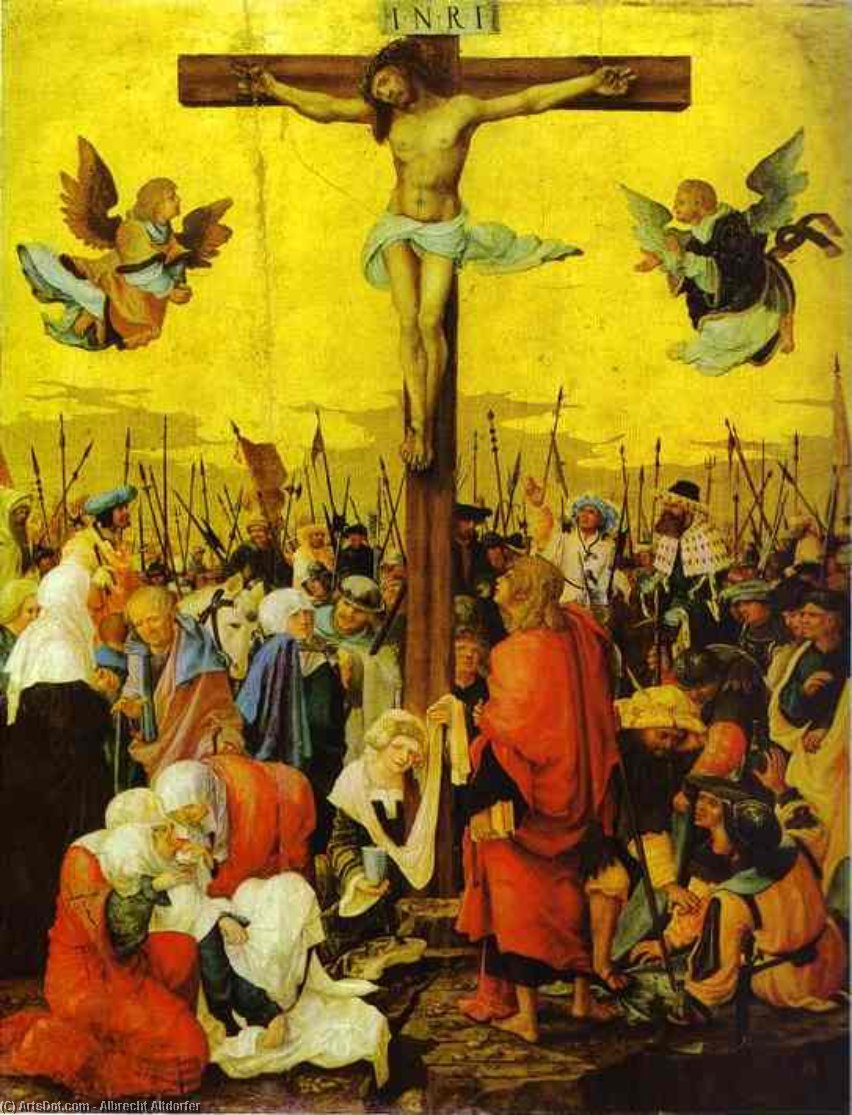
Albrecht Altdorfer's "Crucifixion" (1526) is a dramatic, evocative depiction of Christ’s suffering, showcasing the artist's pioneering landscape style and masterful use of color within the Northern Renaissance.
Biografija umjetnika
Albrecht Altdorfer (1480-1538): Pionir njemačkog renesansnog pejzažnog slikarstva i ključna figura Dunavske škole. Istražite njegove gravure, religijske radove i inovativnu umjetnost koja je utjecala na romantizam.
About the painting
The Weight of Sorrow: Albrecht Altdorfer’s “Crucifixion”
Albrecht Altdorfer's "Crucifixion," painted in 1526, isn’t merely a depiction of a pivotal religious event; it’s a visceral experience. Emerging from the burgeoning German Renaissance, Altdorfer wasn’t simply replicating biblical narratives; he was forging a new visual language, one deeply rooted in the natural world yet imbued with profound spiritual intensity. This particular rendition transcends simple illustration, becoming a landscape saturated with grief and a haunting meditation on sacrifice. The painting immediately commands attention not through grand scale – it's remarkably intimate, measuring just 29 x 21 cm – but through its masterful manipulation of light, color, and composition to evoke an overwhelming sense of sorrow.
The scene unfolds against a dramatically rendered landscape—a brooding, almost primeval forest. The trees, rendered in thick, layered brushstrokes of deep greens, browns, and purples, seem to writhe with the weight of the event. This isn’t a picturesque vista; it's a wilderness imbued with an unsettling energy. Altdorfer deliberately eschews traditional depictions of serene backgrounds, instead presenting a landscape actively participating in the drama. The distant mountains, shrouded in mist and shadow, amplify the feeling of isolation and despair. Notice how the artist uses atmospheric perspective – lighter hues for objects further away – to create a sense of depth and distance, drawing the viewer’s eye into the heart of the scene.
A Pioneer of Landscape
Albrecht Altdorfer stands as a pivotal figure in art history, largely credited with establishing landscape painting as an independent artistic subject within Europe. Prior to his work, landscapes were typically relegated to mere backgrounds for religious or mythological scenes. However, Altdorfer recognized the power of the natural world to convey emotion and meaning. His meticulous observation of nature—evident in the detailed rendering of foliage, rocks, and atmospheric conditions—transformed the landscape from a passive backdrop into an active participant in the narrative. This shift was revolutionary, paving the way for later generations of landscape artists like Albert Bierstadt and Frederic Church.
His background as a town architect and council member further informs his artistic approach. Altdorfer possessed a keen eye for spatial relationships and a deep understanding of how to create a sense of harmony and balance within a composition. This skill is brilliantly demonstrated in “Crucifixion,” where the human figure—Jesus—is carefully positioned within the landscape, creating a dynamic interplay between the earthly realm and the divine.
Symbolism and Emotional Resonance
Beyond its technical brilliance, "Crucifixion" resonates deeply with viewers through its potent symbolism. The stark simplicity of Jesus’s pose – arms outstretched, head bowed – is profoundly moving. Altdorfer avoids any overtly dramatic or theatrical elements, opting instead for a quiet, understated portrayal of suffering. The figures surrounding the cross—angels and soldiers—are rendered in muted tones, emphasizing the central tragedy. Even the light itself seems to weep, casting long shadows across the landscape.
The choice of a dark, foreboding forest as the setting is particularly significant. Forests have historically been associated with death, mourning, and the unknown. In this context, it serves as a powerful metaphor for the spiritual darkness surrounding Jesus’s sacrifice. The painting isn't simply depicting an event; it’s exploring the profound emotional consequences of that event—the grief, despair, and sense of loss experienced by those who witnessed it.
A Timeless Masterpiece
“Crucifixion” is more than just a religious painting; it’s a testament to Altdorfer's artistic genius and his ability to capture the essence of human emotion. The meticulous detail, masterful use of color and light, and profound symbolism combine to create an unforgettable image that continues to resonate with viewers centuries after its creation. Reproductions, like this one, offer a remarkable opportunity to experience the power and beauty of this iconic work, bringing its haunting message into our own spaces.
Pitanja i odgovori
O kojoj se vrsti umjetničkog djela radi kod "Crucifixion" autora Albrecht Altdorfer?
"Crucifixion" je WallArt djelo.
Što "Crucifixion" dijeli s ostatkom stvaralaštva umjetnika Albrecht Altdorfer?
"Crucifixion" dijeli s ostalim djelima Albrecht Altdorfer njezin/njezin German Renaissance Landscape stil i prisutne teme: danube school landscape influence, medieval religious symbolism strong, early renaissance artistic trends, german cultural identity depicted, altdorfer's innovative landscape role.
Nalazi li se "Crucifixion" u zemlji svog tvorca?
Ne – umjetničko djelo se nalazi izvan zemlje umjetnika. Rodna zemlja umjetnika Albrecht Altdorfer je Njemačka, dok se muzej u kojem se čuva izvornik djela "Crucifixion" nalazi u državi Germany.
Quick facts and art quiz
About Albrecht Altdorfer

Albrecht Altdorfer
1480 - 1538, Njemačka
Biografija umjetnika
Pionirovina sjeverne renesansne krajolika
Albrecht Altdorfer, rođen oko 1480. godine u Regensburgu, Njemačka, predstavlja ključnu figuru koja povezuje kasni gotički period i procvat njemačke renesanse. On nije bio samo umjetnik *svoga* vremena; aktivno je preoblikovao njegov umjetnički tok, posebno u području slikarstva krajolika. Potječući iz obitelji duboko ukorijenjene u umjetničkoj tradiciji – njegov otac, Ulrich Altdorfer, bio je slikar i minijaturist – mlađi Altdorfer se brzo istaknuo ne kao slijedbenik, već kao inovator. Regensburg, slobodni carski grad strateški smješten na rijeci Dunavu, pružio je dinamičan kulturni kontekst za njegove formativne godine. Ta lokacija duboko je utjecala na njegov umjetnički osjećaj, potičući vezu s prirodnim svijetom koja će postati središnja u njegovom opusu. Osim svog umjetničkog talenta, Altdorfer je bio čovjek građanske dužnosti, služeći i kao gradski arhitekt i član vijeća – svjedočanstvo o njegovim svestranim sposobnostima. Međutim, upravo kroz svoju umjetnost – posebno rane gravure i crteže iz oko 1506., poput *Stigmata svetog Franje* i *Svetog Jeronima* – prvi put je otkrio jedinstveni umjetnički glas, nagovještavajući emocionalnu intenzitet i precizne detalje koji će karakterizirati njegov zreli stil.Školska dunavska škola i revolucionarna vizija
Altdorfer je najpoznatiji kao vodeći član Škole Dunava, utjecajne grupe umjetnika aktivnih u južnoj Njemačkoj tijekom ranog 16. stoljeća. Ovaj umjetnički krug dijelio je zajedničku fascinaciju istraživanjem ekspresivnog potencijala krajolika, uzdižući ga iz pukle pozadine i pretvarajući ga u središnji subjekt za sebe. Prije Altdorfera, krajolici su prvenstveno služili kao kulise za religijske ili povijesne priče; on se usudio prikazati prirodu *zbog sebe same*, prožetu atmosferom i emocionalnom rezonancijom. Transformacijsko putovanje niz rijeku Dunav i u Alpe oko 1511. godine pokazalo se ključnim za njegov umjetnički razvoj. Dramatični vidici, guste šume i impozantne planine potaknule su u njemu strast prema prikazivanju prirode s bez presedana vjernošću i osjećajem. Postao je, možda, prvi moderni slikar krajolika, ne samo replicirajući ono što je vidio, već prenoseći emocionalni odziv – osjećaj divljenja, misterije, čak i duhovne povezanosti. To nije bila samo topografska točnost; radilo se o hvatanju *iskustva* boravka u krajoliku. Njegovo djelo, poput “Velike smreke”, primjer je te promjene, nudeći miran i detaljan prikaz ljepote prirode.Remek-djela i umjetnički utjecaji
Tijekom svoje karijere, Altdorfer je stvorio raznoliko djelo koje obuhvaća slike, gravure, crteže i arhitektonske nacrte. Među njegovim najpoznatijim ostvarenjima ističe se *Bitka kod Isusa* (1529.), naručena od vojvode Vilijama IV Bavarskog. Ovo monumentalno djelo pokazuje ne samo njegovo majstorstvo kompozicije i detalja, već i inovativnu upotrebu krajolika za pojačanje dramatične napetosti bitke. Vrtložni oblaci, oštre planine i kaotična gužva vojnika stvaraju osjećaj preplavljujuće energije i spektakla. Njegova suradnja s carem Maksimilijanom I u Innsbrucku od 1513. godine dodatno je proširila njegove umjetničke horizonte i pružila prilike za projekte velikih razmjera. Stil Altdorfera nije nastao izolirano; upijao je utjecaje iz različitih izvora. Poetska lirika Giorgionea, ekspresivne figure Lucasa Cranacha Starijeg i precizni detalji Alberta Dürera ostavili su traga na njegovom radu. Međutim, on je sintetizirao te utjecaje u jedinstvenu osobnu viziju, karakteriziranu emocionalnom intenzitetom, dramatičnim osvjetljenjem i evocativnim krajolicima. Njegove gravure, poput “Venera nakon kupanja”, demonstriraju njegovu vještinu u ovom mediju, pokazujući delikatne linije i složene detalje.Nasljeđe i trajni utjecaj
Umjetnička ostavština Albrechta Altdorfera proteže se daleko izvan 55 panela, 120 crteža i brojnih gravura koje je stvorio tijekom svog života. On je fundamentalno promijenio način na koji su umjetnici pristupali slikarstvu krajolika, utirući put budućim generacijama da istraže njegove ekspresivne mogućnosti. Njegov se utjecaj može vidjeti u djelima kasnijih njemačkih romantičnih slikara koji su također nastojali uhvatiti uzvišenu ljepotu i emocionalnu snagu prirode. Danas je Altdorferova umjetnost zastupljena u velikim muzejskim zbirkama diljem svijeta, uključujući Museum Ostdeutsche Galerie u Njemačkoj – koji posjeduje njegovu *Madonu (Prekrasna Marija iz Regensburga)* – i Kunstsammlungen und Museen Augsburg u Austriji. Njegov inovativni duh, tehnička vještina i duboka povezanost s prirodnim svijetom nastavljaju nadahnjivati umjetnike i očaravati publiku stoljećima nakon njegove smrti 1538. godine. Ostaje istaknuta figura njemačke renesanse, pravi pionir koji se usudio vidjeti krajolik ne samo kao scenu, već kao moćnu silu sposobnu pobuditi duboke emocije i duhovno značenje. Njegovo djelo služi kao svjedočanstvo o trajnoj snazi umjetnosti da transformira naše shvaćanje svijeta oko nas – ostavština koja nastavlja odjekivati s gledateljima danas.Istraživanje raznolikih radova Altdorfera
Osim svojih ikoničnih krajolika i bitaka, Altdorferov umjetnički raspon obuhvaćao je religijske teme, mitološke priče, pa čak i arhitektonske nacrte. Njegovi prikazi biblijskih priča, poput “Abrahamova žrtva”, prožeti su dramatičnom intenzitetom i emocionalnom dubinom koji ih izdvaja od ranijih interpretacija. On nije samo ilustrirao Sveto pismo; istraživao je ljudsko stanje kroz leću vjere.- Gravure: Altdorferove gravure, poput “Mucius Scaevola spaljuje ruku”, demonstriraju njegovu majstorstvo linije i detalja, često prenoseći osjećaj kretanja i drame.
- Crteži: Njegovi crteži nude intimne uvide u njegov kreativni proces, otkrivajući njegove pedantne vještine promatranja i ekspresivnu upotrebu sjenčanja.
- Arhitektonski nacrti: Kao gradski arhitekt Regensburga, Altdorfer je doprinio utvrđenjima grada i urbanom planiranju, pokazujući svoje praktične kao i umjetničke talente.
Quick facts about Albrecht Altdorfer
- Datum Rođenja: oko 1480.
- Datum Smrti: 1538.
- Državljanstvo: Njemački
- Mjesto Rođenja: Regensburg, Njemačka
- Puno Ime: Albrecht Altdorfer
- Umjetnici Ili Pokreti Utjecani Od Njega: ['Njemački romantičari']
- Umjetnički Pokret Ili Stil: Dunavska škola, Renesansa
- Utjecali Su Na Ovog Umjetnika:
- Giorgione
- Lucas Cranach Stariji
- Albrecht Dürer
- Značajna Djela:
- Bitka kod Isusa
- Velika smreka
- Sv. Juraj i zmaj
Istražite umjetnička djela organizirana prema temama, stilovima i karakteristikama.


Albrecht Altdorfer
Crucifixion
() ·
With its frame: · Hand-painted in oil on linen
Total