

Prikazano: · S okvirom:
 Pregledaj u realnoj veličini
 Pošalji
 Podijeli
 Detalji o umjetničkom djelu
 Vodič
Vodič

 Preuzmi umjetničko djelo
 Slični predmeti
 Rentgenska snimka
 Slide show
 Pitanja i odgovori
 Statistika
- 51.0 x 38.0 cm


€ 240
Ručno rađena uljana reprodukcija
Ručno oslikano uljanim bojama na platnu u dimenzijama i okviru po vašem izboru, izrađeno po narudžbi od strane naših umjetnika. ( Prebacite na printove Prebacite na digitalnu sliku)
Ovo djelo je zaštićeno autorskim pravima
Djelo prikazano na ovoj stranici zaštićeno je autorskim pravima, što znači da zakonski ne možemo izraditi niti prodati identičnu reprodukciju. Ova se zaštita provodi u skladu s međunarodnim sporazumima kao što su Bernska konvencija i nacionalnim zakonima, uključujući i one koji su utvrđeni u Američki zakon o autorskom pravu – Title 17.
Kao poštovana i legalna alternativa, nudimo prilagođena, ručno oslikana umjetnička djela inspirirana originalom. Naši vješti i profesionalni umjetnici pažljivo proučavaju stil, raspoloženje i umjetničku bit originala kako bi stvorili novo, jedinstveno djelo koje izaziva isti osjećaj – ostajući pritom vlastito, originalno stvaralaštvo.
Ova metoda u potpunosti je usklađena s autorskim pravima jer ne uključuje kopiranje ili dupliciranje zaštićenih umjetničkih djela. Umjesto toga, riječ je o kreativnoj reinterpretaciji – novoj slici koja je dobila utjecaj na izvornik, ali nije identična njemu.
 Pročitajte više
Veličina
·Standardne dimenzije
po mjeri
CM
INCH
Odaberite jednu od naših unaprijed definiranih veličina koje odgovaraju izvornim proporcijama umjetničkog djela.
Učitavanje dimenzija...

širina
visina
Unesite potrebnu širinu i visinu kako bi dimenzije odgovarale vašem okviru ili zidu. Budući da je riječ o ručno oslikanom djelu, umjetnik može malo proširiti rubove slike ili ih skratiti kako bi postigao drugačiji oblik — izbor je vaš. Prije početka slikanja poslat ćemo vam digitalni prikaz (mockup) radi potvrde. Slika prikazana na ovoj stranici ne predstavlja stvarni rezultat — samo digitalni prikaz to čini.
Završetak
·
Bijela rubna traka €1

Zamućeni rubovi €1

Prošireno €1

P118B €10

P118H €10

P118W €10

P438Z €10

P508JH €12

P508YH €12

P805H €10

P805Z €10

P919BZ €10

P919G €10

P919XJ €10

P959ZH €10

P968JZ €12

W106C €8

W218G €10

W218JH €8

W218Y €10

W307PJ €10

W316G €10

W316PJ €8

W316Y €10

W398PJ €8

W4111J €10

W500HY €15

W500JH €15

W692G €12

W849H €8

W940BG €15

W953PJ €8

H24-GOLD €30

H24-SILVER €30

H36-GOLD €45

H36-SILVER €45
Dostavlja se u zaštitnoj cijevi, spremno za ugradnju u vaš vlastiti okvir.
Dodatne usluge
opcionalnoŠto sve uključuju dodaci?
Primjeri onoga što se može promijeniti: Zamjena lica fotografijom kupca; Dodavanje ljubimca (npr. zamjena mačke psom); Uključivanje skrivene poruke u pozadini; Promjena krajolika ili elemenata u pozadini.
Nakon narudžbe, tim TopImpressionists.com kontaktirat će klijenta putem e-pošte radi uputa te dostaviti pregledni prikaz (mockup)
Nakon narudžbe, tim TopImpressionists.com kontaktirat će klijenta putem e-pošte radi uputa te dostaviti pregledni prikaz (mockup)
Isporuka širom svijeta () u roku od 3-4 tjedna umjesto standardnih 5 tjedana. (7 Studeni). Bez kompromisa u kvaliteti.
Zaštitni lak
Natpisna pločica
Detalji gravirane brončane pločice
This elegant plaque features the artist's name and the title of the artwork, finely engraved for a timeless presentation.
It is made from bronze with a refined, elegant finish. The text is precisely laser-engraved for a sharp and permanent result. Measuring 9x2 cm, the plaque is compact yet easy to read. It's built to be durable and scratch-resistant, offering a professional, museum-quality look. Mounting is simple thanks to the included adhesive backing.
Detalji prozirne akrilne pločice
The plaque includes essential engraved details such as the artist's name, the title of the artwork, the date it was created, the type of media used-like oil on canvas or watercolor-a brief description of the piece, and a QR code that links to the complete artwork information.
It is crafted from clear acrylic, offering a sleek, modern appearance. The text is UV-engraved in black to ensure strong visual contrast. With a size of 10x15 cm, it ensures optimal readability. It comes equipped with two metal hooks for secure wall mounting. The plaque is designed to be weather-resistant, making it suitable for various environments, and it includes interactive features that work seamlessly with smartphone scanning.
Detalji crne akrilne pločice
This elegant plaque includes engraved information such as the artist's name, the title of the artwork, the date it was created, the type of media used (like oil on canvas or watercolor), a short description of the artwork, and a QR code for quick access to more information.
The plaque itself is made from refined black acrylic with a premium finish. The text is laser-engraved in white for high contrast and readability. Its size is 10x15 cm, designed to be easy to read. It comes with two metal hooks for professional mounting. The design is sleek and fits any interior style. It is also weather-resistant and durable, with built-in digital integration for mobile compatibility.
Opcija stakla dostupna je samo za dimenzije manje od 110 cm
 Opcija stakla dostupna je samo za dimenzije manje od 110 cm
- Besplatna ekspresna dostava širom svijeta
- Visokokvalitetno laneno platno
- Potpuno osiguranje dostave
- Jamstvo povrata carine i uvoznih poreza
- Jamstvo vjernosti boja
- Politika povrata u roku od 100 dana (samo u slučaju nedostataka)
- Jamstvo povrata 100% novca
- Popust na više proizvoda


Opis kolekcionarskog predmeta
Edward Hopper’s "Woman at Cafe Table" (1907) – a captivating watercolor depicting urban solitude & Art Deco elegance. Explore this iconic American realist painting.
Biografija umjetnika
Edward Hopper: Majstor američke realizma koji je oslavio pojedinačnost i urbano život svjetlom i sjajem. Poznatiji djelovanja su Nighthawks i Kuća pored pruga.
O slici
Woman at Cafe Table: A Portrait of Urban Isolation
Edward Hopper’s “Woman at Cafe Table,” painted in 1906-1907, stands as a quintessential emblem of New Realism and embodies the pervasive sense of solitude that characterized American life during the early 20th century. More than just a depiction of a café scene—though meticulously rendered—the artwork delves into profound psychological themes, capturing a moment suspended in time with remarkable precision and understated emotion. This watercolor and graphite pencil piece resides within the Whitney Museum’s collection, cementing its place as one of Hopper's most iconic creations.Composition and Style: Flattened Perspective & Impressionistic Light
The painting’s composition immediately draws the eye to the central figure—a woman seated alone at a café table—positioned slightly off-center to the right. Hopper eschews traditional perspective, opting for a flattened visual space that reinforces the feeling of detachment. The background elements – tables, chairs, and distant figures – are suggested rather than fully realized, creating an illusion of depth without overwhelming the dominant subject. This stylistic choice aligns perfectly with Impressionism’s focus on capturing fleeting impressions of light and atmosphere. Hopper skillfully employs loose brushstrokes and muted colors—primarily blues and greens—to convey a mood of quiet contemplation and melancholy. The simplified shapes and elongated silhouettes contribute to the overall impressionistic aesthetic, prioritizing emotional resonance over photographic realism.Technique: Watercolor Wash & Detailed Observation
Hopper’s masterful technique utilizes watercolor washes to build up layers of color, achieving a soft, textured surface that enhances the painting's visual appeal. Careful attention is paid to detail—particularly in capturing the woman’s attire and hat—demonstrating Hopper’s commitment to meticulous observation. The visible brushstrokes are not merely accidental; they actively contribute to the artwork’s expressive quality, mirroring the artist’s internal state and conveying a sense of immediacy. Graphite pencil shading adds subtle tonal variations, further enriching the painting's visual complexity and deepening its emotional impact.Historical Context & Symbolism: Echoes of Modern Life
“Woman at Cafe Table” emerged during a period marked by rapid urbanization and social change—a time when Hopper sought to portray the unspoken anxieties and loneliness inherent in modern existence. The café setting itself symbolizes public spaces where individuals encounter each other yet remain fundamentally isolated, reflecting the psychological realities of the era. The woman’s posture—absorbed in her own thoughts—suggests a preoccupation with inner life amidst the bustle of daily activity. Hopper's deliberate use of cool colors and diffused lighting reinforces this mood of introspection and melancholy, inviting viewers to contemplate themes of solitude, contemplation, and perhaps even unspoken longing.Emotional Impact & Artistic Legacy
Ultimately, “Woman at Cafe Table” transcends its formal description as a watercolor painting; it’s an evocative exploration of human emotion—a portrait not just of a woman but also of the psychological landscape of modern life. Hopper's ability to distill complex feelings into simple visual forms continues to resonate with audiences today, securing his place as one of America’s most influential artists and cementing “Woman at Cafe Table” as a timeless masterpiece of New Realism.Pitanja i odgovori
Kada je "Woman at Cafe Table" nastalo i kojem umjetničkom pravcu pripada?
"Woman at Cafe Table" autora Edward Hopper datirano je u 1907. i pripada stilu Contemporary Realism.
Koji umjetnički pravac obuhvaća "Woman at Cafe Table" autora Edward Hopper?
"Woman at Cafe Table" autora Edward Hopper pripada pokretu Contemporary Realism. Ovaj pokret pruža stilski kontekst djela.
Koja je preporučena veličina za "Woman at Cafe Table" u prostoriji tipa Living Room?
Preporučeni par za "Woman at Cafe Table" autora Edward Hopper: print u veličini Large za prostoriju kao što je Living Room.
Brze činjenice i kviz o umjetnosti
O Edward Hopper

Edward Hopper
1931 - 1967, Sjedinjene Američke Države
Biografija umjetnika
Edward Hopper: A Master of American Realism
Edward Hopper, a name inextricably linked to the quietude and subtle melancholy that permeated 20th-century American life, wasn’t simply a painter of scenes; he was a poet of light and shadow, a chronicler of modern isolation. Born in Nyack, New York, in 1882, to middle-class parents of Dutch ancestry, Hopper's early years provided a stable upbringing that nurtured his artistic inclinations. From childhood sketches meticulously dated and signed, it became evident that keen observation and an innate talent for drawing were central to his being. Though initially encouraged towards commercial illustration – a pragmatic suggestion from his parents – Hopper’s ambitions leaned toward fine art, leading him to the New York School of Art where he studied under William Merritt Chase and Robert Henri. These formative years instilled not only technical skill but also an appreciation for realism and a commitment to depicting the world as he saw it—unvarnished and honest. The writings of Ralph Waldo Emerson resonated deeply with Hopper, reinforcing his sense of individualism and acute observation – qualities that would become hallmarks of his artistic vision. Early travels to Paris exposed him to Impressionism, yet Hopper quickly diverged from its fleeting brushstrokes, forging a path uniquely his own.Early Life and Artistic Beginnings
Hopper’s fascination with art began in childhood, fueled by a family tradition of sketching and drawing. He displayed remarkable talent from an early age, diligently documenting the world around him with meticulous detail—a habit that would continue throughout his life. Despite initial reservations about pursuing artistic endeavors due to familial pressure for a more conventional career path, Hopper remained steadfast in his desire to express himself creatively. His formal training at the New York School of Art solidified his foundational skills and exposed him to influential teachers who championed realism as an artistic ideal. William Merritt Chase instilled in him a disciplined approach to technique, emphasizing anatomical accuracy and tonal gradation—skills that would prove invaluable in his subsequent work. Robert Henri encouraged Hopper’s experimentation with expressive brushwork while simultaneously upholding the importance of capturing psychological truthfulness. These formative influences shaped Hopper's artistic sensibilities and established him on a trajectory toward producing art that transcended mere visual representation.Realism as Artistic Expression
Hopper distinguished himself from many of his contemporaries by rejecting Impressionistic techniques in favor of a rigorously realistic style—a stylistic choice driven by a profound conviction that art should faithfully reflect the world as it is perceived. He eschewed idealized forms and decorative embellishments, prioritizing clarity and precision to convey emotional resonance. Hopper’s canvases often depict solitary figures inhabiting unremarkable spaces—houses, diners, offices—yet these scenes radiate an atmosphere of palpable tension and unspoken longing. His masterful manipulation of light and shadow became a defining characteristic of his oeuvre, transforming ordinary environments into evocative landscapes imbued with psychological depth. He achieved this effect through careful tonal planning and meticulous blending techniques—skills honed during his years studying under Chase and Henri—resulting in paintings that captivate viewers not only aesthetically but also emotionally.Iconic Visions: Nighthawks and Beyond
While Hopper’s career unfolded gradually, certain works catapulted him to widespread recognition. Nighthawks (1942), arguably his most famous painting, became an instant icon of American culture. The late-night diner scene, bathed in stark fluorescent light, perfectly encapsulates the alienation and anonymity of modern urban life. The figures within are lost in their own thoughts, disconnected from one another despite their proximity—a poignant commentary on the human condition. Hopper’s printmaking, often overlooked, ran parallel to his painting, sharing similar themes and stylistic qualities, demonstrating his mastery across mediums. He wasn't interested in grand historical narratives or allegorical symbolism; he focused on the mundane, elevating it through careful observation and emotional resonance. House by the Railroad (1925), an early masterpiece, exemplifies this approach—a seemingly simple composition radiating a profound sense of isolation and mystery. Hopper’s printmaking, often overlooked, ran parallel to his painting, sharing similar themes and stylistic qualities, demonstrating his mastery across mediums. He wasn't interested in grand historical narratives or allegorical symbolism; he focused on the mundane, elevating it through careful observation and emotional resonance. Other notable works like *Gas*, *Automat*, and *Office in a Small City* each offer unique insights into the complexities of 20th-century American society. These paintings weren't merely depictions of places; they were explorations of mood, psychology, and the subtle dramas unfolding within ordinary settings.Legacy and Influence
Edward Hopper’s enduring legacy rests on his profound contribution to American art history—his unwavering commitment to realism as an artistic ideal and his ability to capture the psychological nuances of everyday life with unparalleled sensitivity. His paintings continue to resonate with audiences today because they speak to universal themes of loneliness, isolation, and the search for meaning in a rapidly changing world. Hopper’s influence extends far beyond the realm of painting, inspiring filmmakers (like Alfred Hitchcock) and writers who explore similar themes of alienation and psychological tension. He established himself as one of the most important artists of the 20th century—a visual poet whose work transcends time and continues to captivate viewers with its haunting beauty and intellectual depth. Hopper’s distinctive style has influenced countless painters, cementing his place as a pivotal figure in American art history. His ability to capture the essence of modern American life with honesty, sensitivity, and a stylistic vision that distinguishes him from many of his contemporaries ensures his enduring relevance—a testament to the power of art to illuminate the human condition.Brzi pregled o Edward Hopper
- Artistic Movement Or Style: Realizam
- Artists Who Influenced This Artist:
- William Merritt Chase
- Robert Henri
- Date Of Birth: 22. srpnja 1882.
- Date Of Death: 15. svibnja 1967.
- Full Name: Edward Hopper
- Nationality: Američan
- Notable Artworks:
- Nighthawks
- Kuća pored pruga
- Benzinska stanica
- Place Of Birth: Nyack, SAD
Istražite umjetnička djela organizirana prema temama, stilovima i karakteristikama.


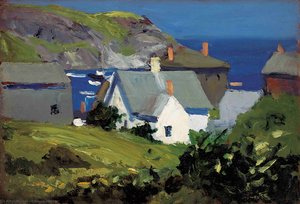


Edward Hopper
Woman at Cafe Table
() ·
S okvirom: · Ručno oslikano uljanim bojama na platnu od lana
Ukupno