


 Pregledaj u stvarnoj veličini
 Podijeli
 Podijeli
 Detalji
 Vodič
Vodič

 Preuzmi datoteku
 Slični predmeti
 Rentgenska snimka
 Slide show
 Statistika
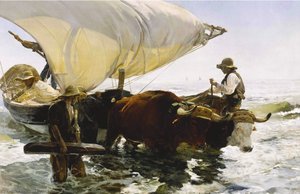
Bueys

Explore 'Bueys' by Enrique Martínez Cubells – a realistic oil painting depicting coastal labor & light. Costumbrismo style captures Spanish life, resilience & nature’s beauty.
Specializing in genre scenes of village life and marine art, Enrique Martinez Cubells captures the essence of coastal communities in works like Return from the Catch, inviting you to discover his evocative Spanish landscapes.
 Pročitajte više
Giclée / Umjetnički otisak
Giclée tisak muzejske kvalitete ili otisak na platnu uz brzu proizvodnju i fleksibilne opcije završne obrade. ( Naručite ručno oslikano reprodukciju Prebacite na digitalnu prodaju slika)




































Standardne dimenzije
prilagođeno po mjeri
CM
INCH
Odaberite jednu od naših unaprijed definiranih veličina koje odgovaraju izvornim proporcijama umjetničkog djela.
Loading sizes...

širina
visina
Unesite širinu i visinu koja vam je potrebna, kako bi odgovarali vašem okviru ili zidu. Print se može samo izrezati, nikada ne može biti veći od slike, stoga veličina s drugačijim oblikom gubi dio slike. Šaljemo vam digitalni prikaz (mockup) na odobrenje prije bilo kakve štampe. Slika prikazana na ovoj stranici ne prikazuje stvarni rez — to čini samo digitalni prikaz.
Dostava širom svijeta () u roku od 2 tjedna umjesto standardnih 4/5 tjedana. (21 Listopad)

Besplatna ekspresna dostava širom svijeta

Visokokvalitetno laneno platno

Potpuno osiguranje transporta

Jamstvo povrata carine i uvoznih poreza

Jamstvo vjernosti boja

Politika povrata u roku od 100 dana (samo u slučaju nedostataka)

Jamstvo povrata 100% novca

Popust na više proizvoda
 Opcija stakla dostupna je samo za dimenzije manje od 110 cm

Bueys
Giclée / Umjetnički otisak
Veličina reprodukcije
-


Ukupna cijena
€ 60
Srodna umjetnička djela



Biografija umjetnika
A Legacy of Light and Coastal Life
Enrique Martínez Cubells y Ruiz Diosayuda was a Spanish painter whose brush captured the profound essence of village life and the rhythmic pulse of the sea. Born in Madrid, Spain, his artistic journey was deeply rooted in a lineage of talent; he received his earliest lessons from his father, the renowned painter and art restorer Salvador Martínez Cubells. This foundational connection to the craft allowed him to develop a mastery over genre scenes that would eventually define his reputation. His education was further refined at the Escuela Especial de Pintura, Escultura y Grabado and the Real Academia de Bellas Artes de San Fernando, where he studied under masters such as Emilio Sala, Antonio Muñoz Degrain, and Carlos de Haes.
The evolution of his style was shaped by a nomadic spirit and an openness to the shifting currents of European art. In 1899, Martínez Cubells moved to Germany, settling in Munich. This period served as a vital crucible for his development, as he continued his studies with Heinrich von Zügel and found himself deeply moved by the works of Wilhelm Leibl. His travels eventually led him to the Netherlands, where an encounter with the Hague School ignited a lasting fascination with marine art and the nuanced depiction of coastal landscapes. This exposure infused his work with a particular sensitivity to light and atmosphere, blending the traditions of Spanish Costumbrismo with a more international, impressionistic sensibility.
Mastery of Genre and Marine Themes
The heart of Martínez Cubells’ oeuvre lies in his ability to elevate the mundane to the monumental. He specialized in genre scenes that focused on the fishing communities, portraying the daily labor, resilience, and quiet dignity of coastal inhabitants. His paintings often evoke a sense of nostalgia through the use of muted tones and textured impasto, creating works that feel both grounded in reality and dreamlike in their execution. Whether depicting the heavy toil of 'Bueys' or the soft, nostalgic glow of children at the beach in 'Backlighting', his technique allowed him to capture the interplay of light and shadow with remarkable precision.
His technical prowess was frequently recognized on the international stage through numerous accolades:
- National Exhibition of Fine Arts: He earned a Third Class prize in 1897, followed by Second Class prizes in 1899 and 1901.
- Major Honors: His excellence was further celebrated with First Class prizes in 1904 and 1912 for works such as 'Work, Rest and family' and 'Return from the Catch'.
- International Recognition: He was awarded a gold medal at the Exposición Internacional de Buenos Aires in 1910 and received honors at the Exposición Nacional de Panamá in 1916.
Beyond his canvases, Martínez Cubells left an indelible mark on the academic and cultural fabric of Spain. Upon returning to his homeland, he was named a Professor at both the Escuela de Artes y Oficios and his alma mater, the Real Academia, where he eventually attained the status of Academician. His life was one of continuous artistic pursuit, spanning continents and leaving behind a body of work that remains a poignant testament to the beauty of human connection to the natural world.

Enrique Martinez Cubells
1845 - 1914 , Spain
Brzi pregled
- Artistic Movement Or Style: Genre scenes, marine art, impressionism
- Artists Who Influenced This Artist:
- Heinrich von Zügel
- Wilhelm Leibl
- Full Name: Enrique Martínez Cubells y Ruiz Diosayuda
- Nationality: Spanish
- Notable Artworks:
- Bueys
- Backlighting
- In Palya
- City
- Work, Rest and family
- Return from the Catch
- Place Of Birth: Madrid, Spain
- Date Of Birth: 1845
- Date Of Death: 1914
Povezani članci
Whispers of the Waves: Discovering the Luminous Beauty and Timeless Light of Impressionist Coastal Art
Experience the breathtaking luminosity of Impressionist coastal art. From Monet’s shores to Sorolla’s sun-drenched waves, discover our exquisite hand-painted oil reproductions and bespoke commissions. Bring the timeless beauty of maritime masters into your home with TopImpressionists.com.