

Prikazano: · S okvirom:
 Pregledaj u realnoj veličini
 Pošalji
 Podijeli
 Detalji o umjetničkom djelu
 Vodič
Vodič

 Preuzmi umjetničko djelo
 Slični predmeti
 Rentgenska snimka
 Slide show
 Pitanja i odgovori
 Statistika

€ 239
Ručno rađena uljana reprodukcija
Ručno oslikano uljanim bojama na platnu u dimenzijama i okviru po vašem izboru, izrađeno po narudžbi od strane naših umjetnika. ( Prebacite na printove Prebacite na digitalnu sliku)
Veličina
·Standardne dimenzije
po mjeri
CM
INCH
Odaberite jednu od naših unaprijed definiranih veličina koje odgovaraju izvornim proporcijama umjetničkog djela.
Učitavanje dimenzija...

širina
visina
Unesite potrebnu širinu i visinu kako bi dimenzije odgovarale vašem okviru ili zidu. Budući da je riječ o ručno oslikanom djelu, umjetnik može malo proširiti rubove slike ili ih skratiti kako bi postigao drugačiji oblik — izbor je vaš. Prije početka slikanja poslat ćemo vam digitalni prikaz (mockup) radi potvrde. Slika prikazana na ovoj stranici ne predstavlja stvarni rezultat — samo digitalni prikaz to čini.
 Pročitajte više
Završetak
·
Bijela rubna traka €1

Zamućeni rubovi €1

Prošireno €1

P118B €10

P118H €10

P118W €10

P438Z €10

P508JH €12

P508YH €12

P805H €10

P805Z €10

P919BZ €10

P919G €10

P919XJ €10

P959ZH €10

P968JZ €12

W106C €8

W218G €10

W218JH €8

W218Y €10

W307PJ €10

W316G €10

W316PJ €8

W316Y €10

W398PJ €8

W4111J €10

W500HY €15

W500JH €15

W692G €12

W849H €8

W940BG €15

W953PJ €8

H24-GOLD €30

H24-SILVER €30

H36-GOLD €45

H36-SILVER €45
Dostavlja se u zaštitnoj cijevi, spremno za ugradnju u vaš vlastiti okvir.
Dodatne usluge
opcionalnoŠto sve uključuju dodaci?
Primjeri onoga što se može promijeniti: Zamjena lica fotografijom kupca; Dodavanje ljubimca (npr. zamjena mačke psom); Uključivanje skrivene poruke u pozadini; Promjena krajolika ili elemenata u pozadini.
Nakon narudžbe, tim TopImpressionists.com kontaktirat će klijenta putem e-pošte radi uputa te dostaviti pregledni prikaz (mockup)
Nakon narudžbe, tim TopImpressionists.com kontaktirat će klijenta putem e-pošte radi uputa te dostaviti pregledni prikaz (mockup)
Isporuka širom svijeta () u roku od 3-4 tjedna umjesto standardnih 5 tjedana. (4 Studeni). Bez kompromisa u kvaliteti.
Zaštitni lak
Natpisna pločica
Detalji gravirane brončane pločice
This elegant plaque features the artist's name and the title of the artwork, finely engraved for a timeless presentation.
It is made from bronze with a refined, elegant finish. The text is precisely laser-engraved for a sharp and permanent result. Measuring 9x2 cm, the plaque is compact yet easy to read. It's built to be durable and scratch-resistant, offering a professional, museum-quality look. Mounting is simple thanks to the included adhesive backing.
Detalji prozirne akrilne pločice
The plaque includes essential engraved details such as the artist's name, the title of the artwork, the date it was created, the type of media used-like oil on canvas or watercolor-a brief description of the piece, and a QR code that links to the complete artwork information.
It is crafted from clear acrylic, offering a sleek, modern appearance. The text is UV-engraved in black to ensure strong visual contrast. With a size of 10x15 cm, it ensures optimal readability. It comes equipped with two metal hooks for secure wall mounting. The plaque is designed to be weather-resistant, making it suitable for various environments, and it includes interactive features that work seamlessly with smartphone scanning.
Detalji crne akrilne pločice
This elegant plaque includes engraved information such as the artist's name, the title of the artwork, the date it was created, the type of media used (like oil on canvas or watercolor), a short description of the artwork, and a QR code for quick access to more information.
The plaque itself is made from refined black acrylic with a premium finish. The text is laser-engraved in white for high contrast and readability. Its size is 10x15 cm, designed to be easy to read. It comes with two metal hooks for professional mounting. The design is sleek and fits any interior style. It is also weather-resistant and durable, with built-in digital integration for mobile compatibility.
Opcija stakla dostupna je samo za dimenzije manje od 110 cm
 Opcija stakla dostupna je samo za dimenzije manje od 110 cm
- Besplatna ekspresna dostava širom svijeta
- Visokokvalitetno laneno platno
- Potpuno osiguranje dostave
- Jamstvo povrata carine i uvoznih poreza
- Jamstvo vjernosti boja
- Politika povrata u roku od 100 dana (samo u slučaju nedostataka)
- Jamstvo povrata 100% novca
- Popust na više proizvoda


Opis kolekcionarskog predmeta
Experience Paul Gauguin's 'Mountain Landscape' (1882) – a vibrant post-impressionist masterpiece capturing nature’s essence with bold colors & expressive brushstrokes. Hand-painted reproductions available.
Biografija umjetnika
Paul Gauguin: Revolucionarni slikarski umjetnik poznat po intenzivnim bojama, egzotičkim motivima i simbolističkim temama koji su oblikovali suvremenu umjetnost. Otkriti njegov stil i ostvarenja putem TopImpressionists.com!
O slici
A Journey Into Gauguin’s Soul: “Mountain Landscape”
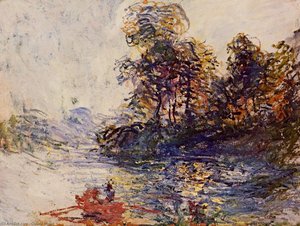
Paul Gauguin's "Mountain Landscape," painted in 1882, isn’t merely a depiction of a hillside; it’s a profound distillation of the artist’s evolving vision and his yearning for a deeper connection with nature and spirituality. Emerging from the vibrant, yet ultimately superficial, world of Impressionism, Gauguin embarked on a radical shift—a deliberate rejection of objective representation in favor of subjective experience and symbolic resonance. This painting stands as a pivotal moment in that transformation, showcasing a nascent style that would profoundly influence generations of artists to come. The scene itself is deceptively simple: a rugged, almost primordial landscape dominated by towering mountains and a swirling, cloudy sky. Yet, within this apparent simplicity lies a complex interplay of color, texture, and emotion—a testament to Gauguin’s innovative approach to capturing the essence of his subject. He wasn't striving for photographic accuracy; instead, he sought to translate the *feeling* of being amidst such grandeur, an experience deeply rooted in personal intuition and spiritual contemplation.- The Palette of Emotion: Gauguin’s masterful use of color is immediately striking. Gone are the delicate pastel hues of Impressionism; here, we encounter a bolder, more assertive palette—deep greens, rich browns, ochre yellows, and dramatic blues. These aren't colors that simply describe the landscape; they *become* the landscape itself, imbued with an emotional charge. The vibrant greens suggest life and vitality, while the earthy browns ground the scene in a sense of solidity and permanence. The sky, rendered in swirling shades of blue and grey, evokes both serenity and turbulence—a reflection perhaps of Gauguin’s own inner turmoil during this period of intense artistic exploration.
- Brushstrokes as Voices: Gauguin's distinctive brushwork is equally crucial to the painting’s impact. His strokes are not smooth or blended; they are loose, expressive, and often deliberately uneven. These visible marks—a hallmark of his style—inject a sense of movement and energy into the scene, suggesting the constant flux of nature and the artist’s own restless spirit. The brushstrokes seem to dance across the canvas, creating a tactile quality that invites the viewer to reach out and touch the landscape.
- A Departure from Realism: Notice how Gauguin simplifies forms—the mountains are not meticulously rendered but rather suggested through broad masses of color and texture. This simplification isn’t an act of carelessness; it's a deliberate choice to prioritize emotional impact over literal representation. He is less concerned with depicting *what* he sees than with conveying *how* he feels about what he sees.
The Context of Transformation: Gauguin and Post-Impressionism
To fully appreciate “Mountain Landscape,” it’s essential to understand its place within the broader context of Post-Impressionism—a movement that arose in reaction to the limitations of Impressionism. While Impressionists sought to capture fleeting moments of light and color, Post-Impressionist artists like Gauguin aimed to delve deeper into the underlying emotions and symbolic meanings of their subjects. They rejected the purely optical approach of Impressionism, embracing a more subjective and expressive style. Gauguin’s journey began in Paris, where he initially experimented with Impressionistic techniques. However, disillusioned by what he perceived as its superficiality, he sought refuge in Brittany, immersing himself in rural life and drawing inspiration from Celtic folklore and mythology. This experience profoundly shaped his artistic vision, leading him to develop a style characterized by bold colors, simplified forms, and symbolic imagery—a style that would become synonymous with Post-Impressionism. Key Influences:- Synthetism: Gauguin’s exploration of Synthetism – an artistic style focused on the synthesis of form and color – is evident in this work.
- Primitivism: His fascination with non-Western cultures, particularly those of Tahiti, fueled his desire to strip away Western conventions and embrace a more primal, intuitive approach to art.
Decoding the Symbolism
“Mountain Landscape” isn’t simply a landscape painting; it's a visual poem—a meditation on nature, spirituality, and the human condition. The towering mountains themselves can be interpreted as symbols of strength, permanence, and the sublime—evoking a sense of awe and humility in the face of nature’s grandeur. The swirling clouds suggest both tranquility and turbulence, reflecting the complexities of life and the artist's own inner struggles. Notably, the absence of human figures reinforces this focus on the landscape itself, transforming it into a sacred space—a realm where the viewer can connect with something larger than themselves. Gauguin was deeply interested in exploring themes of spirituality and mythology, often incorporating symbolic elements into his work to convey hidden meanings. The painting invites contemplation: What does the rugged terrain represent? How does the sky’s movement affect your mood?A Legacy of Innovation
“Mountain Landscape” is a remarkably prescient work—a harbinger of the radical artistic movements that would emerge in the early 20th century. Gauguin's bold experimentation with color, texture, and symbolism paved the way for Expressionism, Fauvism, and other avant-garde styles. His willingness to challenge conventional notions of representation and embrace a more subjective approach to art continues to inspire artists today. Reproductions of this iconic painting offer a unique opportunity to experience Gauguin’s visionary spirit—to step into his world and contemplate the timeless beauty and profound mystery of the natural landscape.Pitanja i odgovori
Koja je tehnika korištena za "Mountain landscape"?
"Mountain landscape" je izvedeno u tehnici Oil On Canvas.
Koje emocije prenosi "Mountain landscape" autora Eugène Henri Paul Gauguin?
Emocionalni ton zabilježen za "Mountain landscape" autora Eugène Henri Paul Gauguin je Tranquil, što sažima osjećaj koji ovo djelo izražava.
Koja su tehnika i datum nastanka djela "Mountain landscape" autora Eugène Henri Paul Gauguin?
"Mountain landscape" je nastalo 1882 godine koristeći tehniku Oil On Canvas. Materijal i datum opisuju kako i kada je original izrađen.
Brze činjenice i kviz o umjetnosti
O Eugène Henri Paul Gauguin

Eugène Henri Paul Gauguin
1848 - 1903, Francuska
Biografija umjetnika
Eugène Henri Paul Gauguin: Master of Color|Artist Biography
Eugène Henri Paul Gauguin, a name that resonates with vibrant color and rebellious spirit, stands as a pivotal figure in the transition from Impressionism to modern art. Born in Paris in 1848, his life was anything but conventional. His early years were shaped by an unusual upbringing; his father a journalist, and his mother descended from Peruvian aristocracy—her grandmother, Flora Tristan, a pioneering feminist and socialist writer whose ideals undoubtedly resonated within the family. This heritage would profoundly shape Gauguin’s artistic vision, instilling in him a fascination with cultures beyond Europe. A formative period spent in Peru as a child, following his family's relocation in 1850, immersed him in a world vastly different from Parisian society, an experience that lingered and ultimately fueled his quest for authenticity in art. Returning to France after his father’s death, Gauguin received a formal education but found himself drawn not to academia, but to the burgeoning financial world, embarking on a career as a stockbroker—a path seemingly at odds with the artistic destiny that awaited him.Early Influences and Artistic Beginnings
Initially captivated by Impressionism – particularly the works of Monet, Pissarro, and Renoir – Gauguin experimented with color and light in his spare time, attempting to capture the fleeting beauty of everyday life. However, he quickly recognized the limitations of Impressionistic technique, perceiving it as too concerned with optical observation and insufficiently expressive of inner emotion. The financial crisis of 1882 proved a decisive turning point, forcing him to abandon his lucrative career and wholeheartedly dedicate himself to painting—a decision that would fundamentally alter the trajectory of his artistic life. This wasn’t merely a change in profession; it was a profound reimagining of his worldview. Influenced by the writings of Friedrich Nietzsche and Henri Bergson, Gauguin sought guidance from Camille Pissarro, who encouraged him to develop his own distinctive style—one rooted not in imitation but in personal experience. Recognizing the influence of Cézanne’s geometric simplification and Raphael's harmonious compositions, he began to refine his technique, moving away from Impressionistic brushstrokes toward a more deliberate and controlled approach.Brittany and the Symbolist Movement
Before embarking on his transformative journey to Tahiti, Gauguin spent time in Brittany—the region of France where he was born—captivated by its rugged landscapes and deeply rooted traditions. During this period, he produced paintings that reflected both Impressionistic sensibilities and emerging Symbolist ideas. He explored themes of spirituality and mythology, depicting Breton peasants and rural scenes with a sensitivity to color and form that foreshadowed his later stylistic innovations. Gauguin’s artistic explorations were further enriched by his engagement with Japanese prints—Japonisme—which exerted a powerful influence on his visual vocabulary. The flattened perspectives, bold outlines, and decorative patterns characteristic of Japanese art captivated him, prompting him to adopt similar techniques in his own paintings. This fascination with “primitive” cultures – fueled by readings of Edgar Allan Poe and Gustave Flaubert – would ultimately propel him toward Tahiti and the pursuit of a radically different artistic vision.Tahiti: A Quest for Authenticity
The decision to relocate permanently to Tahiti in 1891 represented a culmination of Gauguin’s lifelong quest for authenticity—a rejection of Western civilization and its perceived artificiality in favor of a simpler, more spiritually fulfilling existence. Seeking refuge from the pressures of Parisian society and artistic conventions, he envisioned Tahiti as a sanctuary where he could reconnect with his primal instincts and express himself freely. He immersed himself in Polynesian culture, documenting rituals, myths, and daily life through his paintings—a process that profoundly shaped his artistic style. Influenced by medieval art – particularly Byzantine iconography – Gauguin employed bold colors, flattened perspectives, and stylized figures to convey symbolic meanings rooted in religious tradition. Iconic canvases such as “Vahine no te miti” (Woman with Mango), “Manao Tupapau” (Watched by the Spirit of the Dead), and “The Vision After The Sermon” exemplify this distinctive aesthetic—a testament to Gauguin’s unwavering commitment to artistic innovation.Legacy and Influence
Paul Gauguin died in Atuana, Hiva Oa, Marquesas Islands, in 1903, leaving behind a legacy that continues to inspire artists and scholars alike. His groundbreaking stylistic innovations – characterized by bold color palettes, simplified forms, and symbolic imagery – irrevocably altered the course of modern art, paving the way for movements such as Fauvism and Expressionism. Artists like Pablo Picasso, Henri Matisse, Edvard Munch, and Vincent van Gogh acknowledged Gauguin’s profound influence on their own creative endeavors—a recognition of his enduring contribution to the artistic canon. His unwavering belief in the transformative power of art – coupled with his courageous rejection of societal norms – cemented his place as a visionary artist who dared to challenge conventions and forge his own path, leaving behind a body of work that remains both captivating and enigmatic. Gauguin’s exploration of themes of spirituality, myth, and primal instinct continues to resonate with audiences today, ensuring that his artistic legacy will endure for generations to come.Brzi pregled o Eugène Henri Paul Gauguin
- Artistic Movement Or Style: Postimpresionizam, Simbolizam
- Artists Or Movements Influenced By This Artist:
- Pablo Picasso
- Henri Matisse
- Artists Who Influenced This Artist: ['Camille Pissarro']
- Date Of Birth: 1848.
- Date Of Death: 1903.
- Full Name: Eugène Henri Paul Gauguin
- Nationality: Francuski
- Notable Artworks:
- Clearing
- Vahine no te miti
- Manao Tupapau
- Little Breton Shepherd
- Place Of Birth: Pariz, Francuska
Srodna umjetnička djela


Istražite umjetnička djela organizirana prema temama, stilovima i karakteristikama.


Eugène Henri Paul Gauguin
Mountain landscape
() ·
S okvirom: · Ručno oslikano uljanim bojama na platnu od lana
Ukupno