

 Pregledaj u realnoj veličini
 Pošalji
 Podijeli
 Detalji o umjetničkom djelu
 Vodič
Vodič

 Preuzmi umjetničko djelo
 Slični predmeti
 Rentgenska snimka
 Slide show
 Pitanja i odgovori
 Statistika
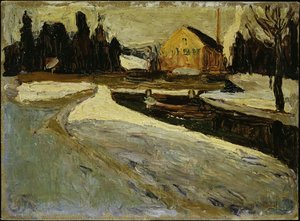
Delaware Canal


A serene winter scene of the Delaware Canal captured by Pennsylvania Impressionist Frederick Roland Wagner features snow-covered landscapes and tranquil boats, inviting you to bring this peaceful moment into your home.
 Prikaži više
Discover Frederick R. Wagner (1860-1940), a pioneering Pennsylvania Impressionist painter. Explore his captivating scenes of Philadelphia – harbors, bridges & everyday life – and learn about his legacy at PAFA & beyond.
Preuzmite datoteku spremnu za tisak koja kvalitom daleko nadilazi web prikaz. Svaka digitalna slika koju prodajemo prosljeđuje se iz visokorezolucijske master datoteke iz naše baze — obično širine od 5.000 do 15.000 piksela — što vam omogućuje tisak velikih dimenzija, precizno izrezivanje ili sigurnu reprodukciju najfinijih detalja.
Nijedna datoteka ne napušta naš studio netaknuta. Digitalni stručnjak uspoređuje boje s izvornim slikama i po potrebi ih ispravlja, a zatim poboljšava jasnoću i detalje pomoću profesionalnih alata za retuširanje — uvijek ostajući vjerni umjetnikovim potezima četkice i stilu. Rezultat je prikaz koji izgleda kao prava slika, a ne kao sken s filtrima.
Odobravanje prije završetka: naš stručnjak šalje sliku e-poštom u roku od 72 sata na vaš pregled. Niste zadovoljni? Zatražite poboljšanja ili ispravke, ili tražite povrat novca ako kvaliteta ne ispunjava vaša očekivanja.
To je kvaliteta na koju se oslanjaju izdavači, dizajn studiji, galerije i tiskare.
Digitalna slika
Preuzmite datoteku visoke rezolucije za osobnu izložbu, tisak i kreativne projekte. ( Prebacite na printove Kupi ručno oslikano djelo)
Uključeno uz svaku narudžbu digitalne slike
Profesionalna digitalna dostava, zajamčena
Odabirom TopImpressionists.com ne dobivate samo sliku – dobivate profesionalno unapređeno digitalno umjetničko djelo, izrađeno s najvećom preciznošću uz jamstvo zadovoljstva. Evo svega što automatski dolazi uz vašu narudžbu:

Brza dostava e-poštom
Vaša digitalna slika visoke rezolucije bit će vam poslana e-mailom u roku od 72 sata od trenutka narudžbe – spremna za neposrednu upotrebu.

Digitalna datoteka poboljšana umjetnom inteligencijom
Vaše umjetničko djelo profesionalno je optimizirano pomoću naprednih AI alata i ručnog uređivanja, čime se osigurava maksimalna razina detalja, oštrine i točnosti boja.

Besplatna doživotna ponovna dostava
Slučajno ste obrisali ili izgubili svoju datoteku? Ne brinite – ponovno ćemo vam je poslati u bilo kojem trenutku, potpuno besplatno.

Bez uvoznih pristojnika – ikada
Uživajte u svojim umjetničkim djelima trenutno, bez carina, pristojbi ili troškova dostave – digitalni downloadi uvijek su oslobođeni poreza.

Jamstvo točnosti boja
Uz pomoć profesionalnih alata i upravljanja bojama, osiguravamo da vaša digitalna slika što vjernije odražava izvorne boje.

Jamstvo zadovoljstva u trajanju od 100 dana
Ako niste zadovoljni svojom digitalnom slikom, revidirat ćemo je ili vratiti 100% iznosa u roku od 100 dana – bez suvišnih pitanja.

100% Jamstvo povrata novca
Niste zadovoljni? Osigurajte puni povrat novca u roku od 100 dana od primitka digitalne datoteke – bez suvišnih pitanja.

Popusti na velike narudžbe
Kupite 3 slike, uštedite 10% - Kupite 5 slika, uštedite 15% - Kupite 10+ slika, uštedite 20%. Odlično za kreativne projekte, galerije i agencije.
Wagner began his studies at the Pennsylvania Academy of the Fine Arts under Thomas Eakins and Thomas Anshutz in the early 1880s. Like many of his New Hope colleagues, the artist preferred painting en plein air, especially winter scenes and specialized in railroad and canal views such as this work. In 1913, Wagner exhibited two works in the landmark Armory Show in New York that introduced Americans to trends in European modernism.
Pitanja i odgovori
U kojem se muzeju čuva izvornik djela "Delaware Canal"?
Originalno djelo "Delaware Canal" autora Frederick Roland Wagner čuva se u muzeju Reading Public Museum, Reading, Sjedinjene Američke Države. Reprodukcija omogućuje prikazivanje ovog djela u vašem domu.
Koja se namjena i prostor preporučuju za "Delaware Canal" autora Frederick Roland Wagner?
"Delaware Canal" se preporučuje za Seasonal, a idealan prostor za nju je Hotel Room.
O kakvom se umjetničkom djelu radi kod "Delaware Canal"?
"Delaware Canal" autora Frederick Roland Wagner klasificirano je kao WallArt. Ova kategorija opisuje vrstu umjetničkog djela kojem original pripada.
Srodna umjetnička djela




Biografija umjetnika
Frederick Roland Wagner: Capturing the Soul of Philadelphia
Born in Port Kennedy, Pennsylvania, in 1860, Frederick Roland Wagner emerged as a pivotal figure in early 20th-century American art, specifically within the burgeoning Pennsylvania Impressionist movement. His life and career were inextricably linked to the vibrant, evolving cityscape of Philadelphia, a subject he relentlessly pursued with a keen eye for detail and an ability to imbue everyday scenes with profound emotional resonance. Wagner’s work wasn't merely documentation; it was a deeply felt exploration of urban life, capturing both its grandeur and its inherent melancholy.
Wagner’s artistic journey began under the tutelage of Thomas Eakins at the Pennsylvania Academy of the Fine Arts, an institution that profoundly shaped his approach to painting. This early immersion in academic training provided him with a solid technical foundation, but it was Wagner's subsequent engagement with the burgeoning Impressionist circle – including Robert Henri and William Glackens – that truly ignited his artistic spirit. These figures encouraged a shift away from rigid realism towards capturing fleeting moments of light and color, emphasizing subjective experience over objective representation. He embraced this new approach, developing a distinctive style characterized by loose brushwork, vibrant palettes, and an intimate portrayal of Philadelphia’s industrial heartland.
Early life and education saw Wagner demonstrating anatomy at the Pennsylvania Academy, showcasing his meticulous observation skills – a trait that undoubtedly informed his ability to render figures and architectural details with remarkable accuracy. He spent time studying in Europe before returning to America, where he honed his craft through independent study and experimentation. His work quickly gained recognition within the Pennsylvania art community, earning him inclusion in prestigious exhibitions such as those of the Pennsylvania Academy and the Corcoran Gallery of Art. These venues provided a crucial platform for showcasing his evolving style and establishing his reputation.
The Urban Landscape: A Philadelphia Portrait
Wagner’s artistic focus centered almost exclusively on scenes within Philadelphia – its canals, bridges, train stations, harbors, and bustling streets. He wasn't interested in grand historical narratives or idealized landscapes; instead, he sought to capture the essence of urban life as it unfolded before him. His paintings of the Delaware Canal, exemplified by “Delaware Canal and Canal at Lumberville,” are particularly noteworthy for their evocative atmosphere and subtle shifts in light and shadow. These works aren’t simply depictions of physical spaces; they're meditations on time, industry, and the human experience within a rapidly changing environment.
His series depicting scenes like “Broad Street Station, Spring” offer a glimpse into the daily rhythms of Philadelphia – the arrival of trains, the flow of pedestrians, the interplay of light and color. Wagner’s compositions often feature figures rendered with remarkable sensitivity, suggesting a quiet awareness of their presence within the larger urban landscape. He skillfully used atmospheric perspective to create a sense of depth and distance, drawing the viewer into the heart of his scenes.
Technique and Style
Wagner's technique was characterized by a loose, expressive brushstroke—a hallmark of Impressionism. He favored working outdoors ("en plein air") whenever possible, allowing him to directly observe and capture the nuances of natural light. His palette was generally bright and vibrant, utilizing complementary colors to create visual excitement and depth. He often employed a technique of applying paint in thin layers, building up color gradually to achieve a luminous effect.
Despite his embrace of Impressionist principles, Wagner’s work retained a strong sense of realism. He meticulously rendered architectural details, figures, and textures, demonstrating a remarkable attention to detail. However, he never sacrificed spontaneity or emotional expression in the pursuit of accuracy. His paintings are imbued with a palpable sense of immediacy—as if he were capturing a fleeting moment in time.
Recognition and Legacy
Wagner’s contributions to American art were recognized throughout his career. He received the Pennsylvania Academy's fellowship prize in 1914, a testament to his artistic merit and dedication. He also earned an honorable mention at the International Exhibition of the Carnegie Institute in Pittsburgh in 1922, further solidifying his place within the broader American art scene. His works are now held in prestigious institutions such as the Philadelphia Museum of Art, the Reading Museum, the Woodmere Art Museum, and the James A. Michener Art Museum, ensuring that his legacy will continue to inspire future generations of artists.
Frederick Roland Wagner’s paintings offer a unique window into the soul of Philadelphia at the turn of the 20th century. His ability to capture the beauty and complexity of urban life—its grandeur, its melancholy, and its inherent humanity—solidifies his position as one of the most important figures in Pennsylvania Impressionism. His work remains a powerful reminder of the enduring appeal of capturing everyday moments with sensitivity and artistic vision.

Frederick Roland Wagner
1860 - 1940 , United States of America
Kratki pregled
- Full Name: Frederick Roland Wagner
- Nationality: American
- Date Of Birth: 1860
- Date Of Death: 1940
- Place Of Birth: Port Kennedy, United States of America
- Notable Artworks:
- Delaware Canal
- Canal at Lumberville
- Artistic Movement Or Style: Pennsylvania Impressionist
- Artists Who Influenced This Artist: ['Thomas Eakins']