

Prikazano: · S okvirom:
 Pregledaj u realnoj veličini
 Pošalji
 Podijeli
 Detalji o umjetničkom djelu
 Vodič
Vodič

 Preuzmi umjetničko djelo
 Slični predmeti
 Rentgenska snimka
 Slide show
 Pitanja i odgovori
 Statistika
- 18.0 x 26.0 cm


€ 239
Ručno rađena uljana reprodukcija
Ručno oslikano uljanim bojama na platnu u dimenzijama i okviru po vašem izboru, izrađeno po narudžbi od strane naših umjetnika. ( Prebacite na printove Prebacite na digitalnu sliku)
Veličina
·Standardne dimenzije
po mjeri
CM
INCH
Odaberite jednu od naših unaprijed definiranih veličina koje odgovaraju izvornim proporcijama umjetničkog djela.
Učitavanje dimenzija...

širina
visina
Unesite potrebnu širinu i visinu kako bi dimenzije odgovarale vašem okviru ili zidu. Budući da je riječ o ručno oslikanom djelu, umjetnik može malo proširiti rubove slike ili ih skratiti kako bi postigao drugačiji oblik — izbor je vaš. Prije početka slikanja poslat ćemo vam digitalni prikaz (mockup) radi potvrde. Slika prikazana na ovoj stranici ne predstavlja stvarni rezultat — samo digitalni prikaz to čini.
 Pročitajte više
Završetak
·
Bijela rubna traka €1

Zamućeni rubovi €1

Prošireno €1

P118B €10

P118H €10

P118W €10

P438Z €10

P508JH €12

P508YH €12

P805H €10

P805Z €10

P919BZ €10

P919G €10

P919XJ €10

P959ZH €10

P968JZ €12

W106C €8

W218G €10

W218JH €8

W218Y €10

W307PJ €10

W316G €10

W316PJ €8

W316Y €10

W398PJ €8

W4111J €10

W500HY €15

W500JH €15

W692G €12

W849H €8

W940BG €15

W953PJ €8

H24-GOLD €30

H24-SILVER €30

H36-GOLD €45

H36-SILVER €45
Dostavlja se u zaštitnoj cijevi, spremno za ugradnju u vaš vlastiti okvir.
Dodatne usluge
opcionalnoŠto sve uključuju dodaci?
Primjeri onoga što se može promijeniti: Zamjena lica fotografijom kupca; Dodavanje ljubimca (npr. zamjena mačke psom); Uključivanje skrivene poruke u pozadini; Promjena krajolika ili elemenata u pozadini.
Nakon narudžbe, tim TopImpressionists.com kontaktirat će klijenta putem e-pošte radi uputa te dostaviti pregledni prikaz (mockup)
Nakon narudžbe, tim TopImpressionists.com kontaktirat će klijenta putem e-pošte radi uputa te dostaviti pregledni prikaz (mockup)
Isporuka širom svijeta () u roku od 3-4 tjedna umjesto standardnih 5 tjedana. (5 Studeni). Bez kompromisa u kvaliteti.
Zaštitni lak
Natpisna pločica
Detalji gravirane brončane pločice
This elegant plaque features the artist's name and the title of the artwork, finely engraved for a timeless presentation.
It is made from bronze with a refined, elegant finish. The text is precisely laser-engraved for a sharp and permanent result. Measuring 9x2 cm, the plaque is compact yet easy to read. It's built to be durable and scratch-resistant, offering a professional, museum-quality look. Mounting is simple thanks to the included adhesive backing.
Detalji prozirne akrilne pločice
The plaque includes essential engraved details such as the artist's name, the title of the artwork, the date it was created, the type of media used-like oil on canvas or watercolor-a brief description of the piece, and a QR code that links to the complete artwork information.
It is crafted from clear acrylic, offering a sleek, modern appearance. The text is UV-engraved in black to ensure strong visual contrast. With a size of 10x15 cm, it ensures optimal readability. It comes equipped with two metal hooks for secure wall mounting. The plaque is designed to be weather-resistant, making it suitable for various environments, and it includes interactive features that work seamlessly with smartphone scanning.
Detalji crne akrilne pločice
This elegant plaque includes engraved information such as the artist's name, the title of the artwork, the date it was created, the type of media used (like oil on canvas or watercolor), a short description of the artwork, and a QR code for quick access to more information.
The plaque itself is made from refined black acrylic with a premium finish. The text is laser-engraved in white for high contrast and readability. Its size is 10x15 cm, designed to be easy to read. It comes with two metal hooks for professional mounting. The design is sleek and fits any interior style. It is also weather-resistant and durable, with built-in digital integration for mobile compatibility.
Opcija stakla dostupna je samo za dimenzije manje od 110 cm
 Opcija stakla dostupna je samo za dimenzije manje od 110 cm
- Besplatna ekspresna dostava širom svijeta
- Visokokvalitetno laneno platno
- Potpuno osiguranje dostave
- Jamstvo povrata carine i uvoznih poreza
- Jamstvo vjernosti boja
- Politika povrata u roku od 100 dana (samo u slučaju nedostataka)
- Jamstvo povrata 100% novca
- Popust na više proizvoda


Opis kolekcionarskog predmeta
Biografija umjetnika
Otkrijte Jamesa Abbotta McNeilla Whistlera (1834-1903), američkog umjetnika Tonalizma i Estetizma! Istražite 'Whistlerovu Majku', noćne prizore, portrete te njegovu filozofiju 'umjetnosti radi umjetnosti'.
O slici
A Moment of Quiet Anticipation: Unpacking “The Violet Note”
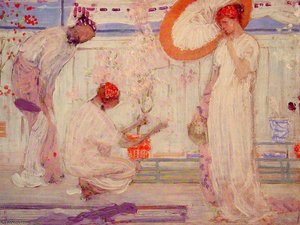
James Abbott McNeill Whistler’s "The Violet Note," painted in 1886, isn't a grand statement of narrative or dramatic action; it’s a carefully constructed tableau of quiet contemplation and the subtle poetry of everyday life. This intimate portrait captures a woman, her back turned to the viewer, engaged in the seemingly simple act of preparing for travel – a moment frozen in time that speaks volumes about Whistler’s core aesthetic philosophy: “art for art’s sake.” The painting immediately draws us in with its muted palette dominated by blues and greens, creating an atmosphere of subdued elegance and a sense of veiled mystery. It's a deliberate departure from the prevailing Victorian obsession with grand historical scenes or emotionally charged portraits, reflecting Whistler’s commitment to capturing the essence of beauty through form, color, and light rather than storytelling.
The Language of Form and Color: Whistler’s Aesthetic Vision
Whistler was deeply influenced by Japanese prints – particularly *ukiyo-e* – which emphasized flattened perspectives, bold outlines, and a focus on decorative elements. This influence is evident in the painting's composition; the figures are rendered with a sense of detachment, almost as if viewed through a slightly removed lens. The use of color is equally deliberate. Whistler favored a technique he called “tonal harmony,” prioritizing subtle gradations of tone over bright, saturated hues. Notice how the violet – hinted at in the title and subtly reflected in the arrangement of objects – acts as a unifying element, grounding the scene and lending it an air of sophisticated restraint. The careful placement of each object—the vase, the potted plant, the books—contributes to a carefully balanced visual rhythm, suggesting a considered aesthetic rather than a spontaneous one.
Symbolism in the Details: A Journey Within
Beyond its formal qualities, “The Violet Note” is rich with symbolic potential. The woman’s posture, leaning on her suitcase, immediately evokes travel and departure – but it's not a joyous or celebratory departure. There’s a hint of melancholy in her stance, suggesting perhaps a bittersweet farewell or the quiet solitude of a journey undertaken alone. The suitcase itself, placed squarely on the floor, is a potent symbol of both practicality and vulnerability. The books, stacked neatly together, could represent knowledge, experience, or even a longing for intellectual stimulation during her travels. Even the vase with its single bloom – a violet, no doubt – speaks to beauty, fragility, and the transient nature of life. Whistler wasn’t simply depicting a scene; he was layering it with subtle suggestions and inviting the viewer to project their own interpretations onto the canvas.
Historical Context: The Rise of Aestheticism
“The Violet Note” emerged during a pivotal moment in art history – the height of the Aesthetic movement. Whistler, along with figures like Oscar Wilde, rejected the didactic and moralistic tendencies of much 19th-century art, arguing that art should exist solely for its own beauty and pleasure. This philosophy challenged the established conventions of the time, leading to considerable controversy and criticism. Whistler’s work was often dismissed as “mere decoration,” but his insistence on prioritizing formal qualities over narrative content paved the way for modernism and profoundly influenced subsequent generations of artists. Understanding this context illuminates why "The Violet Note" is not a painting about *what* is happening, but rather about *how* it's being seen – a testament to Whistler’s dedication to capturing the essence of visual experience.
Bringing “The Violet Note” Home: A Reproduction for Your Space
TopImpressionists.com offers meticulously crafted hand-painted reproductions of "The Violet Note," allowing you to bring this evocative masterpiece into your own home or office. Our skilled artisans replicate Whistler’s tonal harmony and subtle details with exceptional precision, ensuring that the painting's atmosphere and symbolic depth are faithfully preserved. Whether you appreciate Whistler’s pioneering aestheticism or simply admire its quiet beauty, a reproduction of “The Violet Note” is a timeless addition to any collection – a reminder of the power of art to evoke emotion and inspire contemplation.
Pitanja i odgovori
Na koji način "The Violet Note" autora James Abbot Mcneil Whistler povezuje Aestheticism and Symbolism s domovinom umjetnika?
"The Violet Note" djelo je koje je stvorio/la James Abbot Mcneil Whistler, rođen/a u Sjedinjene Američke Države, unutar pokreta Aestheticism and Symbolism. Umjetnikovo podrijetlo povezuje ovo djelo s Aestheticism and Symbolism onako kako su ga prakticirali umjetnici iz Sjedinjene Američke Države.
Kako se tema djela "The Violet Note" povezuje s uobičajenim temama umjetnika James Abbot Mcneil Whistler?
Ponavljajuće teme u radovima umjetnika James Abbot Mcneil Whistler uključuju aestheticism, european avant-garde, sensibility, mood, atmosphere, travel, preparation, journey; djelo "The Violet Note" fokusira se na woman, travel, packing, suitcase, vase, books, anticipation.
Gdje mogu pronaći vodič za "The Violet Note"?
Za djelo "The Violet Note" autora James Abbot Mcneil Whistler dostupna je stranica Vodič za učenike: isprintana informativnica o umjetničkom djelu, dizajnirana za učenike i upotrebu u učionici.
Brze činjenice i kviz o umjetnosti
O James Abbot Mcneil Whistler

James Abbot Mcneil Whistler
1834 - 1903, Sjedinjene Američke Države
Biografija umjetnika
James Abbott McNeill Whistler: Američki Pionir Estetizma i Tonalizma
Rođen 1834. godine u Lowellu, Massachusettsu, James Abbott McNeill Whistler bio je figura koja se neprestano sukobalila s konvencijama – slikar koji je zagovarao "umjetnost radi umjetnosti" u dobu opsjednuto moralizirajućim pričama. Njegovo rano djetinjstvo, obilježeno čestim preseljenjima zbog očeve karijere inženjera željeznice, u njemu je usadilo osjećaj prilagodljivosti i izloženosti raznim okrućenjima. Kratak, nesretan boravak na West Pointu pokazao se neprikladan njegovom umjetničkom temperamentu, nakon čega je slijedio rad s U.S. Coast and Geodetic Survey-em koji, iako ga je odgodio, nije ugasio njegovu rastuću strast za umjetnošću. Te godine formiranja bile su obilježene urođenim talentom za crtanje i odlučnom željom da se probije kao profesionalni umjetnik, pothvat koji će ga na kraju dovesti preko Atlantika i u srce europske avangarde. Sjemenke Whistlera umjetničkog pobunjeništva bile su posađene rano, hranjene duhom koji je odbijao konformizam i prihvatio estetsko istraživanje iznad svega ostalog.Pariske Početci i Kultivacija Stila
Ključni trenutak u Whistlerovoj umjetničkoj putanji nastupio je s njegovim preseljenjem u Pariz 1855. godine. Tamo, pod mentorstvom Sébastiena Bouréa, usavršavao je svoje vještine uljne slike, akvarela i grafike, upijajući utjecaje francuskog realizma i slikara škole Barbizon. Međutim, Whistler je ubrzo nadmašio puku imitaciju, razvijajući prepoznatljiv stil obilježen tonalnim harmonijama i atmosferskim efektima. Nije bio zainteresiran za ponovno stvaranje stvarnosti; nastojao je uhvatiti njezinu *esenciju*, njezin prolazni raspoložaj i suptilne nijanse. Ovaj period označio je ključnu promjenu od reprezentativne točnosti prema istraživanju čiste estetske forme. Njegova djela već tada nagovještavaju delikatnu ravnotežu između opažanja i apstrakcije koja će definirati njegov zreli stil. U Parizu je Whistler počeo artikulirati svoje uvjerenje da se umjetnost treba procijeniti isključivo na temelju njezinih estetskih kvaliteta, bez didaktičkih ili moralizirajućih ograničenja – filozofija koja će postati kamenom temeljcem njegove umjetničke prakse i definirajućom karakteristikom pokreta estetizma.Nocturni, Portreti i Potraga za Harmnijom
Whistlerova umjetnička vizija kristalizirala se u nekoliko ključnih tema i stilskih izbora. On je zagovarao koncepciju "umjetnosti radi umjetnosti", odbacujući narative opterećene moralnim ili socijalnim komentarima. Njegovo djelo postalo je vježbom hvatanja suptilnih nijansi svjetla, boje i atmosfere – pothvat koji je doveo do njegovih ikoničnih *Nocturna*. Te atmosferske slike zalazaka sunca, često prikazuju rijeku Temzu noću, nisu bile namijenjene kao doslovna prikazivanja već kao evocirajuće impresije, studije tonalne harmonije i raspoloženja. Često je koristio ograničene palete i delikatne poteze kistom, stvarajući osjećaj eterične ljepote i tihe kontemplacije. Portreti su također zauzimali središnje mjesto u njegovoj praksi, iako je pristupao njima s jedinstvenim osjetljivošću. Whistler nije bio zabrinut za hvatanje savršenih sličnosti; umjesto toga, fokusirao se na formalne aranžmane i tonalne odnose, tretirajući svoje modele kao kompozicijske elemente unutar pažljivo konstruiranog estetskog okvira. Djela poput *Arrangement in Grey and Black No. 1* – poznatija kao *Whistler’s Mother* – savršeno demonstriraju ovaj pristup, pretvarajući obiteljski portret u ikoničnu sliku viktorijanske majke putem svoje majstorske upotrebe forme i tona.Kontroverze, Utjecaj i Trajno Nasljeđe
Whistlerova karijera nije bila bez kontroverzi. Infamousni sudski spor koji je pokrenuo protiv kritičara Johna Ruskin-a 1878. godine, potaknut *Nocturne in Black and Gold – The Falling Rocket*, postao je prekretnica u povijesti umjetnosti. Whistler je uspješno obranio svoju umjetničku autonomiju, tvrdeći da se njegove slike nisu namjeravale kao realistična prikazivanja već kao estetski aranžmani boje i forme. Ovaj slučaj podigao je njegov profil i potaknuo važne rasprave o prirodi kritike umjetnosti i umjetničke slobode. Izvan ove pravne bitke, Whistlerov utjecaj protezao se daleko i široko. Duboko je bio inspiriran japanskim tiskovima (ukiyo-e), koji su informirali njegova kompozicijska načela i naglasak na dekorativnim uzorcima, kao i tonalnom svladanošću španjolskih slikara poput Velazqueza. Njegovo zagovaranje "umjetnosti radi umjetnosti" duboko je utjecalo na pokret estetizma u Engleskoj i Americi, otvarajući put modernizmu i izazivajući konvencionalna shvaćanja o svrsi umjetnosti. Ostavio je neizbrisiv trag na američku umjetnost, nadahnjujući generacije umjetnika da prihvate formalističke pristupe i istražuju ekspresivni potencijal boje i kompozicije.- Poznata djela: *The Forge* (1861), *Portrait of Charles Lang Freer* (1873), *Brown and Gold: The Gold Girl—Connie Gilchrist* (1876-77), *Arrangement in Grey and Black No. 1 (Whistler’s Mother)* (1871), *Nocturne in Black and Gold – The Falling Rocket* (1875).
- Utjecaji: Japanski tiskovi, Velázquez.
Brzi pregled o James Abbot Mcneil Whistler
- Datum Rođenja: 14. srpnja 1834.
- Državljanstvo: Američki
- Mjesto Rođenja (Grad I Zemlja): Lowell, SAD
- Puno Ime: James Abbott McNeill Whistler
- Umjetnici Ili Pokreti Koje Je Ovaj Umjetnik Utjecao:
- Estetski pokret
- Modernizam
- Umjetnici Koji Su Utjecali Na Ovog Umjetnika:
- Velázquez
- Japanski drvorezi
- Umjetnički Pokret Ili Stil: Tonalizam, Estetika
- Značajna Djela:
- Kovačnica (The Forge)
- Portret Charlesa Lang Freera
- Smeđa i zlatna: Zlatna djevojka
- Arrangement in Grey and Black No. 1
- Nocturne u crnom i zlatu
Srodna umjetnička djela



Istražite umjetnička djela organizirana prema temama, stilovima i karakteristikama.


James Abbot Mcneil Whistler
The Violet Note
() ·
S okvirom: · Ručno oslikano uljanim bojama na platnu od lana
Ukupno