
 Pošalji
 Podijeli
 Detalji o umjetničkom djelu
 Vodič
Vodič

 Preuzmi umjetničko djelo
 Slični predmeti
 Slide show
 Pitanja i odgovori
 Statistika
George Washington


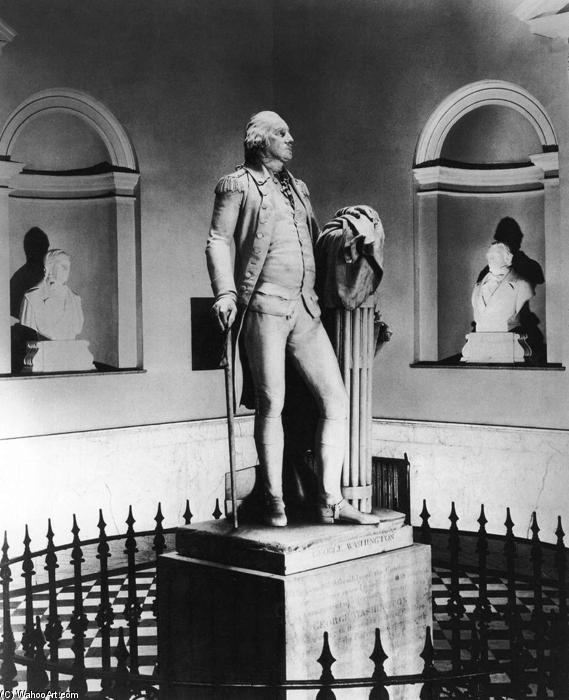
Admire Jean-Antoine Houdon’s iconic George Washington statue – a masterpiece capturing the statesman's intellect & gravitas. Explore its history, artistry, and significance in American art.
 Prikaži više
Istražite neoklasične skulpture Jean-Antoinea Houdona (1741.-1828.), poznatog po realističnim portretima prosvjetiteljskih figura poput Washingtona, Franklina i Voltairea. Majstor realizma koji je ovjekovječio eru.
Giclée / Umjetnički otisak
Giclée tisak muzejske kvalitete ili otisak na platnu uz brzu izradu i raznolike opcije završne obrade. ( Kupi ručno oslikano djelo Prebacite na digitalnu sliku)




































Standardne dimenzije
po mjeri
CM
INCH
Odaberite jednu od naših unaprijed definiranih veličina koje odgovaraju izvornim proporcijama umjetničkog djela.
Loading sizes...

širina
visina
Unesite potrebnu širinu i visinu kako bi odgovarali vašem okviru ili zidu. Print se može samo izrezati, nikada ne može biti veći od slike, stoga format s drugačijim omjerom stranica uzrokuje gubitak dijela slike. Prije bilo kakve štampe šaljemo vam digitalni prikaz (mockup) na odobrenje. Slika prikazana na ovoj stranici ne prikazuje stvarni rez — to prikazuje isključivo digitalni prikaz.
Dostava širom svijeta () u roku od 2 tjedna umjesto standardnih 4/5 tjedana. (6 Studeni)

Besplatna ekspresna dostava širom svijeta

Visokokvalitetno laneno platno

Potpuno osiguranje dostave

Jamstvo povrata carine i uvoznih poreza

Jamstvo vjernosti boja

Politika povrata u roku od 100 dana (samo u slučaju nedostataka)

Jamstvo povrata 100% novca

Popust na više proizvoda
 Opcija stakla dostupna je samo za dimenzije manje od 110 cm

George Washington
Giclée / Umjetnički otisak
Veličina reprodukcije
-


Ukupna cijena
€ 62
The Stoic Statesman: Jean-Antoine Houdon’s Portrait of George Washington
Jean-Antoine Houdon's 1788 sculpture of George Washington stands as more than just a likeness; it is a profound distillation of the ideals upon which the nascent American republic was founded. Carved from luminous Carrara marble, this monumental figure transcends mere portraiture, embodying Washington’s leadership, intellect, and quiet dignity—qualities that continue to resonate centuries later. The statue resides within the Virginia State Capitol in Richmond, a testament to its enduring significance for the Commonwealth and the nation as a whole.
Houdon, a pivotal figure bridging the Rococo and Neoclassical eras, possessed an extraordinary ability to capture not simply outward appearance but the very essence of his subjects. Unlike many of his contemporaries who favored idealized depictions rooted in classical antiquity, Houdon sought to portray individuals as they truly were – with their strengths, vulnerabilities, and inner complexities. This approach is strikingly evident in Washington’s face: a subtle furrow above the brow hints at the weight of responsibility borne during the Revolutionary War, while the steady gaze conveys an unwavering resolve. The sculptor masterfully rendered the texture of the skin, capturing the lines etched by time and experience, lending the statue an astonishing sense of realism.
A Masterclass in Neoclassical Technique
The sculpture’s execution is a remarkable feat of technical skill. Houdon employed a subtractive method, beginning with a large block of marble and meticulously removing material to reveal the desired form. This process demanded immense patience and precision, allowing for gradual refinement of details—from the delicate folds of Washington's military coat to the powerful musculature of his arms. The use of light and shadow is particularly noteworthy; Houdon expertly manipulates the surface of the marble to create a dramatic interplay of highlights and recesses, adding depth and volume to the figure. The statue’s smooth, polished finish reflects the ambient light, further enhancing its visual impact.
Notably, Houdon's approach was revolutionary for his time. He eschewed the traditional practice of creating preparatory drawings, instead working directly from a life mask and measurements taken of Washington himself. This direct engagement with the subject ensured an unparalleled level of accuracy and immediacy in the final sculpture. The statue’s dimensions—standing nearly seven feet tall—were carefully calculated to convey a sense of authority and gravitas, reflecting Washington's stature as the first President of the United States.
Symbolism and Historical Context
Beyond its technical brilliance, the sculpture is rich in symbolic meaning. Washington’s attire – a military uniform reminiscent of Roman generals—references the ideals of republican virtue and civic duty that underpinned the American Revolution. The fasces, a bundle of rods symbolizing authority and unity, held by Washington, echoes the traditions of ancient Rome, suggesting his role as a leader guiding the nation towards a new era. The inclusion of agricultural implements – a plow and a sheaf of wheat – subtly alludes to Washington’s roots as a planter and farmer, grounding him in the values of hard work and self-sufficiency.
Commissioned during a period of profound political and social change, the statue reflects the hopes and aspirations of a nation forging its own identity. It embodies the spirit of Enlightenment ideals – reason, liberty, and civic virtue—that fueled the American Revolution. The fact that Washington chose to be depicted in contemporary attire, rather than adhering to classical conventions, signaled his commitment to practicality and progress over rigid adherence to tradition.
A Legacy of Inspiration
Houdon’s portrait of George Washington remains one of the most iconic representations of the Founding Father. Its enduring appeal lies not only in its technical mastery but also in its ability to capture the essence of a man who shaped the destiny of a nation. Numerous copies have been produced over the centuries, ensuring that this powerful image continues to inspire and remind us of the values upon which America was founded. Today, it stands as a poignant reminder of leadership, resilience, and the enduring pursuit of liberty.
Pitanja i odgovori
Postoji li informativna stranica o "George Washington" autora Jean-Antoine Houdon za studente?
Stranica Vodič za učenike za djelo "George Washington" autora Jean-Antoine Houdon nudi ispisivenu informativnu letak u dvije stranice: prikaz umjetničkog djela s tablicom identiteta, vremensku traku koja ga smješta u životni vijek umjetnika, druga djela istog autora, izmjerenu paletu boja te citate spremne za kopiranje u četiri stila.
Za što se preporučuje korištenje djela "George Washington" autora Jean-Antoine Houdon?
Preporučena upotreba djela "George Washington" autora Jean-Antoine Houdon je Statement, no može poslužiti i u druge svrhe.
Tko je izradio "George Washington" i kada?
"George Washington" je djelo autora Jean-Antoine Houdon iz 1788. godine.
Biografija umjetnika
Skulptor prosvjetiteljstva: Život i djelo Jean-Antoinea Houdona
Jean-Antoine Houdon, rođen u Versaillesu 1741. godine, predstavlja ključnu figuru koja spaja razdoblja Rokokoa i Neoklasicizma – skulptor čiji rad utjelovljuje intelektualni žar i promjenjive estetske osjećaje osamnaestog stoljeća. Njegov život se odvijao usred dramatičnih promjena u francuskom društvu, od nestajućeg bogatstva monarhije do revolucionarnih prevrata i Napoleonovog uspona. Ipak, Houdon je ostao iznimno dosljedan svojoj umjetničkoj viziji: uhvatiti ne samo sličnost, već samu bit svojih subjekata – njihov intelekt, karakter i unutarnji život – u trajni mramor i broncu. Ta predanost proizašla je iz rane sklonosti kulpturi, njegovan formalnim obrazovanjem na Académie Royale de Peinture et de Sculpture počevši od 1752. godine pod cijenjenim kiparima poput René-Michela Sloditza, Jean-Baptistea Lemoyne i Jean-Baptistea Pigallea. Njegovo naknadno upisivanje u École Royale des Élèves Protégés od 1761. do 1764. godine učvrstilo je njegovu osnovu, kulminirajući s trijumfalnom pobjedom na natjecanju Prix de Rome 1761. – nagradom koja mu je osigurala dragocjeno vrijeme za proučavanje klasične umjetnosti iz prve ruke u Italiji, iskustvo koje je duboko oblikovalo njegovu estetsku osjetljivost.Umjetnost vjerodostojnosti i psihološkog uvida
Houdonove skulpture su odmah prepoznatljive po svom zadivujućem realizmu i pedantnoj pažnji prema detaljima. Nije se zadovoljavao samo replikacijom fizičkih obilježja; nastojao je prodrijeti ispod površine, otkrivajući osobnost i intelekt unutar. Ta predanost vjerodostojnosti proizašla je iz duboke fascinacije anatomijom – evidentne u njegovoj slavnoj brončanoj skulpturi *Muscleman Sideview* – i nepokolebljive posvećenosti promatranju. Za razliku od mnogih suvremenika koji su idealizirali svoje subjekte, Houdon je prihvatio nesavršenosti, vjerujući da doprinose istinitijem i uvjerljivijem portretu. Primijenio je inovativne tehnike, uključujući izradu kalupa direktno s modela, što mu je omogućilo hvatanje sitnih detalja s neusporedivom preciznošću. Ovaj pristup bio je posebno očitan u njegovim poprsjima, koja su postala njegovo glavno dostignuće. To nisu bili samo statični prikazi; to su bile dinamične studije karaktera, prožete psihološkom dubinom i emocionalnom rezonancijom. Houdonova sposobnost da prenese ne samo *kako* je netko izgledao, već i *tko* je bio, izdvajala ga je od ostalih. Postigao je to suptilnim nijansama izraza lica, položaja tijela i prikazivanja detalja poput očiju – često isklesanih s blagom konkavnosti kako bi se uhvatila igra svjetlosti i sugeriralo unutarnje mišljenje.Uvječavanje ere: Panteon prosvjetiteljskih figura
Širina Houdonovog klijentela čita se kao istinski tko je tko prosvjetiteljstva. Uvekovječio je neke od najutjecajnijih mislilaca, pisaca, političara i vođa svog vremena. Njegov terakota portret Denisa Diderota hvata filozofovu intelektualnu intenzitet i nekonvencionalni duh s iznimnom osjetljivošću. Benjamin Franklin, prikazan tijekom svoje diplomatske misije u Francuskoj, pojavljuje se kao čovjek mudrosti i pragmatizma, njegov pogled je mudar i dobrohotan. Jean-Jacques Rousseau, isklesan karakterističnom empatijom, utjelovljuje strast i melanholiju koja je definirala njegovu filozofiju. Možda najpoznatije, Houdon je isklesao Voltairea – stvarajući više verzija proslavljenog pisca, uključujući dinamičnu sjedeću figuru za Comédie-Française koja hvata njegov duh i intelektualnu energiju. Osim ovih intelektualnih divova, Houdon je dobivao narudžbe od kraljevske obitelji, posebno Louisa XVI., i usponućih političkih figura poput Napoleona Bonapartea. Međutim, upravo je njegova skulptura Georgea Washingtona, naručena od Virginia General Assemblyja, osigurala njegovo mjesto u američkoj ikonografiji. Ovaj životni mramorni kip – temeljen na pedantnim mjerenjima i kalupu lica uzetom tijekom Washingtonovog predsjedništva – postao je konačni prikaz prvog predsjednika nacije, služeći kao model za bezbrojne gravure i reprodukcije, pojavljujući se čak i na američkim poštanskim markama desetljećima. Također je isklesao Thomasa Jeffersona, čime je dodatno učvrstio svoje naslijeđe preko Atlantika.Nasljeđe i trajni utjecaj
Utjecaj Jean-Antoinea Houdona na svijet skulpture je neosporan. Podigao je portretiranje na umjetnički oblik sposoban za duboki psihološki uvid i povijesnu dokumentaciju. Njegova predanost realizmu, u kombinaciji s njegovom sposobnošću da uhvati bit svojih subjekata, postavio je novi standard za skulpturalni prikaz. Tijekom svog života primio je široko priznanje, imenovan Chevalier de la Légion d'Honneur 1804. godine i Chevalier de l'Empire 1809. godine – svjedočanstva njegovog uglednog statusa unutar francuskog društva. Čak i u kasnijim godinama života, Houdon je nastavio stvarati značajna djela, pokazujući nepokolebljivu predanost svom zanatu sve do svoje smrti u Parizu 15. srpnja 1828. godine. Njegove skulpture ostaju visoko cijenjene danas, ne samo zbog umjetničke vrijednosti, već i zbog dragocjenih uvida koje pružaju u živote i vremena ere prosvjetiteljstva. Houdonov rad služi kao snažan podsjetnik na trajni utjecaj umjetnosti da uhvati ljudski duh i sačuva ga za buduće generacije. Njegov utjecaj se može vidjeti u djelima bezbrojnih umjetnika koji su slijedili, učvršćujući njegov položaj kao majstorskog kipara čije nasljeđe nastavlja nadahnjivati divljenje.Ključne karakteristike Houdonovog stila
- Neoklasicistički realizam: Houdonove skulpture karakteriziraju izniman realizam i pažnja prema detaljima, ukorijenjeni u klasičnim principima, ali prožete predanošću prikazivanju subjekata kakvi su doista bili.
- Psihološka dubina: Pedantno je uhvatio ne samo fizičke značajke, već i psihološku bit svojih subjekata, nadilazeći pukom sličnost kako bi prenio osobnost i intelekt.
- Povijesna važnost: Njegovi portreti nude dragocjene uvide u živote i vremena utjecajnih figura poput Washingtona, Franklina, Voltairea i Rousseaua, služeći kao važni povijesni dokumenti.
- Američka ikonografija: Houdonova skulptura Georgea Washingtona poslužila je kao model za gravure koje su korištene na brojnim američkim poštanskim markama tijekom kasnog devetnaestog i ranog dvadesetog stoljeća, učvršćujući njeno mjesto u američkom kulturnom sjećanju.

Jean-Antoine Houdon
1741 - 1828 , Francuska
Osnovne informacije
- Datum Rođenja: 1741
- Datum Smrti: 1828
- Državljanstvo: Francuz
- Mjesto Rođenja: Versailles, Francuska
- Puno Ime: Jean-Antoine Houdon
- Umijeće Utjecalo Na:
- Canova
- Neoklasicizam
- Umjetnički Pokret: Neoklasicizam
- Utjecali Su Na Umjetnika:
- Slodtz
- Lemoyne
- Pigalle
- Značajna Djela:
- Statuja Washingtona
- Voltaire
- Franklin
Srodni članci

The Eternal Beauty of Marble: A Guide to Sculpting Light, Stone, and the Soul of Art History
Explore the sublime artistry of marble sculpture. From Greek antiquity to the masters of light, discover how stone captures the eternal essence of human beauty and emotion through expert craftsmanship and historical mastery.