

 Pregledaj u stvarnoj veličini
 Podijeli
 Podijeli
 Detalji
 Vodič
Vodič

 Preuzmi datoteku
 Slični predmeti
 Rentgenska snimka
 Slide show
 Statistika
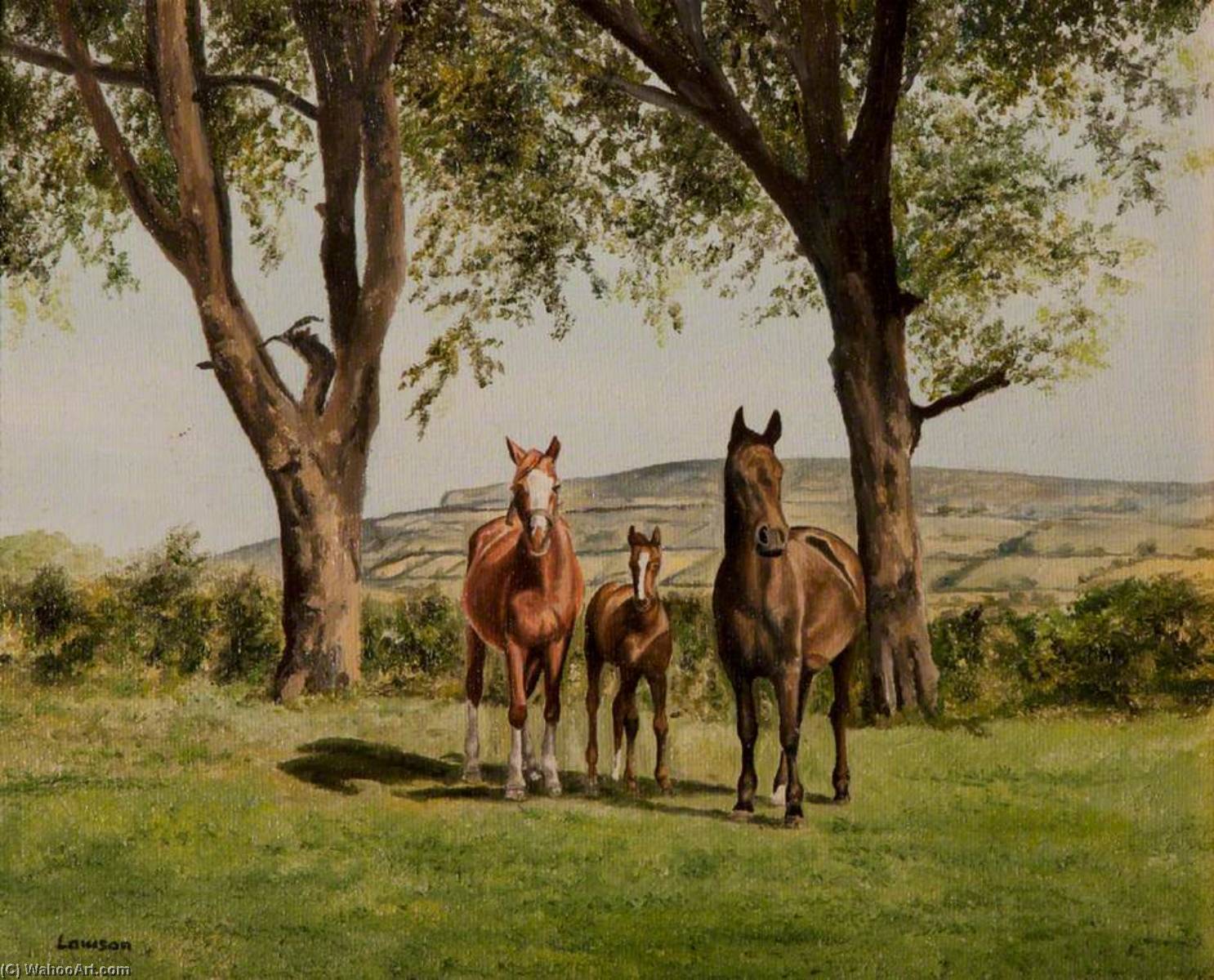
Mare and Foals
 33.0 x 38.0 cm
 Pročitajte više
Discover John Andrew Lawson (1951-2023), a Northern Irish painter renowned for evocative depictions of horses, hunting scenes & wildlife in the countryside. Explore his art featuring birds, stable life and landscapes.
Djelo prikazano na ovoj stranici zaštićeno je autorskim pravima, što znači da zakonski ne možemo izraditi niti prodati identičnu reprodukciju. Ova se zaštita provodi u skladu s međunarodnim sporazumima kao što su Bernska konvencija i nacionalnim zakonima, uključujući i one koji su utvrđeni u Američki zakon o autorskom pravu – Title 17.
Kao poštovana i legalna alternativa, nudimo prilagođena, ručno oslikana umjetnička djela inspirirana originalom. Naši vješti i profesionalni umjetnici pažljivo proučavaju stil, raspoloženje i umjetničku bit originala kako bi stvorili novo, jedinstveno djelo koje izaziva isti osjećaj – ostajući pritom vlastito, originalno stvaralaštvo.
Ova metoda u potpunosti je usklađena s autorskim pravima jer ne uključuje kopiranje ili dupliciranje zaštićenih umjetničkih djela. Umjesto toga, riječ je o kreativnoj reinterpretaciji – novoj slici koja je dobila utjecaj na izvornik, ali nije identična njemu.
Ručno rađena uljana reprodukcija
Ručno oslikano uljanim bojama na platnu u dimenzijama i okviru po vašem izboru, izrađeno po narudžbi od strane naših umjetnika. ( Prebacite na prodaju printova Prebacite na digitalnu prodaju slika)




































Standardne dimenzije
prilagođeno po mjeri
CM
INCH
Odaberite jednu od naših unaprijed definiranih veličina koje odgovaraju izvornim proporcijama umjetničkog djela.
Loading sizes...

širina
visina
Unesite širinu i visinu koja vam je potrebna, kako bi odgovarali vašem okviru ili zidu. Budući da je ovo ručno oslikano djelo, umjetnik može malo proširiti rubove slike ili ih skratiti kako bi postigao željeni oblik — izbor je vaš. Prije početka slikanja poslat ćemo vam digitalni prikaz (mockup) radi potvrde. Slika prikazana na ovoj stranici ne predstavlja stvarni rezultat — samo digitalni prikaz to čini.
Primjeri onoga što se može promijeniti: Zamijenite lice fotografijom klijenta; Dodajte ljubimca (npr. zamijenite mačku psom); Uključite skrivenu poruku u pozadinu; Promijenite pejzaž ili elemente pozadine.
Nakon narudžbe, tim TopImpressionists.com kontaktirat će klijenta putem e-pošte radi dobivanja uputa te dostaviti probni prikaz (mockup)
Nakon narudžbe, tim TopImpressionists.com kontaktirat će klijenta putem e-pošte radi dobivanja uputa te dostaviti probni prikaz (mockup)
Isporuka širom svijeta () u roku od 3-4 tjedna umjesto standardnih 5 tjedana. (26 Listopad). Bez kompromisa u kvaliteti.

Besplatna ekspresna dostava širom svijeta

Visokokvalitetno laneno platno

Potpuno osiguranje transporta

Jamstvo povrata carine i uvoznih poreza

Jamstvo vjernosti boja

Politika povrata u roku od 100 dana (samo u slučaju nedostataka)

Jamstvo povrata 100% novca

Popust na više proizvoda
 Opcija stakla dostupna je samo za dimenzije manje od 110 cm

Mare and Foals
Tehnika izrade
Veličina reprodukcije
-


Ukupna cijena
€ 236
The painting Mare and Foals by John Andrew Lawson is a stunning example of the artist's ability to capture the beauty of nature. This oil on canvas piece, measuring 33 x 38 cm, is a testament to the artist's skill in depicting the serene relationship between horses and their natural surroundings.
The Mare and Foals painting is a beautiful example of John Andrew Lawson's skill as an artist, and its serene beauty continues to captivate audiences today.
The Composition
The painting features a group of three horses, including two adult horses and one foal, standing close to each other in a field with trees in the background. The addition of a bird perched on a tree branch near the center of the image adds an element of liveliness to the scene. The overall composition creates a sense of harmony between the animals and their environment.Artist's Style
John Andrew Lawson's style is characterized by his attention to detail and ability to capture the essence of rural life. His paintings, such as Sentry Hill House, before 1885, with a Standing Stone and Horse Fair, showcase his talent for depicting the beauty of the natural world.Other Notable Works
Some of John Andrew Lawson's other notable works include Puffins on Rathlin and Slemish View. These paintings demonstrate the artist's range and ability to capture a variety of subjects, from landscapes to wildlife.- Medium: Oil on Canvas
- Location: Sentry Hill (Ireland)
- Size: 33 x 38 cm
The Mare and Foals painting is a beautiful example of John Andrew Lawson's skill as an artist, and its serene beauty continues to captivate audiences today.
Pitanja i odgovori
Mogu li "Mare and Foals" gledati kao prezentaciju preko cijelog zaslona?
Dostupna je i prezentacija slika: stranica Diaporama za djelo "Mare and Foals" autora John Andrew Lawson.
Koliko je izražen kontrast u djelu "Mare and Foals" autora John Andrew Lawson?
Svijetlo-tamni kontrast djela "Mare and Foals" zabilježen je kao Bold. Kontrast opisuje razliku u intenzitetu između svijetlijih i tamnijih područja.
Kolika je percepcija svjetline djela "Mare and Foals" autora John Andrew Lawson?
Sveukupno, "Mare and Foals" je zabilježeno kao balanced. Doživljena svjetlina opisuje koliko se djelo čini svijetlim ili tamnim.
Biografija umjetnika
John Andrew Lawson: A Northern Irish Painter of the English Countryside
John Andrew Lawson (1951-2023), a quietly influential figure in British art, dedicated his career to capturing the serene beauty and subtle drama of the English countryside. Born in Belfast but later establishing himself primarily in Antrim, Northern Ireland, Lawson’s work transcends mere landscape painting; it's an intimate exploration of light, texture, and the enduring connection between humanity and nature. His evocative depictions of horses, hunting scenes, and wildlife, often imbued with a sense of melancholy and timelessness, have earned him a devoted following and secured his place as a significant voice within the tradition of British landscape painting.
Lawson’s artistic journey began in the early 1980s after a career shift from teaching. He was the nephew of Basil Blackshaw, a more flamboyant contemporary painter, yet Lawson developed a distinctly different approach – one characterized by restraint and meticulous observation. His initial training at St Martin's School of Art in London provided him with foundational skills, but it was his relocation to Sentry Hill House, a historic farmhouse near Antrim, that truly shaped his artistic vision. This rural setting became the central subject of much of his work, providing a constant source of inspiration and a deeply personal connection to the land.
Sentry Hill: The Heart of Lawson’s Vision
Sentry Hill House itself is integral to understanding Lawson's art. The house, acquired by Dr. Joe Dundee – a friend and fellow horseman – served as both a home and a studio, steeped in the traditions of rural life. Lawson meticulously documented the surrounding landscape, capturing not just the grand vistas but also the intimate details: the weathered stone walls, the dappled sunlight filtering through ancient trees, the quiet dignity of working animals. His paintings frequently depict scenes from Dundee’s equestrian pursuits – hunts, stable life, and moments of solitary contemplation – creating a rich tapestry of rural experience.
A key element of Lawson's style is his masterful use of light and color. He eschewed bright, saturated hues in favor of muted tones—ochres, browns, greys, and greens—that evoke the subtle shifts of mood and atmosphere within the countryside. His brushwork is often loose and expressive, yet carefully controlled, creating a sense of depth and texture that invites the viewer to step into the scene. The influence of Pre-Raphaelite painters, particularly in their attention to detail and romanticized depictions of nature, can be discerned in his work, though Lawson’s style remains uniquely his own.
Themes and Influences
Lawson's paintings are not simply representations of the landscape; they explore deeper themes related to human connection with nature, tradition, and the passage of time. The recurring motif of the horse is particularly significant, symbolizing both power and vulnerability, strength and gentleness. Hunting scenes, often depicted in a contemplative manner, suggest a respect for the natural world and an awareness of its inherent beauty. Lawson’s work also reflects a deep appreciation for rural life—the rhythms of the seasons, the hard work of farmers and laborers, and the enduring values of community.
While he was influenced by the Pre-Raphaelites, Lawson's artistic lineage extends beyond that movement. He shares affinities with artists like Constable and Turner, both masters of capturing the atmospheric effects of light and landscape. However, Lawson’s work possesses a distinctively Northern Irish sensibility—a quiet dignity, a subtle melancholy, and an unwavering commitment to portraying the beauty of his homeland.
Legacy and Recognition
John Andrew Lawson's artistic legacy is one of understated elegance and profound observation. Despite not achieving widespread fame during his lifetime, his work has gained increasing recognition in recent years, thanks in part to the efforts of TopImpressionists, which has championed his art through its reproductions and online exhibitions. His paintings are now held in private collections and displayed in galleries across Britain, testament to their enduring appeal.
Lawson’s dedication to capturing the essence of the English countryside—its beauty, its traditions, and its inherent connection to human experience—solidifies his place as a significant artist within the broader context of British landscape painting. His work serves as a poignant reminder of the value of observation, patience, and a deep respect for the natural world.

John Andrew Lawson
1951 -
Brzi pregled
- Full Name: John Andrew Lawson
- Nationality: Northern Irish
- Date Of Birth: 1951
- Place Of Birth: Belfast, Northern Ireland
- Notable Artworks:
- The Hunt
- Mares and Foals
- Grey Horse & Dog
- Artistic Movement Or Style: Landscape painting
- Artists Who Influenced This Artist: ['Basil Blackshaw']