


 Pregledaj u stvarnoj veličini
 Podijeli
 Podijeli
 Detalji
 Vodič
Vodič

 Preuzmi datoteku
 Slični predmeti
 Rentgenska snimka
 Slide show
 Statistika
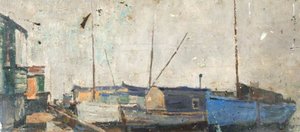
A Maltese Dghaisa
Discover John Fraser's stunning watercolor landscapes of Canada & the US. A pioneering artist known for realistic depictions & pivotal role in Canadian art history.
 Pročitajte više
Ručno rađena uljana reprodukcija
Ručno oslikano uljanim bojama na platnu u dimenzijama i okviru po vašem izboru, izrađeno po narudžbi od strane naših umjetnika. ( Prebacite na prodaju printova Prebacite na digitalnu prodaju slika)




































Standardne dimenzije
prilagođeno po mjeri
CM
INCH
Odaberite jednu od naših unaprijed definiranih veličina koje odgovaraju izvornim proporcijama umjetničkog djela.
Loading sizes...

širina
visina
Unesite širinu i visinu koja vam je potrebna, kako bi odgovarali vašem okviru ili zidu. Budući da je ovo ručno oslikano djelo, umjetnik može malo proširiti rubove slike ili ih skratiti kako bi postigao željeni oblik — izbor je vaš. Prije početka slikanja poslat ćemo vam digitalni prikaz (mockup) radi potvrde. Slika prikazana na ovoj stranici ne predstavlja stvarni rezultat — samo digitalni prikaz to čini.
Primjeri onoga što se može promijeniti: Zamijenite lice fotografijom klijenta; Dodajte ljubimca (npr. zamijenite mačku psom); Uključite skrivenu poruku u pozadinu; Promijenite pejzaž ili elemente pozadine.
Nakon narudžbe, tim TopImpressionists.com kontaktirat će klijenta putem e-pošte radi dobivanja uputa te dostaviti probni prikaz (mockup)
Nakon narudžbe, tim TopImpressionists.com kontaktirat će klijenta putem e-pošte radi dobivanja uputa te dostaviti probni prikaz (mockup)
Isporuka širom svijeta () u roku od 3-4 tjedna umjesto standardnih 5 tjedana. (27 Listopad). Bez kompromisa u kvaliteti.

Besplatna ekspresna dostava širom svijeta

Visokokvalitetno laneno platno

Potpuno osiguranje transporta

Jamstvo povrata carine i uvoznih poreza

Jamstvo vjernosti boja

Politika povrata u roku od 100 dana (samo u slučaju nedostataka)

Jamstvo povrata 100% novca

Popust na više proizvoda
 Opcija stakla dostupna je samo za dimenzije manje od 110 cm

A Maltese Dghaisa
Tehnika izrade
Veličina reprodukcije
-


Ukupna cijena
€ 236



Biografija umjetnika
A Life Between Light and Paper
John Arthur Fraser began his days in London, England, born on January 9th, 1838. His father, a tailor from Portsoy, Scotland, carried the political weight of the Chartist movement into their home, while his maternal grandparents had settled in Stanstead, Lower Canada, years earlier. By the time Fraser reached his twenties, he moved to Montreal, finding work as a decorative painter. It was here, in 1860, that his path crossed with William Notman. He joined Notman’s firm not merely as an artist, but as a specialist in color printing. His hands worked on the edges of photography, tinting portraits and adding watercolor washes to photographic paper to create depth and life.
This period in Montreal shaped his eye for detail. Working within the art department of a major photographic studio required a disciplined way of seeing. He learned to translate the flat reality of a negative into something with atmosphere. Alongside assistants like Henry Sandham, he helped produce cartes-de-visite and cabinet photographs that carried his subtle touches of color. His work was often about what could be added to a captured moment—a soft sky or a textured landscape behind a seated subject.
The Expansion Westward
As the Canadian Pacific Railway pushed its tracks toward the mountains, Fraser found himself documenting the changing terrain. He took on commissions that placed him in the heart of the wilderness, from Banff to Jasper National Park. These were not mere sketches; they were records of a landscape being opened to the world. His paintings of the Rockies, such as Fishing Camp, the Rockies, captured the heavy presence of mountains like Mt. Carroll. He used a precise brush to note the way light hit a granite face or how shadows pooled in a mountain pass.
His style grew from these observations. While his roots were in the meticulous realism required for photographic tinting, he began to use color with a lightness that suggested the influence of Impressionism. He focused on the clarity of the air and the specific hues of the Canadian woods and waterways. His landscapes often moved between the heavy textures of oil on canvas and the translucent layers of watercolor, always seeking to capture the actual light of the Eastern Townships or the New Hampshire forests.
Institutional Roots and Later Years
Fraser’s presence was felt in the very structures of the Canadian art community. He did not just paint; he helped build the organizations that supported others. His name is tied to several foundational groups:
- Royal Canadian Academy of Arts: He was a charter member.
- Society of Canadian Artists: He was also a charter member.
- Ontario Society of Artists: He served as a founder and held the position of vice-president from 1872 to 1874.
In 1868, he moved to Toronto, eventually opening the firm Notman and Fraser. This business venture combined his entrepreneurial spirit with his technical skill. Even as he moved through cities like Boston and New York, his subjects remained tied to the North American landscape. He died in New York City on January 1st, 1898, leaving behind a body of work that documented the physical and cultural expansion of a young nation through the lens of both the brush and the camera.

John Fraser
1838 - 1898
Brzi pregled
- Artistic Movement Or Style: Realistic Landscape Painting
- Artists Or Movements Influenced By This Artist: ['Impressionism']
- Artists Who Influenced This Artist: ['William Raphael']
- Date Of Birth: 1838
- Date Of Death: 1898
- Full Name: John Arthur Fraser
- Nationality: British
- Notable Artworks:
- The Steamship Pickwick
- Square within Square II
- George V on the Royal Barge at Henley, 1912
- Place Of Birth: London, England
Istražite umjetnička djela organizirana prema temama, stilovima i karakteristikama.
