


 Pregledaj u stvarnoj veličini
 Podijeli
 Podijeli
 Detalji
 Vodič
Vodič

 Preuzmi datoteku
 Slični predmeti
 Rentgenska snimka
 Slide show
 Statistika
Self Portrait


Experience the realism of Eastman Johnson's 'Self Portrait' (1860). A captivating oil painting showcasing an American artist’s nuanced portrayal of himself, reflecting a bygone era.
 Pročitajte više
Jonathan Eastman Johnson (1824-1906), poznat kao "Američki Rembrandt", bio je realist koji je oslikavao svakodnevni život u Americi 19. stoljeća. Portreti Lincolna i djela inspirirana nizozemskim majstorima!
Giclée / Umjetnički otisak
Giclée tisak muzejske kvalitete ili otisak na platnu uz brzu proizvodnju i fleksibilne opcije završne obrade. ( Naručite ručno oslikano reprodukciju Prebacite na digitalnu prodaju slika)




P118B €10

P118H €10

P118W €10

P438Z €10

P508JH €12

P508YH €12

P805H €10

P805Z €10

P919BZ €10

P919G €10

P919XJ €10

P959ZH €10

P968JZ €12

W106C €8

W218G €10

W218JH €8

W218Y €10

W307PJ €10

W316G €10

W316PJ €8

W316Y €10

W398PJ €8

W4111J €10

W500HY €15

W500JH €15

W692G €12

W849H €8

W940BG €15

W953PJ €8




Standardne dimenzije
prilagođeno po mjeri
CM
INCH
Odaberite jednu od naših unaprijed definiranih veličina koje odgovaraju izvornim proporcijama umjetničkog djela.
Loading sizes...

širina
visina
Unesite širinu i visinu koja vam je potrebna, kako bi odgovarali vašem okviru ili zidu. Print se može samo izrezati, nikada ne može biti veći od slike, stoga veličina s drugačijim oblikom gubi dio slike. Šaljemo vam digitalni prikaz (mockup) na odobrenje prije bilo kakve štampe. Slika prikazana na ovoj stranici ne prikazuje stvarni rez — to čini samo digitalni prikaz.
Dostava širom svijeta () u roku od 2 tjedna umjesto standardnih 4/5 tjedana. (23 Listopad)

Besplatna ekspresna dostava širom svijeta

Visokokvalitetno laneno platno

Potpuno osiguranje transporta

Jamstvo povrata carine i uvoznih poreza

Jamstvo vjernosti boja

Politika povrata u roku od 100 dana (samo u slučaju nedostataka)

Jamstvo povrata 100% novca

Popust na više proizvoda
 Opcija stakla dostupna je samo za dimenzije manje od 110 cm

Self Portrait
Giclée / Umjetnički otisak
Veličina reprodukcije
-


Ukupna cijena
€ 61
A Window into American Realism: Eastman Johnson’s “Self Portrait” (1860)
Eastman Johnson's "Self Portrait" of 1860 is more than just a likeness; it’s a meticulously crafted window into the soul of an era and the quiet dignity of a man. Painted during a pivotal period of American artistic development, this oil-on-canvas work embodies the burgeoning realism that would define Johnson's career and, in many ways, shape the course of 19th-century portraiture. The painting immediately draws the viewer in with its direct gaze – Johnson’s eyes meet ours across time, conveying a sense of thoughtful introspection and understated strength.
The composition is deceptively simple yet profoundly effective. Dressed in a dark, well-tailored coat and holding a red cloth—a subtle detail that hints at theatricality or perhaps a deliberate gesture of presentation – Johnson presents himself against a muted wall adorned with a vase and a clock. These elements aren’t merely decorative; they ground the portrait within a domestic setting, suggesting a life lived within the rhythms of everyday existence. The background's subdued palette further emphasizes the subject, allowing his features and demeanor to take center stage.
The Painter’s Palette: Technique and Style
Johnson’s masterful technique is rooted in the academic traditions he studied in Europe, particularly in Düsseldorf, Germany, where he honed his skills alongside other American artists seeking a rigorous artistic education. However, unlike many of his European contemporaries, Johnson didn't simply replicate established styles; he adapted them to reflect the unique character of American life. His brushwork is precise and controlled, yet imbued with a remarkable sensitivity to light and shadow. Note the subtle gradations in tone that define the contours of his face, creating a sense of volume and depth.
The painting’s realism extends beyond mere representation. Johnson captures not just Johnson's physical appearance but also something of his personality – a quiet confidence tempered by a hint of melancholy. The careful attention to detail—the texture of the coat, the slight furrow in his brow—reveals a deep understanding of human anatomy and expression. It’s a testament to Johnson’s ability to translate observation into compelling visual narrative.
A Man of His Time: Historical Context
To fully appreciate “Self Portrait,” it's essential to understand the social and artistic landscape of 1860 America. The nation was grappling with the aftermath of the Civil War, navigating a period of Reconstruction and profound societal change. Johnson’s work reflects this atmosphere of introspection and quiet resilience. He wasn’t interested in grand historical narratives or idealized representations; instead, he focused on capturing the realities of ordinary American life – a theme that would become increasingly prominent in his later genre paintings.
Johnson's connection to Washington D.C. is particularly significant. He lived and worked there for much of his career, documenting the lives of politicians, businessmen, and everyday citizens. His portraits offer invaluable insights into the social fabric of a rapidly evolving nation. The inclusion of elements like the vase and clock—common features of domestic interiors—further anchors the portrait within this specific context.
Symbolism and Emotional Resonance
While seemingly straightforward, “Self Portrait” is rich in subtle symbolism. The red cloth held in Johnson’s hand could represent passion, creativity, or perhaps a theatrical element – reflecting his involvement in stage design and set dressing. The direct gaze of the subject invites contemplation, prompting us to consider not only Johnson's identity but also our own relationship with self-representation and portraiture itself.
Ultimately, “Self Portrait” is a powerful testament to the enduring appeal of realism as an artistic approach. It’s a painting that speaks to the complexities of human experience – capturing both the outward appearance and the inner life of a man who sought to document his time with honesty, nuance, and a profound appreciation for the beauty of everyday existence.
Pitanja i odgovori
Mogu li naručiti uljanu reprodukciju djela "Self Portrait"?
Ručno oslikane kopije djela "Self Portrait" autora Jonathan Eastman Johnson prodaju se na stranici ovaj web-mjesto: ručno oslikana uljana reprodukcija na lanenom platnu, a mogu se naručiti putem njihove stranice Ručno oslikana reprodukcija.
Je li "Self Portrait" jedno od najpopularnijih djela autora Jonathan Eastman Johnson?
Zabilježena razina popularnosti za "Self Portrait" autora Jonathan Eastman Johnson iznosi Recognized.
Koliko je godina imao/la Jonathan Eastman Johnson u vrijeme stvaranja djela "Self Portrait"?
Jonathan Eastman Johnson je djelu "Self Portrait" pristupio u dobi od 36 godina. Umjetnik je rođen 1824, a datum stvaranja djela je 1860.
Biografija umjetnika
Život utkan u američki realizam
Jonathan Eastman Johnson, ime koje odjekuje tišom dostojanstvom života 19. stoljeća u Americi, bio je više od slikara; on je bio vizualni kroničar svoje epohe. Rođen u Lovellu, Maine, 1824. godine, put do umjetničke slave nije mu bio put trenutnog priznanja, već postupno razvijanje oblikovano obiteljskim vezama, rigoroznom obukom i nepokolebljivom predanošću prikazivanju svijeta kakav ga je vidio – s iskrenošću, nijansama i daškom melankolične ljepote. Njegov otac, Philip Carrigan Johnson, zauzimao je položaje u poslovanju i bratstvenim organizacijama, usađujući mladom Eastmanu osjećaj društvene uključenosti koji će kasnije prožeti njegove umjetničke teme. Rano izlaganje životu u Fryeburgu i Augusti, Maine, pružilo je temeljna iskustva koja su oblikovala njegovo razumijevanje svakodnevnog postojanja, razumijevanje koje bi prenio na platno s iznimnom osjetljivošću. Njegova formalna obuka započela je kao učeništvo kod litografa u Bostonu 1840. godine, označavajući početni korak u karijeri definiranoj minucioznom promatranjem i tehničkom vještinom. Preseljenje u Washington D.C. s obitelji, zbog pomorskog imenovanja njegovog oca, proširilo mu je horizonte, izlažući ga raznolikim temama i iskustvima koja bi suptilno utjecala na njegov umjetnički pogled.Od holandskih majstora do američkih prizora
Johnsonov umjetnički razvoj bio je fascinantna igra utjecaja. U početku privučen portretiranjem, brzo je proširio svoj repertoar kako bi obuhvatio žanr slikarstvo – scene koje prikazuju svakodnevni život. To nije bilo samo o reprezentaciji; radilo se o hvatanju suštine američkog društva, nudeći uvid u živote običnih ljudi često zanemarenih od strane veličanstvenijih povijesnih narativa. Ključan trenutak nastupio je 1850-ih kada je Johnson otputovao u Haag i uronio u djela holandskih majstora iz 17. stoljeća. To se susret pokazalo transformativnim. Upojio je njihovu vještinu kompozicije, osvjetljenja i realizma, zaradivši mu naklonjeno nadimanje "Američki Rembrandt". Ovaj utjecaj je očigledan u njegovim slikama – prigušena paleta boja, dramatični chiaroscuro i gotovo fotografska pozornost na detalje karakteriziraju njegov zreli stil. Međutim, Johnson nije samo imitirao; sintetizirao je te europske tehnike sa svojim jedinstvenim američkim osjećajem, stvarajući djela koja su bila tehnički briljantna i duboko ukorijenjena u društvenom tkivu njegova vremena. Uskladio se s rastućim Realističkim pokretom, odbijajući idealizirane prikaze u korist točnih opisa svakodnevnog života, predanost koja bi definirala njegov umjetnički nasljeđe.Svjedočenje jednoj eri
Johnsonov opus je iznimno raznolik, obuhvaćajući portrete istaknutih ličnosti poput Abrahama Lincolna, Nathanaela Hawthornea, Ralpha Walda Emersona i Henryja Wadswortha Longfellowa uz intimne scene domaćinstva i seoskog života. Međutim, neka djela ističu se posebno zbog svog društvenog komentara i umjetničke inovacije. Život crnaca na jugu (1859.) ostaje jedno od njegovih najslavnijih – i kontroverznijih – slika. Prikazujući Afroamerikance koji uživaju u slobodnom vremenu, izazvalo je žestoku raspravu o rasnim odnosima i stvarnosti ropstva na jugu prije rata. Dvoznačnost inherentna sceni—je li to romantizirani prikaz ili suptilna kritika?—potaknula je rasprave koje su odjekivale daleko izvan umjetničkog svijeta. Njegov odgovor na Građanski rat bio je jednako potresan. Umjesto da se usredotoči na herojske bitke, Johnson je okrenuo pažnju na utjecaj sukoba na živote civila, stvarajući jezive slike zabrinutih obitelji i scena izvan bojišnice. Jahanje za slobodu (1862.), prikazujući obitelj robova koja bježi u slobodu, snažno je svjedočanstvo njegove predanosti socijalnoj pravdi. Njegovi prikazi seoskog života Nove Engleske – berba šećera od javora, branje brusnice – slavili su tradicionalne američke vrijednosti i majstorstvo s tihom reverencijom.Nasljeđe izvan platna
Osim umjetničkih postignuća, Johnson je igrao ključnu ulogu u oblikovanju američkog umjetničkog krajolika. Njegova predanost žanr slikarstvu podigla ga je na poštovani oblik umjetničkog izraza, osporavajući prevladavajuće koncepte onoga što čini “visoku umjetnost”. On nije bio samo umjetnik; on je bio kulturni zagovornik. Njegova predanost protezala se izvan njegove vlastite prakse, kulminirajući suosnivanjem Metropolitan Museum of Art u New Yorku – svjedočanstvo njegova uvjerenja u moć umjetnosti da educira i nadahnjuje. Njegovo ime je upisano na njegovom ulazu, trajno priznanje njegovog značajnog doprinosa nacionalnom umjetničkom nasljeđu. Johnsonov utjecaj na američki realizam je neosporan; njegova predanost prikazivanju svakodnevnog života s iskrenošću i detaljima utrla je put budućim generacijama umjetnika koji su nastojali uhvatiti složenosti ljudskog iskustva. Danas se Jonathan Eastman Johnson pamti ne samo kao tehnički nadaren slikar, već i kao promišljeni promatrač američkog društva, čija djela nastavljaju odjekivati svojom trajnom relevantnošću i emocionalnom dubinom.Trajna važnost
Johnsonovo nasljeđe se proteže izvan specifičnih slika ili institucionalnih doprinosa. Bio je pionir u premošćivanju jaza između europskih umjetničkih tradicija i jedinstvenih američkih tema. Njegova sposobnost da obdari obične scene dubokim značenjem, njegova spremnost da se uključi u složena društvena pitanja i njegova nepokolebljiva predanost realizmu učvrstili su njegov položaj kao ključne figure u umjetnosti 19. stoljeća u Americi. On nije samo bilježio život; on ga je tumačio, potičući gledatelje da razmisle o vlastitim vrijednostima i uvjerenjima. Njegov rad služi kao snažan podsjetnik da prava umjetnost ne leži samo u tehničkoj vještini, već i u sposobnosti povezivanja s ljudskim duhom i osvjetljavanja svijeta oko nas. Umro je u New Yorku 1906. godine, ostavljajući za sobom opus koji nastavlja očaravati i nadahnjivati, osiguravajući njegovo trajno priznanje kao značajne figure u povijesti američke umjetnosti.
Jonathan Eastman Johnson
1824 - 1906 , Ujedinjeno Kraljevstvo
Brzi pregled
- Datum Rođenja: 29. srpnja 1824.
- Datum Smrti: 5. travnja 1906.
- Državljanstvo: Amerikanac
- Mjesto Rođenja: Lovell, Ujedinjeno Kraljevstvo
- Puno Ime: Jonathan Eastman Johnson
- Umjetnici Ili Pokreti Utjecani Od Ovog Umjetnika: ['Američki realizam']
- Umjetnički Pokret Ili Stil: Realizam, Žanr slikarstva
- Utjecali Su Na Ovog Umjetnika:
- Dutch Masters
- Jean-François Millet
- Značajna Djela:
- Negro Life at the South
- Ride For Liberty
- Woman Reading
Povezani članci
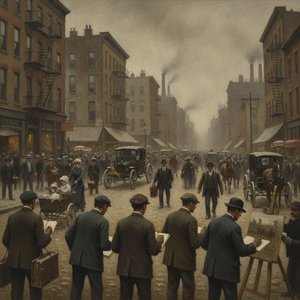
The Ashcan School: Capturing the Raw, Unfiltered Soul of Urban Life through American Realism
Discover the raw beauty of the Ashcan School. Explore how masters like Bellows and Henri captured the gritty, vibrant soul of early 20th-century New York through profound American Realism and evocative urban landscapes.

The Unvarnished Truth: A Cultural Journey Through the Soul of American Realism
Explore the profound beauty of American Realism. From the Ashcan School's urban grit to intimate portraits, discover how artists captured the authentic soul of a nation through unvarnished truth and masterful observation.

The Raw Truth: A Definitive Guide to the Power and Legacy of Social Realism Art
Explore the profound impact of Social Realism. Discover how masters like Courbet rejected idealism to capture the raw, socio-political truths of the working class through powerful, unvarnished art history and enduring visual critique.