

 Pregledaj u realnoj veličini
 Pošalji
 Podijeli
 Detalji o umjetničkom djelu
 Vodič
Vodič

 Preuzmi umjetničko djelo
 Slični predmeti
 Rentgenska snimka
 Slide show
 Pitanja i odgovori
 Statistika
Unknown

- 50.0 x 61.0 cm


Delve into Cubist brilliance with Juan Gris’s ‘Unknown,’ a Stockholm Moderna Museum treasure. Explore geometric forms and balanced composition inspired by Picasso & Kirchner – reproduced authentically on TopImpressionists.
 Prikaži više
Istražite djela Juana Grisa (1887-1927), španjolskog majstora kubizma! Otkrijte njegovu geometrijsku stilistiku, sintetički kubizam i trajni utjecaj na modernu umjetnost. Pregledajte radove sada.
Giclée / Umjetnički otisak
Giclée tisak muzejske kvalitete ili otisak na platnu uz brzu izradu i raznolike opcije završne obrade. ( Kupi ručno oslikano djelo Prebacite na digitalnu sliku)




P118B €10

P118H €10

P118W €10

P438Z €10

P508JH €12

P508YH €12

P805H €10

P805Z €10

P919BZ €10

P919G €10

P919XJ €10

P959ZH €10

P968JZ €12

W106C €8

W218G €10

W218JH €8

W218Y €10

W307PJ €10

W316G €10

W316PJ €8

W316Y €10

W398PJ €8

W4111J €10

W500HY €15

W500JH €15

W692G €12

W849H €8

W940BG €15

W953PJ €8




Standardne dimenzije
po mjeri
CM
INCH
Odaberite jednu od naših unaprijed definiranih veličina koje odgovaraju izvornim proporcijama umjetničkog djela.
Loading sizes...

širina
visina
Unesite potrebnu širinu i visinu kako bi odgovarali vašem okviru ili zidu. Print se može samo izrezati, nikada ne može biti veći od slike, stoga format s drugačijim omjerom stranica uzrokuje gubitak dijela slike. Prije bilo kakve štampe šaljemo vam digitalni prikaz (mockup) na odobrenje. Slika prikazana na ovoj stranici ne prikazuje stvarni rez — to prikazuje isključivo digitalni prikaz.
Dostava širom svijeta () u roku od 2 tjedna umjesto standardnih 4/5 tjedana. (8 Studeni)

Besplatna ekspresna dostava širom svijeta

Visokokvalitetno laneno platno

Potpuno osiguranje dostave

Jamstvo povrata carine i uvoznih poreza

Jamstvo vjernosti boja

Politika povrata u roku od 100 dana (samo u slučaju nedostataka)

Jamstvo povrata 100% novca

Popust na više proizvoda
 Opcija stakla dostupna je samo za dimenzije manje od 110 cm

Unknown
Giclée / Umjetnički otisak
Veličina reprodukcije
-


Ukupna cijena
€ 62
A Geometric Symphony of Modernity
In the quiet corners of Stockholm’s Moderna Museum resides a masterpiece that captures the very essence of a world in transition. Juan Gris’s 1916 work, often referred to as Unknown, is far more than a simple arrangement of objects; it is a profound meditation on the fractured nature of modern perception. At first glance, the viewer is greeted by a deceptively tranquil still life: a bottle of wine containing a deep red liquid, a solitary cup, and two books resting upon a table. Yet, as one lingers before the canvas, the stillness dissolves into a rhythmic dance of planes and edges. This is the hallmark of Synthetic Cubism, where Gris does not merely depict reality but reconstructs it through a sophisticated lens of geometric abstraction.
The composition is a masterclass in balance and structural tension. Eschewing the traditional vanishing points that had governed Western art since the Renaissance, Gris employs a technique of overlapping forms and intersecting lines to create a sense of depth that feels both shallow and infinite. The bottle, the cup, and the books are dissected into cylinders and cubes, subtly rearranged to challenge the eye. This deliberate fragmentation serves as a poignant metaphor for the anxieties of early 20th-century Europe—a period where old certainities were being dismantled by the rapid onset of industrialization and the looming shadows of global conflict.
The Architect of Color and Form
Gris’s approach to this piece reveals his unique intellectual lineage. While often overshadowed by the monumental presence of Pablo Picasso, Gris brought an almost mathematical precision to the Cubist movement, likely a remnant of his early training in engineering. In Unknown, every stroke feels calculated to contribute to a larger, cohesive architecture. The interplay between the solid weight of the books and the translucent suggestion of the wine bottle creates a tactile experience for the viewer. There is a rhythmic quality to the way light seems to catch certain edges while others recede into shadow, guiding the eye in a continuous loop around the central tableau.
For the discerning collector or interior designer, this artwork offers a sophisticated focal point that bridges the gap between historical significance and contemporary elegance. The muted yet purposeful palette allows the piece to integrate seamlessly into modern, minimalist environments, providing a sense of intellectual depth without overwhelming the surrounding space. To possess a high-quality reproduction of this work is to invite a conversation about the nature of sight itself—a reminder that beauty often lies in the way we choose to reassemble the broken pieces of our world.
Ultimately, Unknown remains an evocative testament to the power of transformation. It invites us to look past the surface of everyday objects and find the complex, beautiful structures hidden within. Whether viewed as a historical landmark of the Cubist era or as a striking decorative element for a curated home, Gris’s vision continues to resonate, offering a timeless window into the soul of modern art.
Pitanja i odgovori
Koji emocionalni ton prati stil Cubist Composition u djelu "Unknown"?
Reflective emocija djela "Unknown" prati njegov Cubist Composition stil.
Što objašnjava status autorskih prava za "Unknown" autora Juan Gris?
Status autorskih prava za djelo "Unknown" – u javnom vlasništvu – autorska prava su istekla – proizlazi iz godine smrti umjetnika, 1927.
Koji umjetnički pravac obuhvaća "Unknown"?
"Unknown" autora Juan Gris pripada pokretu Cubist Composition. Ovaj pokret pruža stilski kontekst djela.
Biografija umjetnika
Početak putovanja: Život i rane godine José Victoriana Gonzáleza
José Victoriano González-Pérez, kasnije poznat kao Juan Gris, rođen je 23. ožujka 1887. u Madridu, Španjolska. Njegov početni put nije bio izravno usmjeren prema svijetu slikarstva; studirao je inženjerstvo na Školi umjetnosti i znanosti, pokazujući analitički um koji će kasnije duboko utjecati na njegov umjetnički pristup. Čak i tijekom tih formativnih godina, kreativna iskra nije bila ugašena – doprinos crteža lokalnim periodikama nagovještavao je rastući vizualni talent. Ključna točka dogodila se 1905. kada je usvojio pseudonim Juan Gris, ime koje odražava novoosjećaj identiteta i svrhe dok je započeo formalno slikanje pod vodstvom Joséa Morena Carbonera. Ovo je označilo ključnu promjenu, postavljajući ga na put umjetničke inovacije. Njegova obitelj, iako nije bila izravno povezana sa svijetom umjetnosti, podržavala je njegov interes za crtanje i vizualne vještine, što mu je omogućilo da razvija temeljne vještine prije nego što se preselio u Pariz.Pariz: Probodjenje kroz avangardu i usvajanje kubizma
Godina 1906. svjedočila je transformativnom prelasku u Pariz, grad koji je tada pulsirao umjetničkom energijom. Gris se uronio u ovo živahno okruženje, sklapajući prijateljstva s istaknutim osobama poput Henrija Matissea, Georgesa Braquea i Fernanda Légera. U početku se bavio satiričnim ilustracijama za publikacije kao što je *L'Assiette au Beurre*, usavršavajući svoje promatračke vještine i razvijajući oštar osjećaj vizualnog humora. Međutim, magnetska privlačnost Pabla Picassa pokazala se posebno utjecajnom. Oko 1910. godine Gris je ozbiljno posvetio slikanju, udaljavajući se od karikature prema novom jeziku kubizma. To nije bila puka imitacija; krenuo je u potragu za destilacijom suštine forme i prostora, tražeći novi vizualni poredak. Njegova rana istraživanja obilježila je namjerni odmak od tradicionalne reprezentacije, prihvativši apstrakciju kao sredstvo hvatanja temeljne strukture stvarnosti. U tom razdoblju, Gris je eksperimentirao s različitim stilovima i tehnikama, tražeći vlastiti izraz unutar kubističkog pokreta.Geometrija percepcije: Stil i ključna djela
Umjetnički rad Juana Grisa karakterizira iznimna jasnoća i intelektualna strogost. On nije samo dekonstruirao objekte; ponovno ih je izgradio s namjernom preciznošću, naglašavajući geometrijske oblike i pažljivo promišljen paletu boja. Ovaj pristup doveo je do onoga što je postalo poznato kao njegovo "kristalno razdoblje", utjelovljeno u remek-djela poput *Natura mrtva ispred otvorenog prozora* i *Place Ravignan* (1915.). Ova djela pokazuju izvanrednu interakciju ravnina i kutova, stvarajući osjećaj dubine i čvrstoće istovremeno izazivajući konvencionalne predodžbe o perspektivi. Nakon 1913. godine, Gris je prihvatio sintetički kubizam, pionirski koristeći *papier collé* – kolaž – ugrađujući stvarne materijale poput izreza novina i teksturiranih papira u svoje kompozicije. Ova tehnika dodala je još jedan sloj složenosti i taktilnosti njegovom radu, zamućujući granice između slikarstva i kiparstva. Značajni primjeri uključuju *Gitara ispred mora* (1925.), svjedočanstvo o njegovim pojednostavljenim oblicima i poštivanju kubističkih principa, te *Počast Pablu Picassu* (1912.), koji je signalizirao njegovo sve veće priznanje unutar avangardnog umjetničkog svijeta. Njegova djela često su sadržavala elemente tihe kontemplacije i introspekcije, što ih izdvaja od nekih drugih kubističkih radova.Nasljeđe i trajni utjecaj
Doprinos Juana Grisa kubizmu proteže se dalje od pukih stilskih inovacija; donio je jedinstvenu intelektualnu dubinu i strukturnu jasnoću pokretu. Prešao je fazu analitičkog kubizma, prema organiziranijem i sintetičkom pristupu, naglašavajući red i preciznost. Njegov rad snažno je utjecao na puristički stil koji su zagovarali Amédée Ozenfant i Charles Edouard Jeanneret (Le Corbusier), zalažući se za povratak klasičnim principima forme i kompozicije. Grisov naglasak na geometrijskim oblicima, harmoničnim paletama boja i integraciji svakodnevnih objekata u njegovu umjetnost uspostavio ga je kao ključnu figuru u umjetnosti 20. stoljeća. Njegovo nasljeđe nastavlja nadahnjivati umjetnike danas, demonstrirajući trajni utjecaj kubizma i vizionarskog genija Juana Grisa – španjolskog majstora koji je preoblikovao naše razumijevanje percepcije i reprezentacije. Iako mu je život bio relativno kratak, umro je 1927., njegov doprinos umjetnosti ostaje duboko ukorijenjen u povijesti modernog slikarstva.
Juan Gris
1887 - 1927 , Hrvatska
Osnovne informacije
- Datum Rođenja: 23. ožujka 1887.
- Datum Smrti: 11. svibnja 1927.
- Državljanstvo: Španjolski
- Mjesto Rođenja: Madrid, Španjolska
- Puno Ime: José Victoriano González-Pérez
- Umjetnici Ili Pokreti Koje Je Utjecao:
- Purizam
- Amédée Ozenfant
- Le Corbusier
- Umjetnici Koji Su Utjecali Na Njega:
- Pablo Picasso
- Henri Matisse
- Georges Braque
- Umjetnički Pokret Ili Stil: Kubizam, Sintetički kubizam
- Značajna Djela:
- Gitara pred morem
- Homage à Pablo Picasso
- Mlinar
- Portret gospođe Josette Gris
Srodni članci

Pablo Picasso: A Revolutionary Vision – Cubism, Symbolism & Enduring Legacy
Explore the revolutionary art of Pablo Picasso with TopImpressionists.com. Discover Cubism's origins, symbolism in his masterpieces & investment insights for collectors. Expert appraisal & custom reproductions available.
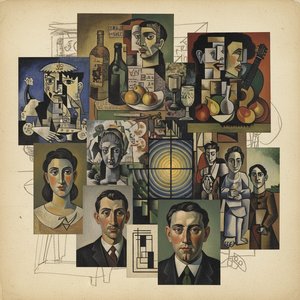
Cubism's Revolution: 10 Masterpieces That Redefined Modern Art | TopImpressionists
Explore 10 Cubist masterpieces by Picasso, Braque & more! Delve into the history of this revolutionary art movement. Find museum-quality reproductions and elevate your home decor with TopImpressionists. Discover all masterpieces on TopImpressionists.com

Juan Gris: Cubist Deconstruction & Synthesis – A Comprehensive Exploration
Explore the revolutionary art of Juan Gris – a master of Cubism. Discover his unique approach to deconstruction, vibrant Synthetic Cubist works, and lasting influence on modern art. Expert analysis for collectors.

Deconstructing Reality: Cubism's Revolutionary Impact on 20th-Century Art
Explore the revolutionary world of Cubism with TopImpressionists. Discover Picasso & Braque's groundbreaking techniques, its philosophical roots, and lasting impact on modern art. Expert insights for collectors.

Deconstructing Identity: A Comprehensive Exploration of Cubist Portraiture
Explore the revolutionary world of Cubist portraiture with our comprehensive guide. Discover Picasso, Braque, Gris & the movement's impact on modern art. Expert analysis for collectors and enthusiasts.
Istražite umjetnička djela organizirana prema temama, stilovima i karakteristikama.


