

 Pregledaj u stvarnoj veličini
 Podijeli
 Podijeli
 Detalji
 Vodič
Vodič

 Preuzmi datoteku
 Slični predmeti
 Rentgenska snimka
 Slide show
 Statistika
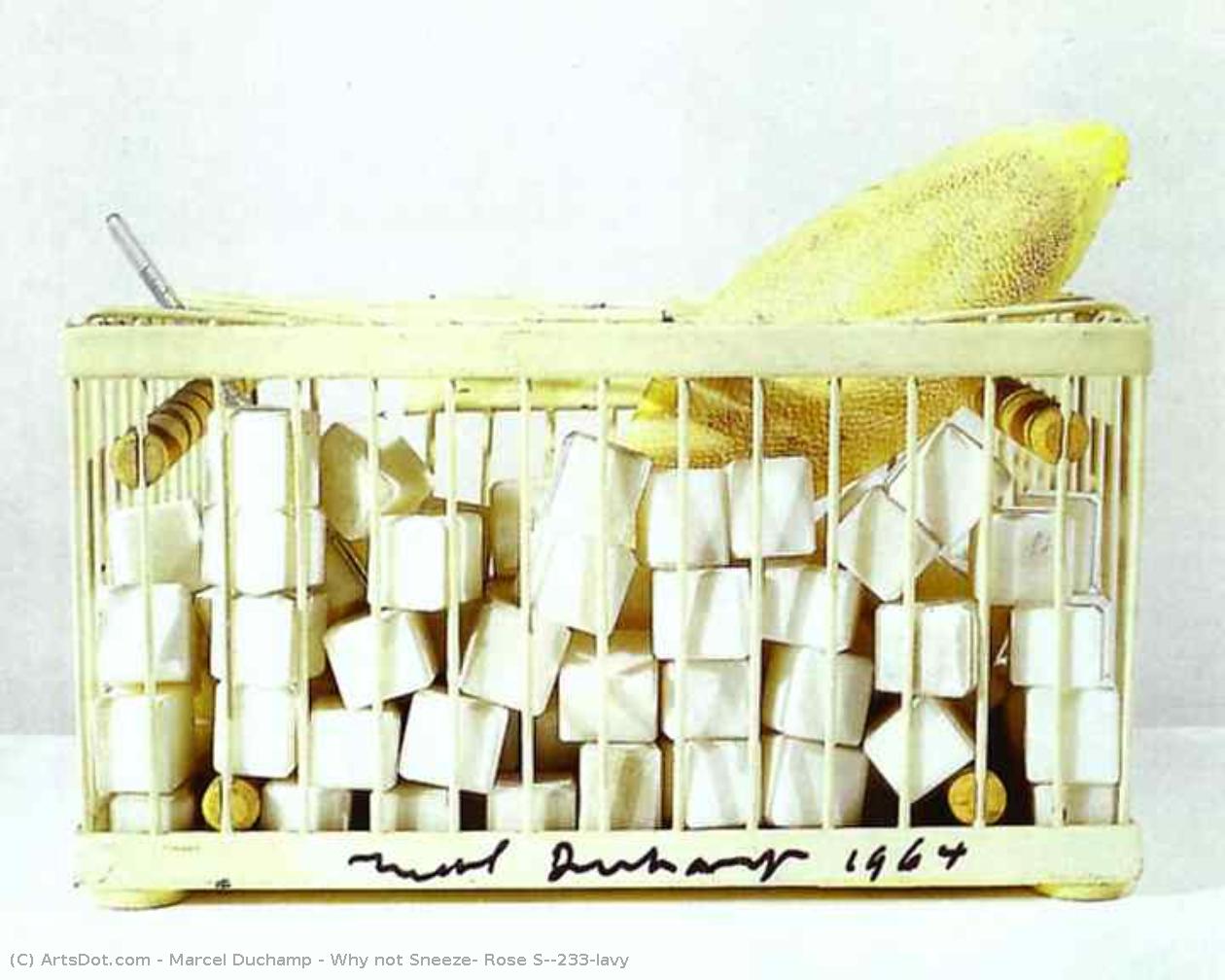
Why not Sneeze, Rose Sélavy
 Acrylic On Canvas
- WallArt
- Dada Gesamtkunstwerk
 1921
1921 12.0 x 22.0 cm
 Tate Modern
 Pročitajte više
Marcel Duchamp: revolucionarni umjetnik koji je zlomomio konvencije s Dadaizmom i ready-made djelima poput 'Fontane'. Istražite njegova kultna djela i filozofski utjecaj na modernu umjetnost!
Djelo prikazano na ovoj stranici zaštićeno je autorskim pravima, što znači da zakonski ne možemo izraditi niti prodati identičnu reprodukciju. Ova se zaštita provodi u skladu s međunarodnim sporazumima kao što su Bernska konvencija i nacionalnim zakonima, uključujući i one koji su utvrđeni u Američki zakon o autorskom pravu – Title 17.
Ova metoda u potpunosti je usklađena s autorskim pravima jer ne uključuje kopiranje ili dupliciranje zaštićenih umjetničkih djela. Umjesto toga, riječ je o kreativnoj reinterpretaciji – novoj slici koja je dobila utjecaj na izvornik, ali nije identična njemu.
Giclée / Umjetnički otisak
Giclée tisak muzejske kvalitete ili otisak na platnu uz brzu proizvodnju i fleksibilne opcije završne obrade. ( Naručite ručno oslikano reprodukciju Prebacite na digitalnu prodaju slika)




P118B €10

P118H €10

P118W €10

P438Z €10

P508JH €12

P508YH €12

P805H €10

P805Z €10

P919BZ €10

P919G €10

P919XJ €10

P959ZH €10

P968JZ €12

W106C €8

W218G €10

W218JH €8

W218Y €10

W307PJ €10

W316G €10

W316PJ €8

W316Y €10

W398PJ €8

W4111J €10

W500HY €15

W500JH €15

W692G €12

W849H €8

W940BG €15

W953PJ €8




Standardne dimenzije
prilagođeno po mjeri
CM
INCH
Odaberite jednu od naših unaprijed definiranih veličina koje odgovaraju izvornim proporcijama umjetničkog djela.
Loading sizes...

širina
visina
Unesite širinu i visinu koja vam je potrebna, kako bi odgovarali vašem okviru ili zidu. Print se može samo izrezati, nikada ne može biti veći od slike, stoga veličina s drugačijim oblikom gubi dio slike. Šaljemo vam digitalni prikaz (mockup) na odobrenje prije bilo kakve štampe. Slika prikazana na ovoj stranici ne prikazuje stvarni rez — to čini samo digitalni prikaz.
Dostava širom svijeta () u roku od 2 tjedna umjesto standardnih 4/5 tjedana. (22 Listopad)

Besplatna ekspresna dostava širom svijeta

Visokokvalitetno laneno platno

Potpuno osiguranje transporta

Jamstvo povrata carine i uvoznih poreza

Jamstvo vjernosti boja

Politika povrata u roku od 100 dana (samo u slučaju nedostataka)

Jamstvo povrata 100% novca

Popust na više proizvoda
 Opcija stakla dostupna je samo za dimenzije manje od 110 cm

Why not Sneeze, Rose Sélavy
Giclée / Umjetnički otisak
Veličina reprodukcije
-


Ukupna cijena
€ 61
A Provocative Pause: Unpacking “Why Not Sneeze, Rose Sélavy”
Marcel Duchamp’s "Why Not Sneeze, Rose Sélavy," painted in 1921, isn't merely a still life; it’s an audacious declaration. This deceptively simple image – a white box containing a yellow banana alongside several cups and spoons – immediately throws the viewer off balance, demanding they reconsider their assumptions about art itself. Duchamp, a pivotal figure in the Dada movement, wasn’t interested in replicating reality or expressing personal emotion through traditional means. Instead, he sought to dismantle established artistic conventions, forcing us to confront the very definition of what constitutes “art” and its role within society.
The painting's genesis lies within Duchamp’s exploration of chance and readymades – everyday objects presented as art without alteration. "Why Not Sneeze" exemplifies this approach perfectly. The choice of a banana, an utterly mundane item, elevates it to the status of subject matter through its placement within the box, transforming it into something worthy of contemplation. The inclusion of the cups and spoons further complicates the scene, suggesting a potential for consumption or ritual – elements deliberately devoid of inherent meaning, yet imbued with a subtle tension.
Dadaist Disruptions: Style and Technique
“Why Not Sneeze” is firmly rooted in the principles of Dadaism, a movement born from the disillusionment following World War I. Rejecting logic and reason, Dada artists embraced absurdity, chance, and anti-art sentiments. Duchamp’s technique reflects this ethos; he employed a precise, almost clinical approach to rendering the objects, using oil paint on canvas with a smooth, matte finish. There's no attempt at illusionistic depth or vibrant color – instead, the focus is entirely on the arrangement of the elements and their juxtaposition. The stark white box acts as a frame, isolating the objects and intensifying their impact.
Interestingly, Duchamp’s process involved a degree of chance. He reportedly placed the banana in the box after it had been emptied, allowing the positioning to be determined by accident. This element of randomness underscores the movement's core belief that art should not be dictated by conscious intention but rather emerge from unexpected encounters and unforeseen circumstances.
Symbolic Whispers: Interpretation and Context
The symbolism within “Why Not Sneeze” is deliberately ambiguous, inviting multiple interpretations. The banana itself has been suggested to represent fertility, sexuality, or even a subtle critique of consumer culture – a small, yellow object placed in an enclosed space, hinting at both abundance and confinement. The cups and spoons could symbolize hospitality, offering, or perhaps the act of consuming – again, devoid of any specific narrative but laden with potential meanings.
Furthermore, the title itself, “Why Not Sneeze?”, is a direct challenge to conventional artistic expectations. Duchamp’s question implies that there are no rules governing art, no prescribed methods for creating it. It's an invitation to embrace spontaneity and reject rigid constraints. The painting can be viewed as a meditation on the absurdity of artistic norms and a playful provocation against established aesthetic values.
A Timeless Dialogue: Emotional Impact and Legacy
Despite its seemingly simple composition, “Why Not Sneeze, Rose Sélavy” possesses a profound emotional impact. It’s unsettling, humorous, and thought-provoking – qualities that have cemented its place as one of the most significant works in modern art history. Duchamp's work continues to resonate today, prompting us to question our own perceptions of beauty, value, and the very nature of artistic expression. A reproduction of this iconic piece offers a unique opportunity to engage with a pivotal moment in art history and contemplate the enduring legacy of Marcel Duchamp’s revolutionary spirit.
Pitanja i odgovori
Je li "Why not Sneeze, Rose Sélavy" dostupan kao umjetnička litografija?
Kako biste naručili print djela "Why not Sneeze, Rose Sélavy" autora Marcel Duvšan, jednostavno ga možete naručiti na njegovoj stranici Umjetnička litografija: umjetnički otisak na pamučnom platnu ili arhivskom kanvas papiru.
Koje se raspoloženje i emocija prepliću u djelu "Why not Sneeze, Rose Sélavy"?
U djelu "Why not Sneeze, Rose Sélavy", Playful raspoloženje prati Playful emocija.
U kojem se razdoblju karijere umjetnika Marcel Duvšan nalazi djelo "Why not Sneeze, Rose Sélavy"?
"Why not Sneeze, Rose Sélavy" pripada Dada Phase u karijeri umjetnika Marcel Duvšan. Ova klasifikacija povezuje djelo s umjetnikovim razvojom.
Biografija umjetnika
Marcel Duchamp: Revolucionar koji je preispitao samu bit umjetnosti
Marcel Duchamp, rođen kao Henri-Robert-Marcel Duchamp u Blainvilleu nad Rouenom, Normandiji, 1887. godine, bio je više od umjetnika; bio je filozofski provokator koji je temeljito promijenio tijek moderne umjetnosti. Njegov raniji život, iako naizgled konvencionalan – odgajan u obitelji koja je cijenila umjetnički izraz, s oba brata koji su ostvarili uspješne karijere kao umjetnici – nagovještavao bunt koji je trebao doći. Duchamp je prvo pohađao formalnu naobrazbu, svladavši tradicionalne tehnike i eksperimentirajući sa stilovima poslije impresionizma. Međutim, ta akademska podloga nije služila kao kraj sam po sebi, već kao trampolin za postavljanje pitanja o vrlo prirodi umjetnosti, njezinoj svrsi i definiciji. Nije bio zadovoljan samo prikazivanjem svijeta; želio je izazvati način na koji ga opažamo i što čini umjetničku vrijednost. Ta neprestana intelektualna znatiželja postat će definirajuća karakteristika njegove plodne karijere.Od kubizma do dadaizma: odbijanje konvencija
Umjetnički put Duchampa obilježen je stalnom evolucijom, svjesnim odricanjem od uspostavljenih normi. Njegovo prvo upoznavanje s kubizmom, vidljivo u djelima poput *Portreta igrača šaha* (1911.), pokazalo je interes za fragmentirane oblike i višestruke perspektive – odmak od tradicionalnog predstavljanja. Međutim, on se ubrzo prebacio izvan čisto estetskih briga, shvaćajući da samo preuređivanje vizualnih elemenata nije dovoljno da se riješe dublja pitanja koja su ga mučila. Užasi Prvog svjetskog rata potaknuli su taj nemir, dovodeći Duchampa do prihvaćanja dadaizma, pokreta koji je nastao iz razočaranja i odbijanja logike, razuma i tradicionalnih umjetničkih vrijednosti. Unutar okvira dadaizma Duchamp je zaista počeo demontirati konvencionalne ideje o umjetnosti. Nije bio zainteresiran za stvaranje lijepih predmeta; želio je potaknuti misli, izazvati pretpostavke i izložiti arbitrarnost estetskog suda. Tijekom tog razdoblja rođena je njegova najradikalnija inovacija: 'ready-made'.Ready-madei i subverzija umjetnosti
Uvođenje ready-madea – uobičajenih proizvedenih predmeta odabranih i prezentiranih kao umjetnost – bio je Duchampov značajniji doprinos 20. stoljeću. To nisu bili samo pronađeni predmeti; bila su to svjesni čini umjetničke subverzije. Uzimajući svakodnevni predmet, poput pisoara (*Fontana*, 1917.), potpisujući ga kao "R. Mutt" i podnoseći ga na izložbu umjetnosti, Duchamp je izazvao samu definiciju umjetničke vještine i autorstva. Je li ruka umjetnika stvorila djelo ili je to bio *koncept* umjetnika? Ovo pitanje postalo je središnje u njegovoj praksi i postavilo temelj za Konceptualnu umjetnost. Ostali zapaženi ready-madei poput *L.H.O.O.Q.* (1919.), reprodukcija slike Mona Lise na čijem se licu nalaze brkovi i brada, bili su igrivo, ali oštro kritiziranje povijesti umjetnosti i uspostavljenih kulturnih ikona. Ta djela nisu trebala biti divljena zbog svojih estetskih kvaliteta; trebala su potaknuti raspravu i prisiliti gledatelje da razmotre svoje predrasude o tome što čini umjetnost. Duchamp je vjerovao da bi umjetnost trebala boraviti u umu, a ne samo u oku.Nasljeđe i trajni utjecaj
Utjecaj Marcela Duchampa na sljedeće generacije umjetnika nemjerljiv je. On je temeljito promijenio naše razumijevanje umjetnosti, otvorivši put pokretima poput Konceptualne umjetnosti, Minimalizma, Pop Art-a i bezbroj drugih. Njegov naglasak na ideji umjetnika – konceptu iza djela – umjesto njegovim estetskim kvalitetama nastavlja inspirirati umjetnike i danas.- Kubizam: Rani eksperimenti s razlomljenim oblicima i prostornim prikazom.
- Dadaizam: Odbijanje logike, razuma i tradicionalnih umjetničkih vrijednosti kao odgovor na Prvi svjetski rat.
- Konceptualna umjetnost: Naglasak na ideji iza djela umjesto njegovih estetskih kvaliteta.

Marcel Duvšan
1887 - 1968 , Francuska
Brzi pregled
- Datum Rođenja: 28. srpnja 1887.
- Državljanstvo: Francusko-američki
- Mjesto Rođenja: Blainville, Francuska
- Puno Ime: Marcel Duchamp
- Umjetnici Ili Pokreti Koje Je Ovaj Umjetnik Inspirirao:
- Konceptualna umjetnost
- Pop Art
- Minimalizam
- Umjetnički Pokret Ili Stil:
- Kubizam
- Dadaizam
- Konceptualna umjetnost
- Značajna Djela:
- Fontana
- L.H.O.O.Q.
- Veliko staklo
- Boîte-en-valise
Povezani članci

Dadaism Unveiled: The Beautiful Chaos of Art's Most Rebellious Movement
Explore the profound rebellion of Dadaism. Discover how this avant-garde movement emerged from the chaos of WWI to redefine art through absurdity, anti-logic, and a legacy that shaped Surrealism and Pop Art. A deep dive into the beautiful chaos of art history for the true enthusiast.

Pop Surrealism Unveiled: The Sophisticated Intersection of Vibrant Pop Art and Dreamlike Subconscious Landscapes
Explore the captivating world of Pop Surrealism. Discover how vibrant Pop Art meets dreamlike subconscious imagery through the works of masters like Jeff Soto and Ryan Heshka. An expert guide for discerning collectors seeking to understand this profound contemporary art movement.
Istražite umjetnička djela organizirana prema temama, stilovima i karakteristikama.


