


 Pregledaj u stvarnoj veličini
 Podijeli
 Podijeli
 Detalji
 Vodič
Vodič

 Preuzmi datoteku
 Slični predmeti
 Rentgenska snimka
 Slide show
 Statistika
Still Life


 Pročitajte više
Paul Cézanne (1839-1906): Pionir postimpresionizma koji je spojio impresionizam i kubizam. Otkrijte geometrijske oblike, mrtve prirode i njegov trajni utjecaj na modernu umjetnost! #Cezanne #PostImpresionizam
Giclée / Umjetnički otisak
Giclée tisak muzejske kvalitete ili otisak na platnu uz brzu proizvodnju i fleksibilne opcije završne obrade. ( Naručite ručno oslikano reprodukciju Prebacite na digitalnu prodaju slika)




P118B €10

P118H €10

P118W €10

P438Z €10

P508JH €12

P508YH €12

P805H €10

P805Z €10

P919BZ €10

P919G €10

P919XJ €10

P959ZH €10

P968JZ €12

W106C €8

W218G €10

W218JH €8

W218Y €10

W307PJ €10

W316G €10

W316PJ €8

W316Y €10

W398PJ €8

W4111J €10

W500HY €15

W500JH €15

W692G €12

W849H €8

W940BG €15

W953PJ €8




Standardne dimenzije
prilagođeno po mjeri
CM
INCH
Odaberite jednu od naših unaprijed definiranih veličina koje odgovaraju izvornim proporcijama umjetničkog djela.
Loading sizes...

širina
visina
Možete unijeti vlastite dimenzije kako biste umjetničko djelo prilagodili specifičnom okviru ili prostoru. Ako odabrana veličina ne odgovara proporcijama izvornog rada, izrezat ćemo dio slike ili je proširiti pomoću ogledalnog efekta ili jednobojne rubne površine. Digitalni prikaz (mockup) bit će vam poslan na odobrenje prije početka proizvodnje.
Imajte na umu da pregled na zaslonu ne odražava stvarno izrezivanje ili proširivanje. Samo će mockup točno prikazati konačnu kompoziciju.
Iako su dostupne prilagođene veličine, preporučujemo odabir dimenzije iz unaprijed definirane liste kako biste očuvali izvorne proporcije.
Dostava širom svijeta () u roku od 2 tjedna umjesto standardnih 4/5 tjedana. (8 Listopad)

Besplatna ekspresna dostava širom svijeta

Visokokvalitetno laneno platno

Potpuno osiguranje transporta

Jamstvo povrata carine i uvoznih poreza

Jamstvo vjernosti boja

Politika povrata u roku od 100 dana (samo u slučaju nedostataka)

Jamstvo povrata 100% novca

Popust na više proizvoda
 Opcija stakla dostupna je samo za dimenzije manje od 110 cm

Still Life
Giclée / Umjetnički otisak
Veličina reprodukcije
-


Ukupna cijena
€ 59
Paul Cézanne’s Still Life: A Bridge Between Worlds
Paul Cézanne's "Still Life," painted around 1879, isn’t merely a depiction of objects arranged on a table; it’s a profound exploration of form, space, and the very nature of seeing. This work, often considered a pivotal moment in Cézanne’s artistic evolution, represents a deliberate departure from the prevailing Impressionist techniques while simultaneously building upon their foundations. It's a painting that invites prolonged contemplation, revealing layers of complexity beneath its seemingly simple arrangement of a metal bucket, ceramic bowl, apples, and bottles.
Cézanne’s early influences—Romanticism with its emphasis on emotional intensity and Realism with its commitment to accurate representation—are subtly present. However, he quickly moved beyond these styles, embarking on a rigorous investigation into the underlying structure of his subjects. He meticulously studied the way light interacts with form, how objects appear to exist in three-dimensional space, and how these perceptions can be translated onto a two-dimensional canvas. This pursuit led him to develop a unique pictorial language characterized by flattened planes, broken brushstrokes, and an almost sculptural quality to his compositions.
Composition and the Illusion of Depth
The arrangement within "Still Life" is deceptively straightforward. A prominent metal bucket anchors the scene, its cylindrical form dominating the central space. Around it, a ceramic bowl holds two apples, their rounded shapes contrasting with the angularity of the bucket. Three bottles—one on the left, one on the right, and one partially obscured behind the other—add further layers of visual interest. Yet, Cézanne doesn’t simply present these objects as they appear; he actively manipulates perspective and form to create an illusion of depth. The table itself is rendered with a subtle recession, drawing the eye into the painting's space.
Notice how Cézanne avoids traditional linear perspective. Instead, he employs overlapping planes and variations in color and tone to suggest spatial relationships. The apples, for instance, are not depicted as sharply defined spheres but rather as slightly flattened forms with subtle gradations of light and shadow. This technique, combined with his broken brushstrokes—short, choppy marks that build up to create texture and volume—creates a sense of dynamism and movement within the still life.
Post-Impressionist Innovation and Artistic Legacy
“Still Life” is a cornerstone of Post-Impressionism, a movement characterized by its rejection of Impressionism’s fleeting effects of light and color in favor of more subjective and expressive approaches. Cézanne's work paved the way for Cubism, with its fragmented forms and multiple perspectives, demonstrating a willingness to challenge traditional notions of representation. His emphasis on geometric structure and his exploration of form as an independent entity profoundly influenced artists like Picasso and Braque.
Initially, Cézanne’s radical approach was met with skepticism and ridicule by contemporary critics who found his work “unintelligible” and “ugly.” However, figures like Camille Pissarro and Ambroise Vollard recognized the significance of his innovations and championed his art. In 1895, Vollard organized a solo exhibition in Paris that brought Cézanne to wider recognition, solidifying his place as a pivotal figure in modern art. His legacy continues to resonate today, reminding us of the power of observation, experimentation, and a willingness to break with convention.
A Masterpiece for Reproduction
TopImpressionists offers meticulously hand-painted reproductions of Paul Cézanne’s “Still Life,” capturing the essence of this iconic work in stunning detail. Our artists replicate Cézanne's distinctive brushwork, rich colors, and nuanced use of light with exceptional skill. Whether you seek a vibrant addition to your art collection or a unique piece for your interior design scheme, our reproductions provide an authentic representation of this groundbreaking masterpiece. Explore the full range of sizes and canvas options available on TopImpressionists.com, and delve deeper into Cézanne’s life and work through the provided links for further research.
Further Resources:
- Paul Cézanne: Peaches, Pears and Grapes
- Paul Cézanne: Still Life with Milk Can and Apples
- Paul Cézanne: Still life with open drawer
- Paul Cézanne: Dish of Apples
Additional Information:
- Artist: Paul Cézanne
- Birth Year: 1839
- Death Year: 1906
- Birth City: Aix-en-Provence
- Birth Country: France
Learn More:
Pitanja i odgovori
Kada je nastalo "Still Life"?
"Still Life" autora Paul Cezanne nastalo je 1879.
Kolika je luminancija djela "Still Life" autora Paul Cezanne?
"Still Life" autora Paul Cezanne ima luminancu od Soft Shadow. Luminancija opisuje koliko se čini da boje reflektiraju svjetlosti.
Od čega je izrađeno "Still Life"?
Tehnika djela "Still Life" autora Paul Cezanne je Acrylic On Canvas. Reprodukcije imaju za cilj dočarati izgled ove tehnike.
Kako se medij i pokret kombiniraju u djelu "Still Life"?
U djelu "Still Life", tehnika Acrylic On Canvas susreće pokret Post-Impressionism.
Je li "Still Life" autora Paul Cezanne u javnom vlasništvu i zašto?
"Still Life" autora Paul Cezanne je u u javnom vlasništvu – autorska prava su istekla. Autorska prava traju od smrti umjetnika, koja se dogodila 1906.
Koliko je godina imao/la Paul Cezanne u vrijeme stvaranja djela "Still Life"?
Paul Cezanne je imao/la 40 godina u trenutku stvaranja djela "Still Life" u 1879 godini. Dob je izračunata na temelju godine umjetnikovog rođenja, 1839.
Koji umjetnik se pripisuje djelu "Still Life"?
Autor djela "Still Life" je Paul Cezanne.
Srodna umjetnička djela


Biografija umjetnika
Paul Cézanne: Iz Impressionizma u Kubizam – Vizija koja je promijenila svijet
Paul Cézanne, rođen 1839. godine u Aix-en-Provenceu, zauvijek je obilježio povijest umjetnosti kao ključna figura koja je premošćivala krhkost impresionista i fragmentiranost kubizma. Njegovo putovanje nije bilo popločano slavljenjem; naprotiv, bio je to dugotrajan proces istraživanja, ispunjen sumnjama u sebe i kritikama, koji je kulminirao nasljeđem koje je neizbrisivo promijenilo tijek moderne umjetnosti. Rođen u prosperitetnoj obitelji – njegov otac je prvo bio proizvođač šešira, a kasnije bankar – Cézanne je uživao financijske prednosti rijetke za ambiciozne umjetnike, što mu je omogućilo posvetiti se svojoj strasti bez neposrednog pritiska komercijalnog uspjeha. Iako ga je otac prvotno usmjerio prema pravnom obrazovanju, neodoljiva sila umjetničkog izraza bila je jača, te je napustio studij prava kako bi se posvetio slikarstvu, odluka koja će definirati njegov život. U početku su ga obilježili romantični utjecaji iz mladosti i predanost krajoliku škole Barbizon, no susreti s umjetnicima poput Paula Gauguina i Georga Seurata, te njihovi inovativni pristupi boji i obliku, potaknuli su Cézannea da krene vlastitim jedinstvenim putem.Od tame do strukture: Evolucija stila
Cézannova rana djela često su odražavala dramatične, emotivne teme karakteristične za romantičko slikarstvo – tamne palete i ekspresivna poteza dominirali su njegovim platnima. Međutim, ta je početna faza bila samo kamenčić na putu prema daleko analitičnijem i revolucionarnijem pristupu. Nezadovoljan sjedinjavanjem prolaznih impresija svjetlosti, kao što su to preferirali impresionisti, Cézanne se uputio u potragu za razumijevanjem i prikazivanjem same strukture objekata. Nije želio samo *vidjeti* ono što je pred njim, već *razumjeti* kako percipira temeljne oblike koji čine stvarnost. To ga je dovelo do razbijanja prirodnih oblika na njihove geometrijske ekvivalente – stožere, valjke, sfere – nadmašujući tako kubističku revoluciju desetljećima prije nego što se ona dogodila. Njegova tehnika postala je obilježena malim, ponovljivim potezima kista, pomno složenima kako bi se izgradili slojeviti polja boja i tekstura, stvarajući osjećaj čvrstine i dubine koji dotada nije bio viđen u slikarstvu. Nije bio zainteresiran za iluzionistički prostor; umjesto toga, često je prezentirao objekte iz više perspektiva istovremeno, izazivajući tradicionalna shvaćanja perspektive i prisiljavajući gledatelja da aktivno sudjeluje u konstruiranoj prirodi njegovih kompozicija. Ta namjerava deformacija nije bila arbitrarna, već pokušaj da se prenese potpunije razumijevanje oblika, predstavljajući ne samo jedan trenutak u vremenu, već sintezu percepcije.Krajolici, mrtve prirode i ljudska forma: Ključna djela i ponavljajuće motive
Cézannovo stvaralaštvo iznimno je raznoliko, obuhvaća krajolike, mrtve prirode, portrete i prikaze kupača, a sve je ujedinjeno njegovim jedinstvenim pristupom obliku i boji. Pogled na Jas de Bouffan, naslikana 1880., predstavlja njegovu rad s krajolicima, demonstrirajući njegovu sposobnost da uhvati suštinu prirode pažljivim rasporedom oblika i tonova. Portret Émilea Zole, nastao 1866., otkriva njegov razvijajući stil i nudi uvjerljiv uvid u intelektualnu intenzivnost bliskog prijatelja i kolege pisca. Njegove mrtve prirode, kao one s jabukama i drugim voćem, nisu samo reprezentacije objekata već istraživanja volumena, svjetla i prostornih odnosa. Serija Mont Sainte-Victoire postala je opsesijom za Cézannea, ponavljajući se motiv koji mu je omogućio da bez prestanka istražuje oblik i perspektivu tijekom desetljeća. Ta djela nisu samo prikazi planine; to su studije o tome kako percipiramo dubinu, volumen i međudjelovanje svjetla i sjene. Konačno, njegova serija Kupača, koja prikazuje gole figure u idiličnim krajolicima, predstavlja dubinsko istraživanje ljudske forme i njezine povezanosti s prirodom, često ispunjeno osjećajem bezvremenskog mira i tihog promišljanja.Nasljeđe izgrađeno inovacijom: Cézanneov utjecaj na modernu umjetnost
Utjecaj Paula Cézanea na sljedeće generacije umjetnika je neizmjeran. On se široko smatra "ocem moderne umjetnosti" zbog njegovih revolucionarnih doprinosa slikarskom jeziku, otvarajući put mnogim glavnim umjetničkim pokretima 20. stoljeća. Pablo Picasso i Georges Braque bili su duboko zaduženi za Cézanneov naglasak na geometrijskim oblicima i višestrukim perspektivama, koji su postali središnji elementi kubizma. Njegova hrabra upotreba boje također je inspirirala fauvistički pokret, predvođen umjetnicima poput Henrija Mattisea, koji je prihvatio žive, ne-naturalističke nijanse. Čak i nadrealisti su pronašli odjek u Cézanneovom istraživanju subjektivne percepcije i psihološke dubine. Izvan specifičnih pokreta, Cézaneova insistencija na osobnim vizijama umjetnika i odbacivanje tradicionalnih akademskih ograničenja oslobodila je generacije slikara da istražuju nove oblike izraza. On je izazvao samu definiciju reprezentacije, prebacujući fokus s oponašanja stvarnosti na konstruiranje vizualnog iskustva temeljeno na podlogama strukture i subjektivne percepcije. Njegova smrt 1906. nije označila kraj, već početak – zoru novog doba u povijesti umjetnosti, doba duboko oblikovano njegovom revolucionarnom vizijom.
Paul Cezanne
1839 - 1906 , Francuska
Brzi pregled
- Datum Rođenja: 19. siječnja 1839.
- Datum Smrti: 22. listopada 1906.
- Državljanstvo: Francuski
- Mjesto Rođenja: Aix-en-Provence, Francuska
- Pokreti/Umjetnici Pod Utjecajem:
- Kubizam
- Fauvizam
- Surrealizam
- Puno Ime: Paul Cézanne
- Umjetnički Pokret: Postimpresionizam
- Utjecajni Umjetnici:
- Romantizam
- Barbizon škola
- Paul Gauguin
- Georges Seurat
- Značajna Djela:
- Slika jezera u Jas de Bouffan
- Portret Émilea Zole
- Šuma
- Serija Mont Sainte-Victoire
- Kupači
Povezani članci
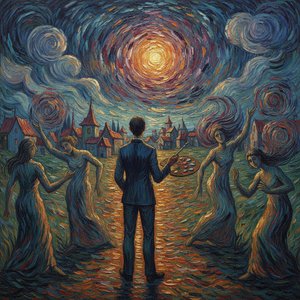
Beyond the Light: Capturing Emotion Through the Expressive Soul of Post-Impressionism
Explore the profound emotional depth of Post-Impressionism. Discover how masters like Van Gogh and Cézanne moved beyond light to capture raw feeling through color and texture. A journey into art history for the true connoisseur.

Beyond the Light: Discovering the Soul and Emotional Depth of Post-Impressionism
Embark on a cultural journey through Post-Impressionism. Discover the profound emotional depth of masters like Van Gogh and Cézanne, exploring how they moved beyond light to capture the very soul of human experience through vibrant color and symbolic form.
Istražite umjetnička djela organizirana prema temama, stilovima i karakteristikama.


