

Shown: · With its frame:
 Pregledaj u realnoj veličini
 Pošalji
 Podijeli
 Detalji o umjetničkom djelu
 Vodič
Vodič

 Preuzmi umjetničko djelo
 Slični predmeti
 Rentgenska snimka
 Slide show
 Q&A
Q&A Statistika

€ 237
Ručno rađena uljana reprodukcija
Ručno oslikano uljanim bojama na platnu u dimenzijama i okviru po vašem izboru, izrađeno po narudžbi od strane naših umjetnika. ( Prebacite na printove Prebacite na digitalnu sliku)
Size
·Standardne dimenzije
po mjeri
CM
INCH
Odaberite jednu od naših unaprijed definiranih veličina koje odgovaraju izvornim proporcijama umjetničkog djela.
Loading sizes...

širina
visina
Unesite potrebnu širinu i visinu kako bi dimenzije odgovarale vašem okviru ili zidu. Budući da je riječ o ručno oslikanom djelu, umjetnik može malo proširiti rubove slike ili ih skratiti kako bi postigao drugačiji oblik — izbor je vaš. Prije početka slikanja poslat ćemo vam digitalni prikaz (mockup) radi potvrde. Slika prikazana na ovoj stranici ne predstavlja stvarni rezultat — samo digitalni prikaz to čini.
 Pročitajte više
Finish
·
White €1

Blurside €1

Extended €1

P118B €10

P118H €10

P118W €10

P438Z €10

P508JH €12

P508YH €12

P805H €10

P805Z €10

P919BZ €10

P919G €10

P919XJ €10

P959ZH €10

P968JZ €12

W106C €8

W218G €10

W218JH €8

W218Y €10

W307PJ €10

W316G €10

W316PJ €8

W316Y €10

W398PJ €8

W4111J €10

W500HY €15

W500JH €15

W692G €12

W849H €8

W940BG €15

W953PJ €8

H24-GOLD €30

H24-SILVER €30

H36-GOLD €45

H36-SILVER €45
Shipped in a protective tube, ready for your own framer.
Above 105 cm the frame is shipped as a kit for a professional framer — read the details.
Extras
optionalWhat do the extras include?
Examples of what can be changed: Replace face with customer photo; Add pet (e.g., replace cat with dog); Include hidden message in background; Change background landscape or elements.
After order, TopImpressionists.com team will email client for instructions and provide a mockup preview
After order, TopImpressionists.com team will email client for instructions and provide a mockup preview
Isporuka širom svijeta () u roku od 3-4 tjedna umjesto standardnih 5 tjedana. (30 Listopad). Bez kompromisa u kvaliteti.
Zaštitni lak
Natpisna pločica
Detalji gravirane brončane pločice
This elegant plaque features the artist's name and the title of the artwork, finely engraved for a timeless presentation.
It is made from bronze with a refined, elegant finish. The text is precisely laser-engraved for a sharp and permanent result. Measuring 9x2 cm, the plaque is compact yet easy to read. It's built to be durable and scratch-resistant, offering a professional, museum-quality look. Mounting is simple thanks to the included adhesive backing.
Detalji prozirne akrilne pločice
The plaque includes essential engraved details such as the artist's name, the title of the artwork, the date it was created, the type of media used-like oil on canvas or watercolor-a brief description of the piece, and a QR code that links to the complete artwork information.
It is crafted from clear acrylic, offering a sleek, modern appearance. The text is UV-engraved in black to ensure strong visual contrast. With a size of 10x15 cm, it ensures optimal readability. It comes equipped with two metal hooks for secure wall mounting. The plaque is designed to be weather-resistant, making it suitable for various environments, and it includes interactive features that work seamlessly with smartphone scanning.
Detalji crne akrilne pločice
This elegant plaque includes engraved information such as the artist's name, the title of the artwork, the date it was created, the type of media used (like oil on canvas or watercolor), a short description of the artwork, and a QR code for quick access to more information.
The plaque itself is made from refined black acrylic with a premium finish. The text is laser-engraved in white for high contrast and readability. Its size is 10x15 cm, designed to be easy to read. It comes with two metal hooks for professional mounting. The design is sleek and fits any interior style. It is also weather-resistant and durable, with built-in digital integration for mobile compatibility.
Opcija stakla dostupna je samo za dimenzije manje od 110 cm
 Opcija stakla dostupna je samo za dimenzije manje od 110 cm
- Besplatna ekspresna dostava širom svijeta
- Visokokvalitetno laneno platno
- Potpuno osiguranje dostave
- Jamstvo povrata carine i uvoznih poreza
- Jamstvo vjernosti boja
- Politika povrata u roku od 100 dana (samo u slučaju nedostataka)
- Jamstvo povrata 100% novca
- Popust na više proizvoda


Opis kolekcionarskog predmeta
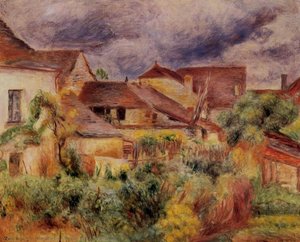
Discover Pierre-Auguste Renoir's 'La Roche-Guyon,' a serene landscape capturing village charm & Impressionist light. Explore this iconic painting’s details, artistic style, and its place in art history.
Biografija umjetnika
Otkrijte rad Pierre-Auguste Renoira (1841-1919), impresionističkog slikara poznatog po portretima, prikazima pariškog života i oslikavanju ženske ljepote. Uživajte u njegovim ikoničnim djelima poput 'Plesa u Bougivalu'!
About the painting
La Roche-Guyon: A Serene Vision of Rural Life by Pierre-Auguste Renoir
Pierre-Auguste Renoir’s “La Roche-Guyon,” painted in 1885, isn't merely a landscape; it’s an immersion into a fleeting moment of idyllic tranquility. The painting captures the essence of a small French village nestled within the verdant folds of the Vexin region, a place seemingly untouched by the anxieties and rapid changes of its time. More than just a picturesque scene, “La Roche-Guyon” embodies Renoir’s signature Impressionist style – an attempt to capture not just what is seen, but also the *feeling* of light, atmosphere, and the transient beauty of everyday life.
The composition immediately draws the eye to the prominent house with its distinctive red roof, a beacon amidst the surrounding greenery. This central structure isn’t imposing; rather, it feels integrated into the landscape, as if grown organically from the earth itself. Smaller buildings—a modest chapel, perhaps, or a farmer's dwelling—are scattered thoughtfully throughout the scene, adding to the village’s charm and sense of community. Renoir masterfully employs a technique of layering trees – some close enough to almost touch the houses, others receding into the distance – creating an illusion of depth that pulls the viewer into this peaceful world. The artist's use of broken brushstrokes and vibrant color is particularly evident in the dappled sunlight filtering through the leaves, lending the scene a luminous quality that feels both realistic and dreamlike.
The Impressionist Palette: Light and Color as Subject
Renoir’s approach to painting was deeply influenced by his contemporaries within the Impressionist movement. Like Monet and Sisley, he prioritized capturing the effects of light on color rather than meticulously rendering every detail. In “La Roche-Guyon,” this is strikingly evident. The greens are not uniform; they range from deep emerald to pale lime, reflecting the varying conditions of light and shadow. Similarly, the reds of the roof and other structures aren’t solid blocks of color but instead shimmer with hints of orange and pink, mirroring the warmth of the sun. This deliberate manipulation of color is central to Renoir's ability to evoke a specific mood – one of serenity, warmth, and quiet contemplation.
The painting’s atmosphere is remarkably peaceful, almost suspended in time. It’s as if the scene has been captured at a moment when life unfolds at its own unhurried pace. The absence of figures—no villagers strolling through the streets, no children playing—further contributes to this sense of stillness and invites the viewer to simply *be* within the painting's embrace.
A Window into Renoir’s World and Artistic Context
To understand “La Roche-Guyon,” it’s helpful to consider Renoir’s broader artistic journey. Initially apprenticed as a porcelain painter, he found his true calling in capturing the vibrancy of Parisian life and the beauty of the natural world. His early works were influenced by artists like Rubens and Watteau, who emphasized sensuality and elegance. However, he also absorbed elements from Realist painters such as Courbet and Manet, particularly their depictions of modern urban scenes. “La Roche-Guyon” represents a culmination of these influences – a harmonious blend of beauty, observation, and Impressionistic technique.
The painting’s creation coincided with Renoir's time spent in La Roche-Guyon, a village he frequented during the summers of 1885 and 1886. This personal connection undoubtedly informed his artistic choices, allowing him to capture not just a landscape but also a feeling of belonging and appreciation for the simple pleasures of rural life. It’s a testament to Renoir's ability to transform an ordinary scene into something extraordinary through his masterful use of color, light, and composition.
Beyond the Canvas: Exploring Renoir’s Legacy
“La Roche-Guyon” stands as a significant example of Impressionism’s impact on art history. The movement's emphasis on capturing fleeting moments and subjective experiences revolutionized painting techniques and challenged traditional notions of representation. Renoir’s work, alongside that of Monet, Degas, and Cézanne, helped to establish the Impressionists as leading figures in the late 19th-century art world.
If you're captivated by the beauty and tranquility of “La Roche-Guyon,” TopImpressionists.com offers exquisite hand-painted reproductions that faithfully capture the painting’s original charm. Explore our collection to bring this timeless masterpiece into your home or office, allowing its serene atmosphere to inspire and uplift.
Further Exploration: For a deeper dive into Renoir's artistic life, we recommend visiting our artist page or browsing our selection of other Impressionist masterpieces at TopImpressionists.com.
Pitanja i odgovori
Koliko je "La Roche-Guyon" u cijelosti svijetlo?
U pogledu percepcije svjetline, "La Roche-Guyon" autora Renoir je balanced.
Koji umjetnik se pripisuje djelu "La Roche-Guyon"?
Autorstvo djela "La Roche-Guyon" pripisuje se Renoir.
Koja tehnika i stil karakteriziraju "La Roche-Guyon" autora Renoir?
"La Roche-Guyon" je djelo izvedeno u tehnici Oil On Canvas, u stilu Impressionism.
Quick facts and art quiz
About Renoir

Renoir
1841 - 1919, Francuska
Biografija umjetnika
Život okupan u svjetlu: Svijet Pierre-Auguste Renoira
Rođen 1841. godine u provincijskom francuskom gradu Limogesu, putovanje Pierre-Augusta Renoira od skromnih početaka kao slikara porculana do postajanja proslavljenog majstora impresionizma svjedočanstvo je njegove neumorne predanosti i umjetničke vizije. Njegov raniji život obilježen je selidbom obitelji u Pariz, tražeći gospodarsku priliku, iskustvo koje je duboko oblikovalo njegovu umjetničku osjetljivost. Oživljavanje grada, s živopisnim ulicama i raznolikim likovima, postalo je izvor inspiracije za djela koja su obilježila njegovu kasniju karijeru. Iako je prvo bio obučen za oslikavanje porculana – praktična potreba nametnuta financijskim ograničenjima – mladi Renoir nalazio je utjehu u čestim posjetima Louvru, gdje je marljivo proučavao djela starih majstora, upijajući njihove tehnike i razvijajući osjećaj za ljepotu koji je postao zaštitni znak njegovog stila. Ta rana izloženost rasplamsala je u njemu strast koja je nadmašivala puku vještinu; bio je to poziv da se zabilježe prolazne kvalitete svjetla i života na platnu. Kasnije se upisao u atelje Charlesa Gleyrea, gdje je sklopio dugogodišnje prijateljstvo s kolegama budućim umjetnicima Claudeom Monetom, Alfredom Sisleyem i Frédéricom Bazilleom – ključni trenutak koji je postavio temelje impresionističkog pokreta.Od realizma do sjajnih impresija
Umjetnički razvoj Renoira bio je fascinantna evolucija, pod utjecajem raznolikog niza majstora. U početku se okretao realizmu Gustava Courbeta i Édouarda Maneta, divio se njihovoj predanosti prikazivanju suvremenog života s iskrenošću i izravnošću. Međutim, upravo sjajne palete i senzualni oblici Petra Paula Rubensa i Jeana-Antoinea Watteaua doista su ga očarali, ulijevajući u njegov rad duboko poštovanje ljepote i sklonost prema prikazivanju scena veselja i razonode. Te rane utjecaje sjedile su se dok je Renoir počeo oblikovati svoj jedinstveni stil, obilježen živopisnim bojama, razlomljenim potezima kista i fokusom na hvatanje prolaznih efekata svjetla. Njegovo sudjelovanje u prvoj impresionističkoj izložbi 1874. godine bio je prekretnica, iako je prvotno doživjela kritike od tradicionalnih umjetničkih krugova. Ovaj hrabar potez značio je odbacivanje akademskih konvencija i prihvaćanje nove umjetničke vizije – one koja nastoji uhvatiti ne samo ono što oko vidi, već i kako se osjeća u određenom trenutku. Slike poput Ples na Moulin de la Galette (1876.) primjeri su tog pristupa, uranjajući gledatelje u živopisnu atmosferu pariškog noćnog života s raspršenim sunčanim zrakama i veselim likovima.Zabilježiti prolazne trenutke života: Ključna djela i teme
Renoirovo stvaralaštvo slavljenje je jednostavnih zadovoljstava u životu – intimnih okupljanja, obasjanih suncem krajolika i sjajne ljepote ljudskog oblika. Ručak veslača (1880-81) stoji kao jedno od njegovih najpoznatijih djela, prikazujući prijateljsku skupinu koja uživa u opuštenom poslijepodnevu na Seni. Slikanje je majstorski prikaz svjetla i pokreta, s likovima obasjanima toplim sunčanim zrakama i refleksijama koje sjaje na vodi. Nakon kupanja (1885-87) pokazuje Renoirovu izuzetnu vještinu u prikazivanju ženskog nagog tijela, naglašavajući nježne tonove kože i graciozne poze. Njegova djela nisu samo reprezentacije stvarnosti; prožeta su toplinom, intimnošću i radošću koja duboko rezonira s gledateljima. On nije bio zainteresiran za grandiozne povijesne narative ili dramatične alegorije; umjesto toga se fokusirao na hvatanje ljepote koja je svojstvena svakodnevnom životu, uzdignuvši obične trenutke u djela umjetnosti. Ples u Bougivalu, još jedno slavno djelo, demonstrira njegovu sposobnost da uhvati prolazne dojmove i atmosferske efekte, stvarajući osjećaj pokreta i spontanosti.Pomak prema obliku i strukturi: Posljednje godine i nasljeđe
Devedesetih godina prošlog stoljeća Renoirov stil doživio je značajnu transformaciju. Iako nikada u potpunosti nije napustio svoje impresionističke korijene, počeo se približavati klasičnijem pristupu, pod utjecajem svojih putovanja u Italiju i obnovljenog interesa za oblikom i strukturom. Ta promjena bila je djelomično potaknuta i fizičkim ograničenjima – artritis mu je postupno ograničio mobilnost, prisiljavajući ga da prilagodi svoju tehniku. Unatoč tim izazovima, Renoir je nastavio slikati s neumornom predanošću, stvarajući djela obilježena punijim figurama i toplijom paletom. Njegova kasnija djela često odražavaju kontemplativnije raspoloženje, ali zadržavaju istu temeljnu slavu ljepote koja je definirala njegova ranija djela. Izvan svojih umjetničkih postignuća, Renoirovo nasljeđe nastavlja se i kroz njegovu obitelj; njegov sin, Jean Renoir, postao je poznati filmski redatelj, prenoseći kreativni duh generacijama. Pierre-Auguste Renoir umro je 1919. godine, ostavivši iza sebe trajno djelo koje i dalje inspirira i oduševljava publiku širom svijeta. Ostaje jedna od najomiljenijih figura u povijesti umjetnosti, slavljen zbog svoje sposobnosti da uhvati radost života i ljepotu ljudskog iskustva s nezadrživim osjetljivosti i gracioznosti.Trajni utjecaj
- Renoirov utjecaj na sljedeće generacije umjetnika je neuporan. Njegov naglasak na svjetlu, boji i hvatanju prolaznih trenutaka otvorio je put mnogim modernim umjetničkim pokretima.
- Njegovo slavljenje ljepote i senzualnosti nastavlja rezonirati s publikom i danas, čineći njegova djela sveprisusnim.
- Igrao je ključnu ulogu u uspostavljanju impresionizma kao glavne sile u povijesti umjetnosti, izazivajući tradicionalne konvencije i otvarajući nove mogućnosti za umjetničko izražavanje.
- Trajna popularnost njegovih slika – reproduciranih na bezbrojnim plakatima, kalendarima i drugim proizvodima – svjedoči o vječnoj kvaliteti njegovog rada.
Quick facts about Renoir
- Datum Rođenja: 25. veljače 1841.
- Datum Smrti: 3. prosinca 1919.
- Mjesto Rođenja: Limoges, Francuska
- Nacionalnost: Francuski
- Pokreti/Umjetnici Utjecani: ['Impresionizam']
- Puno Ime: Pierre-Auguste Renoir
- Umjetnički Pokret: Impresionizam
- Utjecajni Umjetnici:
- Rubens
- Watteau
- Courbet
- Manet
- Značajna Djela:
- Ples uMoulin de la Galette
- Ručak veslača
- Poslije kupanja
- Ples u Bougivalu
Srodna umjetnička djela


Istražite umjetnička djela organizirana prema temama, stilovima i karakteristikama.


Renoir
La Roche-Guyon
() ·
With its frame: · Hand-painted in oil on linen
Total