


 Pregledaj u stvarnoj veličini
 Podijeli
 Podijeli
 Detalji
 Vodič
Vodič

 Preuzmi datoteku
 Slični predmeti
 Rentgenska snimka
 Slide show
 Statistika
Child with Doves (Innocence)


Meta Description: Child with Doves (Innocence) od Ridolfo Schadowa - Majstorski srebrni kip djevičice države pticu. Klasicistička estetika i simbol nevjerne mladosti u umjetnosti romantizma. Pregledajte detalje!
 Pročitajte više
Discover the evocative scenes of Ridolfo Schadow's 19th-century paintings – Parisian life, intimate moments, & serene landscapes. Explore his unique style!
Giclée / Umjetnički otisak
Giclée tisak muzejske kvalitete ili otisak na platnu uz brzu proizvodnju i fleksibilne opcije završne obrade. ( Naručite ručno oslikano reprodukciju Prebacite na digitalnu prodaju slika)




P118B €10

P118H €10

P118W €10

P438Z €10

P508JH €12

P508YH €12

P805H €10

P805Z €10

P919BZ €10

P919G €10

P919XJ €10

P959ZH €10

P968JZ €12

W106C €8

W218G €10

W218JH €8

W218Y €10

W307PJ €10

W316G €10

W316PJ €8

W316Y €10

W398PJ €8

W4111J €10

W500HY €15

W500JH €15

W692G €12

W849H €8

W940BG €15

W953PJ €8




Standardne dimenzije
prilagođeno po mjeri
CM
INCH
Odaberite jednu od naših unaprijed definiranih veličina koje odgovaraju izvornim proporcijama umjetničkog djela.
Loading sizes...

širina
visina
Unesite širinu i visinu koja vam je potrebna, kako bi odgovarali vašem okviru ili zidu. Print se može samo izrezati, nikada ne može biti veći od slike, stoga veličina s drugačijim oblikom gubi dio slike. Šaljemo vam digitalni prikaz (mockup) na odobrenje prije bilo kakve štampe. Slika prikazana na ovoj stranici ne prikazuje stvarni rez — to čini samo digitalni prikaz.
Dostava širom svijeta () u roku od 2 tjedna umjesto standardnih 4/5 tjedana. (26 Listopad)

Besplatna ekspresna dostava širom svijeta

Visokokvalitetno laneno platno

Potpuno osiguranje transporta

Jamstvo povrata carine i uvoznih poreza

Jamstvo vjernosti boja

Politika povrata u roku od 100 dana (samo u slučaju nedostataka)

Jamstvo povrata 100% novca

Popust na više proizvoda
 Opcija stakla dostupna je samo za dimenzije manje od 110 cm

Child with Doves (Innocence)
Giclée / Umjetnički otisak
Veličina reprodukcije
-


Ukupna cijena
€ 61
Child with Dove – Picasso’s Tender Reflection on Innocence
Pablo Picasso's Child with Dove (L'enfant au pigeon), painted in 1901, stands as an emblem of the artist’s formative Blue Period and a poignant meditation on themes of purity and vulnerability. More than just a depiction of a young girl cradling a dove—a symbol universally recognized for peace—the painting embodies Picasso’s revolutionary stylistic choices and his profound engagement with artistic traditions preceding him. This artwork represents a pivotal moment in Picasso's artistic journey, marking the beginning of his exploration into expressive abstraction while simultaneously retaining an undeniable connection to Impressionism and Symbolism.- Subject Matter: The painting portrays a girl dressed in white, her ginger hair framing her face with serene grace. Beside her rests a dove—a recurring motif throughout Picasso’s oeuvre—representing innocence and spiritual contemplation. Complementing this central figure is a ball adorned with vibrant hues reminiscent of the color wheel, subtly hinting at artistic experimentation and challenging conventional visual conventions.
- Style & Technique: Picasso employed a distinctive technique characterized by flattened planes of colour and simplified forms – hallmarks of his Blue Period. The coarse brushstrokes contribute to an atmosphere of melancholy and introspection, mirroring the emotional landscape of the time. Unlike Impressionistic renderings that prioritize capturing fleeting moments of light and color, Picasso’s approach prioritizes conveying psychological depth through expressive abstraction.
- Historical Context: Painted during Picasso's initial foray into Paris following his return from Barcelona, Child with Dove emerged against a backdrop of artistic ferment—the burgeoning influence of Cézanne and Gauguin on European painting. Picasso deliberately distanced himself from the prevailing Impressionist aesthetic, seeking instead to forge a new path rooted in Symbolism’s preoccupation with emotion and spiritual significance.
- Symbolism & Emotion: The dove itself transcends mere representation; it embodies an idealized notion of purity and innocence—concepts central to Blake's poetic vision and reflecting Picasso’s own humanist sensibilities. The muted palette—primarily blues and greens—further amplifies the painting’s emotional resonance, conveying a sense of quiet contemplation and understated sorrow.
- Legacy & Influence: Child with Dove solidified Picasso’s reputation as an innovator and cemented his position within the vanguard of modern art. Its stylistic boldness foreshadowed developments in Cubism and Surrealism, demonstrating Picasso's unwavering commitment to pushing artistic boundaries and redefining visual language. Today, it continues to inspire artists and collectors alike, serving as a testament to Picasso’s enduring ability to capture profound human emotions through masterful technique and evocative imagery.
Pitanja i odgovori
Koji umjetnički pravac obuhvaća "Child with Doves (Innocence)" autora Ridolfo Schadow?
Umjetnički pravac povezan s djelom "Child with Doves (Innocence)" autora Ridolfo Schadow je Neoclassical Style. Ova klasifikacija smješta rad među povezane umjetnike i umjetnička djela.
Postoji li prezentacija u obliku slajdova za "Child with Doves (Innocence)" autora Ridolfo Schadow?
Diaporama djela "Child with Doves (Innocence)" možete pogledati na stranici Diaporama tog umjetničkog djela.
Mogu li pregledati "Child with Doves (Innocence)" autora Ridolfo Schadow prije narudžbe?
Pregled djela "Child with Doves (Innocence)" autora Ridolfo Schadow dostupan je na stranici Pregled za to umjetničko djelo.
Biografija umjetnika
Early Life and Training in the Shadow of a Master
Ridolfo Schadow, born Rudolf Schadow on July 9, 1786, in Rome, entered a world already steeped in artistic tradition. His father, Johann Gottfried Schadow, was a prominent German sculptor whose Neoclassical style profoundly shaped the art scene in Berlin. From an early age, Ridolfo benefited from his father’s tutelage, receiving foundational training within the family studio. This initial period saw him exhibiting statues and reliefs at the prestigious Berlin Akademie between 1802 and 1810, demonstrating a burgeoning talent for both mythological and religious subjects. However, it was his subsequent journey to Rome in 1810 that would truly define his artistic trajectory. The allure of Italy—the heartland of classical sculpture—proved irresistible, offering an environment ripe with inspiration and opportunity.Roman Influences and the Pursuit of Individual Style
Upon arriving in Rome, Ridolfo quickly immersed himself in the city’s vibrant art community. He received invaluable guidance from masters like Antonio Canova and Bertel Thorvaldsen, giants whose work epitomized Neoclassical ideals. While initially absorbing their influence, Schadow soon began to forge his own path, seeking a balance between classical precision and a more realistic, genre-based approach. His early Roman sculpture, *Paris*, though ultimately destroyed, signaled this emerging individuality. It was the companion piece—a captivating depiction of a *Woman Spinning*—that truly captured the attention of the art world. This work, portraying a young woman absorbed in her task, resonated with viewers for its serene beauty and naturalism. Multiple versions were commissioned by prominent collectors, including the King of Prussia and the Duke of Devonshire, testament to its widespread appeal. The sculpture’s success stemmed not merely from technical skill but from Schadow's ability to imbue classical forms with a sense of intimate humanity.Themes of Innocence and Religious Conversion
Schadow’s artistic focus often centered on themes of innocence, domesticity, and quiet contemplation. *Girl with Doves (Innocence)*, completed in 1820, exemplifies this sensibility. The sculpture depicts a young girl tenderly holding doves, symbolizing peace and purity. This work, now housed in the Alte Nationalgalerie in Berlin, showcases Schadow’s refined technique and his ability to evoke emotional resonance through subtle gestures and expressions. A pivotal moment in Schadow's life occurred in 1814 with his conversion to Catholicism, influenced by his brother Wilhelm and Friedrich Overbeck. This spiritual shift profoundly impacted his later work, leading him to create statues of religious figures such as *John the Baptist* and the *Virgin and Child*. These sculptures reflect a newfound depth of emotion and devotion, further solidifying his reputation as a sensitive and skilled artist.Legacy and Historical Significance
Despite a tragically short life—Ridolfo Schadow died in Rome on January 31, 1822, at the age of thirty-five—he left an indelible mark on the landscape of 19th-century sculpture. His untimely death interrupted his work on *Achilles with the Body of Penthesilea*, a colossal group intended for the King of Prussia. Though unfinished in marble, the plaster model was widely admired for its antique character and ambitious scale. Schadow’s contribution lies not only in his individual works but also in his ability to bridge the gap between Neoclassical formality and Romantic expressiveness. He infused classical ideals with a sense of realism and emotional depth that resonated with audiences seeking art that spoke to their own experiences and sensibilities. His sculptures, characterized by grace, serenity, and subtle symbolism, continue to captivate viewers today, offering a glimpse into the artistic world of early 19th-century Rome and the enduring power of human emotion.
Ridolfo Schadow
1786 - 1822 , Italy
Brzi pregled
- Full Name: Ridolfo Schadow
- Nationality: German
- Date Of Birth: 1786
- Date Of Death: 1822
- Place Of Birth: Rome, Italy
- Notable Artworks:
- Woman Tying Her Sandal
- Paris
- Girl with Doves (Innocence)
- Artistic Movement Or Style: Neoclassical sculpture
- Artists Who Influenced This Artist:
- Johann Gottfried Schadow
- Antonio Canova
- Bertel Thorvaldsen
Povezani članci

Slate Blue Masterpieces: 10 Iconic Paintings & Timeless Home Decor Ideas
Immerse yourself in the captivating world of slate blue! Explore 10 iconic paintings by Monet, Van Gogh & Renoir. Discover their stories, techniques & find museum-quality art reproductions for your home at .

Cubist Expression: 10 Masterpieces That Revolutionized Modern Art | TopImpressionists
Explore 10 Cubist masterpieces by Picasso, Braque & more! Discover the stories behind these revolutionary paintings and their impact on modern art. Find museum-quality reproductions for your home at TopImpressionists.com – where art comes to life.

Cubist Portraits: 10 Masterpieces That Revolutionized Art | TopImpressionists
Explore 10 revolutionary Cubist portraits by Picasso, Braque & more! Discover the stories behind these iconic paintings and how they shaped modern art. Find museum-quality reproductions to elevate your home decor on TopImpressionists.com.
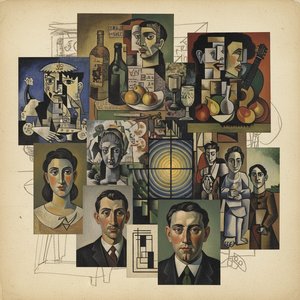
Cubism's Revolution: 10 Masterpieces That Redefined Modern Art | TopImpressionists
Explore 10 Cubist masterpieces by Picasso, Braque & more! Delve into the history of this revolutionary art movement. Find museum-quality reproductions and elevate your home decor with TopImpressionists. Discover all masterpieces on TopImpressionists.com

Serene Blue Backgrounds: Discover Soulful Art to Transform Your Space with Timeless Elegance
Transform your home with soulful blue art. From serene Monet impressions to modern textured sculptures, discover curated masterpieces designed to inspire calm. Explore expert art consultations and bespoke hand-painted reproductions to create your personal sanctuary.
Istražite umjetnička djela organizirana prema temama, stilovima i karakteristikama.
