

Shown: · With its frame:
 Pregledaj u realnoj veličini
 Pošalji
 Podijeli
 Detalji o umjetničkom djelu
 Vodič
Vodič

 Preuzmi umjetničko djelo
 Slični predmeti
 Rentgenska snimka
 Slide show
 Q&A
Q&A Statistika
 Ulje na panelu
- Zidna umjetnost
- Early Netherlandish
 Rana moderna era
 31.0 x 22.0 cm
 Muzej lijepih umjetnosti Houston
€ 237
Ručno rađena uljana reprodukcija
Ručno oslikano uljanim bojama na platnu u dimenzijama i okviru po vašem izboru, izrađeno po narudžbi od strane naših umjetnika. ( Prebacite na printove Prebacite na digitalnu sliku)
Size
·Standardne dimenzije
po mjeri
CM
INCH
Odaberite jednu od naših unaprijed definiranih veličina koje odgovaraju izvornim proporcijama umjetničkog djela.
Loading sizes...

širina
visina
Unesite potrebnu širinu i visinu kako bi dimenzije odgovarale vašem okviru ili zidu. Budući da je riječ o ručno oslikanom djelu, umjetnik može malo proširiti rubove slike ili ih skratiti kako bi postigao drugačiji oblik — izbor je vaš. Prije početka slikanja poslat ćemo vam digitalni prikaz (mockup) radi potvrde. Slika prikazana na ovoj stranici ne predstavlja stvarni rezultat — samo digitalni prikaz to čini.
 Pročitajte više
Finish
·
White €1

Blurside €1

Extended €1

P118B €10

P118H €10

P118W €10

P438Z €10

P508JH €12

P508YH €12

P805H €10

P805Z €10

P919BZ €10

P919G €10

P919XJ €10

P959ZH €10

P968JZ €12

W106C €8

W218G €10

W218JH €8

W218Y €10

W307PJ €10

W316G €10

W316PJ €8

W316Y €10

W398PJ €8

W4111J €10

W500HY €15

W500JH €15

W692G €12

W849H €8

W940BG €15

W953PJ €8

H24-GOLD €30

H24-SILVER €30

H36-GOLD €45

H36-SILVER €45
Shipped in a protective tube, ready for your own framer.
Above 105 cm the frame is shipped as a kit for a professional framer — read the details.
Extras
optionalWhat do the extras include?
Examples of what can be changed: Replace face with customer photo; Add pet (e.g., replace cat with dog); Include hidden message in background; Change background landscape or elements.
After order, TopImpressionists.com team will email client for instructions and provide a mockup preview
After order, TopImpressionists.com team will email client for instructions and provide a mockup preview
Isporuka širom svijeta () u roku od 3-4 tjedna umjesto standardnih 5 tjedana. (30 Listopad). Bez kompromisa u kvaliteti.
Zaštitni lak
Natpisna pločica
Detalji gravirane brončane pločice
This elegant plaque features the artist's name and the title of the artwork, finely engraved for a timeless presentation.
It is made from bronze with a refined, elegant finish. The text is precisely laser-engraved for a sharp and permanent result. Measuring 9x2 cm, the plaque is compact yet easy to read. It's built to be durable and scratch-resistant, offering a professional, museum-quality look. Mounting is simple thanks to the included adhesive backing.
Detalji prozirne akrilne pločice
The plaque includes essential engraved details such as the artist's name, the title of the artwork, the date it was created, the type of media used-like oil on canvas or watercolor-a brief description of the piece, and a QR code that links to the complete artwork information.
It is crafted from clear acrylic, offering a sleek, modern appearance. The text is UV-engraved in black to ensure strong visual contrast. With a size of 10x15 cm, it ensures optimal readability. It comes equipped with two metal hooks for secure wall mounting. The plaque is designed to be weather-resistant, making it suitable for various environments, and it includes interactive features that work seamlessly with smartphone scanning.
Detalji crne akrilne pločice
This elegant plaque includes engraved information such as the artist's name, the title of the artwork, the date it was created, the type of media used (like oil on canvas or watercolor), a short description of the artwork, and a QR code for quick access to more information.
The plaque itself is made from refined black acrylic with a premium finish. The text is laser-engraved in white for high contrast and readability. Its size is 10x15 cm, designed to be easy to read. It comes with two metal hooks for professional mounting. The design is sleek and fits any interior style. It is also weather-resistant and durable, with built-in digital integration for mobile compatibility.
Opcija stakla dostupna je samo za dimenzije manje od 110 cm
 Opcija stakla dostupna je samo za dimenzije manje od 110 cm
- Besplatna ekspresna dostava širom svijeta
- Visokokvalitetno laneno platno
- Potpuno osiguranje dostave
- Jamstvo povrata carine i uvoznih poreza
- Jamstvo vjernosti boja
- Politika povrata u roku od 100 dana (samo u slučaju nedostataka)
- Jamstvo povrata 100% novca
- Popust na više proizvoda


Opis kolekcionarskog predmeta
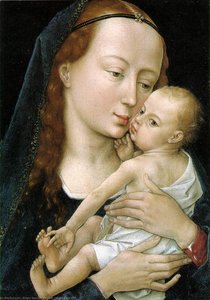
Experience Rogier van der Weyden's 'Virgin and Child.' A masterpiece of Early Netherlandish art, showcasing tender devotion & intricate detail from the Museum of Fine Arts, Houston.
Biografija umjetnika
Rogier van der Weyden (oko 1400-1464): Nizozemski majstor ranog doba sjeverne renesanse, poznat po emotivnim religijskim prikazima, bogatoj paleti boja i prirodnom detalju. Otkrijte 'Skidanje s križa' i još djela!
About the painting
A Tender Embrace: Rogier van der Weyden’s “Virgin and Child”
Within the hallowed halls of the Museum of Fine Arts in Houston resides a painting that transcends mere representation, offering instead a profound meditation on motherhood, divinity, and the quiet intimacy of faith – Rogier van der Weyden's "Virgin and Child." Created around 1454-1460 during the height of the Early Netherlandish school’s artistic flourishing, this work is more than just an image; it’s a carefully constructed dialogue between artist, subject, and viewer. Van der Weyden, a master renowned for his meticulous detail and ability to imbue his scenes with palpable emotion, presents us with a tableau that speaks volumes through its subtle gestures and luminous colors.
The painting depicts the Virgin Mary cradling the Christ Child, an iconic motif in Western art yet rendered here with a remarkable freshness. The composition is deceptively simple: a woman, clearly identified as Mary by her traditional attire – a flowing blue gown and a delicate crown – holds the infant Jesus close to her breast. Yet, within this apparent stillness lies a wealth of visual information and symbolic weight. Van der Weyden’s genius lies in his ability to convey complex ideas through deceptively straightforward imagery. The scene is bathed in an ethereal light, characteristic of the Early Netherlandish style, which allowed for intricate details and vibrant colors while maintaining a sense of depth and realism. The use of oil on panel was crucial here, enabling him to build up layers of paint with incredible precision, creating textures that mimic the feel of fabric and skin.
The Language of Symbolism
Beyond its technical brilliance, “Virgin and Child” is rich in symbolism, reflecting the deeply religious context of its creation. The blue robe worn by Mary isn’t merely decorative; it's a deliberate reference to her role as the Mother of God, associating her with heaven and divine grace. The crown adorning the Christ Child symbolizes his royal status – he is, after all, the King of Kings. However, Van der Weyden doesn’t simply present these symbols in an overtly didactic manner. Instead, he integrates them seamlessly into the scene through gesture and expression. Note how Mary's gaze is directed towards her son with a profound tenderness, while the Christ Child appears to be gazing upwards with innocent curiosity – a visual representation of their mutual love and connection.
The inclusion of a small, intricately carved wooden cartouche above the scene adds another layer of complexity. These cartouches were common in Northern European art during this period, often containing inscriptions or prayers. In this case, they likely served as a devotional element, inviting viewers to contemplate the sacredness of the depicted figures. The use of trompe l'oeil – creating an illusion of three-dimensionality – further enhances the painting’s realism and draws the viewer into its world.
A Masterpiece in Context
To fully appreciate “Virgin and Child,” it’s essential to understand the historical context in which it was created. The late Middle Ages witnessed a remarkable cultural and artistic renaissance in the Low Countries, giving rise to a new generation of artists who pushed the boundaries of realism and emotional expression. Rogier van der Weyden was undoubtedly one of the leading figures of this movement, known for his incredible attention to detail and his ability to convey emotion through his paintings. He served as court painter to Philip the Good, Duke of Burgundy, a position that afforded him significant patronage and influence.
Interestingly, “Virgin and Child” is part of a series of Apostle paintings commissioned by Van der Weyden, including depictions of St. Matthew and St. Bartholomew. This suggests a deliberate effort on the artist’s part to explore themes of faith, piety, and devotion through a variety of religious subjects. The painting's meticulous detail and emotional resonance reflect the broader trends in Northern European art during this period – a shift away from the stylized representations of the Gothic era towards a more naturalistic and human-centered approach.
Reproductions: Bringing History Home
TopImpressionists offers meticulously crafted, hand-painted oil painting reproductions of Rogier van der Weyden’s “Virgin and Child,” allowing art lovers to own a piece of this extraordinary masterpiece. Each reproduction is created by skilled artisans who painstakingly recreate the artist's techniques, colors, and textures, ensuring that it captures the essence of the original while retaining its own unique beauty. Measuring 31 x 22 cm, this intimate rendition invites contemplation and serves as a timeless reminder of the enduring power of art to inspire and uplift.
For those seeking to delve deeper into the life and work of Rogier van der Weyden, we encourage you to visit our dedicated page for further information. And if you’re interested in exploring other works by this master of the Early Netherlandish school, please visit our comprehensive artist database.
Pitanja i odgovori
Koliko je "Virgin and Child" popularno unutar pokreta Early Netherlandish?
"Virgin and Child" je zabilježeno kao Ikonični među djelima Early Netherlandish u katalogu.
Koliko su intenzivne boje djela "Virgin and Child"?
Boje djela "Virgin and Child" autora Rogier Van Der Weyden odlikuju se Suptilne boje zasićenošću i Uravnoteženo intenzitetom.
Iz kojeg razdoblja potječe "Virgin and Child"?
"Virgin and Child" pripada razdoblju Rana moderna era.
Quick facts and art quiz
About Rogier Van Der Weyden

Rogier Van Der Weyden
1400 - 1464, Belgija
Biografija umjetnika
Rogier van der Weyden: Majstor Emocija i Vizijski Pionir
U srcu rane Nizozemske renesanse, u gradu Tournaiju, koji se danas nalazi na teritoriju Belgije, rođen je oko 1400. godine Rogier de la Pasture – umjetnik poznatiji kao Rogier van der Weyden. Iako su detalji o njegovim prvim godinama života prilično rijetki, pretpostavlja se da je svoje vještine brusio ne s kistom i pigmentima, već kao zlatar. Ta rana izobrazba u radu sa plemenitim metalima utisnula mu je u dušu nesalomljivu predanost preciznosti i smisao za umjetničku obradu – kvalitete koje su postale prepoznatljiv znak njegovog stila. Svaka sitnica, svaki detalj zahtijevao je pažnju, a to se kasnije odrazilo u iznimnom prikazivanju tekstura, tkanina i izraza na njegovim djelima. On nije samo reproducirao stvarnost; on ju je ponovno stvarao s neumornom preciznošću, prožetom gotovo svešteničkom posvećenosti detaljima.Od Tournaija do Bruxellesa: Uznicanje Zvijezde
Već 1427. godine, van der Weyden se uzdigao na poziciju majstora unutar Ceha svetog Luke u Tournaiju, što je svjedočanstvo njegovog talentiranosti i vještine. To je označilo ključni trenutak u njegovoj karijeri, učvrstivši ga kao profesionalnog umjetnika i otvorivši vrata važnim narudžbinama. Njegova zvijezda nastavila se uzdizati kada je 1435. godine stupio u službu Filipa Dobrog, vojvoda Burgundije – pokroviteljstvo koje će duboko oblikovati njegovu karijeru do kraja života. Služba na dvoru pružila mu je ne samo financijsku sigurnost, već i pristup elitnom krugu utjecaja te izloženost promišljenim pogledima najrazličitijih ljudi tog vremena. Tijekom tog razdoblja van der Weydenova umjetnička vizija doživjela je zrelinu, odmaknuvši se od pomalo krutih konvencija ranijih nizozemskih slikara prema emotivnijem i realističnijem pristupu. On nije samo oslikavao religijske prizore; nastojao je pobuditi istinsko osjećanje u gledatelju, stvoriti iskustvo koje nadilazi pukom promatranjem.Jezik Osjećaja: Stil i Tehnika
Van der Weydenov umjetnički potpis odmah se prepoznaje kroz nekoliko ključnih karakteristika. Njegova paleta bila je iznimno bogata i raznolika, živopisna tapiserija boja pažljivo odabranih kako bi se izbjegla ponavljanja te stvorila dubina i složenost u njegovim kompozicijama. Posjedovao je izvanrednu sposobnost prenošenja dubokog osjećaja – *patosa* – posebice u prikazima religijskih tema poput "Lamentacije", gdje su tuga i žalovanje opipljivi. Ta emocionalna intenzivnost nije postignuta dramatičnim gestama ili pretjeranim izrazima; ona je umjesto toga bila suptilno utkana u samu tkaninu slike, prenesena kroz nježne nijanse izraza lica, govora tijela i kompozicije. Njegove figure, iako se drže konvencija vremena, pokazuju rastući interes za realističko prikazivanje – ne samo anatomije i draperija, već i hvatanje psiholoških stanja njegovih subjekata. Posjeduju dostojanstvenost, gotovo skulpturalnu kvalitetu, što je posebno vidljivo u njegovim grandioznim triptihima, dajući im dojam smirenosti i pobožnosti. Majstorski je koristio uljane boje, gradeći slojeve prozirnih glatura kako bi postigao svjetlucave efekte te stvorio osjećaj dubine i realizma koji je bio revolucionaran za njegovo vrijeme.Trajni Utjecaj: Ostavština Izgrađena u Bojama
Van der Weydenov utjecaj protezao se daleko izvan granica njegove domovine, Flandrije. Njegova djela su bila vrlo tražena diljem Europe, posebice u Italiji i Španjolskoj, gdje su uvela novu razinu emocionalne dubine i realizma u lokalne umjetničke tradicije. Iako je njegova slava doživjela razdoblje relativnog opadanja u 17. stoljeću, ponovno otkriće tijekom 19. stoljeća učvrstilo ga kao jednog od najvažnijih slikara 15. stoljeća. Stoji ravnopravno s Janom van Eyckom i Robertom Campinom kao jednim od "tri velika" ranoflamskih majstora, pri čemu je svaki od njih dao jedinstven doprinos razvoju sjevernorajenske umjetnosti. Njegove inovativne tehnike i emotivno nabijene kompozicije utrle su put budućim generacijama umjetnika, nadahnjivši bezbrojne imitatore te oblikujući tijek zapadne slike kroz stoljeća. Pomoću uljenih boja je pomogao u uspostavljanju uljane boje kao dominantnog medija i podigao status umjetnika unutar društva, pretvarajući ih od vještih obrtnika u cijenjene kreatore. Rogier van der Weydenova ostavština nastavlja rezonirati i danas, svjedočanstvo njegove genijalnosti i dubokog razumijevanja ljudske prirode.Značajna Djela i Trajna Remek-djela
Tijekom svoje plodne karijere, van der Weyden je stvorio brojna djela koja stoje kao svjedočanstva njegove umjetničke vještine. Sveti Luka oslikava Madonu, smještena u Muzeju likovnih umjetnosti u Bostonu, demonstrira njegovu sposobnost uljane tehnike na drvu i pomno opažanje. Lamentacija, koja se nalazi u Muzeju likovnih umjetnosti Tournai, Belgija, možda je njegovo najpoznatije djelo – snažno emotivni prikaz Kristove žalosti, poznat po dramatičnoj upotrebi *chiaroscuroa* i njegovoj sposobnosti da izaziva duboku tugu u gledatelju. Postoje brojne verzije Depozicije, svaka od kojih demonstrira njegovu vještinu prenošenja tuge i drame s prekrasnom osjetljivošću. Najava anđela, remek-djelo izmjerenog stila i pozornosti na detalje, primjeri je njegove sposobnosti da čak i najtradicionalnije subjekte prožme svježim i živahnim osjećajem. I napokon, složena i bogato detaljna Triptih Bladelin predstavlja monumentalno postignuće – kompleksan oltarski prikaz koji pokazuje puni raspon van der Weydenovih umjetničkih sposobnosti. Ta djela, i mnoga druga, nastavljaju fascinirati publiku i danas, učvršćujući njegov položaj kao jednog od najvažnijih slikara 15. stoljeća.Quick facts about Rogier Van Der Weyden
- Datum Rođenja: oko 1400.
- Datum Smrti: 1464.
- Državljanstvo: Belgijski
- Mjesto Rođenja: Tournai, Belgija
- Pokreti/Umjetnici Pod Utjecajem:
- Talijanska renesansa
- Španjolska umjetnost
- Puno Ime: Rogier van der Weyden
- Umjetnički Pokret: Rana Nizozemska umjetnost
- Utjecajni Umjetnici:
- Robert Campin
- Jan van Eyck
- Značajna Djela:
- Skidanje s križa
- Sveti Luka crta Gospu
- Oltar Miraflores
- Vladelin triptih
- Braque triptih
Istražite umjetnička djela organizirana prema temama, stilovima i karakteristikama.


Rogier Van Der Weyden
Virgin and Child
() ·
With its frame: · Hand-painted in oil on linen
Total