

Prikazano: · S okvirom:
 Pregledaj u realnoj veličini
 Pošalji
 Podijeli
 Detalji o umjetničkom djelu
 Vodič
Vodič

 Preuzmi umjetničko djelo
 Slični predmeti
 Rentgenska snimka
 Slide show
 Pitanja i odgovori
 Statistika

€ 240
Ručno rađena uljana reprodukcija
Ručno oslikano uljanim bojama na platnu u dimenzijama i okviru po vašem izboru, izrađeno po narudžbi od strane naših umjetnika. ( Prebacite na printove Prebacite na digitalnu sliku)
Veličina
·Standardne dimenzije
po mjeri
CM
INCH
Odaberite jednu od naših unaprijed definiranih veličina koje odgovaraju izvornim proporcijama umjetničkog djela.
Učitavanje dimenzija...

širina
visina
Unesite potrebnu širinu i visinu kako bi dimenzije odgovarale vašem okviru ili zidu. Budući da je riječ o ručno oslikanom djelu, umjetnik može malo proširiti rubove slike ili ih skratiti kako bi postigao drugačiji oblik — izbor je vaš. Prije početka slikanja poslat ćemo vam digitalni prikaz (mockup) radi potvrde. Slika prikazana na ovoj stranici ne predstavlja stvarni rezultat — samo digitalni prikaz to čini.
 Pročitajte više
Završetak
·
Bijela rubna traka €1

Zamućeni rubovi €1

Prošireno €1

P118B €10

P118H €10

P118W €10

P438Z €10

P508JH €12

P508YH €12

P805H €10

P805Z €10

P919BZ €10

P919G €10

P919XJ €10

P959ZH €10

P968JZ €12

W106C €8

W218G €10

W218JH €8

W218Y €10

W307PJ €10

W316G €10

W316PJ €8

W316Y €10

W398PJ €8

W4111J €10

W500HY €15

W500JH €15

W692G €12

W849H €8

W940BG €15

W953PJ €8

H24-GOLD €30

H24-SILVER €30

H36-GOLD €45

H36-SILVER €45
Dostavlja se u zaštitnoj cijevi, spremno za ugradnju u vaš vlastiti okvir.
Dodatne usluge
opcionalnoŠto sve uključuju dodaci?
Primjeri onoga što se može promijeniti: Zamjena lica fotografijom kupca; Dodavanje ljubimca (npr. zamjena mačke psom); Uključivanje skrivene poruke u pozadini; Promjena krajolika ili elemenata u pozadini.
Nakon narudžbe, tim TopImpressionists.com kontaktirat će klijenta putem e-pošte radi uputa te dostaviti pregledni prikaz (mockup)
Nakon narudžbe, tim TopImpressionists.com kontaktirat će klijenta putem e-pošte radi uputa te dostaviti pregledni prikaz (mockup)
Isporuka širom svijeta () u roku od 3-4 tjedna umjesto standardnih 5 tjedana. (7 Studeni). Bez kompromisa u kvaliteti.
Zaštitni lak
Natpisna pločica
Detalji gravirane brončane pločice
This elegant plaque features the artist's name and the title of the artwork, finely engraved for a timeless presentation.
It is made from bronze with a refined, elegant finish. The text is precisely laser-engraved for a sharp and permanent result. Measuring 9x2 cm, the plaque is compact yet easy to read. It's built to be durable and scratch-resistant, offering a professional, museum-quality look. Mounting is simple thanks to the included adhesive backing.
Detalji prozirne akrilne pločice
The plaque includes essential engraved details such as the artist's name, the title of the artwork, the date it was created, the type of media used-like oil on canvas or watercolor-a brief description of the piece, and a QR code that links to the complete artwork information.
It is crafted from clear acrylic, offering a sleek, modern appearance. The text is UV-engraved in black to ensure strong visual contrast. With a size of 10x15 cm, it ensures optimal readability. It comes equipped with two metal hooks for secure wall mounting. The plaque is designed to be weather-resistant, making it suitable for various environments, and it includes interactive features that work seamlessly with smartphone scanning.
Detalji crne akrilne pločice
This elegant plaque includes engraved information such as the artist's name, the title of the artwork, the date it was created, the type of media used (like oil on canvas or watercolor), a short description of the artwork, and a QR code for quick access to more information.
The plaque itself is made from refined black acrylic with a premium finish. The text is laser-engraved in white for high contrast and readability. Its size is 10x15 cm, designed to be easy to read. It comes with two metal hooks for professional mounting. The design is sleek and fits any interior style. It is also weather-resistant and durable, with built-in digital integration for mobile compatibility.
Opcija stakla dostupna je samo za dimenzije manje od 110 cm
 Opcija stakla dostupna je samo za dimenzije manje od 110 cm
- Besplatna ekspresna dostava širom svijeta
- Visokokvalitetno laneno platno
- Potpuno osiguranje dostave
- Jamstvo povrata carine i uvoznih poreza
- Jamstvo vjernosti boja
- Politika povrata u roku od 100 dana (samo u slučaju nedostataka)
- Jamstvo povrata 100% novca
- Popust na više proizvoda


Opis kolekcionarskog predmeta
Witness the dramatic power of Peter Paul Rubens’ ‘Chained Prometheus’! This Baroque masterpiece captures a Titan's struggle against Zeus, showcasing vibrant colors and intense emotion.
Biografija umjetnika
Sahrani Peter Paul Rubens, barokni majstor! Poznat po dinamičnim kompozicijama, živopisnim bojama i ikoničnim djelima poput 'Masakra nevina'. Istražite njegov život i umjetnost!
O slici
The Tormented Titan: Unpacking Peter Paul Rubens’ “Chained Prometheus”
Peter Paul Rubens' "Chained Prometheus" is not merely a depiction of a Greek myth; it’s a visceral embodiment of struggle, defiance, and the enduring human spirit. Completed in his Antwerp studio around 1618 – often in collaboration with the skilled animalist Frans Snyders – this oil painting transcends its mythological subject matter to become a profound meditation on suffering, resilience, and the eternal conflict between individual will and divine authority. The scene unfolds with dramatic intensity: Prometheus, the Titan who gifted fire and knowledge to humanity, is brutally bound to a rocky crag, his body ravaged by an eagle’s relentless assault. This isn't a serene mythological tableau; it’s a raw, almost violent portrayal of punishment and endurance. The painting’s power lies in Rubens’ masterful command of Baroque technique. He employs *tenebrism*, a dramatic contrast between light and shadow, to heighten the emotional impact. The figure of Prometheus is bathed in an ethereal glow, highlighting his muscular physique and conveying a sense of heroic dignity despite his plight. Conversely, the surrounding landscape – rendered with meticulous detail by Snyders – is plunged into darkness, emphasizing the oppressive nature of his confinement. Notice how the jagged rocks and swirling clouds contribute to the overall feeling of chaos and despair. The use of color is equally striking: vibrant reds and oranges dominate Prometheus’s exposed flesh, symbolizing both his suffering and his fiery spirit, while cool blues and greens evoke the desolate wilderness surrounding him. Rubens' signature loose brushstrokes and dynamic composition – a deliberate departure from the rigid formality of earlier styles – contribute to the painting’s sense of movement and urgency. The myth of Prometheus is central to understanding this work. In Greek mythology, Prometheus defied Zeus by stealing fire from Mount Olympus and gifting it to humanity. As punishment for his transgression, he was chained to an unyielding rock, forced to have his liver devoured daily by an eagle – a symbol of divine retribution. Rubens doesn’t shy away from the brutality of this punishment; the graphic detail of the eagle's beak tearing into Prometheus’s flesh is both shocking and deeply affecting. However, it’s crucial to recognize that Rubens isn’t simply presenting a tale of suffering. Prometheus’s defiant gaze – locked onto the approaching predator – speaks volumes about his unwavering spirit and his refusal to submit to Zeus’s tyranny. He embodies the archetype of the rebel, the champion of humanity, willing to endure unimaginable torment for the sake of progress and enlightenment. The painting's historical context is equally important. Created during a period of religious upheaval and political instability in Europe, “Chained Prometheus” can be interpreted as an allegory for the struggles faced by artists and intellectuals under oppressive regimes. Rubens himself was a diplomat and court painter, navigating complex political landscapes while striving to maintain his artistic independence. The image of a Titan enduring relentless punishment resonates with those who challenged established authority – a theme particularly relevant during the Counter-Reformation, when the Catholic Church sought to reassert its dominance after the Protestant Reformation. The inclusion of Frans Snyders, known for his dramatic animal paintings, further emphasizes this connection, suggesting a shared interest in portraying powerful forces and their impact on human existence. Beyond its mythological narrative, “Chained Prometheus” offers a profound meditation on themes of sacrifice, resilience, and the enduring power of the human spirit. The painting’s emotional intensity – fueled by Rubens' masterful use of light, color, and composition – continues to captivate viewers centuries after its creation. It serves as a potent reminder that even in the face of overwhelming adversity, the capacity for defiance and hope remains an essential part of what it means to be human. The work’s legacy endures not only through its artistic merit but also as a timeless symbol of resistance against injustice and oppression.Pitanja i odgovori
Za koju je prostoriju preporučeno djelo "Chained Prometheus" autora Petar Petrovič Rubins?
Reprodukcija djela "Chained Prometheus" izvrsno se uklapa u Living Room.
Gdje mogu kupiti ručno oslikanu reprodukciju djela "Chained Prometheus" autora Petar Petrovič Rubins?
Ručno oslikanu reprodukciju djela "Chained Prometheus" autora Petar Petrovič Rubins možete naručiti izravno na njegovoj stranici Ručno oslikana reprodukcija: ručno oslikana uljana reprodukcija na lanenom platnu, izrađeno po narudžbi.
O čemu je "Chained Prometheus" i kakvu atmosferu odiše?
"Chained Prometheus" autora Petar Petrovič Rubins spaja mythology, prometheus, chains, eagle, suffering, titan, baroque, drama s Dramatic atmosferom.
Brze činjenice i kviz o umjetnosti
O Petar Petrovič Rubins

Petar Petrovič Rubins
1577 - 1640, Njemačka
Biografija umjetnika
Sir Peter Paul Rubens: A Baroque Master!
Peter Paul Rubens, a name that resonates with the very essence of Baroque dynamism, was far more than simply a painter. He was a diplomat, a scholar, and a cultural architect who fundamentally reshaped the artistic landscape of 17th-century Europe. Born in Siegen, Germany, in 1577, his early life was marked by displacement—a formative experience that would subtly permeate his later work with an undercurrent of drama and emotional depth. His father, Jan Rubens, a lawyer fleeing religious persecution for his Calvinist beliefs, uprooted the family from their native Antwerp, then under Spanish rule. This initial exile instilled in young Peter Paul a sense of resilience and adaptability, qualities that would serve him well throughout his multifaceted career. Following his father’s death in 1587, the family returned to Antwerp, where he received a humanist education before embarking on his artistic training around 1590, apprenticing under Tobias Verhaecht and Adam van Noort, honing foundational skills in drawing and painting techniques. However, it was his time with Otto van Veen that proved pivotal, exposing him to the rich legacy of Italian Renaissance art—a world he would soon embrace wholeheartedly.The Italian Awakening and Artistic Synthesis
In 1600, Rubens embarked on a transformative journey to Italy, a pilgrimage that irrevocably shaped his artistic vision. For eight years, he immersed himself in the masterpieces of Michelangelo, Raphael, and Titian, absorbing their mastery of form, color, and composition. The influence of these Renaissance giants is readily apparent in his early Italian works, characterized by classical themes and idealized figures. Yet, Rubens didn’t merely imitate; he synthesized these influences with his own innate talent, developing a distinctive style marked by vibrant hues, dynamic compositions, and a sensuous depiction of the human form. He studied anatomy meticulously, resulting in figures that possessed both physical realism and emotional power—robust bodies imbued with life and movement. This period wasn’t solely about artistic development; it was a profound intellectual awakening, fostering a deep appreciation for classical mythology and literature which would become recurring motifs throughout his oeuvre. Upon returning to Antwerp in 1608, Rubens swiftly established himself as the leading artist of his time, receiving a flood of commissions that testified to his burgeoning reputation and solidifying his position at the forefront of Flemish art.A Master of Many Forms: Painting Beyond Boundaries
Rubens’s artistic output was astonishingly diverse and prolific. He didn't confine himself to a single genre; instead, he excelled in history paintings, mythological scenes, portraits, landscapes, and religious works—a testament to his versatility and boundless creativity. His large-scale canvases, often intended for churches, palaces, and public spaces, were breathtaking displays of technical virtuosity and dramatic storytelling. The Descent from the Cross (c. 1616-1617) exemplifies his masterful use of light and shadow to create a scene of profound emotional intensity, drawing viewers into the heart of the narrative. The Raising of the Cross (1610-1611), with its swirling figures and dynamic composition, showcases his ability to convey movement and energy—a hallmark of his Baroque style. Even in seemingly static subjects like The Judgement of Paris (c. 1636), Rubens infused a sense of life and vitality through his vibrant color palette and sensual depiction of the human form. His technique was equally remarkable – a masterful command of oil painting, employing impasto to create texture and depth, alongside delicate glazing techniques to achieve luminous effects. He frequently employed allegorical figures and symbolic imagery, layering narratives with complex meanings that invited contemplation and interpretation.Diplomacy, Legacy, and Enduring Influence
Rubens’s influence extended far beyond the realm of art. His diplomatic skills were highly sought after by the Southern Netherlands (modern-day Belgium), and he undertook numerous missions to England, France, and Spain, negotiating treaties and fostering political alliances—a unique dual role that afforded him a nuanced perspective on European affairs and further enhanced his reputation as a man of intellect and influence. In 1622 he was commissioned by Maria de Medici, where he was quickly forced to hone a new skill set—the political maneuver. Cardinal Richelieu hated him, Maria was unpredictable, and the project eventually fell apart, leaving many works uncompleted. But Rubens still brought home a commission. After the death of his first wife in 1625, Rubens traveled again, this time wielding his skill in painting as a diplomatic tool. He traveled to England to work for King Charles I. In both France and England, Rubens arrived as a painter and left as a confidant of the powerful and dangerous. In his travels he negotiated allegiances for Isabella Clara Eugenia, the governor of the Spanish Netherlands. In exchange, Isabella bestowed knighthood on her loyal painter, and the artist became Sir Peter Paul Rubens. He continued to paint prolifically until his death in Antwerp in 1640, leaving behind a vast legacy that continues to inspire awe and admiration. His impact on subsequent generations of artists is immeasurable; painters like Anthony van Dyck, Jacob Jordaens, and Eugène Delacroix all drew inspiration from his dynamic compositions, vibrant colors, and sensuous figures. Rubens didn’t just define the Baroque style—he elevated painting to a new level of prestige and influence, solidifying Antwerp as a major center of artistic production during the 17th century. He remains, centuries later, a towering figure in the history of art, a testament to the power of human creativity and the enduring allure of Baroque splendor.Key Characteristics of Rubens’s Style
- Dynamic Composition: Rubens' paintings are known for their energetic and dramatic arrangements of figures.
- Vibrant Color Palette: He employed a rich, warm color scheme that brought his canvases to life.
- Sensuous Figures: His depictions of the human form were characterized by fullness, vitality, and often, overt sensuality.
- Masterful Use of Light and Shadow: Rubens skillfully manipulated light and shadow to create depth, drama, and emotional impact.
- Allegorical Symbolism: His works frequently incorporated allegorical figures and symbolic imagery, adding layers of meaning and complexity.
Brzi pregled o Petar Petrovič Rubins
- Artistic Movement Or Style: Barok
- Artists Or Movements Influenced By This Artist:
- Antoni van Dijk
- Jakob Jordans
- Artists Who Influenced This Artist:
- Mikelijel Đevet
- Rafael
- Titijan
- Date Of Birth: 28. juni 1577.
- Date Of Death: 30. maj 1640.
- Full Name: Sir Peter Paul Rubens
- Nationality: Flamanjski
- Notable Artworks:
- Descent iz križa
- Podizanje križa
- Portret Izabele Brant
- Place Of Birth: Siegen, Njemačka
Istražite umjetnička djela organizirana prema temama, stilovima i karakteristikama.


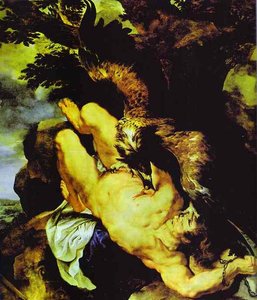
Petar Petrovič Rubins
Chained Prometheus
() ·
S okvirom: · Ručno oslikano uljanim bojama na platnu od lana
Ukupno