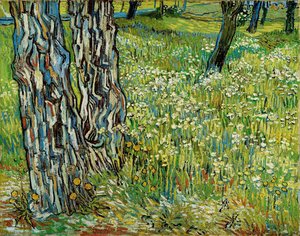
Vincent van Gogh’s “Two Diggers Among Trees”: A Study in Rural Harmony
Vincent van Gogh's "Two Diggers Among Trees," painted in 1889 during his time at the Saint-Rémy asylum, is more than just a depiction of manual labor; it’s a profound meditation on solitude, connection with nature, and the quiet dignity of everyday existence. Currently residing within the Detroit Institute of Arts, this relatively unassuming canvas—measuring 62 x 44 cm—holds an extraordinary depth of emotion and artistic innovation that continues to resonate with viewers today. The painting immediately draws the eye with its earthy palette: deep greens and browns dominate the landscape, punctuated by the vibrant blues and yellows of the sky and the figures’ clothing. This deliberate use of color isn't merely representational; it’s a key element in conveying Van Gogh’s intensely felt connection to the natural world.
At first glance, the scene presents two men engaged in digging—likely preparing a field or clearing land. Their postures are relaxed yet purposeful, suggesting a comfortable rhythm with their work. However, closer observation reveals a subtle complexity. The figures aren't presented as heroic laborers; they’re rendered with an almost gentle melancholy. Van Gogh masterfully captures the texture of their clothing and the rough earth beneath their hands, inviting us to contemplate the physicality of their labor. The birds soaring above, perched on branches, add a layer of life and movement to the otherwise still scene, hinting at a broader ecosystem beyond the immediate task at hand.
Post-Impressionist Techniques: Bold Brushstrokes and Emotional Resonance
"Two Diggers Among Trees" is a quintessential example of Van Gogh’s distinctive Post-Impressionist style. He abandons the smooth, blended brushwork favored by earlier Impressionists in favor of thick, impasto strokes—applying paint directly to the canvas with visible energy and texture. This technique isn't simply about depicting form; it’s about conveying feeling. The swirling patterns within the trees and sky suggest a sense of movement and turbulence beneath the surface tranquility of the scene. Van Gogh’s use of color is equally expressive, employing complementary hues—like blue and orange—to create visual tension and vibrancy. Notice how he uses short, broken brushstrokes to define the forms, lending them an almost vibrating quality.
The painting's composition also contributes significantly to its emotional impact. The figures are positioned on either side of the canvas, creating a sense of balance and symmetry while simultaneously emphasizing their isolation. They’re not interacting with each other; they’re absorbed in their individual tasks, suggesting a quiet solitude—a characteristic that deeply resonated with Van Gogh during his time at Saint-Rémy. The trees themselves act as a framing device, drawing the viewer's eye into the scene and creating a sense of depth.
Historical Context: Solitude and Inspiration in Arles
It’s crucial to understand that “Two Diggers Among Trees” was painted during a particularly challenging period in Van Gogh’s life. He had voluntarily admitted himself to the Saint-Rémy asylum following a mental breakdown, battling intense anxiety and hallucinations. Despite his internal struggles, he continued to paint prolifically, often finding solace and inspiration in the natural world surrounding him. This painting reflects this duality—a sense of quiet contemplation amidst inner turmoil.
The choice of subject matter – rural labor – is also significant. Van Gogh was deeply interested in depicting the lives of ordinary people, particularly those who worked the land. He saw beauty and dignity in their toil, viewing it as a connection to something larger than themselves. This interest aligns with his broader philosophical concerns about social justice and the value of honest work—themes that would later become central to his artistic vision. The painting can be viewed as an exploration of the human condition, capturing both the physical exertion and the spiritual rewards of labor.
Symbolism and Emotional Impact: A Moment of Peace
Beyond its technical brilliance, “Two Diggers Among Trees” is imbued with a powerful sense of symbolism. The trees represent stability, endurance, and connection to the earth—elements that Van Gogh sought to embody in his art. The figures themselves can be interpreted as symbols of human resilience and the ability to find peace amidst hardship. The painting’s overall mood is one of quiet contemplation and understated beauty – a rare moment of serenity captured on canvas.
Van Gogh's intention wasn’t simply to record a scene; he aimed to evoke an emotional response in the viewer. “Two Diggers Among Trees” invites us to pause, reflect, and consider our own relationship with nature, labor, and the simple pleasures of life. It remains a poignant reminder of Van Gogh’s extraordinary ability to transform ordinary subjects into works of profound beauty and enduring significance. For those seeking a tangible connection to this masterpiece, high-quality reproductions are available at TopImpressionists.com.



 Kupi otisak
 Pošalji
 Podijeli
 Detalji o umjetničkom djelu

 Preuzmi
 Slični predmeti
 Rentgenska snimka
 Automatska prezentacija


 Prikaži više






































 Opcija stakla dostupna je samo za dimenzije manje od 110 cm