Atelier — Besplatna dostava širom svijeta — Rok isporuke 2–6 tjedana
      Egon Schiele, 1890 – 1918

      Egon Schiele's 100 Most Famous Paintings

      Portret Wally (1912) is the painting Egon Schiele is best remembered for; it belongs to the Leopold Museum, Beč. Smrt i Dijeva (1915) and Samoproglasiči II (Smrt i Čovjek) (1911) complete the trio of best-loved canvases. Our catalogue counts 649 works by Egon Schiele. Here are the 100 most famous, with the year, the museum and the story of each canvas.

      Rangirano prema našoj ocjeni popularnosti, koja objedinjuje broj pretraživanja, posjeta i narudžbi za svako djelo. Ažurirano Listopad 2026. Each painting on this page can be ordered as an oil reproduction painted by hand on linen canvas, or as a fine art print, made to the size you choose.

      Portret Egon Schiele
      Egon Schiele · 1890 – 1918
      Rođen · umro
      1890 – 1918, Tulln an der Donau
      Pokret
      Ekspresionizam
      Djela u našem katalogu
      649
      Najpoznatije
      Portret Wally (1912)
      Najviše djela u
      Leopold Museum

      The ten best-loved paintings by Egon Schiele

      Portret Wally (1912) od Egon Schiele
      1

      Portret Wally

      1912 · Ulje na platnu · Leopold Museum, Beč

      Portret Wally Neuzil: Pogled u dušu ekspresionizma Egon Schieleovo "Portret Wally Neuzil" iz 1912. godine nije samo slika žene; to je duboki psihološki portret, iskrena studija ljudske ranjivosti i strasti, utkana u tkaninu austrijskog ekspresionizma. Wally, ljubavnica i muza Schielea, gleda direktno u nas, ne s idealiziranom ljepotom, već s intenzitetom koji prožima sliku gotovo opipljivim napetostima. Njezina poza je pomalo nespretna, odjeća jednostavna, a lice izražava složenost emocija –…

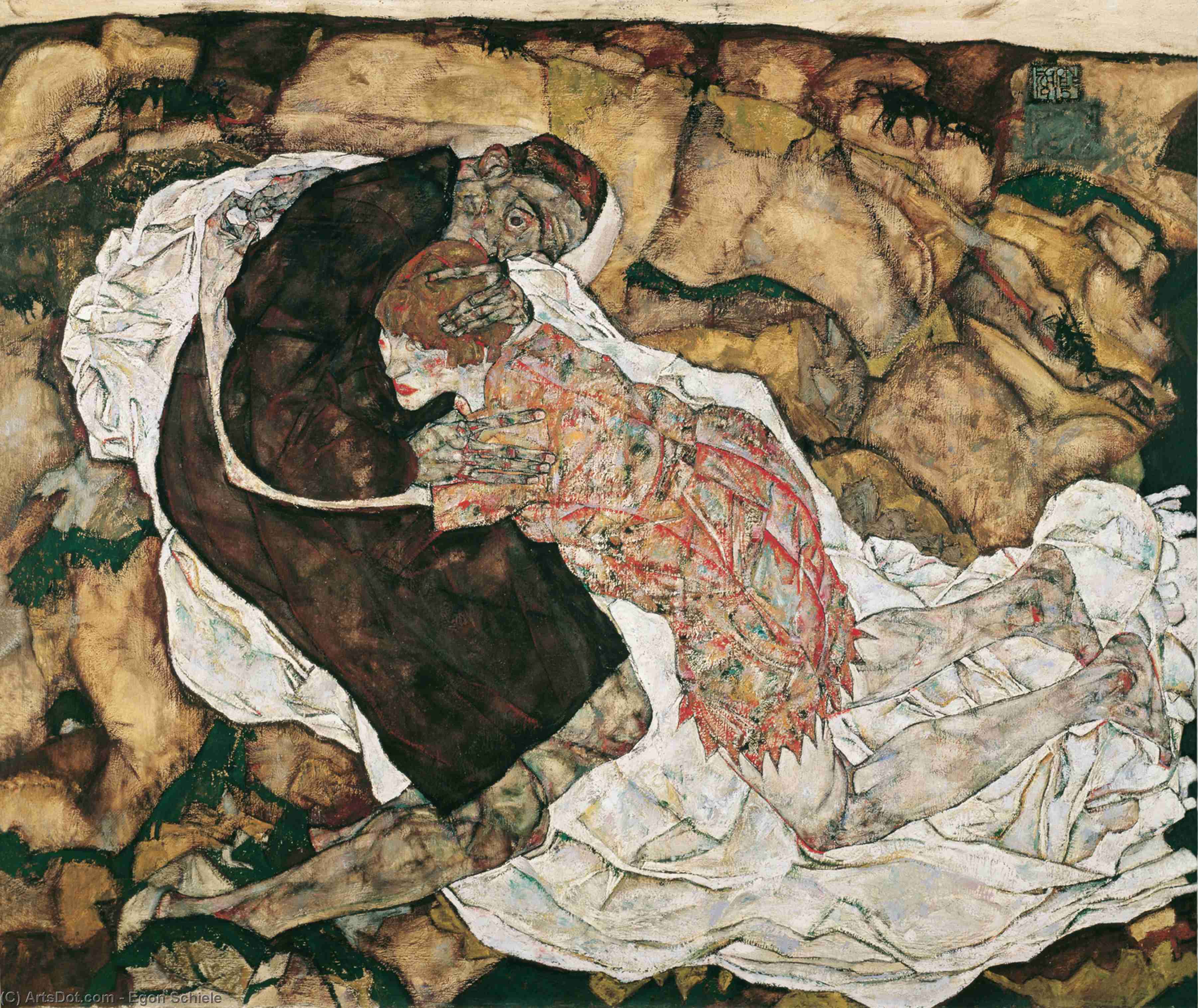
      Smrt i Dijeva (1915) od Egon Schiele
      2

      Smrt i Dijeva

      1915 · Akril na platnu · Austrijska galerija Belvedere, Beč

      Egon Schiele i "Smrt i Dijevo": Utisak Dubokog Trunka Egon Schieleova “Smrt i Dijevo” nije samo slika; ona je iskra emocije, zapanjujuća manifestacija ekspresionizma koji je definirao njegov rad. Kreirana 1915. godine, ova kompozicija se neprestano vrti oko intenzivne interakcije između dvije figure – jedna u mračnom oblačenju, druga okružena živim bojama – stvarajući vizualni sukob koji je duboko utjecao na umjetnički svijet. Schiele, obilježen tragovima vlastite života i tragičnih…

      Samoproglasiči II (Smrt i Čovjek) (1911) od Egon Schiele
      3

      Samoproglasiči II (Smrt i Čovjek)

      1911 · Ulje na platnu · Leopold Museum, Beč

      Egon Schieleov "Samopromatrači II (Smrt i Čovjek)": Pogled u Bezdan Psihe U mračnom i intrigantnom svijetu ranog ekspresionizma, Egon Schiele se ističe kao majstor introspekcije i bezkompromisnog prikazivanja ljudske psihologije. "Samopromatrači II (Smrt i Čovjek)", nastao 1911., nije samo portret; to je visceralna studija o životu, smrti i egzistencijalnoj tjeskobi koja prožima čovječanstvo. Djelo odiše atmosferom neodoljive melankolije i introspekcije, pozivajući gledatelja da se suoči s neizbježnim pitanjima o prolaznosti…

      Mater s Dvoje Djeca (1917) od Egon Schiele
      4

      Mater s Dvoje Djeca

      1917 · Ulje na platnu · Austrijska galerija Belvedere, Beč

      Egon Schieleova *Mater s Dvoje Djeca* (1917) nije samo portret; to je snažno, gotovo neizdrživo izražavanje ljudske sudbine, upijeno u tragove tuge i nade. Ova slika, trenutno smještena u Österreichische Galerie Belvedere u Beču, predstavlja ključni primjer Schieleovog izraziti stila – jedan od onih dijelova njegovog kratkog, ali iznimno utjecajnog života koji je obilježavao intenzivan pogled na ljudsku psihu i okružujuće okolnosti. U srži ovog djela leži istraživanje obiteljskih veza,…

      Obitelj (1917) od Egon Schiele
      5

      Obitelj

      1917 · Akril na platnu · Austrijska galerija Belvedere, Beč

      Egon Schieleova "Obitelj", nastala 1917., nije samo prikaz obiteljskih veza; to je snažna meditacija nad čovječanstvom. Njezin trajni privlačnost leži u sposobnosti da dotakne univerzalne emocije – ljubav, tjeskobu, ranjivost i otporljivost. Slika je svjedočenje Schieleove majstorije ekspresionizma, a njezin intenzitet i psihološka dubina čine ju privlačnom za sve koji traže umjetnost koja potiče razmišljanje i budi iskrene osjećaje.

      Lovers: Man and Woman I (1914) od Egon Schiele
      6

      Lovers: Man and Woman I

      1914 · Oil On Canvas

      Egon Schiele's 1914 painting, *Lovers: Man and Woman I*, isn’t merely a depiction of two figures; it’s a visceral exploration of human connection, vulnerability, and the unsettling beauty of mortality. Created during a period of intense personal struggle for the artist – marked by illness, loss, and a profound awareness of his own precarious existence – this work embodies the core tenets of Expressionism, translating raw emotion directly onto the…

      Self Portrait with Hands on Chest (1910) od Egon Schiele
      7

      Self Portrait with Hands on Chest

      1910 · Akril na platnu

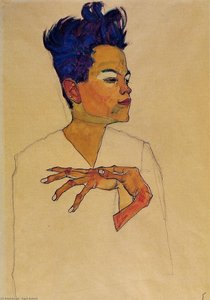
      A Window into the Soul: Egon Schiele’s ‘Self Portrait with Hands on Chest’ (1910) This striking self-portrait by Austrian Expressionist master Egon Schiele is more than just a likeness; it's a raw and unflinching exploration of inner turmoil, vulnerability, and the search for identity. Created in 1910, at a pivotal moment in both his artistic development and personal life, this work embodies the core tenets of Expressionism while establishing Schiele’s…

      Zagrljaj (Ljubavnici II) - - , (1917) od Egon Schiele
      8

      Zagrljaj (Ljubavnici II) - - ,

      1917 · Akril na platnu

      Slika prikazuje ogoljeno par zarobljen u čvrstom zagrljaju. Muška figura dominira kompozicijom, pozicionirana iznad žene, s licem pritisnutim uz njezin vrat u gesti koja je istovremeno nježna i posesivna. Njezine ruke prekrivaju njezino lice – to je dvosmislen čin koji bi mogao označavati stidljivost, zaštitu ili čak suptilni otpor. Figure su usko izrezane, ispunjavajući gotovo cijelo platno, što pojačava osjećaj klaustrofobije i intimnosti. Svirlajući pozadinski prostor, izveden u prigušenim nijansama…

      Žena u žalosti (1912) od Egon Schiele
      9

      Žena u žalosti

      1912 · Leopold Museum, Beč

      Priđite bliže i možda ćete se zapljenuti teškim, suznim očima ove žene. Ovdje vlada duboka tišina, iako ona nipošto nije mirna. Lice je blijedo, gotovo skeletno, s tamnim sjama koji se nakupljaju oko očne jagodice, sugerirajući duboko, fizičko iscrpljenost. Njezina glava prekrivena je tamnom tkaninom, detaljem koji gledatelja uvlači u njezinu privatnu tugu. Iza nje, iz mutnog pozadinskog prostora, izranja drugo, gotovo sablasno lice – muškarac čije prisustvo djeluje poput…

      Autoportret kao sveti Sebastian (plakat) (1914) od Egon Schiele
      10

      Autoportret kao sveti Sebastian (plakat)

      1914 · Grafika

      Ovo umjetničko djelo neporečivo je utemeljeno u pokretu ekspresionizma. Karakteriziran izobličenim oblicima, živopisnim, ali uznemirujućim bojama te odvažnim linijama, Schieleov stil stavlja subjektivno emocionalno iskustvo ispred realističkog prikaza. Izdužena figura, izvedena s nervoznom energijom, dominira kompozicijom. Primijetite kako crveni odjevni predmet—namjeren izbor—pojačava osjećaj drame i predosjećaja. Ovdje nije riječ o anatomskoj točnosti; riječ je o dočaravanju unutarnjeg stanja.

      Egon Schiele: canvases 11 to 100 of the ranking

      Portrait of a Woman (1912) od Egon Schiele
      #11

      Portrait of a Woman

      1912

      Egon Schiele's Portrait of a Woman, painted in 1912, stands as a cornerstone of Austrian Expressionism and a poignant exploration of psychological depth. More than just a depiction…

      Bring this light home →
      Moa (1911) od Egon Schiele
      #12

      Moa

      1911 · Leopold Museum

      Egon Schiele i ‘Moa’: Prizor Melancolije iz Sjena Vienskog Cabareta U srcu početka 20. stoljeća, u preobražavajućoj atmosferi Beča, Egon Schiele stvarao je radove koji su se istinski…

      Order this canvas →
      Agony (1912) od Egon Schiele
      #13

      Agony

      1912

      Egon Schiele, an Austrian Expressionist painter, is renowned for his intense and emotionally charged works. One such painting that exemplifies his unique style and thematic focus is "Agony",…

      Have it painted by hand →
      Portret s prugastom košulju (1910) od Egon Schiele
      #15

      Portret s prugastom košulju

      1910 · Leopold Museum

      Self-Portrait with Striped Shirt: A Window Into Schiele’s Soul Egon Schieleova "Self-Portrait with Striped Shirt", nastala 1910., prepoznaje se iznad obične reprezentacije; ona odražava anđustvo i introspekciju karakteristične…

      Order this canvas →
      Mother and Child (Madonna) (1908) od Egon Schiele
      #17

      Mother and Child (Madonna)

      1908

      In the realm of early twentieth-century modernism, few works capture the raw, psychological intimacy of human connection as poignantly as Egon Schiele’s “Mother and Child (Madonna).” Created in…

      Order this canvas →
      Two Women Embracing (1915) od Egon Schiele
      #18

      Two Women Embracing

      1915 · Szépművészeti Múzeum

      In the hauntingly beautiful realm of Austrian Expressionism, few works capture the raw, pulsating essence of human intimacy quite like Egon Schiele’s Two Women Embracing. This masterpiece serves…

      Bring this light home →
      The Artist's Mother, Sleeping (1911) od Egon Schiele
      #19

      The Artist's Mother, Sleeping

      1911

      A Portrait of Intimacy & Unease: Egon Schiele’s ‘The Artist's Mother, Sleeping’ Egon Schiele’s 1911 watercolor, *The Artist’s Mother, Sleeping*, is a profoundly moving and unsettling work that…

      Bring this light home →
      Portret Samog (1912) od Egon Schiele
      #20

      Portret Samog

      1912

      Egon Schiele (1890-1918), austrijski ekspresionistički slikar, predstavlja jedinstvenu glasnu pojavu u vrtoglavom pejzažu umjetnosti početka 20. stoljeća. Njegovo djelo karakteriziraju žiljave emocije i uznemirujući imidži – teme koje…

      Bring this light home →
      Couple Embracing od Egon Schiele
      #21

      Couple Embracing

      In the quiet, trembling lines of “Couple Embracing,” we encounter more than just a depiction of human intimacy; we witness a profound psychological excavation. Created in 1911, this…

      Have it painted by hand →
      Self-Portrait with Bare Shoulder (1912) od Egon Schiele
      #22

      Self-Portrait with Bare Shoulder

      1912 · Leopold Museum

      A single, intense gaze pierces through the heavy, agitated brushstrokes of this 1912 self-portrait. The artist’s head and shoulder occupy a tight, off-center position, creating an immediate sense…

      Bring this light home →
      Secession 49. Exhibition (1918) od Egon Schiele
      #23

      Secession 49. Exhibition

      1918

      In the hauntingly beautiful Secession 49. Exhibition, Egon Schiele invites us into a moment of profound stillness amidst the social currents of 1918 Vienna. This evocative work serves…

      Bring this light home →
      Pregnata žena i smrt (1911) od Egon Schiele
      #26

      Pregnata žena i smrt

      1911 · Nacionalna galerija u Pragu

      Egon Schieleova “Pregnancy i smrt”, nastala 1911., je duboko uznemirujuća, ali fascinantna djela koja primjeru temeljne načela ekspresionizma. Smještena u Narodnu galeriju u Pragu, Češka Republika, ova uljana…

      Order this canvas →
      Schiele: Gerti Schiele od Egon Schiele
      #29

      Schiele: Gerti Schiele

      Egon Schieleov prikaz njegove sestre, Gerti Schiele, nije samo slika; to je zagonetan i lijep istraživanje mlade dobi, ranjivosti i rastućih briga u ubrzano mijenjanoj eri. Naslikano oko…

      Order this canvas →
      Gorski torrent (1918) od Egon Schiele
      #31

      Gorski torrent

      1918

      Schieleovo djelo iz 1918. godine, Gorski torrent, nije samo prikaz brze rijeke; to je visceralni izljev duboko proživljenih umjetnikovih tjeskoba i njegova temeljita povezanost s temom smrtnosti. Stvoreno…

      Have it painted by hand →
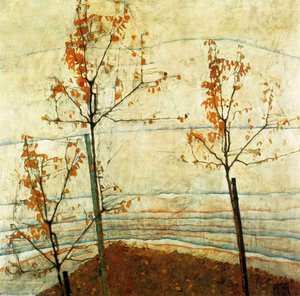
      Autumn Trees (1911) od Egon Schiele
      #32

      Autumn Trees

      1911

      Egon Schiele's "Autumn Trees," created in 1911, is a striking example of Austrian Expressionism, showcasing the artist’s unique ability to convey intense emotion through distorted forms and vibrant…

      Order this canvas →
      Portret nakaznika Eduarda Kosmacka (1910) od Egon Schiele
      #33

      Portret nakaznika Eduarda Kosmacka

      1910 · Austrijska galerija Belvedere

      U uzvišenim dvoranama galerije Belvedere u Beču postoji prozor u oluđenu psihu početka dvadesetog stoljeća. Egon Schieleov “Portret nakaznika Eduarda Kosmacka”, naslikan 1910. godine, mnogo je više od…

      Order this canvas →
      untitled (938) od Egon Schiele
      #34

      untitled (938)

      Egon Schiele's "Untitled (938)," a captivating oil on canvas, isn’t merely a depiction of two figures embracing; it’s an intensely personal exploration of vulnerability, desire, and the precariousness…

      Have it painted by hand →
      Schiele's Room in Neulengbach (1911) od Egon Schiele
      #35

      Schiele's Room in Neulengbach

      1911 · Kunsthistorisches Museum

      Egon Schiele, a prominent figure in the Expressionist movement, is renowned for his intense and emotionally charged works. One of his notable pieces, Schiele's Room in Neulengbach, offers…

      Order this canvas →
      Gustav Klimt on his deathbed (1918) od Egon Schiele
      #40

      Gustav Klimt on his deathbed

      1918 · Wien Museum

      Egon Schiele’s 1915 painting, “Death and the Maiden,” isn’t merely a depiction of mortality; it’s a profoundly intimate exploration of grief, longing, and the unsettling dance between life…

      Have it painted by hand →
      The truth unveiled - - (1913) od Egon Schiele
      #43

      The truth unveiled - -

      1913

      Egon Schiele's "The Truth Unveiled," painted in 1913, isn’t merely a depiction of figures; it’s an excavation of the human psyche, a raw and unsettling exploration of mortality,…

      Bring this light home →
      Street in Krumau (1917) od Egon Schiele
      #45

      Street in Krumau

      1917

      The narrow street of this Austrian provincial town functions as a distillation of internal tension. Painted in 1917, the work moves beyond mere topography to map a sense…

      Order this canvas →
      self-portrait (1913) od Egon Schiele
      #49

      self-portrait

      1913

      Egon Schiele’s 1913 self-portrait is not a comfortable image. It’s a visceral, almost brutal depiction of an interior world grappling with uncertainty and perhaps even despair. Rendered in…

      Have it painted by hand →
      Portret Viktora Rittera von Bauera (1918) od Egon Schiele
      #50

      Portret Viktora Rittera von Bauera

      1918 · Austrijska galerija Belvedere

      Egon Šileov „Portret Viktora Ritera von Bauera“, nasuđen 1918. godine, nije samo sličica; to je pažljivo konstruirana destilacija anksioznosti i tihe kontemplacije koja se kuha ispod površine Viladžene…

      Have it painted by hand →
      schiele agonia 1912 od Egon Schiele
      #51

      schiele agonia 1912

      In the hauntingly intimate masterpiece Agonia, painted in 1912, Egon Schiele invites the viewer into a psychological landscape where the boundaries between physical struggle and existential dread dissolve.…

      Bring this light home →
      schiele sebastian od Egon Schiele
      #53

      schiele sebastian

      Egon Schiele's "Schiele Sebastian," a pivotal work within his extensive body of nude portraits, stands as a haunting testament to the artist’s unique vision and the turbulent emotional…

      Bring this light home →
      pregnant woman death od Egon Schiele
      #54

      pregnant woman death

      In the visceral landscape of early twentieth-century Expressionism, few works possess the unsettling psychological depth found in Egon Schiele’s “Pregnant Woman and Death.” Painted in 1911, this masterpiece…

      Have it painted by hand →
      Sunflowers (1911) od Egon Schiele
      #56

      Sunflowers

      1911

      The painting Sunflowers is a watercolor by Egon Schiele created in 1911. The composition features a variety of sunflowers depicted in different stages of bloom, with some flowers…

      Order this canvas →
      untitled (2447) od Egon Schiele
      #59

      untitled (2447)

      Egon Schiele's "Untitled (2447)" is not merely a depiction of two figures; it’s a raw, intensely personal exploration of vulnerability, connection, and the unsettling beauty of human emotion.…

      Bring this light home →
      Self Portrait (1911) od Egon Schiele
      #61

      Self Portrait

      1911

      The artwork is a watercolor painting titled Self Portrait, created in 1911. It depicts a nude figure positioned centrally against a muted background. The figure's arms are outstretched…

      Have it painted by hand →
      Study of hands (1913) od Egon Schiele
      #65

      Study of hands

      1913

      Two hands emerge from a vast, pale void, locked in a grip that feels both desperate and tender. The skin appears thin, almost translucent, revealing the delicate architecture…

      Have it painted by hand →
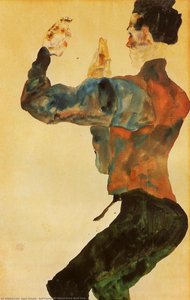
      scornful woman 1910 od Egon Schiele
      #66

      scornful woman 1910

      Egon Schiele’s “Scornful Woman,” painted in 1910, isn't merely a portrait; it’s a raw distillation of psychological turmoil and the unsettling beauty of human vulnerability. This arresting image,…

      Bring this light home →
      Reclining Female Nude (1917) od Egon Schiele
      #68

      Reclining Female Nude

      1917

      Egon Schiele's “Reclining Female Nude,” painted in 1917, stands as a poignant emblem of Expressionism—a movement characterized by raw emotion and unflinching honesty. More than just a depiction…

      Have it painted by hand →
      Autumn Sun (1912) od Egon Schiele
      #69

      Autumn Sun

      1912

      Egon Schiele, an Austrian artist known for his bold and emotive works, created the captivating painting "Autumn Sun" in 1912. This piece is a quintessential representation of the…

      Bring this light home →
      Conversion (1912) od Egon Schiele
      #70

      Conversion

      1912

      In the realm of early 20th-century art, few works capture the essence of human intimacy and emotional depth as profoundly as Egon Schiele's "Conversion." Painted in 1912, this…

      Order this canvas →
      Kneeling Young Man (1908) od Egon Schiele
      #71

      Kneeling Young Man

      1908

      Created in 1908, Kneeling Young Man is a significant work by the Austrian artist Egon Schiele. This piece emerged from the creative atmosphere of Vienna, Austria, during a…

      Have it painted by hand →
      Prostitute (Dirne) od Egon Schiele
      #72

      Prostitute (Dirne)

      Egon Schiele’s “Prostitute (Dirne)” stands as a haunting testament to the artist’s unflinching exploration of human psychology and sexuality, firmly rooted in the Expressionist movement that gripped Vienna…

      Have it painted by hand →
      Levitation (1915) od Egon Schiele
      #74

      Levitation

      1915

      Egon Schiele’s ‘Levitation,’ painted in 1915 during the height of Expressionism, isn't merely a depiction of two figures; it’s an invitation into a realm where rationality yields to…

      Have it painted by hand →
      Two young girls od Egon Schiele
      #75

      Two young girls

      An Intimate Embrace: Exploring Egon Schiele’s ‘Two Young Girls’ This captivating watercolor painting by Austrian Expressionist master, Egon Schiele, offers a profoundly intimate and emotionally charged depiction of…

      Order this canvas →
      Woman Undressing (1914) od Egon Schiele
      #76

      Woman Undressing

      1914

      In 1914, the artist Egon Schiele captured a singular moment of transition in Vienna, Austria. The work, titled Woman Undressing, presents a female nude in a state of…

      Order this canvas →
      Lovemaking (1915) od Egon Schiele
      #78

      Lovemaking

      1915 · Leopold Museum

      Egon Schiele's "Lovemaking," painted in 1915, is not a celebration of romantic bliss; rather, it’s a brutally honest and profoundly unsettling exploration of human connection – a moment…

      Order this canvas →
      Reclining Female Nude (1908) od Egon Schiele
      #79

      Reclining Female Nude

      1908

      is a watercolor and paper work created by the Austrian Expressionist Egon Schiele in 1908. This nude painting (nu) reflects the artist's departure from academic traditions toward a…

      Order this canvas →
      Moa (1911) od Egon Schiele
      #81

      Moa

      1911

      Egon Schiele’s “Moa”: A Study in Vulnerability and Expressionist Boldness The painting "Moa" by Egon Schiele, created in 1911, stands as a haunting testament to the artist's preoccupation…

      Order this canvas →
      untitled (5287) od Egon Schiele
      #82

      untitled (5287)

      In the quiet, unsettling depths of Egon Schiele’s Untitled (5287), one encounters more than just a figure study; one enters a profound psychological landscape. This work, a hauntingly…

      Have it painted by hand →
      The Bridge (1913) od Egon Schiele
      #83

      The Bridge

      1913

      Egon Schiele’s “The Bridge,” painted in 1913, stands as a cornerstone of early 20th-century Expressionist art—a movement that sought to convey raw emotion and psychological intensity rather than…

      Have it painted by hand →
      untitled (7272) od Egon Schiele
      #84

      untitled (7272)

      Egon Schiele's "Untitled (7272)" is not merely a depiction of a reclining figure; it’s an immersion into the raw, unsettling heart of the Expressionist soul. Painted in 1918,…

      Bring this light home →
      Reclining Girl, with Round Head od Egon Schiele
      #85

      Reclining Girl, with Round Head

      A Study in Vulnerability: Egon Schiele’s ‘Reclining Girl, with Round Head’ Egon Schiele's *Reclining Girl, with Round Head* is a profoundly moving watercolor that encapsulates the core tenets…

      Order this canvas →
      untitled (6044) od Egon Schiele
      #88

      untitled (6044)

      A man stares directly at the viewer, his expression caught in a moment of intense, perhaps even grotesque, animation. He wears a white shirt and tie, the formality…

      Order this canvas →
      Seated Couple, 1915 (1915) od Egon Schiele
      #92

      Seated Couple, 1915

      1915 · Albertina

      A Moment Frozen in Time: Exploring Egon Schiele’s “Seated Couple” The painting "Seated Couple," completed in 1915 by Austrian Expressionist Egon Schiele, transcends mere depiction; it embodies a…

      Order this canvas →
      Nude Self-Portrait (1910) od Egon Schiele
      #93

      Nude Self-Portrait

      1910 · Leopold Museum

      A Portrait of Vulnerability: Exploring Egon Schiele’s ‘Nude Self-Portrait’ The painting “Nude Self-Portrait” by Austrian Expressionist Egon Schiele stands as a haunting testament to the artist's preoccupation with…

      Bring this light home →
      Krumau Town Crescent I (1915) od Egon Schiele
      #94

      Krumau Town Crescent I

      1915 · Izraelski muzej

      Egon Schiele's *Krumau Town Crescent I*, painted in 1915, isn’t merely a depiction of a provincial Austrian town; it’s a raw, intensely personal exploration of mortality, isolation, and…

      Have it painted by hand →
      untitled (1348) od Egon Schiele
      #96

      untitled (1348)

      In the hauntingly beautiful monochrome sketch untitled (1348), Egon Schiele invites us into a profound confrontation with the human psyche. Created around 1918, during the twilight of his…

      Have it painted by hand →
      Female nude (1910) od Egon Schiele
      #97

      Female nude

      1910

      Egon Schiele’s Intimate Exploration of the Human Form This captivating work on paper by Egon Schiele, created in 1910, offers a poignant glimpse into the artist's exploration of…

      Have it painted by hand →
      Procession (1911) od Egon Schiele
      #99

      Procession

      1911

      In the hauntingly beautiful masterpiece "Procession," created in 1911, Egon Schiele invites us into a psychological landscape where the boundaries between reality and inner turmoil dissolve. This seminal…

      Order this canvas →

      Egon Schiele's canvases, period by period

      What Egon Schiele painted most

      The four subjects that return most often on these canvases, each with its best-loved example.

      Where Egon Schiele's canvases hang

      8 muzeja u kojima se nalazi najviše djela s ove stranice.

      Muzej Grad Djela autora Egon Schiele Slike iz ovog popisa
      Leopold Museum, BečLeopold Museum Beč 46 Portret Wally, Samoproglasiči II (Smrt i Čovjek), Žena u žalosti
      Austrijska galerija Belvedere, BečAustrijska galerija Belvedere Beč 10 Smrt i Dijeva, Mater s Dvoje Djeca, Obitelj
      Albertina, BečAlbertina Beč 10 Girl Nude with Folded Arms, 1910, I Will Gladly Endure for Art and My Loved Ones, 1912, Seated Couple, 1915
      Kunsthistorisches Museum, BečKunsthistorisches Museum Beč 4 Schiele's Room in Neulengbach
      Wien Museum, BečWien Museum Beč 2 Gustav Klimt on his deathbed
      Szépművészeti Múzeum, BudimpeštaSzépművészeti Múzeum Budimpešta 1 Two Women Embracing
      Staatsgalerie Stuttgart, StuttgartStaatsgalerie Stuttgart Stuttgart 1 Prophets (also known as Double Self Portrait)
      Nacionalna galerija u Pragu, PragNacionalna galerija u Pragu Prag 1 Pregnata žena i smrt

      Egon Schiele's most famous canvases, one year after another

      Between 1907 and 1918, 12 years of Egon Schiele's painting, shown year after year through its most famous canvases.

      1. 1907
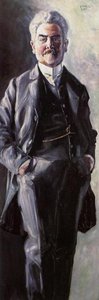
        Portrait of Leopold Czihaczek (1907) od Egon Schiele
        Canvas 52 of 100

        Portrait of Leopold Czihaczek

        Godine 17

        Egon Schiele's 1907 “Portrait of Leopold Czihaczek” is more than just a likeness; it’s a raw, intensely personal exploration of the human condition. This oil on canvas painting,…

      2. 1907
        Portrait of Leopold Czihaczek, Standing (1907) od Egon Schiele
        55 of 100

        Portrait of Leopold Czihaczek, Standing

        Godine 17

        In the hauntingly beautiful Portrait of Leopold Czihaczek, Standing, Egon Schiele invites us into a space where the boundaries between physical representation and psychological truth dissolve. Created in…

      3. 1908
        Mother and Child (Madonna) (1908) od Egon Schiele
        17 of 100

        Mother and Child (Madonna)

        Godine 18

        In the realm of early twentieth-century modernism, few works capture the raw, psychological intimacy of human connection as poignantly as Egon Schiele’s “Mother and Child (Madonna).” Created in…

      4. 1908
        Kneeling Young Man (1908) od Egon Schiele
        Canvas 71 of 100

        Kneeling Young Man

        Godine 18

        Created in 1908, Kneeling Young Man is a significant work by the Austrian artist Egon Schiele. This piece emerged from the creative atmosphere of Vienna, Austria, during a…

      5. 1909
        Man with Blue Headband and Hand on Cheek (1909) od Egon Schiele
        Canvas 57 of 100

        Man with Blue Headband and Hand on Cheek

        Godine 19

        A Window into the Soul: Egon Schiele’s ‘Man with Blue Headband and Hand on Cheek’ This captivating drawing by Egon Schiele, created in 1909, is a powerful example…

      6. 1909
        Autumn Tree with Fuchsias (1909) od Egon Schiele
        Ranked 86 of 100

        Autumn Tree with Fuchsias

        Godine 19

        In the heart of the early twentieth century, amidst the intellectual ferment of Vienna, Egon Schiele captured a moment of profound emotional resonance in his 1909 masterpiece, Autumn…

      7. 1910
        Self Portrait with Hands on Chest (1910) od Egon Schiele
        Canvas 7 of 100

        Self Portrait with Hands on Chest

        Godine 20

        A Window into the Soul: Egon Schiele’s ‘Self Portrait with Hands on Chest’ (1910) This striking self-portrait by Austrian Expressionist master Egon Schiele is more than just a…

      8. 1910
        Kompozicija s tri мушка обнажена tijela (1910) od Egon Schiele
        Canvas 14 of 100

        Kompozicija s tri мушка обнажена tijela

        Godine 20 · Leopold Museum

        A Fragile Dance of Form: Exploring Egon Schiele’s ‘Composition with Three Male Nudes’ Egon Schiele's 1910 *Composition with Three Male Nudes* je temeljna djela koja sadržavaju radnika naglask…

      9. 1911
        Samoproglasiči II (Smrt i Čovjek) (1911) od Egon Schiele
        Canvas 3 of 100

        Samoproglasiči II (Smrt i Čovjek)

        Godine 21 · Leopold Museum

        Egon Schieleov "Samopromatrači II (Smrt i Čovjek)": Pogled u Bezdan Psihe U mračnom i intrigantnom svijetu ranog ekspresionizma, Egon Schiele se ističe kao majstor introspekcije i bezkompromisnog prikazivanja…

      10. 1911
        Moa (1911) od Egon Schiele
        12 of 100

        Moa

        Godine 21 · Leopold Museum

        Egon Schiele i ‘Moa’: Prizor Melancolije iz Sjena Vienskog Cabareta U srcu početka 20. stoljeća, u preobražavajućoj atmosferi Beča, Egon Schiele stvarao je radove koji su se istinski…

      11. 1912
        Portret Wally (1912) od Egon Schiele
        Canvas 1 of 100

        Portret Wally

        Godine 22 · Leopold Museum

        Portret Wally Neuzil: Pogled u dušu ekspresionizma Egon Schieleovo "Portret Wally Neuzil" iz 1912. godine nije samo slika žene; to je duboki psihološki portret, iskrena studija ljudske ranjivosti…

      12. 1912
        Žena u žalosti (1912) od Egon Schiele
        Canvas 9 of 100

        Žena u žalosti

        Godine 22 · Leopold Museum

        Priđite bliže i možda ćete se zapljenuti teškim, suznim očima ove žene. Ovdje vlada duboka tišina, iako ona nipošto nije mirna. Lice je blijedo, gotovo skeletno, s tamnim…

      13. 1912
        Portrait of a Woman (1912) od Egon Schiele
        Ranked 11 of 100

        Portrait of a Woman

        Godine 22

        Egon Schiele's Portrait of a Woman, painted in 1912, stands as a cornerstone of Austrian Expressionism and a poignant exploration of psychological depth. More than just a depiction…

      14. 1913
        The truth unveiled - - (1913) od Egon Schiele
        Ranked 43 of 100

        The truth unveiled - -

        Godine 23

        Egon Schiele's "The Truth Unveiled," painted in 1913, isn’t merely a depiction of figures; it’s an excavation of the human psyche, a raw and unsettling exploration of mortality,…

      15. 1913
        Wally with a Red Blouse (1913) od Egon Schiele
        Canvas 46 of 100

        Wally with a Red Blouse

        Godine 23

        In the turbulent landscape of early 20th-century Vienna, few images capture the fractured psyche of an era as poignantly as Egon Schiele’s “Wally with a Red Blouse.” Painted…

      16. 1914
        Lovers: Man and Woman I (1914) od Egon Schiele
        Canvas 6 of 100

        Lovers: Man and Woman I

        Godine 24

        Egon Schiele's 1914 painting, *Lovers: Man and Woman I*, isn’t merely a depiction of two figures; it’s a visceral exploration of human connection, vulnerability, and the unsettling beauty…

      17. 1914
        Autoportret kao sveti Sebastian (plakat) (1914) od Egon Schiele
        10 of 100

        Autoportret kao sveti Sebastian (plakat)

        Godine 24

        Ovo umjetničko djelo neporečivo je utemeljeno u pokretu ekspresionizma. Karakteriziran izobličenim oblicima, živopisnim, ali uznemirujućim bojama te odvažnim linijama, Schieleov stil stavlja subjektivno emocionalno iskustvo ispred realističkog prikaza.…

      18. 1915
        Smrt i Dijeva (1915) od Egon Schiele
        2 of 100

        Smrt i Dijeva

        Godine 25 · Austrijska galerija Belvedere

        Egon Schiele i "Smrt i Dijevo": Utisak Dubokog Trunka Egon Schieleova “Smrt i Dijevo” nije samo slika; ona je iskra emocije, zapanjujuća manifestacija ekspresionizma koji je definirao njegov…

      19. 1915
        Two Women Embracing (1915) od Egon Schiele
        Ranked 18 of 100

        Two Women Embracing

        Godine 25 · Szépművészeti Múzeum

        In the hauntingly beautiful realm of Austrian Expressionism, few works capture the raw, pulsating essence of human intimacy quite like Egon Schiele’s Two Women Embracing. This masterpiece serves…

      20. 1916
        Portrait of an Old Man (also known as Johann Harms) (1916) od Egon Schiele
        Canvas 48 of 100

        Portrait of an Old Man (also known as Johann Harms)

        Godine 26 · Solomon R. Guggenheim Museum

        Egon Schiele's “Portrait of an Old Man (also known as Johann Harms),” painted in 1916, is not merely a likeness; it’s a profound meditation on aging, mortality, and…

      21. 1917
        Mater s Dvoje Djeca (1917) od Egon Schiele
        Canvas 4 of 100

        Mater s Dvoje Djeca

        Godine 27 · Austrijska galerija Belvedere

        Egon Schieleova *Mater s Dvoje Djeca* (1917) nije samo portret; to je snažno, gotovo neizdrživo izražavanje ljudske sudbine, upijeno u tragove tuge i nade. Ova slika, trenutno smještena…

      22. 1917
        Obitelj (1917) od Egon Schiele
        5 of 100

        Obitelj

        Godine 27 · Austrijska galerija Belvedere

        Egon Schieleova "Obitelj", nastala 1917., nije samo prikaz obiteljskih veza; to je snažna meditacija nad čovječanstvom. Njezin trajni privlačnost leži u sposobnosti da dotakne univerzalne emocije – ljubav,…

      23. 1917
        Zagrljaj (Ljubavnici II) - - , (1917) od Egon Schiele
        Canvas 8 of 100

        Zagrljaj (Ljubavnici II) - - ,

        Godine 27

        Slika prikazuje ogoljeno par zarobljen u čvrstom zagrljaju. Muška figura dominira kompozicijom, pozicionirana iznad žene, s licem pritisnutim uz njezin vrat u gesti koja je istovremeno nježna i…

      24. 1918
        Secession 49. Exhibition (1918) od Egon Schiele
        Ranked 23 of 100

        Secession 49. Exhibition

        Godine 28

        In the hauntingly beautiful Secession 49. Exhibition, Egon Schiele invites us into a moment of profound stillness amidst the social currents of 1918 Vienna. This evocative work serves…

      25. 1918
        Gorski torrent (1918) od Egon Schiele
        Canvas 31 of 100

        Gorski torrent

        Godine 28

        Schieleovo djelo iz 1918. godine, Gorski torrent, nije samo prikaz brze rijeke; to je visceralni izljev duboko proživljenih umjetnikovih tjeskoba i njegova temeljita povezanost s temom smrtnosti. Stvoreno…

      Egon Schiele's canvases, question by question

      Which canvas is Egon Schiele most remembered for?Read the answer

      Portret Wally (1912), Leopold Museum, Beč. Smrt i Dijeva (1915) and Samoproglasiči II (Smrt i Čovjek) (1911) follow.

      Portret Wally: how old was Egon Schiele when it was painted?Read the answer

      Egon Schiele, born in 1890, was 22 years old: Portret Wally dates from 1912.

      What are Egon Schiele's ten most famous canvases?Read the answer

      Portret Wally, Smrt i Dijeva, Samoproglasiči II (Smrt i Čovjek), Mater s Dvoje Djeca, Obitelj, Lovers: Man and Woman I, Self Portrait with Hands on Chest, Zagrljaj (Ljubavnici II) - - ,, Žena u žalosti i Autoportret kao sveti Sebastian (plakat). Each canvas in the ranking above comes with its year and its museum.

      How many paintings did Egon Schiele create?Read the answer

      649 works by Egon Schiele are in our catalogue, dated 1907 to 1918.

      Where do Egon Schiele's most famous canvases hang today?Read the answer

      Mostly in Leopold Museum (Beč), Austrijska galerija Belvedere (Beč) i Albertina (Beč); the list above names each museum and its canvases.

      When did Egon Schiele paint the most famous canvases?Read the answer

      In 1911, which gave 13 of the 100 works on this page, Samoproglasiči II (Smrt i Čovjek) among them.

      Which famous Egon Schiele canvas came first, and which came last?Read the answer

      The earliest canvas here is Portrait of Leopold Czihaczek (1907); the latest is Secession 49. Exhibition (1918).

      Which subjects did Egon Schiele paint most?Read the answer

      Mortality (26), Vienna (17) i Anxiety (15), across the 100 works on this page.

      Which medium appears most in Egon Schiele's paintings?Read the answer

      Acrylic On Canvas, used in 29 of the 100 works on this page.

      Which movement is Egon Schiele associated with?Read the answer

      Ekspresionizam, as the canvases on this page show.

      Which paintings by Egon Schiele are held by the Leopold Museum?Read the answer

      The Leopold Museum, Beč holds 17 of the works on this page, among them Portret Wally, Samoproglasiči II (Smrt i Čovjek) i Žena u žalosti.

      Where can I buy a reproduction of a Egon Schiele painting?Read the answer

      Yes. Every painting on this page can be ordered from its own page as an oil reproduction painted by hand, or as a fine art print, in the size you choose.

      Meet the painter: Egon Schiele

      The Life of Egon Schiele

      Tulln, Lower Austria, provides the setting for the beginning of Egon Schiele’s life. Born on 12 June 1890, he enters a world defined by the rigid structures of the Austro-Hungarian Empire. His father, Adolf Schiele, manages the local station as the station master for the Austrian Federal Railways. His mother, Marie, is known by her maiden name, Soukup. Within the family, Egon grows alongside his three sisters: Elvira, Melanie, and Gertrude.

      The stability of this domestic life fractures early. The shadow of illness moves through the household, leaving a permanent mark on the young artist's psyche. These personal disruptions do not merely pass; they settle into the marrow of his future work. He moves through the world with a sensitivity to mortality that will eventually define his place in Austrian Expressionism. His existence becomes a struggle to translate internal tension onto the surface of the canvas.

      His path leads him toward the center of a shifting European landscape. He navigates the tension between traditional academic expectations and a burgeoning need for raw, psychological truth. The life of Egon Schiele is a series of intense, often uncomfortable confrontations with the human condition. He does not seek to depict the world as it appears to the eye, but as it vibrates within the nervous system.

      Early Life, Family and Training

      The stability of Schiele's youth fractures in 1904. His father, Adolf Schiele, a station master, succumbs to syphilis. This illness, contracted during a honeymoon in Trieste, leaves the family impoverished and the young artist's psyche marked by the shadow of his father's mental confusion and rage. Egon grows up alongside his three sisters, Elvira, Melanie, and Gertrude, under the guardianship of his uncle-in-law, Leopold Czihaczek. Even in these turbulent years, a fascination with trains persists, a motif that would later surface in his work.

      Formal training begins under the guidance of tutor Ludwig Karl Strauch. By 1906, Schiele moves to Vienna to study at the Academy of Fine Arts (Akademie der bildenden Künste). The atmosphere is rigid. He finds himself increasingly at odds with the ultra-conservative teaching of Professor Christian Griepenkerl. The friction becomes unsustainable. After three years of navigating these strict academic traditions, Schiele abandons the Academy altogether to forge an independent path.

      A shift occurs when he encounters Gustav Klimt. The established artist becomes a mentor, providing the young painter with models and introducing him to the circles of the Vienna Secession. This connection marks the transition from a student struggling against tradition to a central figure in the burgeoning avant-garde.

      Artistic Development in Vienna

      Vienna becomes the center of Schiele's creative friction. He moves through the city's artistic circles, eventually meeting Gustav Klimt. This encounter marks a significant shift in his trajectory. While he absorbs the influence of his mentor, Schiele does not simply replicate the decorative patterns of the Secession. Instead, he begins to strip away the ornamentation. He seeks a more visceral truth. By 1909, he is actively challenging the established order, co-founding the Neues Wiener Kunstgruppe and the Neukunstgruppe. These movements signal his break from tradition.

      His presence in the city is marked by a restless movement between urban centers and quieter outskirts. He works across Vienna, Krems, Klosterneuburg, Neulengbach, and Prague. This geographic spread mirrors a psychological expansion. His art moves from the formal constraints of his early training toward a raw, unshielded exploration of the human condition. The tension of the era is visible in his evolving sketches and compositions.

      Technique and Expressionist Style

      The line is the primary engine of Schiele’s vision. It does not merely outline a form; it vibrates with a nervous, restless energy. He employs expressive lines to map out psychological tension, often resulting in contorted poses and twisted body shapes. Figures appear elongated, their limbs stretched beyond natural proportions to convey a sense of unease. This is not a pursuit of anatomical perfection but an attempt to expose the internal state of the subject. Skin tones often appear emaciated or sickly-coloured, emphasizing a sense of fragility and physical vulnerability.

      His technical approach varies by medium, yet the intensity remains constant. In his watercolors, he utilizes loose washes of color to create depth and mood, often leaving much of the paper bare to heighten the sense of isolation. When working in oil on canvas, the brushwork carries the same jagged urgency found in his drawings. Beyond the two-dimensional plane, he also explored form through sculpture, working in clay and plaster to capture the weight of the human presence.

      Key Works and Subject Matter

      The canvas becomes a site of psychological excavation. Schiele confronts the heavy presence of death, sexuality, anxiety, and isolation through a lens of unflinching honesty. In 1915, he produces Death and the Maiden, a work where the presence of mortality intersects with eros. The figures exist in a state of tension, reflecting the internal struggles that define his vision. He often returns to the human form to map these invisible states, using the body as a vessel for the complexities of existence.

      Self-portraiture acts as a recurring method of introspection. He does not seek to present a polished image but rather a vulnerable one, often appearing in contorted or emaciated states. In Self-Portrait with Physalis, he utilizes the Physalis plant as a recurring motif. The plant, with its delicate and papery husk, symbolizes transience and the fragility of life. This botanical element anchors his preoccupation with decay and the fleeting nature of the human condition.

      His intimate connections also find their way into his compositions. In 1915, he paints Portrait of Edith Schiele, capturing his wife in a way that reflects his specific expressive language. His subjects are rarely static; they pulse with a nervous energy that mirrors the shifting social and psychological landscapes of the era. The following works represent significant points in his exploration of these themes:

      Later Years and Death

      The landscape of Schiele's life shifts as the First World War approaches. He marries Edith Harms, a union that marks a significant personal transition. However, the stability of marriage is quickly interrupted by the demands of the conflict. He is drafted into military service, a period that places him within the chaos of the war's reach.

      The end arrives with sudden, biological ferocity. In 1918, the Spanish flu pandemic sweeps through Vienna. The virus claims Schiele at the age of 28. He dies on 31 October 1918. His passing occurs shortly after the death of his wife, Edith, who succumbed to the same disease. The artist's life ends abruptly, leaving behind a body of work that captures the tension of a world in collapse.

      Legacy and Artistic Influence

      Schiele emerges from the early 20th century as a leading figure in Austrian Expressionism. His departure from the decorative gold of the Secession movement toward a more visceral, psychological exploration of the human form changed the trajectory of figurative painting. He stripped away the surface to map the nervous system, using jagged, restless lines to capture the tremors of anxiety and desire. This focus on the internal landscape rather than idealized beauty established him as a major figurative painter of the era.

      The impact of his work extends far beyond the borders of Vienna. Subsequent generations of artists find a precedent in his radical honesty, particularly those drawn to the darker, more complex layers of the human psyche. His ability to translate personal trauma and existential tension into a universal visual language ensures his presence in the discourse of modern art. Today, his paintings are held in major museum collections worldwide, preserved as essential records of the psychological shifts of his time.

      Where to See the Works Today

      The weight of Schiele’s output is felt most heavily in Vienna. The Leopold Museum holds a vast concentration of his works, preserving the raw energy of his sketches and paintings. Nearby, the Österreichische Galerie Belvedere houses significant canvases, including Death and the Maiden (1915). The city’s institutional landscape continues to guard his legacy through the Kunsthistorisches Museum and the Albertina, both of which contain essential pieces of his oeuvre.

      Beyond the Austrian capital, the Egon Schiele Art Centrum in Český Krumlov, Czech Republic, offers a dedicated space for his work. This museum traces his evolution through a permanent collection that includes watercolors and ink drawings. Visitors can encounter the specific intensity of his linework in this setting, which focuses on the development of his expressive style.

      Sva 649 djela umjetnika Egon Schiele →