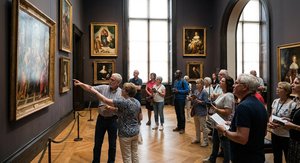
Gemäldegalerie Alte Meister: A Sanctuary of Light and Shadow
Nestled within the opulent Zwinger palace complex in Dresden, Germany, the Gemäldegalerie Alte Meister isn’t merely a museum; it's a time machine. Stepping through its doors is akin to entering a meticulously preserved echo chamber of European artistic genius, a place where the brushstrokes of masters like Raphael, Titian, and Rembrandt still resonate with an almost palpable energy. More than simply housing paintings, the gallery embodies a profound understanding of light, color, and the very essence of human emotion – a legacy painstakingly rebuilt after the devastation of World War II, yet retaining its core spirit of scholarly dedication and artistic reverence.
The Collection: A Treasure Trove of Renaissance Brilliance
At the heart of the Gemäldegalerie’s allure lies its extraordinary collection of Italian Renaissance and Baroque paintings. The gallery boasts an unparalleled concentration of works by Raphael, Titian, Giorgione, Correggio, Tintoretto, and Veronese – masters who revolutionized painting through their innovative use of perspective, *chiaroscuro* (the dramatic interplay of light and shadow), and color palettes. These artists didn’t simply depict reality; they sculpted it with light and shade, imbuing their subjects with an unprecedented sense of realism and emotional depth. Beyond Italy, the gallery's holdings are equally impressive, showcasing a remarkable assemblage of Dutch and Flemish paintings from the 17th century – spearheaded by Rembrandt and Rubens. The sheer scale and quality of these works, particularly Rembrandt’s evocative portraits and landscapes, demonstrate the profound influence of Northern European art on the development of painting techniques. Among the most celebrated pieces are Raphael's "Madonna Sistina," a masterpiece of serene beauty that captures the divine grace of motherhood, and Titian’s “Flora,” an opulent depiction of mythological allegory brimming with vibrant colors and sensual detail.
Architectural Harmony: The Zwinger Palace – A Stage for Artistic Vision
The Gemäldegalerie’s setting within the Zwinger palace is itself a testament to architectural grandeur. Designed by Matthäus Daniel Poppelmann in the Neoclassical style, the Semper Gallery – named after Lorenz Niemeyer, who oversaw its construction – provides an exquisitely harmonious backdrop for the artworks it houses. The soaring ceilings, meticulously proportioned spaces, and abundant natural light were deliberately conceived to enhance the perception of color and form, creating an immersive experience that invites contemplation and deep appreciation. Poppelmann’s design reflects Enlightenment ideals of rationality and order, offering a striking contrast to the exuberant Baroque style prevalent in earlier centuries. The gallery's very structure feels like a carefully orchestrated stage for the masterpieces within, allowing them to breathe and speak.
A Legacy Forged in Fire: Dresden’s Resilience After WWII
The history of the Gemäldegalerie is inextricably linked to the tragic events of World War II. The bombing of Dresden in 1945 resulted in the destruction of much of the Zwinger palace complex and the irreplaceable loss of countless artworks – a devastating blow to the city’s cultural heritage. Yet, from the ashes emerged an extraordinary spirit of determination, fueled by an unwavering belief that art's enduring power transcends physical ruin. The meticulous reconstruction efforts, guided by a commitment to honoring the memory of those lost and safeguarding artistic legacies for future generations, stand as a poignant testament to this resilience. Today, visitors can experience firsthand the profound beauty and intellectual stimulation that characterized Dresden’s golden age, ensuring that its artistic heritage continues to inspire awe and wonder for centuries to come.
Additional Resources: Exploring Dresden's Artistic Soul
- Official Website: Gemäldegalerie Alte Meister
- Related Museums in Dresden: State Art Collections Dresden (includes Zwinger, New Masters Gallery, Porcelain Collection)