

 Előnézet
 Megosztás
 Megosztás
 Részletek
 Útmutató

 Letöltés
 Hasonló darabok
 X-ray felvétel
 Diavetítés
 Statisztika
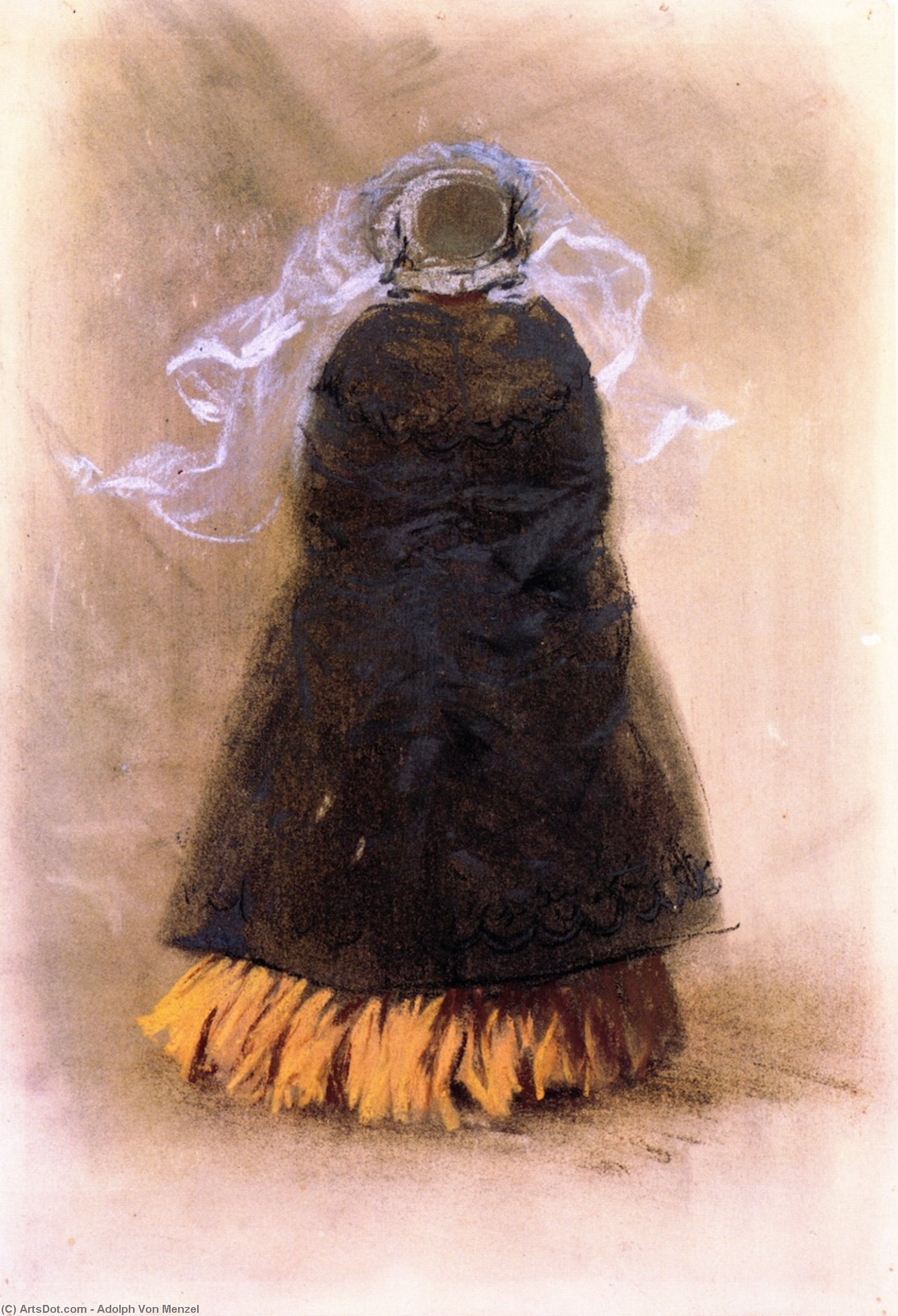
Lady with Hat and Veil, Viewed from Behind


Admire Adolph von Menzel’s ‘Lady with Hat,’ a haunting Impressionistic portrait of veiled sorrow. Explore its muted tones, fluid lines & symbolic depth – a masterpiece of 19th-century realism.
 Tovább olvasom
Menzel Adolph (1815-1905): A német realista festő, aki a 19. század életét és ipari jeleneteit ábrázolta részletesen. Fedezd fel műveit és befolyásait! #Menzel
Kézzel készített olajfestmény reprodukció
Kézzel festett olajvastú vászon, az Ön által választott méretben és keretben, művészeink készítik meglévőre. ( Váltás nyomtatványra Áttérés digitális képre)




P118B $10

P118H $10

P118W $10

P438Z $10

P508JH $12

P508YH $12

P805H $10

P805Z $10

P919BZ $10

P919G $10

P919XJ $10

P959ZH $10

P968JZ $12

W106C $8

W218G $10

W218JH $8

W218Y $10

W307PJ $10

W316G $10

W316PJ $8

W316Y $10

W398PJ $8

W4111J $10

W500HY $15

W500JH $15

W692G $12

W849H $8

W940BG $15

W953PJ $8




Standard méret
egyedi
CM
INCH
Válasszon előre meghatározott méreteink közül, amelyek megfelelnek a műalkotás eredeti arányainak.
Loading sizes...

szélesség
magasság
Ön megadhat saját méreteket egy adott kerethez vagy térhez igazításhoz. Ha a kiválasztott méret nem egyezik az eredeti kép arányával, akkor a műalkotást levágjuk, vagy további kézzel festett elemekkel meghosszabbítjuk a festményt. A gyártás megkezdése előtt küldünk Önnek egy digitális előnézetet jóváhagyásra.
Kérjük, vegye figyelembe, hogy a képernyőn megjelenő előnézet nem tükrözi a tényleges vágást vagy kiterjesztést. Csak az előnézet fog pontosan mutatni a végső kompozíciót.
Bár egyedi méretek állnak rendelkezésre, javasoljuk, hogy válasszon egy méretet az előre meghatározott listából az eredeti arányok megőrzése érdekében.
Példák arra, mit lehet módosítani: az arc kicserélése az ügyfél fotójára; háziállat hozzáadása (pl. macska helyett kutya); rejtett üzenet elhelyezése a háttérben; a háttér tájának vagy elemeinek megváltoztatása.
A rendelést követően a TopImpressionists.com csapata e-mailt küld az ügyfélnek az instrukciókért, és biztosít egy előnézeti képet (mockup).
A rendelést követően a TopImpressionists.com csapata e-mailt küld az ügyfélnek az instrukciókért, és biztosít egy előnézeti képet (mockup).
Világszerte elérhető szállítás () 3-4 hét alatt a szokásos 5 hét helyett. (23 szeptember). A minőség nem kérdőjelezhető.

Ingyenes globális expressz szállítás

Prémium minőségű len vászon

Teljes körű szállítási biztosítás

Vámvisszatérítési Garancia

Tökéletes színarányosság garancia

100 napos visszaküldési garancia (csak gyártási hibás termékek esetén)

100% pénzvisszatérítési garancia

Több darab vásárlásakor kedvezmény
 Az üvegkeretes opció csak 110 cm alatti méretben érhető el

Lady with Hat and Veil, Viewed from Behind
Reprodukciós technika
Reprodukció méretei
-


Összesített ár
$ 269
A Vision of Veiled Sorrow
In the quiet, evocative depths of Adolph von Menzel’s Lady with Hat and Veil, Viewed from Behind, we encounter a moment suspended in time, captured with a hauntingly beautiful sensitivity. This masterpiece, dating back to 1850, transcends mere portraiture to become an atmospheric meditation on mystery and the ephemeral nature of presence. The subject, seen from behind, is shrouded in a delicate white veil that clings to her form, creating a sense of profound intimacy and distance all at once. As she stands centrally yet slightly off-center within the frame, there is a palpable feeling of imbalance, as if the weight of her unseen emotions pulls at the very composition itself. The muted palette of pale beiges, deep browns, and a sudden, soft splash of yellow from her skirt works in harmony to evoke a somber, dreamlike state that lingers in the viewer's mind long after the first glance.
The technique employed by Menzel in this work showcases a masterful command of Impressionistic sensibilities well before the movement reached its peak. Through a delicate wet-on-wet blending process, the artist allows colors to merge and soften, erasing harsh boundaries and replacing them with fluid, organic shapes. The brushstrokes are loose and expressive, lending a sense of movement to the heavy fabrics and the light, translucent veil. This layering of oil paint creates a rich, tactile texture that gives the canvas an almost ethereal, hazy quality. There is no sharp definition here; instead, the background merges seamlessly into the figure, flattening the perspective and creating a shallow space that forces the observer to focus entirely on the emotional resonance of the subject's silhouette.
Symbolism and the Art of Observation
Beyond its technical brilliance, the painting serves as a profound exploration of symbolism. The veil, a classic motif in art history, acts as a barrier between the seen and the unseen, representing themes of mourning, grief, or perhaps the concealment of one's true self. The obscured face invites the viewer to project their own narratives onto the figure, turning the painting into a mirror for human melancholy. Menzel, a master of German Realism, utilizes his background in lithography to bring an uncanny ability for detail to the textures of the clothing, yet he intentionally softens these details to prioritize atmosphere over anatomical precision. This tension between the realistic depiction of 19th-century attire and the abstract, emotional weight of the composition creates a captivating duality.
For the discerning collector or interior designer, this artwork offers more than just visual beauty; it provides a focal point of profound emotional depth. Its understated color scheme makes it an incredibly versatile piece for sophisticated spaces, capable of anchoring a room with its quiet dignity and historical gravity. Whether placed in a contemporary gallery setting or a classic study, the Lady with Hat and Veil brings with it a sense of timelessness and a whisper of the past. It is a piece that does not demand attention through loudness, but rather commands it through a subtle, irresistible pull toward its mysterious, shrouded heart.
Hasonló műalkotások


A művész életrajza
A Life Etched in Realism: The World of Adolph von Menzel
Adolph Friedrich Erdmann von Menzel, a name synonymous with German Realism, was more than just a painter; he was a visual chronicler of 19th-century life. Born on December 8, 1815, in Breslau (now Wrocław, Poland), his journey began not amidst the hallowed halls of artistic academies, but within the practical world of his father’s lithographic workshop. This early immersion in reproduction and detail would profoundly shape his aesthetic sensibilities. Though initially intended for a professorial path by his father, young Adolph's passion for art proved undeniable, leading to brief studies at the Berlin Academy of Art in 1833 before embracing a largely self-taught approach. He quickly distinguished himself through meticulous draftsmanship and an uncanny ability to capture the essence of everyday scenes, initially through lithography, but soon expanding into painting and etching—media he would master with unparalleled skill. Menzel’s life was one dedicated to observation, to translating the world around him onto canvas and paper with a precision that bordered on photographic realism, yet always imbued with a subtle emotional depth.From Historical Grandeur to Intimate Moments
Menzel's artistic output was remarkably diverse, spanning historical paintings, genre scenes, portraits, and landscapes. Early success came through his illustrations for historical works, notably those depicting the reign of Frederick the Great, showcasing a dedication to accuracy and narrative detail that resonated with a burgeoning national pride in Prussia. These large-scale compositions established him as a leading history painter, satisfying public demand for patriotic imagery during a period of significant political and social change. The *History of Frederick the Great* (1840), a monumental series of around 400 illustrations, stands as a testament to his meticulous research and artistic skill—a detailed portrayal of a king’s life, meticulously rendered with an eye for historical accuracy and dramatic composition. However, it was his later work—the seemingly unassuming genre paintings and intimate studies of modern life—that truly cemented his legacy. The Iron Rolling Mill, completed between 1872 and 1875, stands as a monumental achievement, not merely for its scale but for its unflinching depiction of industrial labor. It’s a scene teeming with energy and grit, capturing the raw power and human cost of the burgeoning Industrial Revolution. This wasn't romanticized industry; it was honest, visceral, and profoundly modern in its approach. Alongside grand historical narratives, Menzel found beauty and significance in quieter moments: a glimpse through a French window, a scene in a palace garden, or a simple portrait revealing character through subtle gestures and expressions.Influences and Artistic Development
While largely self-taught, Menzel was not immune to artistic influences. He admired the Dutch Masters—their mastery of light and shadow, their ability to elevate everyday life to artful significance—and elements of this influence can be seen in his compositions and use of color. The meticulous detail and atmospheric perspective found in works by Rembrandt and Vermeer clearly informed his own approach. However, he forged a distinctly German path, rejecting the overt romanticism prevalent in some contemporary circles in favor of a more objective, analytical approach. His work resonated with French artists as well; Edgar Degas, famously, deeply admired Menzel’s skill, even copying his works and declaring him “the greatest living master.” This mutual respect highlights a shared commitment to realism and observation, despite differing national contexts. Menzel's development wasn't linear. He continually experimented with technique and subject matter, moving from the grand historical canvases of his early career to the more intimate and psychologically nuanced scenes that characterized his later work. His etching skills were particularly noteworthy, allowing for a level of detail and tonal range that further enhanced his realistic style.Major Achievements and Recognition
Menzel’s career spanned several decades, marked by consistent productivity and critical acclaim. He was commissioned to create numerous works for royal patrons, including portraits of Frederick the Great and other prominent figures. His *History of Frederick the Great* remains a cornerstone of Prussian art history, while The Iron Rolling Mill is considered one of the most important depictions of industrial life in 19th-century painting. Beyond these monumental works, Menzel produced thousands of drawings and prints, showcasing his versatility and technical mastery. In 1898, he was knighted by Kaiser Wilhelm II, a significant recognition of his contributions to German culture. His work was widely exhibited throughout Europe, solidifying his reputation as one of the leading artists of his time.Legacy and Historical Significance
Adolph von Menzel’s impact on German art is undeniable. He bridged the gap between traditional historical painting and modern realism, paving the way for future generations of artists to explore new subjects and techniques. His posthumous reputation rests not only on his paintings but also on his extensive graphic work—drawings and etchings that reveal a remarkable sensitivity and observational skill. He was knighted in 1898, becoming Adolph von Menzel, a recognition of his immense contribution to the cultural landscape of Germany. His influence extended beyond painting, impacting illustration and printmaking as well. Museums across Germany—the Museum Georg Schäfer and the Städtische Galerie im Lenbachhaus among them—proudly display his works, ensuring that his vision continues to inspire. Menzel’s art serves as a powerful reminder of the beauty and complexity inherent in everyday life, and his dedication to capturing reality with honesty and precision ensures his enduring place as one of the most important German artists of the 19th century. His work remains relevant today, offering insights into a pivotal period of social and industrial transformation, and reminding us of the power of art to illuminate the human condition.
Adolph von Menzel
1815 - 1905 , Lengyelország
Gyors információk
- Artistic Movement Or Style: Realizmus
- Artists Or Movements Influenced By This Artist: ['Edgar Degas']
- Date Of Birth: 1815. december 8.
- Date Of Death: 1905. február 9.
- Full Name: Adolph Friedrich Erdmann von Menzel
- Nationality: Német
- Notable Artworks:
- Vasöntőműhely
- Veronai piacter
- Nagy Frigyes portré
- Place Of Birth: Wrocław, Lengyelország
Kapcsolódó cikkek

Capturing the Drama: How Impressionist Light and Shadow Transform Your Living Space
Discover how the luminous light and dramatic shadows of Impressionist masterpieces can transform your home. Explore expert insights on using Renoir, Monet, and Cézanne to create a serene, culturally rich sanctuary through museum-quality, hand-painted oil reproductions.

Capturing the Light of Amsterdam: A Journey Through Impressionist Masterpieces of the Dutch Canals
Embark on a visual journey through the luminous Amsterdam canals. Discover how Impressionist masters captured the fleeting light of the Dutch landscape through evocative brushwork and color. Explore the timeless beauty of these masterpieces for your private art collection.

Dining Room Elegance: Transforming Your Space with Impressionist Masterpieces
Elevate your dining room with the luminous beauty of Impressionist masterpieces. Discover how hand-painted Claude Monet and Renoir reproductions can transform your space into a sanctuary of light, color, and timeless elegance for your home.
Fedezze fel a műalkotásokat témák, stílusok és jellemzők szerint csoportosítva.


