

 Megtekintés
 Küldés
 Megosztás
 Részletek
 Útmutató

 Letöltés
 Hasonló darabok
 X-ray felvétel
 Diavetítés
 Statisztika
Crucifixion


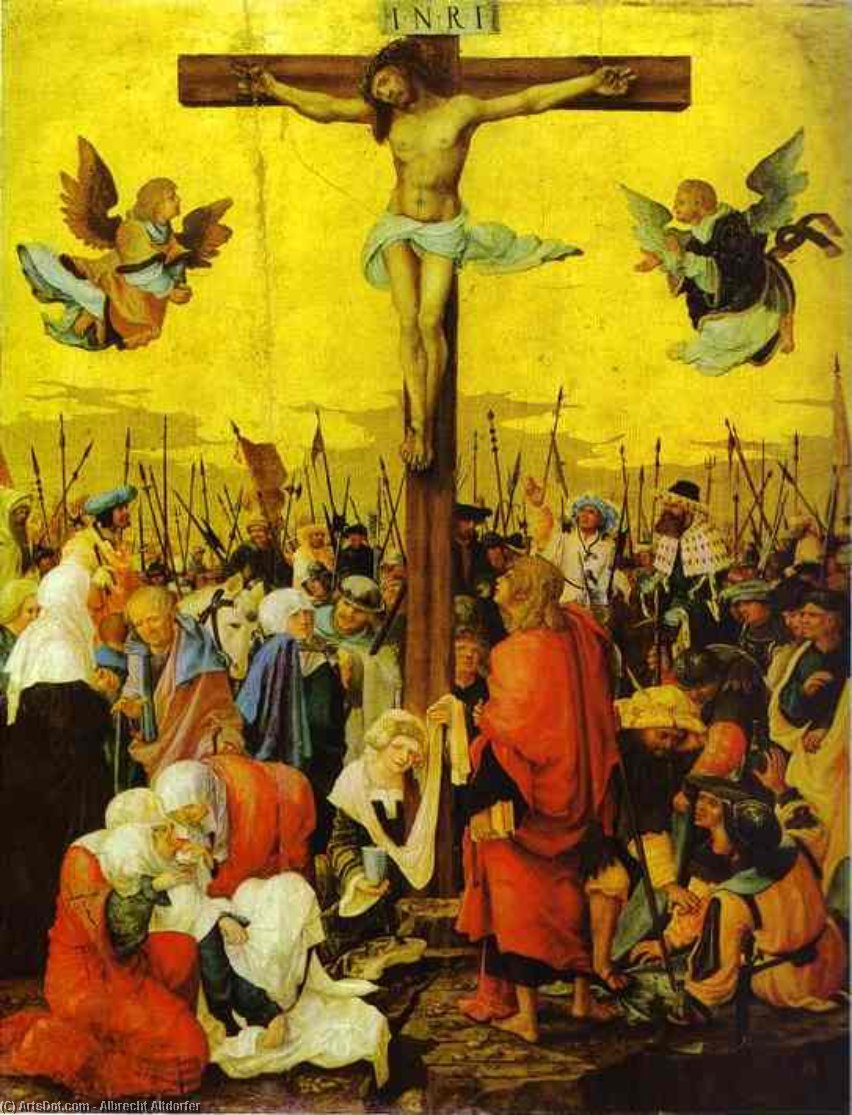
Albrecht Altdorfer's "Crucifixion" (1526) is a dramatic, evocative depiction of Christ’s suffering, showcasing the artist's pioneering landscape style and masterful use of color within the Northern Renaissance.
 Összes részlet megjelenítése
Albrecht Altdorfer (1480-1538): A német festő, a reneszánsz tájképfestés úttörője, a Dunai iskola legkiemelkedőbb képviselője. Kiemelkedett rézmetszői és építőművészi munkáival.
Giclée / Műnyomat
Múzeumi minőségű giclée vagy vászonnyomat, gyors gyártással és rugalmas finomítási lehetőségekkel. ( Kézzel festett másolat rendelése Áttérés digitális képre)




P118B Ft10

P118H Ft10

P118W Ft10

P438Z Ft10

P508JH Ft12

P508YH Ft12

P805H Ft10

P805Z Ft10

P919BZ Ft10

P919G Ft10

P919XJ Ft10

P959ZH Ft10

P968JZ Ft12

W106C Ft8

W218G Ft10

W218JH Ft8

W218Y Ft10

W307PJ Ft10

W316G Ft10

W316PJ Ft8

W316Y Ft10

W398PJ Ft8

W4111J Ft10

W500HY Ft15

W500JH Ft15

W692G Ft12

W849H Ft8

W940BG Ft15

W953PJ Ft8




Standard méret
egyedi méretű
CM
INCH
Válasszon előre meghatározott méreteink közül, amelyek megfelelnek a műalkotás eredeti arányainak.
Loading sizes...

szélesség
magasság
Írja be a keretének vagy a falának megfelelő szélességet és magasságot. A nyomatot csak le lehet vágni, soha nem tehető nagyobbá, mint az eredeti kép, így egy eltérő alakú méretnél a kép egy része elveszik. Mielőtt bármit kinyatintanánk, küldünk egy digitális próbamodellt jóváhagyásra. Az oldalon látható kép nem tartalmazza a valós levágást — ezt csak a próbamodell mutatja meg.
Világszerte történő kiszállítás területére mindössze 2 hét alatt, a szokásos 4-5 hét helyett. (26 október)

Ingyenes globális expressz szállítás

Prémium minőségű len vászon

Teljes körű szállítási biztosítás

Vámvisszatérítési Garancia

Hiteles színarányosság garancia

100 napos visszaküldési lehetőség (csak hibás termékek esetén)

100% pénzvisszatérítési garancia

Több darab vásárlásakor kedvezmény
 Az üvegkeretes opció csak 110 cm alatti méretben érhető el

Crucifixion
Giclée / Műnyomat
Reprodukció mérete
-


Összesített ár
Ft 22150
The Weight of Sorrow: Albrecht Altdorfer’s “Crucifixion”
Albrecht Altdorfer's "Crucifixion," painted in 1526, isn’t merely a depiction of a pivotal religious event; it’s a visceral experience. Emerging from the burgeoning German Renaissance, Altdorfer wasn’t simply replicating biblical narratives; he was forging a new visual language, one deeply rooted in the natural world yet imbued with profound spiritual intensity. This particular rendition transcends simple illustration, becoming a landscape saturated with grief and a haunting meditation on sacrifice. The painting immediately commands attention not through grand scale – it's remarkably intimate, measuring just 29 x 21 cm – but through its masterful manipulation of light, color, and composition to evoke an overwhelming sense of sorrow.
The scene unfolds against a dramatically rendered landscape—a brooding, almost primeval forest. The trees, rendered in thick, layered brushstrokes of deep greens, browns, and purples, seem to writhe with the weight of the event. This isn’t a picturesque vista; it's a wilderness imbued with an unsettling energy. Altdorfer deliberately eschews traditional depictions of serene backgrounds, instead presenting a landscape actively participating in the drama. The distant mountains, shrouded in mist and shadow, amplify the feeling of isolation and despair. Notice how the artist uses atmospheric perspective – lighter hues for objects further away – to create a sense of depth and distance, drawing the viewer’s eye into the heart of the scene.
A Pioneer of Landscape
Albrecht Altdorfer stands as a pivotal figure in art history, largely credited with establishing landscape painting as an independent artistic subject within Europe. Prior to his work, landscapes were typically relegated to mere backgrounds for religious or mythological scenes. However, Altdorfer recognized the power of the natural world to convey emotion and meaning. His meticulous observation of nature—evident in the detailed rendering of foliage, rocks, and atmospheric conditions—transformed the landscape from a passive backdrop into an active participant in the narrative. This shift was revolutionary, paving the way for later generations of landscape artists like Albert Bierstadt and Frederic Church.
His background as a town architect and council member further informs his artistic approach. Altdorfer possessed a keen eye for spatial relationships and a deep understanding of how to create a sense of harmony and balance within a composition. This skill is brilliantly demonstrated in “Crucifixion,” where the human figure—Jesus—is carefully positioned within the landscape, creating a dynamic interplay between the earthly realm and the divine.
Symbolism and Emotional Resonance
Beyond its technical brilliance, "Crucifixion" resonates deeply with viewers through its potent symbolism. The stark simplicity of Jesus’s pose – arms outstretched, head bowed – is profoundly moving. Altdorfer avoids any overtly dramatic or theatrical elements, opting instead for a quiet, understated portrayal of suffering. The figures surrounding the cross—angels and soldiers—are rendered in muted tones, emphasizing the central tragedy. Even the light itself seems to weep, casting long shadows across the landscape.
The choice of a dark, foreboding forest as the setting is particularly significant. Forests have historically been associated with death, mourning, and the unknown. In this context, it serves as a powerful metaphor for the spiritual darkness surrounding Jesus’s sacrifice. The painting isn't simply depicting an event; it’s exploring the profound emotional consequences of that event—the grief, despair, and sense of loss experienced by those who witnessed it.
A Timeless Masterpiece
“Crucifixion” is more than just a religious painting; it’s a testament to Altdorfer's artistic genius and his ability to capture the essence of human emotion. The meticulous detail, masterful use of color and light, and profound symbolism combine to create an unforgettable image that continues to resonate with viewers centuries after its creation. Reproductions, like this one, offer a remarkable opportunity to experience the power and beauty of this iconic work, bringing its haunting message into our own spaces.
Kérdések és válaszok
A „Crucifixion”, Albrecht Altdorfer alkotása jogtalanul védett (public domain)?
A „Crucifixion”, Albrecht Altdorfer alkotása közösségi tulajdon – a szerzői jog lejártt státuszú mű. Ez a jogi státusz határozza meg, hogy a mű képmásolata hogyan reproduzható.
Milyen fényerő ébreszt fel „Crucifixion”, Albrecht Altdorfer alkotása alkotást?
Összességében a "Crucifixion" alkotás bright fényerőséget mutat. A tapasztalt fényerő azt írja le, hogy a mű mennyire tűnik világosnak vagy sötétnek.
Mekkora a fényerke „Crucifixion”, Albrecht Altdorfer alkotása alkotásnak?
A „Crucifixion”, Albrecht Altdorfer alkotása alkotás Gentle Luminance fényerőséggel rendelkezik. A fényerő azt mutatja meg, hogy a színek mennyire tűnnek visszafényesnek.
A művész életrajza
A Pioneer of the Northern Renaissance Landscape
Albrecht Altdorfer, born around 1480 in Regensburg, Germany, stands as a pivotal figure bridging the late Gothic period and the burgeoning German Renaissance. He wasn’t merely an artist *of* his time; he actively reshaped its artistic trajectory, particularly in the realm of landscape painting. Coming from a family deeply rooted in artistic tradition—his father, Ulrich Altdorfer, was a painter and miniaturist—the younger Altdorfer quickly distinguished himself not as a follower, but as an innovator. Regensburg, a free imperial city strategically positioned on the Danube River, provided a vibrant cultural backdrop for his formative years. This location profoundly shaped his artistic sensibilities, fostering a connection to the natural world that would become central to his oeuvre. Beyond his artistry, Altdorfer was a man of civic duty, serving as both town architect and council member—a testament to his versatile talents. However, it was through his art—particularly his early engravings and drawings from around 1506, such as *Stygmata of St. Francis* and *St. Jerome*—that he first revealed a unique artistic voice, hinting at the emotional intensity and meticulous detail that would characterize his mature style. His work reflected not just observation but an attempt to capture the very essence of being within a landscape, a revolutionary shift in how nature was represented.The Danube School and a Revolutionary Vision
Altdorfer is most prominently recognized as a leading member of the Danube School, an influential group of artists active in southern Germany during the early 16th century. This artistic circle shared a common fascination with exploring the expressive potential of landscape, elevating it from a mere backdrop to become a central subject in its own right. Before Altdorfer, landscapes primarily served as settings for religious or historical narratives; he dared to depict nature *for itself*, imbued with atmosphere and emotional resonance. A transformative journey down the Danube River and into the Alps around 1511 proved crucial to his artistic development. The dramatic vistas, dense forests, and imposing mountains ignited within him a passion for depicting nature with unprecedented fidelity and feeling. He became, arguably, the first modern landscape painter, not simply replicating what he saw but conveying an emotional response—a sense of awe, mystery, and even spiritual connection. This wasn’t topographical accuracy alone; it was about capturing the *experience* of being within a landscape. His work, like “The Large Spruce,” exemplifies this shift, offering a serene and intricate depiction of nature's beauty. The Danube School artists, including Altdorfer and Wolf Huber, sought to break away from the rigid conventions of earlier art and create works that were both beautiful and emotionally resonant.Masterpieces and Artistic Influences
Throughout his career, Altdorfer produced a diverse body of work encompassing paintings, engravings, drawings, and architectural designs. Among his most celebrated achievements is *The Battle of Alexander at Issus* (1529), commissioned by Duke William IV of Bavaria. This monumental painting showcases not only his mastery of composition and detail but also his innovative use of landscape to heighten the dramatic tension of the battle scene. The swirling clouds, jagged mountains, and chaotic melee of soldiers create a sense of overwhelming energy and spectacle. He skillfully integrated the natural world into the narrative, using it to amplify the emotions of the participants and the scale of the conflict. His collaboration with Emperor Maximilian I in Innsbruck from 1513 further expanded his artistic horizons and provided opportunities for large-scale projects. Altdorfer’s style wasn't formed in isolation; he absorbed influences from various sources. The poetic lyricism of Giorgione, the expressive figures of Lucas Cranach the Elder, and the meticulous detail of Albrecht Dürer all left their mark on his work. However, he synthesized these influences into a uniquely personal vision, characterized by its emotional intensity, dramatic lighting, and evocative landscapes. His engravings, such as “Mucius Scaevola Burning His Hand,” demonstrate his skill in this medium, showcasing delicate lines and intricate details.Exploring Altdorfer’s Diverse Works
Beyond his iconic landscapes and battle scenes, Altdorfer's artistic range encompassed religious subjects, mythological narratives, and even architectural designs. His depictions of biblical stories, such as “Abraham’s Sacrifice,” are imbued with a dramatic intensity and emotional depth that set them apart from earlier interpretations. He wasn’t simply illustrating scripture; he was exploring the human condition through the lens of faith. His altar panels, like the one depicting *The Beautiful Virgin of Regensburg*, are particularly noteworthy for their vibrant colors and dynamic compositions. These works often featured a complex interplay of figures and landscapes, creating a sense of both earthly and spiritual grandeur. Altdorfer’s ability to seamlessly blend technical skill with emotional depth solidified his position as a leading artist of the Renaissance. His work continues to be studied and admired for its innovative approach to landscape painting and its profound exploration of human emotion.Legacy and Lasting Impact
Albrecht Altdorfer’s artistic legacy extends far beyond the 55 panels, 120 drawings, and numerous engravings he created during his lifetime. He fundamentally altered the way artists approached landscape painting, paving the way for future generations to explore its expressive possibilities. His influence can be seen in the works of later German Romantic painters who similarly sought to capture the sublime beauty and emotional power of nature. Today, Altdorfer’s art is represented in major museum collections worldwide, including the Museum Ostdeutsche Galerie in Germany—which houses his *Madonna (Beautiful Maria of Regensburg)*—and the Kunstsammlungen und Museen Augsburg in Austria. His innovative spirit, technical skill, and profound connection to the natural world continue to inspire artists and captivate audiences centuries after his death in 1538. He remains a towering figure of the German Renaissance, a true pioneer who dared to see landscape not merely as scenery but as a powerful force capable of evoking deep emotion and spiritual meaning. His work serves as a testament to the enduring power of art to transform our perception of the world around us—a legacy that continues to resonate with viewers today.
Albrecht Altdorfer
1480 - 1538 , Németország
Rövid információk
- Artistic Movement Or Style: Duna Schule, Reneszánsz
- Artists Or Movements Influenced By This Artist: ['német romantikusok']
- Artists Who Influenced This Artist:
- Giorgione
- Lucas Cranach
- Albrecht Dürer
- Date Of Birth: c. 1480
- Date Of Death: 1538
- Full Name: Albrecht Altdorfer
- Nationality: Német
- Notable Artworks:
- Alexander csatája
- Nagy nyeregpálca
- Szent György
- Place Of Birth: Regensburg, Németország
Kapcsolódó cikkek

The Magic of Tonalism: Capturing Mood, Mist, and Atmospheric Emotion in Landscape Art
Discover the ethereal beauty of Tonalism. Explore how master artists use mist, soft light, and muted palettes to capture profound emotion and atmospheric mood in landscape painting. A deep dive into this quiet, introspective art movement for true connoisseurs.
Fedezze fel a műalkotásokat témák, stílusok és jellemzők szerint csoportosítva.


