


 Előnézet
 Megosztás
 Megosztás
 Részletek
 Útmutató

 Letöltés
 Hasonló darabok
 X-ray felvétel
 Diavetítés
 Statisztika
Dances


Explore Arthur Bowen Davies’ ‘Dances,’ a captivating Symbolist oil painting blending realism & dreamlike abstraction. Discover its dynamic composition & influence on modern art at the Detroit Institute of Arts.
 Tovább olvasom
Davies Arthur B.: amerikai modernista festő, szimbolikus tájkép- és éteri képeivel. Az 1913-as Armory Show kulcsfontosságú szerepet játszott a modern művészet újdonságainak bevezetésében.
Giclée / Műnyomat
Múzeumi minőségű giclée vagy vászonnyomat, gyors gyártással és rugalmas finomítási lehetőségekkel. ( Kézzel festett másolat vásárlása Áttérés digitális képre)




P118B Ft10

P118H Ft10

P118W Ft10

P438Z Ft10

P508JH Ft12

P508YH Ft12

P805H Ft10

P805Z Ft10

P919BZ Ft10

P919G Ft10

P919XJ Ft10

P959ZH Ft10

P968JZ Ft12

W106C Ft8

W218G Ft10

W218JH Ft8

W218Y Ft10

W307PJ Ft10

W316G Ft10

W316PJ Ft8

W316Y Ft10

W398PJ Ft8

W4111J Ft10

W500HY Ft15

W500JH Ft15

W692G Ft12

W849H Ft8

W940BG Ft15

W953PJ Ft8




Standard méret
egyedi
CM
INCH
Válasszon előre meghatározott méreteink közül, amelyek megfelelnek a műalkotás eredeti arányainak.
Loading sizes...

szélesség
magasság
Megadhat saját méreteket is egy konkrét kerethez vagy helyszínhez igazítva. Amennyiben a kiválasztott méret nem egyezik az eredeti kép arányokkal, a műalkotást le fogjuk vágni, vagy kiegészítjük a képet tükrözött vagy egyszínű szélekkel. A gyártás megkezdése előtt egy digitális tervezetet küldünk jóváhagyásra.
Kérjük, vegye figyelembe, hogy a képernyőn látható előnézet nem tükrözi a tényleges levágást vagy kiegészítést. Csak a tervezet mutatja pontosan a végső kompozíciót.
Bár az egyedi méretek is elérhetőek, az eredeti arányok megőrzése érdekében azt javasoljuk, hogy válasszon a előre meghatározott listából származó méretet.
Világszerte történő kiszállítás területére mindössze 2 hét alatt, a szokásos 4-5 hét helyett. (11 október)

Ingyenes globális expressz szállítás

Prémium minőségű len vászon

Teljes körű szállítási biztosítás

Vámvisszatérítési Garancia

Tökéletes színarányosság garancia

100 napos visszaküldési garancia (csak gyártási hibás termékek esetén)

100% pénzvisszatérítési garancia

Több darab vásárlásakor kedvezmény
 Az üvegkeretes opció csak 110 cm alatti méretben érhető el

Dances
Giclée / Műnyomat
Reprodukció méretei
-


Összesített ár
Ft 21633
A Visionary Blend: Exploring Arthur Bowen Davies’ ‘Dances’
Arthur Bowen Davies (1862-1928), a figure often overshadowed yet undeniably influential, stands as a testament to the transformative power of artistic vision. Born in Utica, New York, he embarked on an extraordinary journey—one that propelled him from initial landscapes rooted in Hudson River School aesthetics toward a bold embrace of Symbolism and ultimately, into the orbit of Expressionist innovation. Davies’ oeuvre isn't merely aesthetically pleasing; it embodies a profound engagement with philosophical currents shaping the early 20th century, reflecting both European intellectual ferment and an emerging American sensibility.
- The Painting: ‘Dances,’ completed in 1914, resides prominently at the Detroit Institute of Art. This oil on canvas depicts three dancers engaged in independent movements—a left dancer, a central figure, and one positioned to the right—creating a dynamic tableau that captures the essence of performance.
- Composition & Technique: Davies’ masterful execution is evident in his loose brushstrokes and fragmented perspective. Thick impasto application lends textural richness to the surface, emphasizing the physicality of movement and conveying an energetic spirit. The color palette – dominated by yellows, blues, whites, and browns against a dark background – contributes significantly to the painting's mood and visual impact.
Symbolism’s Embrace: Beyond Representation
Davies’ artistic trajectory reveals a deliberate departure from purely representational art. Influenced by Symbolist principles—a movement prioritizing subjective experience and exploring realms beyond the visible—he sought to communicate ideas rather than simply mirroring reality. The dreamlike quality of the dancers' postures and movements aligns perfectly with Symbolism’s fascination for the subconscious and mystical dimensions of existence.
- Recurring Motifs: Recurring motifs like swirling lines and fragmented shapes reinforce this symbolic intent, inviting viewers to contemplate themes of movement, transformation, and perhaps even spiritual aspiration.
- Ashcan Influence: Simultaneously, Davies’ work retains echoes of the Ashcan School—a movement dedicated to portraying urban life with unflinching honesty—grounding his vision in a distinctly American context.
A Legacy Shaping Modern Art
Davies' artistic explorations resonated deeply within subsequent movements like Expressionism and Post-Impressionism. Artists such as Edvard Munch, captivated by Davies’ emotive approach to color and form, recognized the potential for conveying psychological depth through abstraction. ‘Dances,’ therefore, serves as a pivotal point in art history—a bridge between traditional landscapes and the burgeoning expressive language of modern art.
- Davies' Impact: His pioneering use of impasto technique and his willingness to delve into subjective experience paved the way for future generations of artists seeking to communicate emotion and explore inner worlds.
- Contemporary Relevance: Today, ‘Dances’ continues to inspire designers and collectors alike—a reminder that art can transcend time, communicating universal themes of movement, beauty, and contemplation.
Gyakran Ismételt Kérdések
Hányan tekintik meg a(t): "Dances"?
A „Dances”, Arthur B. Davies alkotása Statisztika oldala a nyilvános látogatási statisztikákat mutatja be: az alkotás havi látogatottságát, összehasonlításban a művész legnézettebb alkotásaival, valamint a látogatók származási helyét.
Hány éves volt Arthur B. Davies, amikor megalkotta a "Dances" című alkotást?
Arthur B. Davies 52 éves volt, amikor 1914 évben megalkotta a "Dances" alkotást. A korúsítás az alkotó születési évéből, 1862 fel основании került kiszámítva.
Általánosságban inkább világos vagy sötét a "Dances"?
A „Dances”, Arthur B. Davies alkotása fényerősége shadow, luminanciája pedig Soft Shadow.
Milyen érzelmet közvetít a „Dances”, Arthur B. Davies alkotása?
A „Dances”, Arthur B. Davies alkotása művészeti alkotás érzelmi tónusa Energetic. Ez foglalja össze a mű által kifejezett érzést.
Mely művészhez köthető a "Dances"?
A „Dances” műtémét Arthur B. Davies alkotójának tulajdonítják.
Melyik évben készült a „Dances”, Arthur B. Davies alkotása?
A "Dances" művészeti alkotás 1914-ból származik. A dátum Arthur B. Davies pályájának és az adott korszaknak is meghatározó pontjaként szolgál.
Mely múzeum őrzi az eredeti "Dances" című alkotást?
A „Dances”, Arthur B. Davies alkotása eredeti darabja a Detroit Institute of Arts, Detroit, Egyesült Államok gyűjteményében található. A reprodukció lehetővé teszi, hogy a mű otthonában is megjelenjen.
A művész életrajza
A Mystic in the Modern Age: The Life and Art of Arthur B. Davies
Arthur Bowen Davies, born in Utica, New York, in 1862, occupies a uniquely complex position within the narrative of American art. He wasn’t simply *of* his time—the tumultuous era bridging the 19th and 20th centuries—but actively shaped it, serving as both a conduit for European modernism and a champion of distinctly American artistic voices. His journey began with an early fascination for landscape painting, sparked by a touring exhibition that showcased the works of George Inness and the Hudson River School masters. This initial exposure instilled in him a reverence for nature’s beauty and a technical proficiency that would remain hallmarks of his style throughout his career. However, Davies wasn't destined to become merely another practitioner of traditional landscape; he possessed an inner vision, a yearning to express something beyond the purely representational. After studies at the Chicago Academy of Design and the Art Students League in New York, he began to forge a path that blended romantic sensibilities with emerging modernist ideals. His early career involved illustration work, but his true calling lay in painting—in creating worlds imbued with symbolism and emotional resonance.The Ashcan School & The Armory Show: A Catalyst for Change
Davies’s artistic development unfolded against a backdrop of significant social and cultural shifts. He became associated with “The Eight,” a group of artists who challenged the conservative norms of the National Academy of Design in 1908. While often linked to the Ashcan School—a movement known for its gritty depictions of urban life—Davies stood somewhat apart. Where artists like John Sloan focused on the raw realities of city streets, Davies sought refuge in a more ethereal realm. His paintings weren’t about documenting the visible world; they were about evoking moods, dreams, and spiritual longings. Nevertheless, his involvement with The Eight demonstrated his commitment to artistic independence and his willingness to challenge established conventions. This spirit of rebellion culminated in his pivotal role as one of the organizers of the 1913 Armory Show—a watershed moment that introduced European modernism (Cubism, Fauvism, Futurism) to a largely unsuspecting American public. The show was met with both outrage and excitement, irrevocably altering the course of American art history. Davies’s contribution wasn't merely logistical; he possessed an exceptional understanding of contemporary artistic trends and a keen eye for talent, making him instrumental in selecting the works exhibited. He understood that art needed to reflect the changing world, even if that meant embracing radical new forms.A Language of Symbolism & Ethereal Visions
Davies’s mature style is characterized by its lyrical quality, delicate brushwork, and evocative use of color. His paintings often feature figures—often women or mythological beings—immersed in dreamlike landscapes. These aren't portraits in the traditional sense; they are archetypal representations of human emotions and spiritual states. Unicorns: Legend, Sea Calm, perhaps his most famous work, exemplifies this approach. The painting depicts a group of ethereal figures frolicking with unicorns on a tranquil shore—a scene that is both enchanting and deeply symbolic. His works frequently explore themes of longing, loss, and the search for transcendence. He wasn’t interested in depicting reality as it *is*, but rather as it *feels*. This emphasis on subjective experience aligns him with Symbolist painters like Odilon Redon and Pierre Puvis de Chavannes, artists who sought to express inner truths through evocative imagery. Davies's palette is often muted and harmonious, creating a sense of atmosphere and mystery. He masterfully employed techniques such as glazing and scumbling to achieve luminous effects and subtle gradations of tone. His art invites contemplation, urging viewers to look beyond the surface and delve into the realm of the imagination.Influences & Artistic Development
Davies’s early work was heavily influenced by the Hudson River School, particularly George Inness's atmospheric landscapes. However, he quickly moved beyond mere imitation, absorbing elements of Impressionism and Symbolism from European artists like Claude Monet and Gustave Moreau. The Armory Show profoundly impacted his artistic trajectory, exposing him to Cubism and other avant-garde movements that challenged traditional notions of representation. He experimented with geometric forms and flattened perspectives, incorporating these influences into his own distinctive style. Despite this experimentation, Davies remained rooted in a Romantic sensibility, retaining a deep appreciation for beauty and emotion. His work evolved over time, reflecting the changing artistic landscape of the early 20th century while maintaining a consistent focus on spiritual themes and evocative imagery.A Contradictory Legacy
The life of Arthur B. Davies was marked by contradictions. While publicly advocating for artistic freedom and innovation, he maintained a relatively conservative personal life—at least, the one presented to the world. The revelation after his death in Florence, Italy, in 1928, that he had lived a double life with two families—Virginia Meriwether Davies, whom he married in 1892, and Edna—shocked the art community. This hidden aspect of his biography adds another layer of complexity to his artistic persona. Despite this personal turmoil, or perhaps because of it, Davies left an indelible mark on American art. He was a pivotal figure in the development of American modernism, bridging the gap between traditional aesthetics and avant-garde experimentation. His influence can be seen in the work of subsequent generations of artists who continued to explore themes of spirituality, symbolism, and emotional expression.- He remains a testament to the power of art to transcend boundaries—both artistic and personal.
- His paintings continue to resonate with viewers seeking beauty, mystery, and a glimpse into the hidden depths of the human soul.

Arthur B. Davies
1862 - 1928 , Egyesült Államok
Gyors információk
- Artistic Movement Or Style: Modernista, Szimbolista
- Artists Or Movements Influenced By This Artist:
- Amerikai Modernizmus
- Ashcan School
- Artists Who Influenced This Artist:
- George Inness
- Corot
- Millet
- Date Of Birth: 1862. szeptember 26.
- Date Of Death: 1928. október 24.
- Full Name: Arthur Bowen Davies
- Nationality: Amerikai
- Notable Artworks: ['Unicorns: Legend']
- Place Of Birth: Utica, USA
Kapcsolódó cikkek
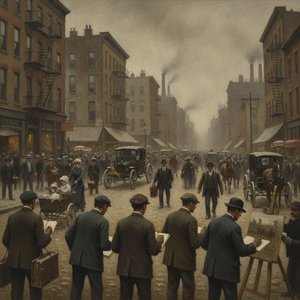
The Ashcan School: Capturing the Raw, Unfiltered Soul of Urban Life through American Realism
Discover the raw beauty of the Ashcan School. Explore how masters like Bellows and Henri captured the gritty, vibrant soul of early 20th-century New York through profound American Realism and evocative urban landscapes.
Fedezze fel a műalkotásokat témák, stílusok és jellemzők szerint csoportosítva.


