


 Előnézet
 Megosztás
 Megosztás
 Részletek
 Útmutató

 Letöltés
 Hasonló darabok
 X-ray felvétel
 Diavetítés
 Statisztika
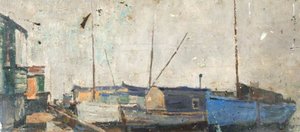
Sandridge
 Oil On Canvas
- WallArt
- Australian Impressionism
 1888
1888- 19th Century
 233.0 x 128.0 cm
 National Gallery of Australia
A dramatic harbor scene capturing the chaos of a sinking boat in Arthur Streeton's 1888 masterpiece Sandridge, showcasing Australian Impressionism and inviting you to explore this iconic piece for your collection.
 Tovább olvasom
Streeton Arthur Ernest (1867-1943) a korai ausztrál impresszionista festő, a Heidelberg School meghatározó alakja. A napfény és a táj egyedülálló megörökítése, ikonikus alkotásai, mint Golden Summer, Eaglemont, a nemzeti identitás szimbóluma.
Giclée / Műnyomat
Múzeumi minőségű giclée vagy vászonnyomat, gyors gyártással és rugalmas finomítási lehetőségekkel. ( Kézzel festett másolat vásárlása Áttérés digitális képre)




P118B Ft10

P118H Ft10

P118W Ft10

P438Z Ft10

P508JH Ft12

P508YH Ft12

P805H Ft10

P805Z Ft10

P919BZ Ft10

P919G Ft10

P919XJ Ft10

P959ZH Ft10

P968JZ Ft12

W106C Ft8

W218G Ft10

W218JH Ft8

W218Y Ft10

W307PJ Ft10

W316G Ft10

W316PJ Ft8

W316Y Ft10

W398PJ Ft8

W4111J Ft10

W500HY Ft15

W500JH Ft15

W692G Ft12

W849H Ft8

W940BG Ft15

W953PJ Ft8




Standard méret
egyedi
CM
INCH
Válasszon előre meghatározott méreteink közül, amelyek megfelelnek a műalkotás eredeti arányainak.
Loading sizes...

szélesség
magasság
Írja be a keretének vagy a falának megfelelő szélességet és magasságot. A nyomatot csak le lehet vágni, soha nem tehető nagyobbá, mint az eredeti kép, így egy eltérő alakú méretnél a kép egy része elveszik. Mielőtt bármit kinyatintanánk, küldünk egy digitális próbamodellt jóváhagyásra. Az oldalon látható kép nem tartalmazza a valós levágást — ezt csak a próbamodell mutatja meg.
Világszerte történő kiszállítás területére mindössze 2 hét alatt, a szokásos 4-5 hét helyett. (22 október)

Ingyenes globális expressz szállítás

Prémium minőségű len vászon

Teljes körű szállítási biztosítás

Vámvisszatérítési Garancia

Tökéletes színarányosság garancia

100 napos visszaküldési garancia (csak gyártási hibás termékek esetén)

100% pénzvisszatérítési garancia

Több darab vásárlásakor kedvezmény
 Az üvegkeretes opció csak 110 cm alatti méretben érhető el

Sandridge
Giclée / Műnyomat
Reprodukció méretei
-


Összesített ár
Ft 22050
A Moment Frozen in Time: The Drama of Sandridge
In the vast expanse of Australian Impressionism, few works capture the raw, unscripted tension of maritime life as poignantly as Arthur Streeton’s Sandridge. Painted in 1888, this monumental oil on canvas serves as a window into a bustling, high-stakes moment within a busy harbor. At first glance, the viewer is drawn into a scene of profound movement and uncertainty; the central focus is a vessel caught in a state of distress, appearing to sink or having just succumbed to the elements. This focal point acts as the emotional anchor of the composition, pulling the eye toward the center of a swirling maritime drama where the calm of the water meets the sudden chaos of an emergency.
Streeton, a pioneer of the Heidelberg School, was a master at capturing what his contemporaries called the "Australian Light." In Sandridge, he utilizes this expertise to paint not just a scene, and not just a location, but an atmosphere. The light dances across the hulls of various boats—ranging from large, dominating vessels to smaller, more agile craft—creating a sense of depth and shimmering heat. Through his brushwork, one can almost feel the humidity of the harbor and the frantic energy of the at least twelve figures scattered throughout the scene. Some onlookers stand in stunned proximity to the sinking boat, while others are mere silhouettes against the horizon, their presence adding to the collective weight of the unfolding tragedy.
Technique and the Impressionist Spirit
The technical execution of Sandridge is a testament to Streeton’s ability to blend large-scale composition with delicate, impressionistic touches. The sheer scale of the work, measuring an impressive 233 x 128 cm, allows the viewer to become immersed in the harbor's geography. Streeton employs a palette that reflects the gritty yet luminous reality of a working port. His use of oil on canvas provides a rich texture that gives weight to the wooden hulls and life to the churning water. The way he manages the interplay between light and shadow is crucial; it is through these subtle shifts in tone that the sense of "chaos" is communicated without relying on overt, messy strokes.
For the discerning collector or interior designer, this piece offers a sophisticated balance of narrative intensity and aesthetic harmony. The painting does not merely depict a disaster; it captures the structural beauty of a maritime landscape. The composition guides the eye through a rhythmic arrangement of masts, sails, and figures, making it a powerful statement piece for any grand space. It possesses that rare quality in fine art: the ability to command attention through its historical gravity while simultaneously complementing a modern or classical interior with its masterful use of color and light.
A Legacy of Australian Identity
To understand Sandridge is to understand the birth of a national artistic identity. During the late 19th century, Streeton and his peers were moving away from European traditions to find a way to paint the unique, harsh, yet beautiful Australian landscape. While much of his work focuses on the golden hues of the bush, Sandridge explores the industrial and social heartbeat of the coast. The painting symbolizes the vulnerability of human endeavor when faced with the unpredictable forces of nature, a theme that resonates deeply across generations.
Owning a high-quality reproduction of this masterpiece allows one to bring a piece of Australian history into the contemporary home. It is more than a decoration; it is an invitation to contemplate the fleeting nature of stability and the enduring strength of human observation. Whether placed in a library, a formal dining room, or a curated gallery space, Sandridge serves as a profound conversation starter, embodying the spirit of an era defined by discovery, struggle, and the breathtaking beauty of the Australian light.
Gyakran Ismételt Kérdések
Milyen viszonyban állnak egymáshoz a "Sandridge" színei?
A "Sandridge" színharmóniája úgy van rögzítve, mint Balanced Harmony.
Hol találhatok egy útmutatót a(z) "Sandridge" alkotáshoz?
A „Sandridge”, Streeton Arthur Ernest alkotása Útmutató oldala egy kinyomtatható, kétoldalas információs adatlapot kínál: magát a művészeti alkotást az azonosító táblázattal, egy évtizedes időrenddel, amely a művész életkorába helyezi a alkotást, a művész további treballatait, a megmért színpalettát, valamint négy különböző stílusban, azonnal másolható idézeteket.
Milyen hangulatot áraszt a "Sandridge"?
„Sandridge”, Streeton Arthur Ernest alkotása művészeti alkotásának összhangulata Dramatic. Ez az érzet írja le a mű általános atmoszféráját.
Hasonló műalkotások



A művész életrajza
A Pioneer of the Australian Light: The Life and Art of Arthur Streeton
Arthur Ernest Streeton, a name synonymous with the vibrant heart of Australian Impressionism, was more than just an artist; he was a chronicler of a nation’s evolving identity. Born on April 8, 1867, at Mount Duneed, a small coastal village near Geelong in Victoria, his early life was steeped in the quiet beauty of the Australian bush – a landscape that would forever shape his artistic vision. His parents, English migrants who met during their voyage to Australia, instilled in him a deep appreciation for both nature and the burgeoning spirit of a young nation seeking its own distinct voice through art. Streeton’s formal training began at the National Gallery School in Melbourne from 1882 to 1887, providing him with the foundational skills necessary to translate his unique perceptions onto canvas. However, it was his experiences outside the classroom – particularly his immersion in the *plein air* painting traditions of France – that truly ignited his artistic fire and laid the groundwork for his groundbreaking style.The Heidelberg School and Eaglemont’s Influence
Streeton's artistic journey became inextricably linked with the rise of the Heidelberg School, a group of artists dedicated to capturing the essence of Australia through landscape painting. He forged close friendships with luminaries like Tom Roberts and Frederick McCubbin, embarking on countless *plein air* excursions that sought to directly represent the Australian bush – its light, its atmosphere, its very soul. The establishment of the Eaglemont Camp in 1888 proved to be a pivotal moment. Situated just outside Melbourne, this communal farmhouse became a crucible for artistic innovation and collaboration. Here, amidst the warmth of shared meals and spirited discussions, Streeton produced some of his most celebrated works: *Golden Summer, Eaglemont* (1889) and *Still glides the stream, and shall for ever glide* (1890). These paintings weren’t merely scenic depictions; they were imbued with a palpable sense of place – the shimmering heat haze over golden fields, the tranquil stillness of a summer afternoon. The Eaglemont Camp fostered an environment where experimentation thrived, challenging conventional artistic norms and solidifying the Heidelberg School's reputation as a bold and influential force in Australian art. The group’s audacious “9 by 5 Impression Exhibition” in 1889, showcasing small, rapidly executed paintings on cigar box lids, further cemented this legacy, demonstrating their willingness to disrupt established expectations.Seeking Recognition and Artistic Evolution
Driven by an ambition to gain wider recognition for his work, Streeton embarked on a journey to Europe in 1897, sailing aboard the *Polynesien* to London. While he achieved some success exhibiting at the Royal Academy – including a representation in 1900 – he found it difficult to replicate the acclaim he had enjoyed in Australia. The European art scene was fiercely competitive and often resistant to his distinctly Australian vision. Despite this, Streeton continued to paint, exploring diverse subjects such as Venetian scenes like *Palazzo Labia, Venice* (1908), which showcased a shift towards more formal compositions while retaining his characteristic sensitivity to light and color. The outbreak of World War I brought about a period of service for Streeton; he initially attempted to contribute through military medical assistance before ultimately being commissioned as an official war artist in 1918, documenting the devastating realities of the Western Front. His wartime paintings, while starkly contrasting with his earlier idyllic landscapes, reflected his enduring fascination with the natural world and its ability to endure even amidst destruction.A Legacy Etched in Light
Upon returning to Australia in 1923, Arthur Streeton was greeted as a national hero, knighted in 1937 for his invaluable contributions to art. His legacy extends far beyond his individual paintings; he played a crucial role in establishing a uniquely Australian artistic identity – one that celebrated the continent’s vastness and breathtaking beauty. Streeton wasn't simply painting landscapes; he was capturing the spirit of Australia itself, translating its light, its atmosphere, and its inherent sense of wonder onto canvas. His influence can be seen across generations of landscape painters who followed, inspired by his ability to distill the essence of the Australian experience. Furthermore, Streeton’s prolific writing and art criticism helped shape the discourse surrounding Australian art, solidifying his position as a pivotal figure in the nation's cultural history. Arthur Ernest Streeton passed away on September 1, 1943, at Olinda, Victoria, leaving behind a body of work that continues to captivate audiences today – a timeless testament to the beauty and spirit of Australia.Key Works & Themes
- Golden Summer, Eaglemont (1889): Perhaps his most famous work, embodying the heat and light of an Australian summer.
- Still glides the stream, and shall for ever glide (1890): A lyrical depiction of the Yarra River, showcasing his mastery of atmospheric perspective.
- Fire’s on (1891): A powerful representation of the Australian bushfire landscape, capturing both its beauty and danger.
- Palazzo Labia, Venice (1908): Demonstrates his ability to adapt his Impressionistic style to European subjects.
- Egyptian Drink Vendor (1897): A vibrant scene reflecting his travels and exploration of different cultures.

Streeton Arthur Ernest
1867 - 1943 , Ausztália
Gyors információk
- Artistic Movement Or Style: Impressionista, Heidelberg Schule
- Artists Or Movements Influenced By This Artist: ['Ausztrál Impressionizmus']
- Artists Who Influenced This Artist:
- Buvelot
- Turner
- Date Of Birth: Ápril 8, 1867
- Date Of Death: Szeptember 1, 1943
- Full Name: Arthur Ernest Streeton
- Nationality: Ausztrál
- Notable Artworks:
- Golden Summer
- Stream
- Palazzo Labia
- Place Of Birth: Mount Duneed, Ausztrália
Kapcsolódó cikkek

Capturing the Light: A Journey Through the Soul of American Impressionism and the Hudson River School
Explore the luminous beauty of American Impressionism and the Hudson River School. Discover a curated journey through light, landscape, and history, celebrating the enduring legacy of masters through exquisite, hand-painted oil reproductions for the discerning art lover.
Fedezze fel a műalkotásokat témák, stílusok és jellemzők szerint csoportosítva.

