


 Előnézet
 Megosztás
 Megosztás
 Részletek
 Útmutató

 Letöltés
 Hasonló darabok
 X-ray felvétel
 Diavetítés
 Statisztika
The Threshing Machine


Explore Camille Pissarro’s "The Threshing Machine" – an Impressionistic masterpiece depicting rural labor. Discover its details & purchase a high-quality art reproduction today!
 Tovább olvasom
Fedezd fel Pissarro festményeit: lenyűgöző tájak és hétköznapi jelenetek! A művészet egyik legjelentősebb alakja, aki nagy hatással volt Van Goghurt, Cézannre és másokra. Egyedi stílusával a világot ábrázolja!
Giclée / Műnyomat
Múzeumi minőségű giclée vagy vászonnyomat, gyors gyártással és rugalmas finomítási lehetőségekkel. ( Kézzel festett másolat vásárlása Áttérés digitális képre)




P118B Ft10

P118H Ft10

P118W Ft10

P438Z Ft10

P508JH Ft12

P508YH Ft12

P805H Ft10

P805Z Ft10

P919BZ Ft10

P919G Ft10

P919XJ Ft10

P959ZH Ft10

P968JZ Ft12

W106C Ft8

W218G Ft10

W218JH Ft8

W218Y Ft10

W307PJ Ft10

W316G Ft10

W316PJ Ft8

W316Y Ft10

W398PJ Ft8

W4111J Ft10

W500HY Ft15

W500JH Ft15

W692G Ft12

W849H Ft8

W940BG Ft15

W953PJ Ft8




Standard méret
egyedi
CM
INCH
Válasszon előre meghatározott méreteink közül, amelyek megfelelnek a műalkotás eredeti arányainak.
Loading sizes...

szélesség
magasság
Írja be a keretének vagy a falának megfelelő szélességet és magasságot. A nyomatot csak le lehet vágni, soha nem tehető nagyobbá, mint az eredeti kép, így egy eltérő alakú méretnél a kép egy része elveszik. Mielőtt bármit kinyatintanánk, küldünk egy digitális próbamodellt jóváhagyásra. Az oldalon látható kép nem tartalmazza a valós levágást — ezt csak a próbamodell mutatja meg.
Világszerte történő kiszállítás területére mindössze 2 hét alatt, a szokásos 4-5 hét helyett. (23 október)

Ingyenes globális expressz szállítás

Prémium minőségű len vászon

Teljes körű szállítási biztosítás

Vámvisszatérítési Garancia

Tökéletes színarányosság garancia

100 napos visszaküldési garancia (csak gyártási hibás termékek esetén)

100% pénzvisszatérítési garancia

Több darab vásárlásakor kedvezmény
 Az üvegkeretes opció csak 110 cm alatti méretben érhető el

The Threshing Machine
Giclée / Műnyomat
Reprodukció méretei
-


Összesített ár
Ft 22182
A Symphony of Rural Labor: Camille Pissarro’s *The Threshing Machine*
Camille Pissarro's *The Threshing Machine*, painted in 1876, is more than a depiction of agricultural labor; it’s a poignant meditation on the rhythms of rural life and the enduring connection between humanity and the land. Executed during a pivotal moment in Impressionism’s development, this work exemplifies Pissarro's commitment to capturing fleeting moments and atmospheric effects with an unprecedented sensitivity. The scene unfolds as a vibrant tableau of figures engaged in the arduous task of harvesting hay – men operating a mechanical thresher, women diligently gathering bundles, and horses patiently assisting – all bathed in the warm glow of an unseen light. It’s a snapshot of a world rapidly changing, one where traditional farming practices were being challenged by industrial advancements, yet still deeply rooted in community and shared effort.
Impressionistic Technique and Palette
- Loose Brushstrokes: Pissarro’s signature technique is immediately apparent – a deliberate avoidance of precise detail in favor of expressive brushwork. The paint isn't blended smoothly; instead, visible strokes create a dynamic sense of movement, particularly evident in the billowing haystacks and the figures’ actions.
- Muted Earth Tones: The color palette is dominated by ochres, browns, and yellows, reflecting the natural hues of the harvest itself. This restrained use of color contributes to the painting's overall atmosphere of rustic authenticity.
- Impasto Effects: Evidence suggests Pissarro employed a palette knife in certain areas, building up thick layers of paint – an *impasto* technique – to heighten textural contrast and emphasize the physicality of the scene. This adds a tactile quality, inviting the viewer to almost feel the rough texture of the hay.
Historical Context and Pissarro’s Vision
*The Threshing Machine* was created during a period of significant social and artistic upheaval in France. The rise of industrialization, coupled with advancements in agricultural technology, was transforming rural landscapes and challenging traditional ways of life. Pissarro, deeply invested in the lives of ordinary people, sought to document these changes while simultaneously celebrating the enduring values of community and labor. As a key figure in the development of Impressionism, Pissarro’s work reflects his desire to move beyond academic realism and capture the subjective experience of seeing – the way light and color interact to create an impression on the eye.
Symbolic Resonance and Emotional Impact
Beyond its straightforward depiction of a harvest scene, *The Threshing Machine* carries a deeper symbolic resonance. It speaks to themes of human resilience, the relationship between man and nature, and the importance of collective effort. The flattened perspective and atmospheric haze create a sense of timelessness, transporting the viewer back to a simpler era. The painting’s emotional impact is one of quiet dignity and understated beauty – a celebration of hard work, community spirit, and the enduring connection between humanity and the land. It evokes a feeling of nostalgia for a bygone rural existence, prompting reflection on our own relationship with nature and tradition.
Gyakran Ismételt Kérdések
Milyen viszonyban állnak egymáshoz a "The Threshing Machine" színei?
A „The Threshing Machine”, Pissarro alkotása egy Strong Color Unity színharmóniát mutat be.
Hogyan tudok nyomtatványt vásárolni a(z) „The Threshing Machine”, Pissarro alkotása alkotásból?
A "The Threshing Machine" minőségi giclée nyomat pamutvászonon vagy archiváló vászonpapíron formátumban is elérhető. A rendelést a Minőségi műalkotás nyomat oldalon lehet megtenni, a kívánt méretben.
Mi a "The Threshing Machine" formátuma?
A "The Threshing Machine" formátuma Landscape. Ez hasznos, amikor tervezünk, hogy a reprodukciót hová helyezzük el.
Hasonló műalkotások


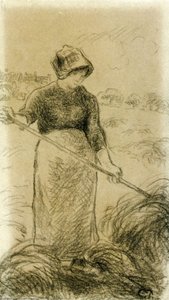


A művész életrajza
A Life Rooted in Observation: The World of Camille Pissarro
Camille Pissarro, a name synonymous with both the birth and evolution of Impressionism, was an artist whose life mirrored the shifting landscapes he so devotedly captured on canvas. Born Jacob Abraham Camille Pissarro on July 10, 1830, in Charlotte Amalie, St. Thomas – then part of the Danish West Indies, now the US Virgin Islands – his origins were as diverse and vibrant as the scenes that would later define his artistic vision. His father, a Portuguese Jewish merchant with French nationality, and his mother, from a French-Jewish family on the island, instilled in him a unique cultural heritage. This upbringing, somewhat unconventional due to familial complexities, fostered an early sensitivity to the world around him, a quality that would become the cornerstone of his artistic practice. His initial formal training at the Savary Academy near Paris provided a foundation in traditional techniques, but it was his return to St. Thomas and subsequent work as a cargo clerk that truly ignited his passion for observation. The bustling harbor, the vibrant local life, and the raw beauty of the Caribbean landscape became his first subjects, shaping an eye keenly attuned to the nuances of everyday existence.From Realism to Revolution: Artistic Development
Pissarro’s artistic journey was one of constant exploration and refinement. After a period assisting Danish painter Anton Melbye in Paris, he immersed himself in the works of masters like Gustave Courbet, Jean-Baptiste-Camille Corot, and Honoré Daumier – artists who championed realism and social commentary. He initially sought acceptance within the established art world, exhibiting at the Paris Salon, but soon found its constraints stifling. A pivotal moment came with his embrace of *plein air* painting—working outdoors directly from nature—a practice encouraged by Corot that would become central to Impressionism. This shift wasn’t merely technical; it represented a philosophical change, a desire to capture the fleeting effects of light and atmosphere, the very essence of a scene rather than its precise representation. He began experimenting with looser brushwork and brighter palettes, moving away from academic conventions towards a more subjective and expressive style. His early landscapes, though still grounded in realism, hinted at the revolutionary path he was about to forge. This period saw him grappling with finding his own voice amidst the burgeoning artistic ferment of Paris, a city undergoing rapid transformation that provided endless inspiration.The Father Figure of Impressionism
Camille Pissarro wasn’t simply *an* Impressionist; he was arguably its most steadfast and unifying force. Uniquely, he exhibited at all eight Paris Impressionist exhibitions between 1874 and 1886, acting as a stabilizing presence within a group often characterized by internal disagreements and individual ambitions. He wasn’t merely present—he actively encouraged his fellow artists, offering support, guidance, and a much-needed sense of camaraderie. This earned him the affectionate nickname “the father figure” of the movement. His commitment to artistic freedom and innovation was unwavering, even in the face of critical scorn and public indifference. He believed in the power of collective action and championed the idea of artists exhibiting independently from the Salon’s restrictive rules. Beyond his own work, Pissarro's influence extended to a younger generation of artists, including Paul Cézanne, Vincent van Gogh, and Paul Gauguin, whom he mentored and profoundly impacted. He provided them with not only technical advice but also a philosophical framework for their artistic explorations. His willingness to experiment led him briefly into Neo-Impressionism, influenced by Georges Seurat and Paul Signac’s pointillist techniques, before ultimately returning to a more personal style that blended his earlier influences with new discoveries.Landscapes of Life: Themes and Legacy
Pissarro's artistic output was remarkably diverse, yet consistently focused on the world around him. He is celebrated for his depictions of both rural and urban landscapes, often portraying scenes of everyday life—peasants working in fields, bustling Parisian streets, quiet village squares. His paintings weren’t simply picturesque views; they were social commentaries, reflecting his deep empathy for the working class and his commitment to depicting their lives with dignity and respect.- Landscapes: Renowned for capturing the beauty of both countryside and city life.
- Scenes of Parisian Life: Vivid portrayals of a rapidly changing metropolis.
- Peasant Life: Reflecting his social consciousness and empathy for the working class.

Pissarro
1830 - 1903 , Dán-Antillák
Gyors információk
- Artistic Movement Or Style: Impressionista, Divizionista
- Artists Or Movements Influenced By This Artist:
- Cézanne
- Van Gogh
- Gauguin
- Artists Who Influenced This Artist:
- Courbet
- Corot
- Daubigny
- Date Of Birth: 1830. július 10.
- Date Of Death: 1903. november 13.
- Full Name: Camille Pissarro
- Nationality: Dán-francia
- Notable Artworks:
- A Boulevard Montmartre
- Betakarítás Pontoise-ban
- Place Of Birth: Charlotte Amalie, USA
Kapcsolódó cikkek

Capturing the Soul: The Most Emotionally Moving Impressionist and Post-Impressionist Masterpieces
Discover the profound emotional depth of Impressionist and Post-Impressionist masterpieces. Explore how legends like Monet, Van Gogh, and Gauguin captured light and soul through evocative landscapes and vibrant brushwork for a timeless connection to art history.

The Beauty of Impermanence: Capturing Decay through Impressionist Eyes
Explore the profound beauty of impermanence through Impressionist and Post-Impressionist eyes. Discover how masters like Monet and Van Gogh captured fleeting light and the poetic essence of nature's transitions in our deep dive into art history and emotional landscapes.
Golden Fields & Sun-Drenched Meadows: Capturing the Soul of Impressionist Landscapes
Immerse yourself in the luminous world of Impressionist landscapes. Discover how masters like Monet and Gauguin captured ephemeral light through plein air painting, and learn to bring the soul of sun-drenched meadows into your home with exquisite, hand-painted oil reproductions.

Beyond the Light: Capturing Raw Emotion and Subjective Vision in Post-Impressionist Landscapes
Explore the profound emotional depth of Post-Impressionist landscapes. Discover how masters like Van Gogh moved beyond light to capture raw human feeling through vibrant color and expressive texture in this expert art history retrospective.
Fedezze fel a műalkotásokat témák, stílusok és jellemzők szerint csoportosítva.


