


 Előnézet
 Megosztás
 Megosztás
 Részletek
 Útmutató

 Letöltés
 Hasonló darabok
 X-ray felvétel
 Diavetítés
 Statisztika
Self-Portrait
 Acrylic On Canvas
- WallArt
- Romanticism
 1810
1810 228.0 x 182.0 cm
 Staatliche Museen zu Berlin
 Tovább olvasom
Caspar David Friedrich lenyűgöző 'A jégtenger' című alkotása egy elképesztő északi táj, a természet erejének és a romantika szépségének megtestesítője. Fedezze fel ezt a művészeti remekművet!
Giclée / Műnyomat
Múzeumi minőségű giclée vagy vászonnyomat, gyors gyártással és rugalmas finomítási lehetőségekkel. ( Kézzel festett másolat vásárlása Áttérés digitális képre)




P118B Ft10

P118H Ft10

P118W Ft10

P438Z Ft10

P508JH Ft12

P508YH Ft12

P805H Ft10

P805Z Ft10

P919BZ Ft10

P919G Ft10

P919XJ Ft10

P959ZH Ft10

P968JZ Ft12

W106C Ft8

W218G Ft10

W218JH Ft8

W218Y Ft10

W307PJ Ft10

W316G Ft10

W316PJ Ft8

W316Y Ft10

W398PJ Ft8

W4111J Ft10

W500HY Ft15

W500JH Ft15

W692G Ft12

W849H Ft8

W940BG Ft15

W953PJ Ft8




Standard méret
egyedi
CM
INCH
Válasszon előre meghatározott méreteink közül, amelyek megfelelnek a műalkotás eredeti arányainak.
Loading sizes...

szélesség
magasság
Írja be a keretének vagy a falának megfelelő szélességet és magasságot. A nyomatot csak le lehet vágni, soha nem tehető nagyobbá, mint az eredeti kép, így egy eltérő alakú méretnél a kép egy része elveszik. Mielőtt bármit kinyatintanánk, küldünk egy digitális próbamodellt jóváhagyásra. Az oldalon látható kép nem tartalmazza a valós levágást — ezt csak a próbamodell mutatja meg.
Világszerte történő kiszállítás területére mindössze 2 hét alatt, a szokásos 4-5 hét helyett. (23 október)

Ingyenes globális expressz szállítás

Prémium minőségű len vászon

Teljes körű szállítási biztosítás

Vámvisszatérítési Garancia

Tökéletes színarányosság garancia

100 napos visszaküldési garancia (csak gyártási hibás termékek esetén)

100% pénzvisszatérítési garancia

Több darab vásárlásakor kedvezmény
 Az üvegkeretes opció csak 110 cm alatti méretben érhető el

Self-Portrait
Giclée / Műnyomat
Reprodukció méretei
-


Összesített ár
Ft 22182
Caspar David Friedrich’s “Self Portrait”: A Meditation on Solitude and Spiritual Reflection
Caspar David Friedrich’s “Self Portrait,” painted in 1810, stands as a cornerstone of Romantic art—a poignant emblem of introspection and the sublime beauty found within quiet contemplation. More than just a depiction of an individual face, it embodies a profound philosophical stance that continues to resonate with audiences today.
- Subject Matter: The painting presents Friedrich himself in a dimly lit studio setting, gazing intently outwards. His gaze is directed beyond the canvas, suggesting a preoccupation with something larger than his immediate surroundings—a yearning for transcendence and connection with the natural world.
- Style & Technique: Friedrich’s signature style—characterized by meticulous detail combined with atmospheric perspective—is evident throughout the composition. The muted palette of browns and grays reinforces the mood of melancholy and solitude, while subtle brushstrokes create a textured surface that captures the essence of light and shadow.
- Historical Context: Created during the Romantic era, “Self Portrait” reflects the broader intellectual currents of its time. Philosophers like Kant championed the concept of ‘das Ding an sich’—the thing-in-itself—a notion that Friedrich wrestled with artistically. The painting speaks to a desire for spiritual experience and a rejection of Enlightenment rationalism.
Symbolism & Emotional Impact: The inclusion of two figures in the background – likely Friedrich’s brother Christian and his wife Louise – adds layers of complexity to the portrait. They represent companionship and familial bonds, yet their presence serves as a counterpoint to Friedrich's solitary gaze. This juxtaposition underscores the artist’s preoccupation with themes of isolation and remembrance—a reflection on mortality and the enduring power of memory.
“Self Portrait” isn’t merely an image; it’s an invitation to contemplate the human condition. Friedrich’s masterful technique captures not only physical likeness but also inner psychological state, conveying a sense of profound seriousness and spiritual yearning. Its quiet grandeur continues to inspire viewers with its timeless exploration of solitude, beauty, and the quest for meaning.
- Recommended Reproduction: At TopImpressionists.com, you can acquire a stunning hand-painted reproduction of “Self Portrait” in various sizes—bringing Friedrich’s evocative vision into your home or studio. Explore our curated collection today!
Gyakran Ismételt Kérdések
Mit ábrázol a „Self-Portrait”, Friedrich Caspar David alkotása?
A „Self-Portrait”, Friedrich Caspar David alkotása alkotás témái közé tartozik a landscape, portraiture, melancholy, solitude, sublime, germanromanticism, biblicalimagery. Ezek együtt foglalják össze a mű tárgyát.
Hogyan írható le „Self-Portrait”, Friedrich Caspar David alkotása hangulata?
A "Self-Portrait" Romantic hangulatú.
Megtekinthetném a(z) „Self-Portrait”, Friedrich Caspar David alkotása röntgensugárzásos felvételét?
A „Self-Portrait”, Friedrich Caspar David alkotása X-Ray felvétel oldala egy interaktív nézegető, amely lehetővé teszi a mű alkotásának eleven optikai rétegei közötti görgetést, beleértve az röntgenszerű felvételt is.
A művész életrajza
A Solitary Vision: The Life and Art of Caspar David Friedrich
Born in the Baltic port city of Greifswald in 1774, Caspar David Friedrich’s life was steeped in a melancholic atmosphere that would profoundly shape his artistic vision. His early years were marked by loss – the deaths of his mother and siblings cast a long shadow, fostering a sensitivity to mortality and transience that became central themes in his work. Initially educated by his older brother Christian in drawing, Friedrich’s formal training began at the University of Leipzig, where he pursued both art and theology, though neither degree was completed. This dual interest – a fascination with the visual world alongside a deep spiritual questioning – would prove crucial to his development as an artist. Further studies in Copenhagen honed his technical skills, exposing him to landscape painting traditions that would serve as a foundation for his unique style, yet it was not imitation he sought but rather expression—a means of conveying inner emotional states through the language of nature.The Birth of Romantic Landscape
Friedrich’s artistic journey wasn't merely about depicting scenery; it was about imbuing landscapes with profound symbolic meaning. He moved away from the meticulous detail favored by earlier artists, embracing a more personal and expressive approach. His paintings are characterized by an emphasis on the sublime – evoking feelings of awe, terror, and spiritual connection in the face of nature’s grandeur. The use of *Rückenfiguren*, figures seen from behind, became a signature element, inviting viewers to step into the scene and share in the contemplative experience. Natural elements like ancient trees, towering mountains, swirling fog, and crumbling ruins weren't simply picturesque details; they were potent symbols representing life’s cycles, spiritual longing, and the weight of history. His palette, often muted with blues, grays, and browns, further enhanced the mood of introspection and solemnity that pervades his work. He pioneered a way to depict landscapes not as mere views but as reflections of the human soul—a revolutionary concept for its time.Iconic Works and Enduring Themes
Several paintings stand out as defining examples of Friedrich’s artistic achievement. “Abbey in the Oakwood” (1809-1810), a haunting image of a ruined churchyard enveloped by bare trees, speaks powerfully to themes of mortality and spiritual decay. The composition is deliberately understated, emphasizing the desolate beauty of the decaying edifice against the backdrop of winter’s starkness—a deliberate contrast intended to provoke contemplation on the passage of time and the inevitability of death. “Wanderer Above the Sea of Fog” (c. 1818), arguably Friedrich's most recognizable masterpiece, depicts a solitary figure standing atop a rocky outcrop overlooking a misty expanse. The Rückenfigur—the figure viewed from behind—creates an illusion of intimacy and invites viewers to join him in contemplating the sublime grandeur of nature. It symbolizes humanity’s yearning for transcendence and its confrontation with the incomprehensible forces governing the universe. “Chalk Cliffs on Rügen” (1818) showcases Friedrich's masterful manipulation of atmospheric perspective, capturing the ethereal quality of the Baltic coast under a hazy sky. The painting embodies the Romantic fascination with national landscapes—a desire to celebrate Germany’s natural beauty and forge a sense of collective identity amidst political upheaval. “The Sea of Ice” (1824) presents an arresting depiction of the Arctic wilderness, conveying both its immensity and its indifference to human presence. Friedrich's use of dramatic lighting and chilling color palettes underscores the sublime terror inherent in confronting nature’s raw power—a theme that resonates deeply with Romantic sensibilities.Influences and Artistic Development
Friedrich’s artistic style evolved over time, drawing inspiration from diverse sources. He initially studied under Johann Christian Dahl, whose landscapes emphasized tonal harmonies and atmospheric effects—techniques that would become hallmarks of Friedrich's own oeuvre. However, he was profoundly influenced by the philosophical ideas of Immanuel Kant, particularly Kant’s concept of “disinterested contemplation”—the ability to perceive beauty without regard for practical utility or personal gratification. This intellectual engagement fueled Friedrich’s artistic quest to express spiritual truths through visual means—a pursuit that distinguished him from many of his contemporaries and cemented his place as a pioneer of Romantic landscape painting. He skillfully blended Dutch Golden Age traditions with German Romantic idealism, creating a unique aesthetic characterized by emotional depth and symbolic resonance. ## Legacy and Rediscovery Friedrich’s art achieved considerable renown during his lifetime, though it remained largely unrecognized for decades after his death in Dresden in 1840. His paintings were rediscovered in the mid-20th century, sparking renewed interest in Romanticism and establishing him as one of Germany's most celebrated artists. Today, Friedrich’s work continues to captivate audiences worldwide—a testament to its enduring power to evoke contemplation and spiritual awakening. He remains a pivotal figure whose art transcends stylistic conventions, prompting viewers to grapple with fundamental questions about human existence and our relationship to the natural world. His legacy extends far beyond the confines of 19th-century Germany, influencing generations of artists who sought to explore the inner landscape through visual expression—a testament to his profound contribution to the history of art.
Friedrich Caspar David
1774 - 1840 , Németország
Gyors információk
- Artistic Movement Or Style: Romantizmus
- Artists Who Influenced This Artist:
- Holland Görög Festők
- J.C. Dahl
- Date Of Birth: 5 szeptember 1774
- Date Of Death: 7 május 1840
- Full Name: Caspar David Friedrich
- Nationality: Német
- Notable Artworks:
- Abbé az Ókornában
- Vándorló az Északi Homoktenger felett
- Szénköves Sziklák Rügenön
- Jégtenger
- Place Of Birth: Greifswald, Németország
Kapcsolódó cikkek

Capturing the Soul: The Emotional Magic and Sublime Grandeur of Romantic Landscape Painting
Explore the profound emotional depth of Romantic landscape painting. Discover how masters like Friedrich and Turner captured the sublime through light, shadow, and nature's power in this expert art history retrospective for discerning collectors.
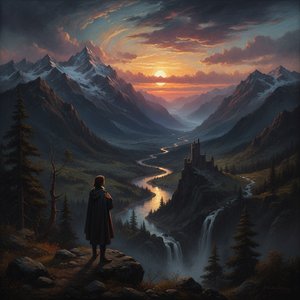
Capturing the Soul: The Emotional Majesty and Sublime Power of Romantic Landscape Painting
Explore the profound emotional depth of Romantic landscape painting. Discover how masters like Turner and Friedrich captured the sublime power of nature through intuition and imagination in this expert art history retrospective.
Fedezze fel a műalkotásokat témák, stílusok és jellemzők szerint csoportosítva.


