


 Előnézet
 Megosztás
 Megosztás
 Részletek
 Útmutató

 Letöltés
 Hasonló darabok
 X-ray felvétel
 Diavetítés
 Statisztika
Model


Cristóbal Balenciaga’s ‘Model’ (1967) captures a striking tweed suit – elegant, geometric & timeless. Explore this iconic fashion photograph and discover the legacy of the 'Master Couturier'.
 Tovább olvasom
Balenciaga: A legend of haute couture! Elegáns, szokatlan formák, avantgárd hatás. Fedezd fel a művész mesterségét és ikonikus ruhadezőinek világát!
Az ezen az oldalon megjelenített műalkotások szerzői jogi védelem alatt állnak, ami azt jelenti, hogy törvényileg nem készíthetünk és nem adhatunk el belőlük pontos másolatokat. Ez a védelem olyan nemzetközi megállapodások alapján érvényesül, mint például a Berni Egyezmény és a nemzeti törvények által, beleértve azokat is, amelyeket meghatározott Az USA szerzői jogi törvénye – 17. cím.
Ez a módszer teljes mértékben megfelel a szerzői jogi szabályozásnak, mivel nem tartalmazza a védett műalkotás másolását vagy duplikálását. Ehelyett ez egy kreatív újinterpretáció – egy új festmény, amely az eredetivel való összefüggései miatt hatással van rá, de nem az az.
Giclée / Műnyomat
Múzeumi minőségű giclée vagy vászonnyomat, gyors gyártással és rugalmas finomítási lehetőségekkel. ( Kézzel festett másolat vásárlása Áttérés digitális képre)




P118B Ft10

P118H Ft10

P118W Ft10

P438Z Ft10

P508JH Ft12

P508YH Ft12

P805H Ft10

P805Z Ft10

P919BZ Ft10

P919G Ft10

P919XJ Ft10

P959ZH Ft10

P968JZ Ft12

W106C Ft8

W218G Ft10

W218JH Ft8

W218Y Ft10

W307PJ Ft10

W316G Ft10

W316PJ Ft8

W316Y Ft10

W398PJ Ft8

W4111J Ft10

W500HY Ft15

W500JH Ft15

W692G Ft12

W849H Ft8

W940BG Ft15

W953PJ Ft8




Standard méret
egyedi
CM
INCH
Válasszon előre meghatározott méreteink közül, amelyek megfelelnek a műalkotás eredeti arányainak.
Loading sizes...

szélesség
magasság
Írja be a keretének vagy a falának megfelelő szélességet és magasságot. A nyomatot csak le lehet vágni, soha nem tehető nagyobbá, mint az eredeti kép, így egy eltérő alakú méretnél a kép egy része elveszik. Mielőtt bármit kinyatintanánk, küldünk egy digitális próbamodellt jóváhagyásra. Az oldalon látható kép nem tartalmazza a valós levágást — ezt csak a próbamodell mutatja meg.
Világszerte történő kiszállítás területére mindössze 2 hét alatt, a szokásos 4-5 hét helyett. (24 október)

Ingyenes globális expressz szállítás

Prémium minőségű len vászon

Teljes körű szállítási biztosítás

Vámvisszatérítési Garancia

Tökéletes színarányosság garancia

100 napos visszaküldési garancia (csak gyártási hibás termékek esetén)

100% pénzvisszatérítési garancia

Több darab vásárlásakor kedvezmény
 Az üvegkeretes opció csak 110 cm alatti méretben érhető el

Model
Giclée / Műnyomat
Reprodukció méretei
-


Összesített ár
Ft 22084
The Enigmatic Silhouette: Unpacking Cristóbal Balenciaga’s ‘Model’
Cristóbal Balenciaga’s 1966 photograph, “Model,” isn't merely a portrait; it’s a distilled essence of the designer’s revolutionary approach to fashion. The image captures a woman, her form enveloped in a striking tweed suit – a garment that immediately speaks of geometric precision and timeless elegance. Yet, beneath this surface simplicity lies a profound exploration of structure, proportion, and the very nature of representation. The photograph, often cited as one of Balenciaga’s most iconic works, transcends its status as a simple fashion image, offering a glimpse into the meticulous process and philosophical underpinnings of his design philosophy.
Balenciaga's genius wasn’t simply about creating beautiful clothes; it was about dissecting them, understanding their fundamental components, and rebuilding them with an almost architectural rigor. “Model” exemplifies this perfectly. The tweed itself is a deliberate choice – a robust, slightly stiff material that resists the drape of traditional fabrics, demanding a precise construction. Notice how the seams are barely visible, suggesting a layering technique designed to create volume without adding bulk. This restraint, this careful control over the fabric’s behavior, is characteristic of Balenciaga's work and reflects his deep understanding of materials – he considered himself more a craftsman than a designer in the conventional sense.
A Masterclass in Architectural Form
The suit’s silhouette isn’t simply flattering; it’s deliberately constructed to evoke a sense of solidity and strength. The fitted bodice, the subtly flared skirt – each element contributes to an overall impression of contained power. Balenciaga was deeply influenced by the art movements of his time, particularly Surrealism and Cubism, which encouraged him to deconstruct familiar forms and reassemble them in unexpected ways. This is evident in the suit’s sharp angles and its almost sculptural quality. The photograph itself becomes a study in form – a meditation on how shape can convey meaning and emotion.
The choice of David Bailey as the photographer further enhances the image's impact. Bailey, known for his stark, black-and-white portraits, captures the subject with an unflinching gaze, emphasizing her posture and the suit’s impeccable tailoring. The lighting is carefully controlled, highlighting the textures of the tweed and casting subtle shadows that accentuate the garment’s three-dimensional form. Bailey's skill lies in revealing the underlying structure of the image, mirroring Balenciaga’s own approach to design.
Echoes of a Lost Era: Context and Legacy
“Model” was created during a pivotal moment in fashion history – the mid-1960s. While Yves Saint Laurent was injecting youthful energy into Parisian couture with his Le Smoking tuxedo, Balenciaga remained steadfastly committed to his own vision of timeless elegance. His designs were often perceived as being ahead of their time, challenging conventional notions of beauty and femininity. The photograph serves as a reminder of this period of creative experimentation and the enduring influence of Balenciaga’s work.
The image also speaks to the broader cultural context of the era – a fascination with architecture, technology, and industrial design. Balenciaga's designs were often described as “architectural,” reflecting a growing interest in geometric forms and functional aesthetics. The photograph captures this spirit perfectly, suggesting that fashion could be both beautiful and intellectually stimulating.
A Timeless Icon: Reproduction and Inspiration
Today, “Model” remains one of the most recognizable images in the history of fashion photography. Its enduring appeal lies in its combination of technical skill, artistic vision, and emotional resonance. Reproductions of this photograph are highly sought after by collectors and interior designers alike, who appreciate its timeless elegance and its ability to evoke a sense of sophistication and refinement. When commissioning a hand-painted reproduction, it’s crucial to select an artist who understands Balenciaga's meticulous approach to detail and his commitment to capturing the essence of his designs.
Gyakran Ismételt Kérdések
Mi magyarázza a „Model”, Cristóbal Balenciaga alkotása szerzői jogi helyzetét?
A "Model" szerzői jogi státusza - még szerzői jogにより védi - a művész 1972 évi halálából következik.
Milyen technikával és milyen stílusban készült a "Model"?
A "Model" alkotás Acrylic On Canvas technikával készült, a Early Modernism stílusban.
Maradt-e a "Model" mű a művész hon országában?
Igen – a műmű a művész honcountryjában található. Cristóbal Balenciaga születési országa Spanyolország, a „Model” eredeti művét pedig Spanyolország-ban tároló múzeum található.
A művész életrajza
Early Life and Artistic Beginnings
Cristóbal Balenciaga Eizaguirre, a name synonymous with revolutionary elegance in the world of haute couture, was born in 1895 in Getaria, a small fishing village nestled on the rugged coast of Spain’s Basque Country. This remote location, steeped in maritime tradition and surrounded by dramatic cliffs and crashing waves, would profoundly shape his artistic sensibility – a deep appreciation for structure, precision, and the inherent beauty of natural forms. His early life was marked by a close connection to his mother, a seamstress who instilled in him a profound respect for textiles and the meticulous craft of garment construction. Witnessing her dedication to detail and the artistry involved in transforming simple fabrics into wearable works of art ignited within him a lifelong passion for design. He began his apprenticeship at just twelve years old, learning the fundamentals of tailoring from a local master craftsman, absorbing techniques that would later become hallmarks of his distinctive style. This formative period laid the groundwork for his future mastery – an understanding of materials, construction, and the subtle power of form.The Rise to Parisian Prominence
Following his apprenticeship, Balenciaga’s ambition led him to San Sebastián, where he honed his skills further, eventually opening his own couture house in 1917. His early successes were fueled by patronage from prominent Spanish figures, including the Marchioness of Casa Torres, a wealthy socialite who recognized and nurtured his talent. This connection provided invaluable experience and exposure, allowing him to refine his designs and establish a reputation for impeccable quality and innovative silhouettes. In 1937, seeking new challenges and opportunities, Balenciaga moved to Paris – the undisputed heart of the fashion world. Here, he quickly established himself as a force to be reckoned with, opening a prestigious atelier on Avenue George V. His Parisian career was marked by a relentless pursuit of perfection, a commitment to pushing the boundaries of design, and an unwavering belief in his own artistic vision. He collaborated with some of the most influential figures in fashion, including Coco Chanel and Christian Dior, each of whom recognized and admired his unparalleled skill and unique aesthetic.A Revolutionary Approach to Design
Balenciaga’s designs were characterized by a remarkable departure from the prevailing trends of the mid-20th century. He rejected the overtly feminine silhouettes popularized by designers like Dior, instead favoring clean lines, geometric shapes, and an almost sculptural quality in his garments. His influence stemmed from a deep understanding of construction – he meticulously studied the way fabrics draped and moved on the human form, creating designs that were both elegant and remarkably comfortable. Key to his style was the introduction of the “barrel line” in 1947, a dramatic shift away from the traditional waistline, resulting in voluminous shapes that redefined women’s fashion. He also pioneered the "sack dress" in 1957 – a deceptively simple garment with no discernible waist – and the cocoon coat, demonstrating his ability to create garments that were both innovative and timeless. Balenciaga's work was deeply influenced by art movements such as Surrealism and Primitivism, evident in his experimental use of materials and forms.Legacy and Enduring Influence
Cristóbal Balenciaga’s impact on the world of fashion is immeasurable. He wasn’t merely a couturier; he was an architect of elegance, a master craftsman who elevated garment construction to an art form. His designs continue to inspire contemporary designers, demonstrating that true innovation lies not in fleeting trends but in a profound understanding of form, structure, and the beauty of simplicity. The Museo Balenciaga in Getaria, his birthplace, serves as a testament to his enduring legacy, preserving and celebrating his remarkable creations. He remains an iconic figure – “The Master” as he was affectionately known by his peers – whose influence continues to shape the aesthetic landscape of fashion today. His work stands as a powerful reminder that true artistry lies in the meticulous execution of a clear vision.
Cristóbal Balenciaga
1895 - 1972 , Spanyolország
Gyors információk
- Artistic Movement Or Style: Avant-garde / Surrealista
- Artists Or Movements Influenced By This Artist: ['Hubert de Givenchy']
- Artists Who Influenced This Artist:
- Christian Dior
- Coco Chanel
- Date Of Birth: 1895. jan 21.
- Date Of Death: 1972. már 23.
- Full Name: Cristóbal Balenciaga Eizaguirre
- Nationality: Spanyol
- Notable Artworks:
- Study 'Song of Songs IV'
- Állapot gyökerei
- Acrobata
- Place Of Birth: Getaria, Spanyolország
Kapcsolódó cikkek

Gianfranco Ferré: Deconstructing Haute Couture – A Legacy of Architectural Form
Explore the revolutionary world of Gianfranco Ferré, 'the architect of fashion.' Discover his architectural approach to haute couture, iconic Dior designs, and lasting influence on luxury style. A deep dive for collectors & enthusiasts.

Cristóbal Balenciaga: Deconstructing Haute Couture's Architectural Legacy
Explore the revolutionary world of Cristóbal Balenciaga, the 'couturier's couturier'. Discover his architectural designs, lasting influence on haute couture, and guide to collecting rare pieces. A connoisseur’s resource.

Draped Narratives: Fashion as Symbol & Subject in Historical Art
Explore the fascinating history of fashion as a symbol of power & status in art! Discover masterpieces from Gainsborough to Tissot and learn how clothing shaped societal narratives. Find museum-quality reproductions at TopImpressionists.
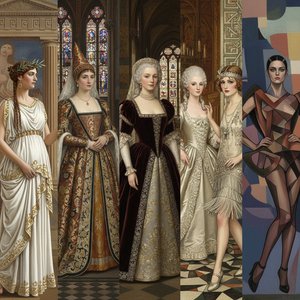
Style Through the Ages: Iconic Artworks That Defined the Evolution of Fashion Design
Explore the breathtaking intersection of fine art and high fashion. Discover how iconic masterpieces from Art Deco to Impressionism have shaped the world of luxury couture and timeless design in this curated visual journey.

The Lens of Luxury: A Visual Journey Through the Evolution and Artistry of Fashion Photography
Embark on a visual journey through the evolution of fashion photography. Discover how masters like Gianfranco Ferré blended geometry, surrealism, and texture to redefine high-fashion art for collectors and connoisseurs of luxury imagery.
Fedezze fel a műalkotásokat témák, stílusok és jellemzők szerint csoportosítva.


