


 Előnézet
 Megosztás
 Megosztás
 Részletek
 Útmutató

 Letöltés
 Hasonló darabok
 X-ray felvétel
 Diavetítés
 Statisztika
The Lomond Hills
 Impressionism
 1926
1926 51.0 x 61.0 cm
Admire Douglas Gordon Shields’ "The Lomond Hills" (1926). This impressionistic landscape captures serene Scottish hills & village life with visible brushstrokes & atmospheric depth.
Explore the evocative portraits & landscapes of Douglas Gordon Shields, renowned Scottish painter capturing Victorian society & natural beauty. Discover his legacy!
 Tovább olvasom
Az ezen az oldalon megjelenített műalkotások szerzői jogi védelem alatt állnak, ami azt jelenti, hogy törvényileg nem készíthetünk és nem adhatunk el belőlük pontos másolatokat. Ez a védelem olyan nemzetközi megállapodások alapján érvényesül, mint például a Berni Egyezmény és a nemzeti törvények által, beleértve azokat is, amelyeket meghatározott Az USA szerzői jogi törvénye – 17. cím.
Mint tiszteletes és törvényes alternatívát, olyan egyedi, kézzel festett alkotásokat kínálunk, amelyek az eredetiből merítnek inspirációt. Tapasztalt és professzionális művészeink alaposan tanulmányozzák az eredeti stílusát, hangulatát és művészeti esszenciáját, hogy egy olyan új, egyedi alkotást hozzunk létre, amely ugyanazt az érzést kelti – miközben önálló, eredeti alkotásként létezik.
Ez a módszer teljes mértékben megfelel a szerzői jogi szabályozásnak, mivel nem tartalmazza a védett műalkotás másolását vagy duplikálását. Ehelyett ez egy kreatív újinterpretáció – egy új festmény, amely az eredetivel való összefüggései miatt hatással van rá, de nem az az.
Kézzel készített olajfestmény reprodukció
Kézzel festett olajvastú vászon, az Ön által választott méretben és keretben, művészeink készítik meglévőre. ( Váltás nyomtatványra Áttérés digitális képre)




































Standard méret
egyedi
CM
INCH
Válasszon előre meghatározott méreteink közül, amelyek megfelelnek a műalkotás eredeti arányainak.
Loading sizes...

szélesség
magasság
Írja be a kívánt szélességet és magasságot, hogy illeszkedjen a keretéhez vagy a falához. Mivel ez kézzel festett alkotás, egy eltérő formájú méret esetén a művész akár festhet is valamivel többet a kép körül, vagy korolathat is belőle — az Ön döntésének megfelelően. A festés megkezdése előtt küldünk egy digitális tervezetet jóváhagyásra. Az oldalon látható kép nem tartalmazza a végeredményt — csak a tervezet mutatja meg a valódi eredményt.
Példák arra, mit lehet módosítani: az arc kicserélése az ügyfél fotójára; háziállat hozzáadása (pl. macska helyett kutya); rejtett üzenet elhelyezése a háttérben; a háttér tájának vagy elemeinek megváltoztatása.
A rendelést követően a TopImpressionists.com csapata e-mailt küld az ügyfélnek az instrukciókért, és biztosít egy előnézeti képet (mockup).
A rendelést követően a TopImpressionists.com csapata e-mailt küld az ügyfélnek az instrukciókért, és biztosít egy előnézeti képet (mockup).
Világszerte elérhető szállítás () 3-4 hét alatt a szokásos 5 hét helyett. (24 október). A minőség nem kérdőjelezhető.

Ingyenes globális expressz szállítás

Prémium minőségű len vászon

Teljes körű szállítási biztosítás

Vámvisszatérítési Garancia

Tökéletes színarányosság garancia

100 napos visszaküldési garancia (csak gyártási hibás termékek esetén)

100% pénzvisszatérítési garancia

Több darab vásárlásakor kedvezmény
 Az üvegkeretes opció csak 110 cm alatti méretben érhető el

The Lomond Hills
Reprodukciós technika
Reprodukció méretei
-


Összesített ár
Ft 86477
Hasonló műalkotások


A művész életrajza
The Visionary of the Highlands: The Life and Art of Douglas Gordon Shields
In the tapestry of Scottish art history, few threads are as richly colored or as evocative as those woven by Douglas Gordon Shields. Born in Glasgow in 1888, Shields emerged during a transformative era, a time when the lingering romanticism of the Victorian age began to dance with the burgeoning light and movement of modernism. His life, spanning from the late nineteenth century to his passing in 1940, serves as a bridge between two worlds: the disciplined, academic traditions of the Glasgow School of Art and the ethereal, atmospheric freedom of Impressionism. To look upon a Shields canvas is to witness a profound dialogue between the meticulous observation of reality and the emotional resonance of the Scottish landscape.
Shields’ artistic foundation was laid within the prestigious halls of the Glasgow School of Art, where he immersed himself in the rigorous techniques of academic painting. This period of his life was defined by a disciplined pursuit of mastery, learning to render textures, light, and form with an almost scientific precision. His early training instilled in him a reverence for detail that would later allow him to excel in the demanding genre of portraiture. As he began to establish his reputation, Shields became a sought-after chronicler of the Scottish elite. His portraits were far more than mere likenesses; they were psychological studies imbued with dignity and grace. Whether capturing the stern resolve of an industrialist or the delicate elegance of a lady, such as in his hauntingly beautiful The Lady in the Blue Cloak, Shields possessed a rare ability to translate the very essence of his subjects onto the canvas through subtle tonal gradations and masterful handling of fabric.
A Symphony of Light and Landscape
While the structured world of portraiture provided him with professional prominence, it was the wild, untamed beauty of the Scottish Highlands that truly captured Shields’ soul. As his career progressed, a stylistic metamorphosis began to take hold, driven by an undeniable passion for the fleeting moments of nature. Influenced by the luminous innovations of Claude Monet and Frédéric Bazille, Shields moved away from the rigid boundaries of academic realism toward the soft, breathing edges of Impressionism. He began to prioritize the way light dances across a glen or how mist clings to a mountain peak, favoring loose, expressive brushstrokes over exacting lines.
This shift allowed him to create works that felt less like static images and more like living memories. His depictions of the Lomond Hills stand as quintessential examples of this late-period mastery. In these landscapes, one can sense the atmospheric depth and the vibrant, shifting color palettes that convey a profound sense of immediacy. He did not merely paint the land; he painted the air surrounding it, the moisture in the breeze, and the quiet, rhythmic pulse of Highland life. This ability to blend the structural integrity of his early training with an Impressionistic sensitivity to light is what elevates his landscape work from mere scenery to poetic expression.
Legacy and Artistic Significance
The oeuvre of Douglas Gordon Shields, comprising approximately 150 significant paintings, remains a testament to a life dedicated to the pursuit of visual truth. His significance lies in his unique position as a transitional figure who could navigate the complexities of both the formal and the fluid. He honored the traditions of his predecessors—the Pre-Raphaelite aesthetics and Romantic idealism that shaped his youth—while fearlessly embracing the modern impulse to capture the ephemeral.
Today, his work continues to resonate with those who seek the sublime in the natural world and the profound in the human countenance. His legacy is found in:
- The mastery of texture: His ability to render the weight of velvet and the roughness of stone with equal brilliance.
- Atmospheric storytelling: The way his landscapes evoke the specific, haunting moods of the Scottish climate.
- Cultural preservation: His role in documenting the faces and the vistas of a Scotland caught between the Victorian era and the modern age.
Through his eyes, we are invited to rediscover the Highlands not just as a geographical location, but as an emotional landscape of light, shadow, and enduring beauty.

Gyors információk
- Artistic Movement Or Style: Victorian Art
- Artists Or Movements Influenced By This Artist: ['Impressionism']
- Artists Who Influenced This Artist: ['Pre-Raphaelites']
- Date Of Birth: 1888
- Full Name: Douglas Gordon Shields
- Nationality: Scottish
- Notable Artworks:
- The Lady in the Blue Cloak
- Glassford Walker
- The Lomond Hills
- Place Of Birth: Glasgow, Scotland
Kapcsolódó cikkek
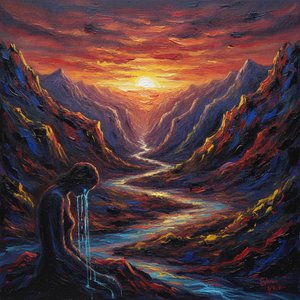
Capturing Emotion: A Journey Through the Soul of Expressionist Landscapes
Explore the profound emotional depth of Expressionist landscapes. Discover how Post-Impressionist masters moved beyond light to capture the soul through vibrant color and form. A curated journey for true art lovers seeking the beauty of expressive mastery.

Whispers of the Meadow: Capturing the Serenity of the Quiet Countryside in Impressionist Masterpieces
Embark on a visual journey through Impressionist masterpieces. Discover how masters like Monet and Renoir captured the serene beauty of the countryside through light, color, and emotion. Explore timeless landscapes designed to bring tranquility and cultural elegance to your home sanctuary.

Beyond the Light: Capturing Raw Emotion and Subjective Vision in Post-Impressionist Landscapes
Explore the profound emotional depth of Post-Impressionist landscapes. Discover how masters like Van Gogh moved beyond light to capture raw human feeling through vibrant color and expressive texture in this expert art history retrospective.

Capturing the Soul: The Most Emotionally Moving Impressionist and Post-Impressionist Masterpieces
Discover the profound emotional depth of Impressionist and Post-Impressionist masterpieces. Explore how legends like Monet, Van Gogh, and Gauguin captured light and soul through evocative landscapes and vibrant brushwork for a timeless connection to art history.