


 Előnézet
 Megosztás
 Megosztás
 Részletek
 Útmutató

 Letöltés
 Hasonló darabok
 X-ray felvétel
 Diavetítés
 Statisztika
Farmyard


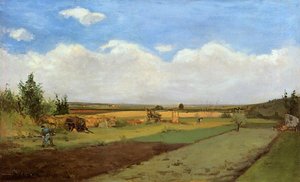
Admire 'Farmyard' by Dwight William Tryon (1896), a quintessential Tonalist landscape capturing rural tranquility. A beautiful depiction of cows & barn life, hand-painted for collectors.
Dwight William Tryon (1849-1925) amerikai tonalista festő, a csendes tájak és tengerparti jelenetek híres alkotója. Whistler hatása érezhető munkáiban, melyek nyugodt légkört és természet szépségét ábrázolják.
 Tovább olvasom
Kézzel készített olajfestmény reprodukció
Kézzel festett olajvastú vászon, az Ön által választott méretben és keretben, művészeink készítik meglévőre. ( Váltás nyomtatványra Áttérés digitális képre)




P118B Ft10

P118H Ft10

P118W Ft10

P438Z Ft10

P508JH Ft12

P508YH Ft12

P805H Ft10

P805Z Ft10

P919BZ Ft10

P919G Ft10

P919XJ Ft10

P959ZH Ft10

P968JZ Ft12

W106C Ft8

W218G Ft10

W218JH Ft8

W218Y Ft10

W307PJ Ft10

W316G Ft10

W316PJ Ft8

W316Y Ft10

W398PJ Ft8

W4111J Ft10

W500HY Ft15

W500JH Ft15

W692G Ft12

W849H Ft8

W940BG Ft15

W953PJ Ft8




Standard méret
egyedi
CM
INCH
Válasszon előre meghatározott méreteink közül, amelyek megfelelnek a műalkotás eredeti arányainak.
Loading sizes...

szélesség
magasság
Írja be a kívánt szélességet és magasságot, hogy illeszkedjen a keretéhez vagy a falához. Mivel ez kézzel festett alkotás, egy eltérő formájú méret esetén a művész akár festhet is valamivel többet a kép körül, vagy korolathat is belőle — az Ön döntésének megfelelően. A festés megkezdése előtt küldünk egy digitális tervezetet jóváhagyásra. Az oldalon látható kép nem tartalmazza a végeredményt — csak a tervezet mutatja meg a valódi eredményt.
Példák arra, mit lehet módosítani: az arc kicserélése az ügyfél fotójára; háziállat hozzáadása (pl. macska helyett kutya); rejtett üzenet elhelyezése a háttérben; a háttér tájának vagy elemeinek megváltoztatása.
A rendelést követően a TopImpressionists.com csapata e-mailt küld az ügyfélnek az instrukciókért, és biztosít egy előnézeti képet (mockup).
A rendelést követően a TopImpressionists.com csapata e-mailt küld az ügyfélnek az instrukciókért, és biztosít egy előnézeti képet (mockup).
Világszerte elérhető szállítás () 3-4 hét alatt a szokásos 5 hét helyett. (21 október). A minőség nem kérdőjelezhető.

Ingyenes globális expressz szállítás

Prémium minőségű len vászon

Teljes körű szállítási biztosítás

Vámvisszatérítési Garancia

Tökéletes színarányosság garancia

100 napos visszaküldési garancia (csak gyártási hibás termékek esetén)

100% pénzvisszatérítési garancia

Több darab vásárlásakor kedvezmény
 Az üvegkeretes opció csak 110 cm alatti méretben érhető el

Farmyard
Reprodukciós technika
Reprodukció méretei
-


Összesített ár
Ft 84995
Hasonló műalkotások




A művész életrajza
Early Life and Artistic Beginnings
Dwight William Tryon’s story begins in the quiet heart of Connecticut, specifically in Hartford, where he was born on August 13, 1849. His early years were shaped by a poignant loss – the untimely death of his father left him under the care of his grandparents on their farm in East Hartford. This immersion in rural life proved to be an unexpectedly formative experience, deeply imprinting upon him a profound connection with nature and its subtle rhythms. Remarkably, Tryon’s artistic inclinations emerged organically, without formal training initially. He wasn't driven by a grand ambition but rather by a quiet fascination with the world around him. His path into art began not through structured lessons, but through a job at a prominent Hartford bookstore – a place where he discovered instructional manuals and ignited his self-directed learning journey. He spent countless hours sketching the familiar landscapes of East Hartford, translating the shifting light and shadows onto paper, honing his observational skills with remarkable dedication. This early practice culminated in his first sale in 1870, a modest beginning that nonetheless signaled the blossoming of a talent soon to be recognized by wider audiences. His acceptance into the National Academy of Design in 1873 marked a significant milestone, providing him with formal training and a platform for exhibiting his work.European Influences and the Shaping of a Style
Driven by a desire to refine his skills and explore new artistic horizons, Tryon embarked on a transformative journey to France in 1876. This move represented more than just a relocation; it was an immersion into the heart of European art. He enrolled at the École des Beaux-Arts in Paris, immersing himself in the vibrant currents of the time and studying under esteemed instructors like Jacquesson de la Chevreuse. However, his education extended far beyond the confines of the classroom. He actively sought guidance from luminaries such as Charles-François Daubigny, Henri Harpignies, and Jean Baptiste-Antoine Guillemet, absorbing their techniques, philosophies, and approaches to capturing light and atmosphere. Initially, Tryon’s style leaned towards Luminism – a movement characterized by its emphasis on the effects of light and atmospheric perspective. Yet, his artistic path soon diverged, drawn toward the principles of the Barbizon School, a movement that prioritized direct observation of nature and a more subdued, earthy palette. The Barbizon School, with its focus on capturing the essence of the landscape rather than meticulously rendering every detail, resonated deeply with Tryon’s own connection to the natural world. Surrounded by the burgeoning Impressionist movement in France – with artists like Monet and Renoir experimenting with new techniques – Tryon remained steadfastly committed to the Barbizon aesthetic, finding a greater sense of harmony and authenticity in its contemplative mood and realistic depiction of nature. The influence of James McNeill Whistler was particularly profound; his tonalist style—emphasizing subtle gradations of color and atmosphere—left an indelible mark on Tryon’s artistic development, shaping his approach to capturing the nuances of light and shadow.Mature Style and Atmospheric Landscapes
By the late 1880s, Dwight William Tryon had fully realized his distinctive artistic style – a signature approach that would define his legacy as a leading American Tonalist. His canvases often featured a carefully considered composition: a grouping or broken row of trees positioned in the middle distance, acting as a visual bridge between a luminous sky above and a foreground marsh or pasture below. These scenes were frequently imbued with autumnal hues – rich browns, golds, and russets – evoking a sense of tranquility, melancholy, and the passage of time. Beyond landscapes, Tryon also excelled at seascapes, skillfully utilizing pastel to capture the expansive beauty of water, sky, and beach under varying weather conditions. His mastery lay not in precise detail but in his ability to convey atmosphere—the subtle shifts in light, the delicate interplay of color, and the overall mood of a scene. *Salt-Marsh, December*, which garnered first prize at the Tennessee Centennial Exposition in 1897, stands as a prime example of this skill – a testament to his talent for capturing the serene beauty of the natural world. His paintings were consistently exhibited nationally, gaining recognition at prestigious venues such as the Pennsylvania Academy of Fine Arts and the Montross Gallery.Patronage, Recognition, and Lasting Legacy
The trajectory of Tryon’s career was significantly bolstered by his relationship with Charles Lang Freer, a discerning collector who became his most important patron. Freer acquired dozens of Tryon's works, providing him with financial security and enabling him to fully dedicate himself to his art. This generous support allowed Tryon to travel extensively throughout Europe, studying the landscapes and techniques of master artists. Furthermore, Freer’s influence extended beyond mere patronage; he encouraged Tryon to experiment with new approaches and refine his artistic vision. In 1908, Tryon received the Carnegie Prize at the Carnegie Exhibition – a prestigious award that cemented his position among the leading American landscape painters of his time. Throughout his career, Tryon remained an active member of several prominent art organizations, including the Society of American Artists, the American Watercolor Society, and the National Institute of Arts and Letters (now the American Academy of Arts and Letters). In 1887, he established a summer home in South Dartmouth, Massachusetts – a tranquil retreat where he continued to paint and develop his artistic practice. Dwight William Tryon passed away on July 1, 1925, leaving behind a rich artistic legacy defined by his contribution to American Tonalism and his exceptional ability to capture atmospheric landscapes and seascapes with delicate color and refined feeling. His works continue to be celebrated and are held in prominent collections such as the Smithsonian American Art Museum and the Freer Gallery of Art, ensuring that his vision endures for generations to come.
Dwight William Tryon
1849 - 1925 , Egyesült Államok
Gyors információk
- Artistic Movement Or Style: Tonalizmus, Barbizon
- Artists Or Movements Influenced By This Artist: ['Impressionizmus']
- Artists Who Influenced This Artist:
- Whistler
- Daubigny
- Harpignies
- Date Of Birth: Augusztus 13, 1849
- Date Of Death: Július 1, 1925
- Full Name: Dwight William Tryon
- Nationality: Amerikai
- Notable Artworks:
- Salt-Marsh, December
- Spring
- Newbury Haystacks
- Place Of Birth: Hartford, USA
Kapcsolódó cikkek

Capturing the Soul of Nature: A Journey Through the Sublime Majesty of American Romanticism
Explore the breathtaking beauty of American Romanticism. Discover how Hudson River School masters captured the sublime spirit of the wilderness through luminous oil landscapes and emotional depth. A journey into the soul of nature for the true art enthusiast.