

Shown: · With its frame:
 Megtekintés
 Küldés
 Megosztás
 Részletek
 Útmutató

 Letöltés
 Hasonló darabok
 X-ray felvétel
 Diavetítés
 Q&A
Q&A Statisztika
- 72.0 x 106.0 cm


Ft 88091
Kézzel készített olajfestmény reprodukció
Kézzel festett olajvastú vászon, az Ön által választott méretben és keretben, művészeink készítik meglévőre. ( Váltás nyomtatványra Áttérés digitális képre)
Size
·Standard méret
egyedi méretű
CM
INCH
Válasszon előre meghatározott méreteink közül, amelyek megfelelnek a műalkotás eredeti arányainak.
Loading sizes...

szélesség
magasság
Írja be a kívánt szélességet és magasságot, hogy illeszkedjen a keretéhez vagy a falához. Mivel ez kézzel festett alkotás, egy eltérő formájú méret esetén a művész akár festhet is valamivel többet a kép körül, vagy korolathat is belőle — az Ön döntésének megfelelően. A festés megkezdése előtt küldünk egy digitális tervezetet jóváhagyásra. Az oldalon látható kép nem tartalmazza a végeredményt — csak a tervezet mutatja meg a valódi eredményt.
 További információk
Finish
·
White Ft1

Blurside Ft1

Extended Ft1

P118B Ft10

P118H Ft10

P118W Ft10

P438Z Ft10

P508JH Ft12

P508YH Ft12

P805H Ft10

P805Z Ft10

P919BZ Ft10

P919G Ft10

P919XJ Ft10

P959ZH Ft10

P968JZ Ft12

W106C Ft8

W218G Ft10

W218JH Ft8

W218Y Ft10

W307PJ Ft10

W316G Ft10

W316PJ Ft8

W316Y Ft10

W398PJ Ft8

W4111J Ft10

W500HY Ft15

W500JH Ft15

W692G Ft12

W849H Ft8

W940BG Ft15

W953PJ Ft8

H24-GOLD Ft30

H24-SILVER Ft30

H36-GOLD Ft45

H36-SILVER Ft45
Shipped in a protective tube, ready for your own framer.
Above 105 cm the frame is shipped as a kit for a professional framer — read the details.
Extras
optionalWhat do the extras include?
Examples of what can be changed: Replace face with customer photo; Add pet (e.g., replace cat with dog); Include hidden message in background; Change background landscape or elements.
After order, TopImpressionists.com team will email client for instructions and provide a mockup preview
After order, TopImpressionists.com team will email client for instructions and provide a mockup preview
Világszerte elérhető szállítás () 3-4 hét alatt a szokásos 5 hét helyett. (2 november). A minőség nem kérdőjelezhető.
Védőréteg (Lakk)
Névtábla
A gravírozott bronztábla részletei
This elegant plaque features the artist's name and the title of the artwork, finely engraved for a timeless presentation.
It is made from bronze with a refined, elegant finish. The text is precisely laser-engraved for a sharp and permanent result. Measuring 9x2 cm, the plaque is compact yet easy to read. It's built to be durable and scratch-resistant, offering a professional, museum-quality look. Mounting is simple thanks to the included adhesive backing.
Átlátszó akril tábla részletei
The plaque includes essential engraved details such as the artist's name, the title of the artwork, the date it was created, the type of media used-like oil on canvas or watercolor-a brief description of the piece, and a QR code that links to the complete artwork information.
It is crafted from clear acrylic, offering a sleek, modern appearance. The text is UV-engraved in black to ensure strong visual contrast. With a size of 10x15 cm, it ensures optimal readability. It comes equipped with two metal hooks for secure wall mounting. The plaque is designed to be weather-resistant, making it suitable for various environments, and it includes interactive features that work seamlessly with smartphone scanning.
Fekete akril tábla részletei
This elegant plaque includes engraved information such as the artist's name, the title of the artwork, the date it was created, the type of media used (like oil on canvas or watercolor), a short description of the artwork, and a QR code for quick access to more information.
The plaque itself is made from refined black acrylic with a premium finish. The text is laser-engraved in white for high contrast and readability. Its size is 10x15 cm, designed to be easy to read. It comes with two metal hooks for professional mounting. The design is sleek and fits any interior style. It is also weather-resistant and durable, with built-in digital integration for mobile compatibility.
Az üvegkeretes opció csak 110 cm alatti méretben érhető el
 Az üvegkeretes opció csak 110 cm alatti méretben érhető el
- Ingyenes globális expressz szállítás
- Prémium minőségű len vászon
- Teljes körű szállítási biztosítás
- Vámvisszatérítési Garancia
- Hiteles színarányosság garancia
- 100 napos visszaküldési lehetőség (csak hibás termékek esetén)
- 100% pénzvisszatérítési garancia
- Több darab vásárlásakor kedvezmény


A gyűjtemény leírása
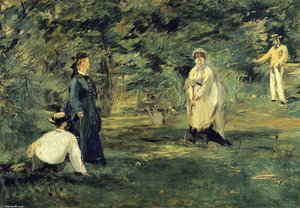
Experience Édouard Manet's 'The Croquet Party,' a vibrant snapshot of Parisian life in 1873. This oil painting captures a lively game with family & friends, showcasing Impressionism’s realism and social commentary.
A művész életrajza
Édouard Manet (1832-1883): A realizmus és impresszionizmus határát jelentő francia festő, aki megújította a modern művészet fogalmát! Fedezze fel ikonikus alkotásait!
About the painting
A Parisian Moment Frozen in Time: Manet’s “The Croquet Party”
Édouard Manet's "The Croquet Party" (La partie de croquet), painted in 1873, isn’t merely a depiction of an afternoon pastime; it’s a carefully constructed tableau capturing the vibrant social life and evolving artistic sensibilities of late 19th-century Paris. More than just a snapshot of leisure, the painting offers a subtle commentary on modernity, class, and the changing role of the artist within society – themes that would become central to Manet's legacy. The scene unfolds in a meticulously rendered garden setting, bathed in the soft light characteristic of Impressionism, yet imbued with a distinctly Realist sensibility. Notice how Manet eschews idealized beauty or dramatic narrative, instead presenting an ordinary moment elevated through his masterful observation and technical skill.A Gathering of Friends and Artistic Figures
The painting’s subject matter is deceptively simple: a group of friends enjoying a game of croquet. However, the individuals depicted are far from anonymous; they represent a constellation of Parisian artists, writers, and social figures who formed Manet's close circle. Paul Roudier, a lifelong friend and fellow artist, stands prominently on the left, engaging directly with the viewer – an unusual gesture for portraiture at the time. Beside him is Jeanne Gonzalès, a talented painter herself, and further in the background are recognizable faces like Léon Leenhoff (Suzanne Manet’s son) and Marie-Céline Ragut, reflecting Manet's own family life. The inclusion of these figures wasn’t accidental; it served to establish Manet as part of this artistic community, a position he actively sought to occupy. The painting is not just about the game itself but about the relationships and conversations that unfolded within its context.Impressionistic Techniques and a Shifting Light
Manet’s brushwork is remarkably loose and suggestive, a hallmark of Impressionism – a movement he helped pioneer. He employed broken color and rapid strokes to capture the fleeting effects of light and atmosphere, particularly evident in the dappled sunlight filtering through the trees and casting shadows across the lawn. Unlike the smooth, polished surfaces favored by academic painters, Manet’s canvas retains a sense of immediacy and spontaneity. The use of *plein air* painting techniques – working directly from nature – is subtly present, contributing to the overall feeling of capturing a transient moment. Note how he uses subtle gradations of color to create depth and volume, particularly in the depiction of the figures' clothing and the surrounding foliage.Symbolism and the Modern Gaze
Beyond its surface appearance, “The Croquet Party” is rich with symbolic meaning. The game itself – croquet – was a fashionable pastime among Parisian artists and intellectuals during this period, representing leisure, social interaction, and intellectual discourse. Manet’s direct address to the viewer through Roudier's gaze invites us into the scene, blurring the boundaries between observer and participant. This deliberate inclusion of the spectator is a key element of Manet’s innovative approach to painting – he sought to engage the audience directly, challenging traditional notions of artistic representation. The slightly off-kilter composition and the casual, unposed manner of the figures also reflect the growing sense of modernity and the rejection of rigid social conventions that characterized Parisian life in the 1870s.A Legacy of Innovation
“The Croquet Party” stands as a pivotal work in Manet’s artistic development, bridging the gap between Realism and Impressionism. It demonstrates his willingness to depict contemporary subjects with honesty and psychological insight, while simultaneously pushing the boundaries of traditional painting techniques. The painting's influence can be seen in the works of later artists who followed in Manet’s footsteps, paving the way for modern art movements like Post-Impressionism and Fauvism. Today, it remains a captivating example of Manet’s genius – a vibrant testament to the pleasures of Parisian life and a profound exploration of the complexities of human relationships.Kérdések és válaszok
Használhatom az augmented reality technológiát, hogy megtekintsem a „Croquet”, Édouard Manet alkotása művet a saját szobámban?
A(z) "Croquet" kiterjesztett valóság (AR) előnézettel rendelkezik: a mű Kiterjesztett valóság előnézet oldalán kompatibilis eszközön megtekinthető saját környezetében.
Hol vásárolható „Croquet”, Édouard Manet alkotása képmű kézzel festett másolata?
A "Croquet" kézzel festett olajfesték reprodukció lino vászonon formátumban is elérhető. A rendelés a Kézzel festett másolat oldalon adható le, különböző méretválasztékban.
Milyen méretben és milyen elrendezésben javasolt a(z) "Croquet" kinyomtatása?
A "Croquet" esetében a javasolt nyomtatási beállítás a Large méret és a Landscape orientáció.
Quick facts and art quiz
About Édouard Manet

Édouard Manet
1832 - 1883, Franciaország
A művész életrajza
Édouard Manet: A modern élet festője, a konvenciók megújítója
Édouard Manet 1832-ben született Párizsban, egy tehetős polgári családban. Apja, tiszteletreméltő bíró, biztonságos jövőt képzelt el fiának a jogi pályán vagy éppen a haditengerészetnél – méltó foglalkozásokat családjuk társadalmi helyzetéhez mérten. Mégis, már gyerekként Manet szívét a művészetért dobogott. Tizenegy évesen kezdett formalizált rajzórákat venni, és bár rövid ideig Thomas Couture akadémiai festő tanítványa volt, hamar elnyomónak találta mestere merev módszereit. Ez a korai ellenállás vetített előre egy olyan életet, amelyben állandóan kihívta a művészi konvenciókat. Manet nem egyszerűen a múltat akarta másolni; arra törekedett, hogy megragadja a modern párizsi élet vibrálását – és néha nyugtalanító valóságát is. Gyakran járt a Louvre-ban, nem csupán az Ómesterek másolgatására, hanem technikájuk feltárására, tanulva Caravaggiótól és Velázquez-től, hogyan formázhatják a fényt és az árnyékot, hogyan idézhetők elő érzelmek. Azonban a művészeti áramlatok eltolódása, különösen Gustave Courbet által képviselt realizmus felemelkedése élesztette igazán be Manet kreatív ösvényét. Courbet ragaszkodása a mindennapi élet ábrázolásához idealizálás nélkül mélyen rezonált Manettel, felszabadítva őt a történelmi vagy mitológiai témák kényszeréből.A hagyományok megkerülése: botrány és innováció
Az 1860-as évek Párizsban a művészeti pezsgés időszaka volt, és Manet találta magát ennek középpontjában. A japán nyomatok – az *ukiyo-e* – mélyen hatottak esztétikai érzékenységére. Magával ragadta őket a lapos perspektívák, merész kompozíciók és feltűnő színek, amelyek saját stílusa jellegzetességeivé váltak. Ez a befolyás, akadémiai polír elutasításával kombinálva olyan alkotásokhoz vezetett, amelyek megdöbbentették és felháborították a párizsi művészeti világot. A Le Déjeuner sur l'herbe (A reggeli a szabadban), amelyet 1863-ban mutattak be a Salon des Refusés-n – egy kiállításon, amelyen az hivatalos Szalon által elutasított műveket állították ki – azonnali viták forrása lett. A festmény, amelyen egy meztelen nő piknikezik két teljesen öltözött férfival, nem a meztelenségről szólt; arról szólt, *hogyan* mutatták be ezt a meztelenséget. Manet alakjai hiányolták a hagyományos mezítelenek idealizált formáit és mitológiai kontextusát. Tagadhatatlanul modernnek számítottak, nyugtalanító közvetlenséggel szembesítve a nézőt. A Le Déjeuner körüli botrány még intenzívebb lett 1865-ös remekművével, az Olympiaval. Ez a festmény, Titian *Urbinói Vénuszá*nak szándékos újraalkotása, egy kortárs prostituáltat ábrázolt, amely merészen nézett szembe a nézővel. A könyörtelen realizmus és provokatív téma széles körű elítélést váltott ki. A kritikusok vulgárisággal és művészi inkompetenciával vádolták Manet-t, de a felháborodás alatt felismerés rejlett: alapvetően megváltoztatta a festészet nyelvét.A realizmus és az impresszionizmus között: fény, ecsetkezelés és modern élet
Bár Manet sosem fogadta el teljes mértékben az „impresszionista” jelzőt, hatása a mozgalomra vitathatatlan volt. Megosztotta velük az akadémiai konvenciók elutasítását és a fény és atmoszféra változó hatásainak megragadásának elkötelezettségét. Kiállított Monet-val, Renoir-ral, Degas-val és másokkal az impresszionisták független kiállításain, megerősítve pozícióját az avantgárdban. Manet technikája lazább ecsetkezelés felé fejlődött, a forma benyomását részesítve előnyben a pontos részletekkel szemben. Kísérletezett a színnel, gyakran éles kontrasztokat használva drámai hatások elérése érdekében. A botrányos mezítelenek mellett Manet széles témakört fedezett fel: portrékat – beleértve felesége, Suzanne és társas festője, Émile Zola lenyűgöző ábrázolásait; párizsi éjszakai élet jeleneteit, mint például A Folies-Bergère bárja, amely mesterien rögzíti a modern városi élet elidegenedését és látványosságát; és meghitt házi jeleneteket. Nem csupán dokumentálta ezeket a témákat; megkérdőjelezte őket, társadalmi normákat vitatott és a szépség hagyományos fogalmait kihívta ki.Öröksége és maradandó hatása
Édouard Manet 1883-ban bekövetkezett korai halála szifilisz következtében egy olyan karriert szakított félbe, amely máris megváltoztatta a művészettörténet menetét. Bár hírneve halálát követően jelentősen nőtt, hatása azonnal érezhető volt a fiatalabb művészeken, akik felszabadítónak ismerték fel őt. Lerombolt korlátokat, megkérdőjelezte a téma, technika és művészeti cél fogalmait.- A modern élet megragadásának hangsúlyozása előkészítette az impresszionizmus és a posztimpresszionizmus útját.
- Innovatív ecsetkezelése és színhasználata generációk festőit inspirálta.
- Készen állt szembeszállni a társadalom kényes igazságaival, arra kényszerítve a nézőket, hogy megkérdőjelezzék saját feltételezéseiket.
Quick facts about Édouard Manet
- Artistic Movement Or Style: realizmus, impresszionizmus
- Artists Or Movements Influenced By This Artist:
- Monet
- Renoir
- Artists Who Influenced This Artist:
- Caravaggio
- Velázquez
- Courbet
- Date Of Birth: 1832. január 23.
- Date Of Death: 1883
- Full Name: Édouard Manet
- Nationality: francia
- Notable Artworks (List Of Titles):
- Reggeli a szabadban
- Olympia
- Place Of Birth (City And Country): Párizs, Franciaország
Hasonló műalkotások


Fedezze fel a műalkotásokat témák, stílusok és jellemzők szerint csoportosítva.


Édouard Manet
Croquet
() ·
With its frame: · Hand-painted in oil on linen
Total